Loading this page…

Loading this page…
Sailing club
Wallagoot Lake Boat Club is a community sailing club on Wallagoot Lake (Bournda National Park) between Merimbula and Tathra, NSW. The club runs organised racing and an annual regatta, offers a Learn to Sail program (Saturday mornings in sailing season, Oct–Apr) and day membership via SailPass. The club says it welcomes all classes (monohulls, multihulls, dinghies, catamarans and trailer-sailors), has spare club boats and can provide life jackets, and notes a main ramp for launching powerboats.
About
Wallagoot Lake Boat Club is a community sailing club on Wallagoot Lake (Bournda National Park) between Merimbula and Tathra, NSW. The club runs organised racing and an annual regatta, offers a Learn to Sail program (Saturday mornings in sailing season, Oct–Apr) and day membership via SailPass. The club says it welcomes all classes (monohulls, multihulls, dinghies, catamarans and trailer-sailors), has spare club boats and can provide life jackets, and notes a main ramp for launching powerboats.
Service area: Wallagoot, NSW
Keep exploring
Wallagoot Lake Boat Club is a community sailing club on Wallagoot Lake (Bournda National Park) between Merimbula and Tathra, NSW. The club runs organised racing and an annual regatta, offers a Learn to Sail program (Saturday mornings in sailing season, Oct–Apr) and day membership via SailPass. The club says it welcomes all classes (monohulls, multihulls, dinghies, catamarans and trailer-sailors), has spare club boats and can provide life jackets, and notes a main ramp for launching powerboats.
The centrepiece of Wallagoot's teaching calendar is its annual Sailing School, run over the January-February stretch of each season and offered free once you've joined. It operates at genuine club scale: the 2014 school put 23 students on the water with 22 instructors and helpers and 18 boats, while the following year 15 newcomers took part. Beyond that intensive, lessons run on Saturday mornings through the season, which spans early October to the end of April. The entry bar is deliberately low — become a member and demonstrate you can swim 25 metres.
Instruction carries on in anything from three knots up to twenty, with life jackets supplied, and the intake ranges from primary-aged children to adults, the club cheerfully noting that you can learn at eight or at eighty. Crucially, nobody needs to own a boat to start. The club keeps around five dinghies for members to borrow, including Pacers and a Leader dinghy donated by a former commodore, plus four Manly Juniors set aside for kids.
Those Manly Juniors arrived as gifts from the Callala Bay Sailing School and Jervis Bay Sailing Club, while local sponsors — Club Sapphire, Club Bega, the Merimbula RSL and Bendigo Bank — funded the club's rescue RIB. A Junior Sailing Program, launched in 2014, gives younger sailors tuition and racing on most Saturday mornings from 9.30 until midday, and the club has also hosted school camp groups, such as a Hobart Beach peer-support camp for primary school leavers bound for Bega High.
On the racing side, Saturday afternoons rotate through pointscore, pursuit-style handicap starts where slower boats leave first and the fleet is meant to converge at the finish, and quick sprint races. The class mix is broad: Sabres, Lasers, Impulses, MG14s, NS14s, Tasars, Cherubs, plus RS Aeros and RS100s, trailer-sailors such as the Caribou, Castle and Austral 20, and a healthy multihull contingent of Paper Tigers, Maricats, Windrush, Hobie and Nacra cats and Weta trimarans.
Try Sailing days under the national Discover Sailing banner round out the pathway, with SailPass day membership for those testing the water.
Wallagoot Lake is a shallow estuarine waterway that spends much of its life closed off from the ocean, its level rising and falling with rainfall and the occasional breach of the sand bar. Even so, the club reports there's enough water for every kind of dinghy, catamaran and trailer-sailor, and the main ramp can still launch powerboats. The clubhouse sits at 259 Wallagoot Lake Road, just off Sapphire Coast Drive, with a balcony that gives spectators a clear view of the course area; regatta Saturday nights traditionally end with a dinner shared with visiting crews.
The setting is unusual among NSW clubs: the clubhouse and its rigging area lie inside Bournda National Park, managed by the NSW National Parks and Wildlife Service. Visitors pay the park entry fee, while members receive a sticker exempting them. NPWS provides toilets and picnic tables, and the Hobart Beach campground nearby makes the lake an easy weekend away — something the travelling regatta contingent clearly appreciates. The lake is shared, amicably by all accounts, with water-skiers and powerboat users, and the club formalises that relationship by offering powerboat memberships that include use of the ramp and facilities.
Conditions on the water keep sailors honest. Race reports describe everything from glassy calms that reward patience and light-air technique to gusts recorded at 26 to 30 knots that turn a reach into a survival exercise. The breeze can swing through 45 degrees, particularly in the lake's north-eastern corner, so crews who read the shifts gain real ground. That variability, combined with the enclosed water, makes Wallagoot a sharp training ground: small enough that beginners are never far from help, shifty enough that experienced sailors stay engaged. The season runs from October through to April or May, closing with a presentation day in May.
The club's own records don't publish a founding date, but its race reports reach back at least to the 2009-10 season, and the institution they describe was already well established — an annual regatta, a sailing school, a committee structure and a loyal travelling contingent. That regatta has grown into the anchor event of the Sapphire Coast sailing calendar.
The 2018 edition bundled the NSW Sabre State Titles with the first running of the RS 100 titles for South Coast NSW, plus the NS14 Southern Travellers Trophy series, and the 2024 running drew entries from Kogarah Bay, Georges River, Canberra and Lake Jindabyne clubs. The tradition continues, with the regatta open to all off-the-beach boats and trailer-sailors.
Wallagoot's members have long punched above their weight away from home. Club crews are regulars at the Twofold Bay Yacht Club regatta in Eden, the Batemans Bay Anzac Regatta, the Coila Lake Regatta and the YMCA Canberra Multihull Regatta. Rob and Sian Morton, sailing their MG14 Wizard of Oz, collected multiple club championships and finished 12th at an MG14 National Titles with second on handicap, while Tony Hastings campaigned his Paper Tiger Tigerdelic to 11th at a nationals, second in B-Grade, and strung together a four-year unbeaten run on his home lake in the mid-2010s. Hastings later teamed with Luca Dorrough to take 14th of 24 at an MG14 nationals in Sydney.
The club's continuity rests on long-serving volunteers. Former commodore Keith Underhill donated his Leader dinghy to the club's loan fleet, Brian Wright held the commodore's role in the mid-2010s, and the 2025-26 committee lists Rob Morton as commodore, Tony Hastings as vice commodore, Todd Helton as secretary, Deb Keys as treasurer and Anne Hodge as public officer. Sponsorship from those same local businesses — the Bendigo Bank, the RSL and the two clubs — bought the rescue RIB, and the donated Manly Juniors seeded the junior fleet — a record of a club built, boat by boat, by its community.

Usually not for a small sailing dinghy. In NSW a boat driving licence is needed only to drive at 10 knots or more, or to drive a personal watercraft, and a vessel must be registered if it has an engine of 4 kW or more, is 5.5 m or longer, or needs a mooring licence or marina berth. A trailer towed on public roads needs its own registration.
Explore →
Legal requirements can change — check Transport for NSW for the current rules. As a practical baseline for coastal day sailing from NSW shores: keep the right number and type of lifejackets for everyone, have a means of calling for help, show navigation lights if you’ll be out after dusk, and carry basic items to manage a man‑overboard or abandon‑ship situation. Add anchor, bilge/bailer, sun/protection and basic repair kit as recommended items.
Explore →
Before the season: confirm seaworthiness — hull, rig, engine, electrics, sails and safety gear — and replace or service wearable items. After the season: wash, dry and protect gear, service consumables and record what you did so the boat’s ready and reliable next season.
Explore →
Plan as a chain of conservative daily legs tied to your boat’s real-world fuel and speed in the expected sea state, with confirmed primary and alternate anchorages/berths, fuel legs and back-up fuel options, and a documented emergency/diversion plan (comms, tow and med-evac). Build tidal and weather gates into each leg and carry chart and comms redundancy.
Explore →
A concise, practical guide to the points of sail and how to trim sails effectively for common Australian conditions. Learn the basics of wind angles, sail shape, telltales, reefing considerations and simple steps to improve boat speed and balance.
Explore →
A practical guide for new sailors on picking the right Australian sailing club: training, boat access, racing, social fit, costs and the key questions to ask before joining.
Explore →A concise, practical introduction to the essential parts of a recreational sailing boat for beginners in Australia. Covers hull, deck, rigging, sails, steering, below-decks spaces and safety equipment, with simple explanations, common mistakes and a pre-sail checklist to help new sailors communicate and get underway.
Explore →
A practical, Australia‑focused introduction to sailing: key terms, common boat types, basic manoeuvres, where to learn, licence and club options, and planning your first trips with safety and local conditions in mind.
Explore →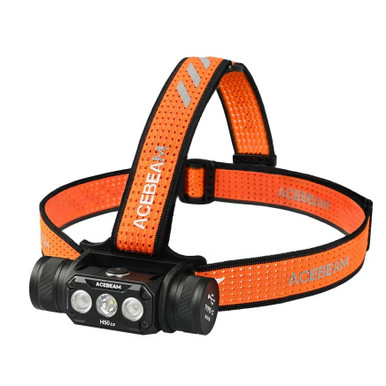
A 2000 lumen headlamp with spot and flood beams, rated IP68 and submersible to 2 metres, with a 141 metre beam and up to 30 hours on low.
Explore →
Push-to-talk radio that works over 4G mobile networks and Wi-Fi, including a Starlink router, with GPS tracking and an SOS button. Sold as a two-pack.
Explore →
Metal-bodied 4G push-to-talk radio with GPS and SOS in the GPS variant and a lifetime SIM plan included. Sold as a two-pack.
Explore →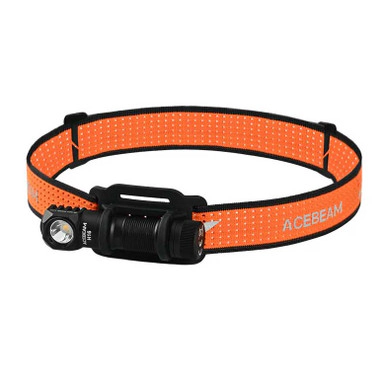
A lightweight headlamp that runs on one AA-size cell, giving up to 1000 lumens, a 105 metre beam and up to 58 hours of run time, rated IP68.
Explore →