Loading this page…

Loading this page…
Sailing club
Yarra Bay 16ft Skiff Sailing Club is a small community skiff club on the beach at Yarra Bay, Phillip Bay (Botany Bay), established in 1928. The club maintains senior and junior volunteer-run sailing divisions and operates a licensed clubhouse with a restaurant, bar and auditorium that supports the sailing through hospitality revenue. Racing and junior training take place on Botany Bay.
About
Yarra Bay 16ft Skiff Sailing Club is a small community skiff club on the beach at Yarra Bay, Phillip Bay (Botany Bay), established in 1928. The club maintains senior and junior volunteer-run sailing divisions and operates a licensed clubhouse with a restaurant, bar and auditorium that supports the sailing through hospitality revenue. Racing and junior training take place on Botany Bay.
Service area: Yarra Bay / Botany Bay, Phillip Bay, NSW
Keep exploring
Yarra Bay 16ft Skiff Sailing Club is a beachfront sailing club at Yarra Bay (Phillip Bay, NSW) offering member and guest facilities since 1928. The club hosts organised sailing activities for its class, provides a licensed restaurant (C Salt on the Beach), a Beach Bar & Kiosk, a 180-seat auditorium available for functions, and social/recreational events (pool tables, trivia, fishing weigh-ins). The club also publishes opening hours and contact details and operates a courtesy bus service for local pick-ups on weekends.
Yarra Bay's sailing operation runs on a two-division structure that has served it for generations. The Junior Division owns Sunday mornings, combining training with mixed-class junior racing in Sabots, Sky-Riders and Bics — a pathway that takes kids from their first tack to competitive fleet racing on flat, protected water. The Senior Division takes over on Sunday afternoons, where the fleets are multihulls, Lasers and Cherubs: quick, physical boats that suit the open water of the bay. It's a tidy arrangement — the youngest sailors get the morning's gentler breeze and clear water, the adults race in the afternoon's stronger sea breeze.
The season calendar shows how the intake works. For 2025-26, adult racing began on 14 September with a fortnight of warm-up races, while new adult and junior sailors, plus returning juniors and adults learning the sport, were brought in together from 19 October — registration for newcomers having been held in the Beach Bar on opening day. Racing paused after 21 December for the Christmas break, resumed on 18 January and wrapped up on 25 April. New sailors of any age are welcomed into that October intake, which effectively functions as the club's learn-to-sail gateway: adults learning alongside juniors, absorbed into divisions that race every week.
There's no accredited sailing centre or keelboat course here — instruction is club-run and volunteer-delivered, in the manner of the skiff clubs from which Yarra Bay descends. What it offers instead is continuity and community: a child can start in a Sabot on a Sunday morning and, a decade later, be trapezing a Cherub in the afternoon division without ever leaving the club. The licensed clubhouse completes the loop — sailing families spend the whole Sunday at the beach, juniors racing in the morning, seniors in the afternoon, everyone converging on the bistro and the live music when the boats are away.
Yarra Bay is a gentle crescent of beach on the northern shore of Botany Bay at Phillip Bay, a pocket of relative calm between La Perouse and the container terminals. The club's address is Yarra Road — ten minutes from Sydney Airport, five from the Eastern Suburbs Memorial Park — and the licensed clubhouse looks directly over the bay, with generous car and bus parking and that courtesy bus for the evenings. Few Sydney sailing venues combine open-water racing with a waterfront restaurant literally upstairs.
The racing water is Botany Bay proper, what the club's history calls the open water sailing of the historic bay. Conditions differ markedly from the harbour clubs further north: the bay is broad and shallow, sea breezes arrive early and strong across its fetch, and the wave patterns are its own. That said, the bay a Yarra Bay crew races on today is not the bay of 1928.
The club's own history records that runway extensions for the airport, the oil refineries and the Port Botany container terminal took a massive bite out of the bay and permanently altered its waves and tidal flows. Modern sailors race with container ships swinging at their berths as backdrop — an industrial amphitheatre that has become oddly picturesque in its own right.
For juniors, the inshore water off the beach is forgiving: shallow, flat in a nor'-easter, and quickly reached by rescue boat. The afternoon senior fleets range wider across the bay, into the chop and the shipping channel edges. And when the sailing's done, the shore side of the equation is arguably the best appointed of any small club in Sydney — a hundred-seat restaurant, the Beach Bar, a function auditorium and live music on Sunday afternoons, all looking out over the water the club has sailed for nearly a century.
The club was born of another club's collapse. When the Botany Flying Squadron's racing fleet disbanded for want of numbers in January 1928, its sailors regrouped on Yarra Bay, basing themselves at Howes boatshed and putting seven boats on the water that first season in what contemporaries described as a picnic atmosphere. The club was formally constituted in February 1928, and a social committee elected that March set about fundraising for expansion. Through the 1930s the club progressed steadily, buying a number of 16ft skiffs of its own.
War didn't stop the building. A Crown land lease for a clubhouse site was secured around 1940, the building went up with voluntary labour — including help from members of the St George club — and opened in 1941, the same year the club joined the NSW Skiff Association, beginning a close relationship with the association and its Southern Zone clubs that continues today. In 1967 the club incorporated as a company, a move its own history wryly notes finally legitimised the wide range of social activities it had practised for years.
Yarra Bay hosted numerous skiff carnivals and national and international regattas over the decades; one that stands out in the club's memory is the Bi-Centennial Regatta of January 1988, sailed alongside the First Fleet Re-enactment in the bay where the real First Fleet had first anchored. But the 16ft class itself was fading — interest had peaked in the 1970s, and rising costs, the lack of international competition and the spread of smaller dinghy classes saw the skiffs eventually disappear from the club's racing.
The response was reinvention: the clubhouse evolved into a licensed community venue whose restaurant, bars and functions now sustain the senior and junior sailing divisions. Ninety-odd years on, the club still publishes its annual financial report publicly, still fields its Sunday divisions, and still welcomes visitors with the picnic-atmosphere warmth its founders claimed in 1928.
Batemans Bay and the Clyde River form a classic NSW South Coast cruising region where a sheltered, tidal estuary meets a short, island‑dotted entrance to the Tasman Sea. It’s distinctive for easy access from Canberra, a mix of river and bay sailing, a compact marina and mooring network, and a river entrance (the Clyde River bar) that can change rapidly. The area suits day sails, weekend cruising, trailer‑boat exploration and sheltered coastal passages; offshore or long‑passage plans require careful timing and local knowledge. Preparation for tidal flow, variable southerly swells and shallow, s

Use ramps and beaches with respect for local conditions: check ramp layout, tide and swell, wind direction, vehicle access and crowding; prepare boat and crew before you launch or retrieve; and follow local signage, courtesy and safety practices. Specifics vary by ramp and beach, so confirm details for the exact site before you go.
Explore →
Look for a friendly club with beginner-focused training, accessible facilities and boats, a supportive community, clear safety practices, and opportunities to progress at your own pace.
Explore →
Pick a stable, simple, forgiving dinghy with a single sail or basic sloop rig, affordable handling and easy maintenance—ideally one with a local class or school nearby so you can access coaching and spare parts.
Explore →
Rig and de-rig a small dinghy by following a consistent, step-by-step sequence: prepare the boat on shore, fit spars and foils in a stable order, control sails and running rigging so lines don’t tangle, check fittings and safety gear, and reverse the process when coming ashore—always working with a partner when possible and staying aware of wind and tide.
Explore →
A practical guide for new sailors on picking the right Australian sailing club: training, boat access, racing, social fit, costs and the key questions to ask before joining.
Explore →A practical guide for recreational sailors planning visits to Albany and King George Sound. Covers the main anchorage areas, typical local weather patterns, tidal and current considerations, navigational hazards, on-the-water etiquette and a pre-departure checklist to help you plan a safe passage and enjoyable stopover
Explore →A practical guide for recreational sailors planning day sails or short cruises around Batemans Bay, Broulee and the Clyde River. Covers local conditions, safe approaches, anchorages, launching, tides, common hazards, and checklists for trip planning and on-water decisions.
Explore →
A practical, Australia-focused guide for planning and sailing around the Whitsunday Islands: weather and seasons, navigation and anchoring, moorings and parks, provisioning and charters, safety and common mistakes, plus checklists and next steps.
Explore →Burke Yachtsman Gear Bag 40L - Shop Now Zip Pay | Tamar Marine Skip to content 59 – 63 Holbrook Street, Invermay Online Shop Open 24/7 Products search Contact us 1300 MARINE $ 0.00 0 Cart Burke Yachtsman Gear Bag 40L $ 79.90 Colour Choose an option Black Blue Black Blue Clear - Burke Yachtsman Gear Bag 40L quantity + Add to cart Enquire about this product SKU BAGB-Y24/BLACK* Category Bags - Sail & Gear A Burke classic and customer favourite, the Yachtsman’s Gear Bag is built tough to handle wet, salty conditions while keeping your gear dry and protected. Made from double coated waterproof…
Explore →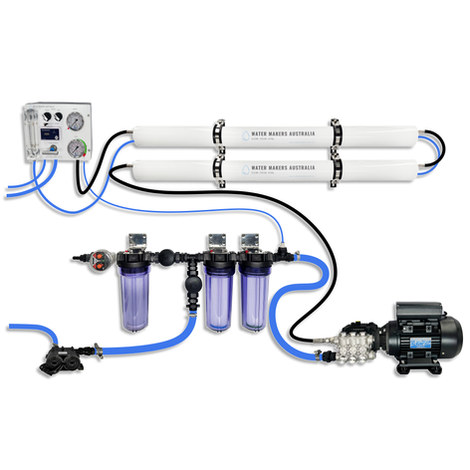
A two-membrane modular watermaker with 140 L/h nominal output, aimed at families and liveaboards that want more water per run.
Explore →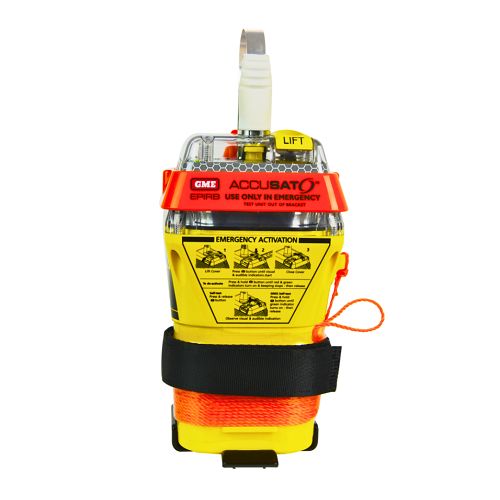
A 10‑year battery EPIRB with integrated GNSS (supports GPS and Galileo), infrared strobe and 121.5 MHz homing signal. Approved for worldwide COSPAS‑SARSAT operation.
Explore →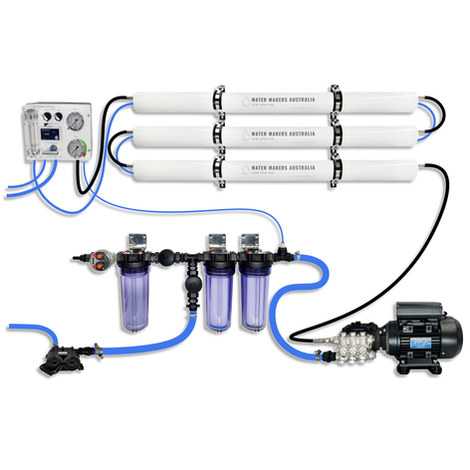
A three-membrane modular watermaker with 200 L/h nominal output and up to 240 L/h family-level marketing, for larger crews and heavy use.
Explore →