Loading this page…

Loading this page…
Sailing club
Abell Point Yacht Club is a volunteer-run, mixed sail-and-power yacht club based at Airlie Beach in the Whitsundays (postal address Cannonvale). Founded in 1997, the club focuses on social racing, cruising and community events rather than formal sail-training or trophy-driven competition. Members gather for monthly social nights (usually the first Thursday, February–December) using Whitsunday Sailing Club rooms, and the club organises multi-day coastal rallies, casual cruise weekends and occasional races such as the Warri Cup and the Round the Molles.
About
Abell Point Yacht Club is a volunteer-run, mixed sail-and-power yacht club based at Airlie Beach in the Whitsundays (postal address Cannonvale). Founded in 1997, the club focuses on social racing, cruising and community events rather than formal sail-training or trophy-driven competition. Members gather for monthly social nights (usually the first Thursday, February–December) using Whitsunday Sailing Club rooms, and the club organises multi-day coastal rallies, casual cruise weekends and occasional races such as the Warri Cup and the Round the Molles.
Service area: Airlie Beach / Whitsundays (Coral Sea Marina / Abell Point Marina precinct)
Keep exploring
Abell Point Yacht Club is a member-based sailing and boating club in Airlie Beach, QLD, catering to both sail and power vessels. The club organises on‑ and off‑water events and activities including social races, cruise weekends, the Coral Coast Rally and monthly social nights (usually first Thursday of the month, Feb–Dec). The club welcomes visiting cruisers and provides membership, event registration and club information via its website and Facebook pages.
Nobody should join Abell Point expecting a structured learn-to-sail syllabus. The club has never presented itself as a teaching organisation, and nothing resembling a Tackers program, dinghy course or Discover Sailing operation appears in its material. What it offers instead is a harder currency: miles under the keel, in company. The centrepiece is the club's Coral Coast Rally: a multi-day passage-making cruise up the North Queensland coast.
The 2025 edition called first at Cape Gloucester, then made a 48-nautical-mile leg to Cape Upstart with a barbecue ashore at Shark Bay, before a 70-nautical-mile passage delivered the fleet to Horseshoe Bay on Magnetic Island — with themed parties, trivia nights and golf days filling the gaps between sails. That year's crews earned their fun, working through 20-knot northerly gusts, rolling seas at 16 to 20 knots and a 37-knot burst at Bun Rock.
Between rallies, the club organises monthly cruises open to sail and power craft alike, welcoming all ages at no charge — one Easter weekend outing ran to Cid Harbour, then onward toward Long Island or South Molle. The annual social calendar is equally programmed: July's Wine and Cheese night, an August formal dinner dressed in white on Whitehaven Beach, an October marina barbecue, a November reef cruise and a Christmas party.
Racing survives through the revived Warri Cup and the Round the Molles event, which offers separate starts for multihulls and for monohulls with and without spinnakers. A Sunset Series introduced in 2014 added twilight competition to the mix, and for a newcomer the practical pathway is simply to turn up: monthly cruises welcome novices aboard, and the learning happens crew by crew, anchorage by anchorage.
Mail goes to Cannonvale, but the club's true anchorage is Coral Sea Marina at Airlie Beach — the precinct formerly named Abell Point Marina, from which the club took, and kept, its name. Beyond the marina breakwater lie the Whitsunday Passage and its island chain, waters the club's website evokes as "turquoise seas and 74 tropical islands", and which it bills as the most boated region in the country.
The sailing here needs no salesmanship: sheltered inter-island passages link Daydream, the Molle group, Hook and Whitsunday islands, with anchorages like Cid Harbour and the silica sands of Whitehaven Beach reachable in a day. The club's cruising range, however, extends well beyond the island group. Coral Coast Rally itineraries have carried fleets north to Cape Gloucester and Cape Upstart and across to Magnetic Island, legs of up to about 70 nautical miles along the mainland coast.
Rally reporting paints the typical seasonal picture: south-east trades blowing a steady 15 to 25 knots through cruising months, sharpening into heavier gusts as they bend around the headlands. Because the club maintains no premises, its shore footprint stays deliberately minimal — meetings and socials borrow neighbouring club rooms, and much of its communal life runs across three Facebook pages serving the club, its cruising members and the Coral Coast Rally. It is a club whose true clubhouse is the coastline itself.
Airlie Beach's marina precinct is thoroughly accustomed to visiting cruising boats, and members passing through on their own vessels can plug into the club's social calendar for exactly as long as their anchor is down.
The club came into being in 1997, a date confirmed by community directory records and by its own website, which has long carried a footer spanning from that year forward. The names of its founders and early office-bearers have not been preserved in published sources — fitting, perhaps, for a club that has always kept its paperwork light. From the beginning it defined itself as the smaller, more easy-going counterpart to the established Whitsunday Sailing Club, an independent body that observers say found its own complementary role in the local sailing community.
Its name tied the club to the Abell Point Marina precinct; when the marina later traded under the Coral Sea Marina brand, the club retained both its original title and its Airlie Beach base. Competitive tradition rests on two pillars. The Coral Coast Rally evolved from an earlier race-and-rally concept into the signature multi-day cruise, while the Warri Cup carried the match-racing flame, sailed as recently as March 2018.
A lively chapter opened in 2014 with the introduction of a Sunset Series alongside that year's combined Coral Coast Race and Rally; a later committee subsequently dusted off the heritage events and added casual fixtures such as beer and burger evenings, marina barbecues and a cocktail function at Knuckle Reef. The boldest recent step came in June 2023, when the club partnered with Whitsunday Sailing Club to stage the first Round the Molles yacht race, a circuit of the four islands of the Molle group — Daydream or West Molle, South, Middle and North — contested across multihull and monohull divisions.
Three decades in, the smallest club on the Whitsunday waterfront maintains an outsized cruising footprint.

Look for a friendly club with beginner-focused training, accessible facilities and boats, a supportive community, clear safety practices, and opportunities to progress at your own pace.
Explore →
Give everyone a simple, clearly defined role (helm, main trimmer, headsail trimmer, lookout/tactician and bow/lines), use short standard calls for manoeuvres, and keep communications positive and concise so the day stays safe and relaxed.
Explore →
Learn boat-handling basics (steering, points of sail and sail trim), safety and seamanship (personal flotation, wind awareness, man-overboard procedure), and simple anchoring/mooring — these give you the core skills to sail safely and enjoyably.
Explore →
Keep the boat balanced by steering a consistent course for the sail trim and by moving crew weight fore/aft and side-to-side to control helm and reduce weather or lee helm. Upwind you aim for a slight weather helm and a heel that lets the sails work efficiently; downwind you flatten the boat a little, ease sheets to prevent luffing or accidental broaches, and shift weight aft as the apparent wind drops.
Explore →
A practical guide for new sailors on picking the right Australian sailing club: training, boat access, racing, social fit, costs and the key questions to ask before joining.
Explore →
A concise, practical guide to the points of sail and how to trim sails effectively for common Australian conditions. Learn the basics of wind angles, sail shape, telltales, reefing considerations and simple steps to improve boat speed and balance.
Explore →
Practical guidance for recreational sailors in Australia on assessing swell, tide and wind, choosing the safest time to cross a coastal bar, preparing crew and gear, and making the decision to go or turn back.
Explore →A practical, Australian-focused guide explaining how sails generate drive, the points of sail, and how to trim sails for different conditions. Includes simple explanations of aerodynamic concepts, step-by-step trim checks, common mistakes and clear next steps for practice on the water.
Explore →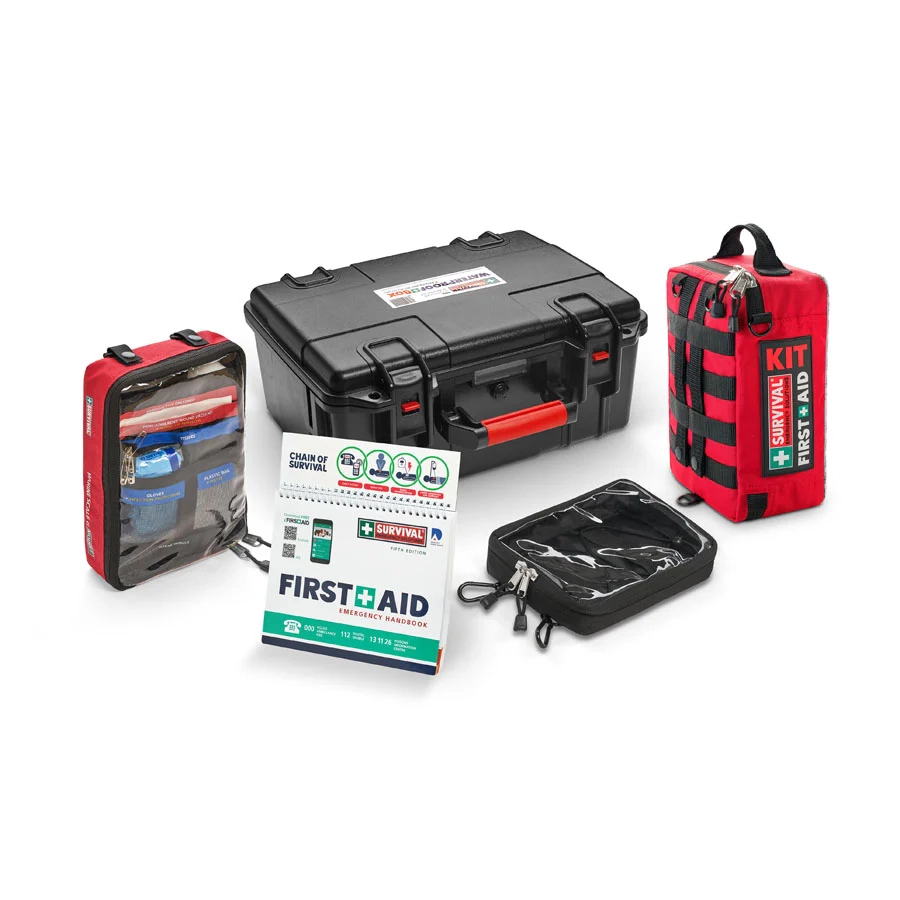
A 142-item marine first aid kit built around the Australian Scale G requirement, with a workplace kit, a Scale G module and a handbook packed in a large waterproof box.
Explore →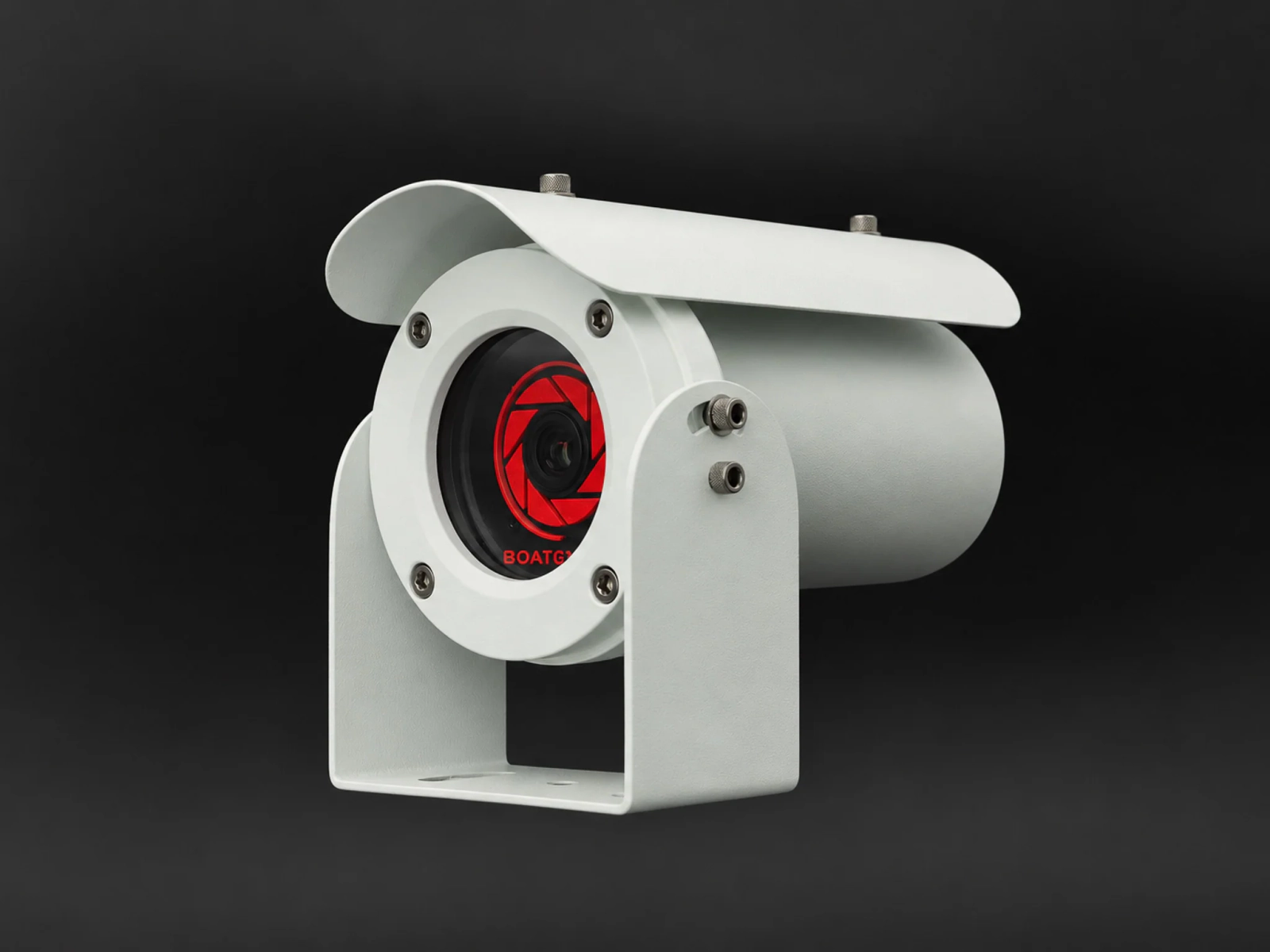
The original BoatEye360 full-colour low-light camera: the same 0.0001 lux sensor as the V2 in a larger 316L stainless housing, with HDMI and analog output, at a lower price.
Explore →
Push-to-talk radio that uses 4G mobile networks where there is coverage and a built-in 16-channel analog radio where there is none, with GPS and SOS. Sold as a two-pack.
Explore →
Metal-bodied 4G push-to-talk radio with GPS and SOS in the GPS variant and a lifetime SIM plan included. Sold as a two-pack.
Explore →