Loading this page…

Loading this page…
Sailing club
Brisbane 18 Footers Sailing Club is the Brisbane home of modern 18ft skiff racing and historical skiff sailing. The club operates without a single clubhouse, running modern 18ft skiff racing from Moreton Bay partner squadrons and historical 10ft/12ft skiff activity from Bulimba Point on the Brisbane River. The club’s website and notices record a continuous class presence from the 1890s, a formal reconstitution in 1920, a centenary in 2020 and recent revival with major regattas staged in Brisbane.
About
Brisbane 18 Footers Sailing Club is the Brisbane home of modern 18ft skiff racing and historical skiff sailing. The club operates without a single clubhouse, running modern 18ft skiff racing from Moreton Bay partner squadrons and historical 10ft/12ft skiff activity from Bulimba Point on the Brisbane River. The club’s website and notices record a continuous class presence from the 1890s, a formal reconstitution in 1920, a centenary in 2020 and recent revival with major regattas staged in Brisbane.
Service area: Moreton Bay (Waterloo Bay) and Brisbane River (Bulimba Point), Queensland
Keep exploring
One class of boat, pursued for well over a century, defines this organisation. Brisbane 18 Footers Sailing Club — which styles itself the city's home for both the modern 18-footer and its heritage skiff cousins — turned one hundred in 2020 and stands as the city's original 18-footer body, affiliated with Australian Sailing. Around the modern 18ft skiff orbit the historical 10ft and 12ft skiffs, boats that keep the class's long memory physically alive on the water.
The club's pedigree is remarkable: by its own historical reckoning, Queensland craft claimed 23 national 18-footer titles up to 1958, and its members and designers repeatedly changed the sport itself — the heel-less Aberdare of the 1930s provoked a schism that created a whole new Sydney league, while the Ben Lexcen-designed Venom ruled the 1961 world titles on the Brisbane River.
The lean decades that followed, as costs and technology favoured the southern fleets, have lately given way to a genuine revival: in January 2025 the club staged the national championship on Waterloo Bay, ending a 35-year absence of the title event from Queensland waters. Today the club operates without a single clubhouse of its own, racing instead from partner squadrons around Moreton Bay and the river, but the mission is precisely what it was in 1920 — keep the 18-footer flying in Queensland, and teach young sailors to handle it.
Membership figures are not published, but the measure of the club is better taken from its boats than its books: a website proudly recounting 125 years of river and bay racing, a heritage fleet that still competes, and a modern squad sailing at world-championship level.
Development here means mentoring, not classroom syllabuses. The modern rebuild has centred on young crews guided by two substantial figures: Dave Hayter, a four-time national 14ft skiff champion, and Rob Brown, a former world champion, with a youth team fronted by Josh Sloman now actively campaigning. No Tackers or Discover Sailing Centre accreditation attaches to the club; grassroots junior sailing in its orbit runs through Brisbane Sailing Squadron at Bulimba Point, leaving the 18 Footers free to concentrate on their speciality — converting talented youngsters into capable skiff sailors.
Fleet-building through design is in the club's DNA: back in 1959 it commissioned Norman Wright Jr and Bob Miller — the latter later famous as Ben Lexcen — to draw a boat expressly to rebuild the club fleet, and the radical three-handed chine skiff Taipan resulted. The present racing program runs in three strands. Modern 18ft skiffs compete on Waterloo Bay, launching from the Darling Point and Royal Queensland squadrons under arrangements dating from 2008.
Historical 10ft and 12ft skiffs keep the heritage fleet racing from Brisbane Sailing Squadron on the river. And hosting rounds out the picture: staging the 2025 nationals on Waterloo Bay returned the championship event to Queensland after 35 years away. Hayter's own 2023 skiff Big Foot Bags & Covers, eighth at the 2024 Giltinan worlds, marks the competitive standard the squad now chases.
For a young sailor weighing the pathway, the appeal is obvious: learn the ropes in dinghies on the river, graduate through the heritage skiffs, and step into one of the fastest monohull classes on the planet with a world champion looking over your shoulder.
Two stretches of water bookend the club's story. For the greater part of its life its clubhouse occupied the Brisbane River bank at Bulimba, looking across to Kingsford Smith Drive on the Hamilton side — a busy tidal reach where 18 footers had raced since the nineteenth century and where champions from Britannia through the Jenny boats honed their craft. That era closed in 2008, when the clubhouse site was relinquished and racing transferred to Waterloo Bay, the open sweep of Moreton Bay off Manly and Wynnum whose steadier breezes and cleaner air suit the modern skiff.
The contemporary fleet sails from two partner bases on the bay — the Darling Point and Royal Queensland squadrons — and Waterloo Bay hosted the national championship decider across 18 to 20 January 2025. The river thread, though, was never cut. The heritage 10ft and 12ft skiffs, together with the junior sailing that feeds the club's future, operate from Brisbane Sailing Squadron at Bulimba Point, barely a stone's throw from the old front door.
The dual arrangement serves the club well: sheltered tidal water saturated with the class's past for the wooden boats, and open bay conditions for the carbon-fibre generation chasing interstate and international honours. Visitors should note there is no single clubhouse gate to knock on; the club's presence is wherever its skiffs are rigging, from Bulimba Point out to the Waterloo Bay start line.
Both environments sit within easy reach of central Brisbane, which is part of the class's enduring appeal here: world-level racing conducted practically within sight of a capital city's suburbs.
The family tree begins in July 1895 with the City of Brisbane Sailing Club, which a year later hosted an interstate 18-footer contest won on home water by the newly built Britannia. Names changed as the organisation matured — Brisbane Flying Squadron from February 1900, Queensland Flying Squadron from August 1905 — before the body was reconstituted in 1920 under its present title, with J. Colin Clark and Lance Watts among the driving forces and a blue-and-red pennant bearing an "18" on its blue field.
The honour board from that period is formidable: Clark's Britannia secured the first official national championship held in Queensland, in 1917–18, and Clark, the Crouch brothers, Watts and ultimately Norman Wright Jr accumulated titles across four decades. Audacity peaked in 1932, when member Frederick Hart engaged builder Alf 'Toby' Whereat to construct Aberdare, the first heel-less seven-foot-beam skiff-type 18 footer. The design convulsed Sydney racing and directly triggered the 1935 birth of the NSW 18 Footers Sailing League.
Vic Vaughan steered the boat — sailors knew her as "the Galloping Ghost" — to four consecutive national crowns, and Queenslanders won 12 of the 15 championships contested between 1934 and 1953. In 1956 Wright's Jenny VI took the world 18-footer crown on Waterloo Bay, a Queensland first; Taipan and Venom then swept the 1961 worlds on the Brisbane River. Neville Buckley's six consecutive state titles in TraveLodge-sponsored boats extended the run into the 1970s before escalating technology costs closed it.
Revival stirred from about 2019 under Dave Hayter and crested in January 2025, when the national championship finally came home to Queensland.
Batemans Bay and the Clyde River form a classic NSW South Coast cruising region where a sheltered, tidal estuary meets a short, island‑dotted entrance to the Tasman Sea. It’s distinctive for easy access from Canberra, a mix of river and bay sailing, a compact marina and mooring network, and a river entrance (the Clyde River bar) that can change rapidly. The area suits day sails, weekend cruising, trailer‑boat exploration and sheltered coastal passages; offshore or long‑passage plans require careful timing and local knowledge. Preparation for tidal flow, variable southerly swells and shallow, s

Look for a friendly club with beginner-focused training, accessible facilities and boats, a supportive community, clear safety practices, and opportunities to progress at your own pace.
Explore →
Progress gradually by increasing exposure, practising specific skills, sailing with more experienced crew/skippers, and deliberately training for each new step—start in calm sheltered bays, then move to longer trips, busier waters, stronger winds and finally open coastal passages when you and your crew are consistently competent and comfortable.
Explore →
Expect very different seasonal systems across Western Australia: the south‑west (Perth to Albany) has a strong summer afternoon sea breeze (the “Fremantle Doctor”) and winter westerly fronts, while northern WA follows a wet/dry monsoonal cycle with strong seasonal onshore winds, thunderstorms and cyclone risk in the wet season. Local headlands, estuaries and tidal flows often change what you actually feel on the water, so learn the local timing and sheltered venues first.
Explore →
Use a sensible scope (line length), pick good ground, set the anchor with a controlled reverse to load it, and check you’re not dragging by noting fixed references and using a stern line or anchor alarm if needed.
Explore →
A practical guide for new sailors on picking the right Australian sailing club: training, boat access, racing, social fit, costs and the key questions to ask before joining.
Explore →A practical guide for recreational sailors planning passages to, from or around Eden and Twofold Bay. Covers sheltered anchorages, shore facilities, local weather and tidal considerations, preparing for Bass Strait conditions and a focused equipment and safety checklist.
Explore →A concise, practical introduction to the essential parts of a recreational sailing boat for beginners in Australia. Covers hull, deck, rigging, sails, steering, below-decks spaces and safety equipment, with simple explanations, common mistakes and a pre-decast checklist to help new sailors communicate and get underway.
Explore →
A practical, Australia-focused guide for planning and sailing around the Whitsunday Islands: weather and seasons, navigation and anchoring, moorings and parks, provisioning and charters, safety and common mistakes, plus checklists and next steps.
Explore →Burke Yachtsman Gear Bag 40L - Shop Now Zip Pay | Tamar Marine Skip to content 59 – 63 Holbrook Street, Invermay Online Shop Open 24/7 Products search Contact us 1300 MARINE $ 0.00 0 Cart Burke Yachtsman Gear Bag 40L $ 79.90 Colour Choose an option Black Blue Black Blue Clear - Burke Yachtsman Gear Bag 40L quantity + Add to cart Enquire about this product SKU BAGB-Y24/BLACK* Category Bags - Sail & Gear A Burke classic and customer favourite, the Yachtsman’s Gear Bag is built tough to handle wet, salty conditions while keeping your gear dry and protected. Made from double coated waterproof…
Explore →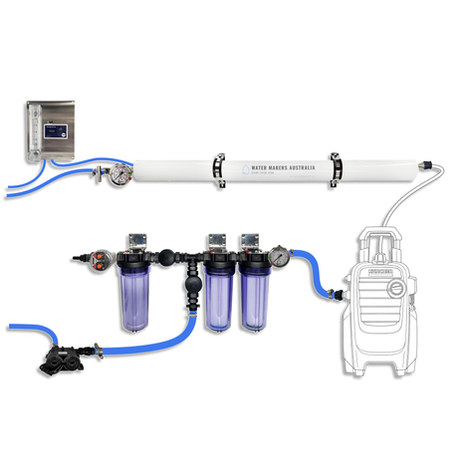
A one-membrane modular marine watermaker with 80 L/h nominal output, remote stainless control panel, standard consumables and direct Australian support.
Explore →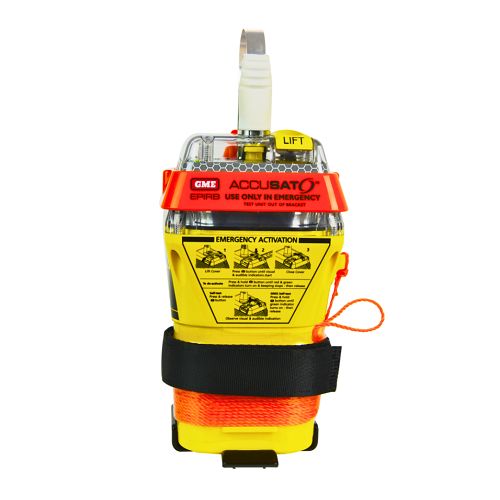
A 10‑year battery EPIRB with integrated GNSS (supports GPS and Galileo), infrared strobe and 121.5 MHz homing signal. Approved for worldwide COSPAS‑SARSAT operation.
Explore →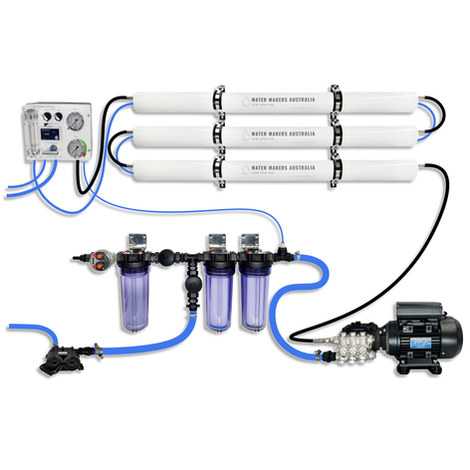
A three-membrane modular watermaker with 200 L/h nominal output and up to 240 L/h family-level marketing, for larger crews and heavy use.
Explore →