Loading this page…

Loading this page…
Sailing club
Cairns Cruising Yacht Squadron (CCYS) is a relaxed, mixed yacht club and boating facility on Tingira Street, Portsmith (Cairns, QLD). Founded in 1967 to support cruising and keelboat sailors rather than dinghy-only racing, the Squadron operates a waterfront clubhouse with a licensed bar and restaurant, a multi-stage marina with pile moorings and hardstand, a working boatyard and travel-lift (historically significant), and an active social and twilight-sailing calendar. The club runs keelboat-based training partnerships, supports cruising-in-company and rally sailing, and maintains reciprocal and community connections in the region.
About
Cairns Cruising Yacht Squadron (CCYS) is a relaxed, mixed yacht club and boating facility on Tingira Street, Portsmith (Cairns, QLD). Founded in 1967 to support cruising and keelboat sailors rather than dinghy-only racing, the Squadron operates a waterfront clubhouse with a licensed bar and restaurant, a multi-stage marina with pile moorings and hardstand, a working boatyard and travel-lift (historically significant), and an active social and twilight-sailing calendar. The club runs keelboat-based training partnerships, supports cruising-in-company and rally sailing, and maintains reciprocal and community connections in the region.
Service area: Portsmith (Cairns, QLD)
Keep exploring
Racing results are not the point here — lifestyle is. Cairns Cruising Yacht Squadron was established in 1967 to serve boats other than racing dinghies, and it says it has always taken pride in a relaxed, informal atmosphere; walking into its Tingira Street precinct in Portsmith today, that self-image still rings true. The address reads less like a clubhouse and more like a compact maritime village: a licensed bar and restaurant, a sixteen-berth marina with a further ten-berth extension, pile moorings, hardstand and storage, a chandlery site and a function centre, all looking across Smiths Creek toward Admiralty Island.
The boatyard, with its long history of travel-lift operation, has underwritten the club financially and remains a rare piece of cruising infrastructure in the Far North. Connections reach well beyond Cairns — reciprocal arrangements exist with the Singapore Yacht Club and the Cruising Yacht Club of South Australia, the Cairns Dragon Boat Club (founded by breast cancer survivors) has been an associated club since 2010, and recent years have deepened a Sailability partnership.
Affiliated with Australian Sailing and now led by a qualified general manager, the squadron keeps its calendar lively with twilight sailing, live music and the celebrated Parrot Head Party, while members cruise in company along the tropical coast. In 2025 it hosted Australian Sailing's first Queensland club roadshow and the Cairns Sailing Summit — a nod to its standing in northern sailing circles. Membership figures are not published, but the breadth of the facilities on Tingira Street speaks for a club of substance rather than a paper organisation.
The squadron's signature contribution to teaching is keelboat-based and shared. Since 2005 it has partnered with Cairns Yacht Club to deliver introductory keelboat courses on six J24s owned by NQ Sailing — matched one-design keelboats that are ideal for showing adults how to handle something larger than a dinghy. Each series takes about fifteen participants through six sessions under volunteer skippers; in the program's heyday four or five series ran annually and every one filled.
Graduates can progress to Boat Safe and Competent Crew qualifications, course entry is arranged via club membership, and the club history records with satisfaction that many alumni have gone on to purchase cruising yachts — precisely the outcome a cruising club hopes for. The training pedigree runs deeper than the J24 era: the squadron registered its own training school around the turn of the millennium, and in the mid-1990s bought Corsair dinghies for a short-lived dinghy revival, while later grant funding has supported refurbishment of the J24 fleet.
Candour is needed on competition: the club's own published history concedes the local racing program is limited and says much remains to be done to reinvigorate it — an unusually frank self-assessment. Members seeking rally-style adventure join Louisiade-style cruising-in-company events organised through Yorkeys Knob Boating Club. What the squadron delivers unfailingly is the social-on-water calendar: twilight sailing sessions, live music from April, and themed nights that keep the marina precinct humming.
The volunteer skipper roster is itself a training asset, keeping experienced cruising sailors actively engaged in passing their seamanship on.
Portsmith is the industrial and port quarter of Cairns, and the squadron's Tingira Street address places it in the working heart of the city's maritime economy, beside Smiths Creek close to where the creek meets Trinity Inlet. From the clubhouse deck the view crosses the creek to Admiralty Island — proof that even in the industrial zone the tropics stay close.
For cruising sailors the practical inventory matters most: a marina offering a courtesy berth, secure storage, pile moorings and a private ramp combine to make this one of the more useful landfalls on the Far North Queensland coast, and the licensed bar and restaurant — trading Tuesday through Sunday, with lunch most days, Friday dinner and Sunday breakfast — turn a maintenance stop into an enjoyable stay. One local peculiarity deserves mention: the site sits near military and restricted airspace, and drones are strictly forbidden at the club.
The sailing waters are the classic Cairns cruising ground. Trinity Inlet offers protected tidal water on the doorstep, opening into Trinity Bay, and the club's traditional races and cruises have reached Green Island, Fitzroy Island, the Low Isles and Port Douglas — reef-fringed destinations within easy passage. In earlier decades the squadron acted as host club for the Gladstone to Cairns and Cairns to Port Moresby offshore contests, and it welcomed the finishers of the first Hamilton Island to Cairns race in 1985, pedigree that reflects how naturally this coast lends itself to passage-making.
In the yard's earlier years its services were shared with game-fishing boats, motor boat clubs and trawlers alike.
The squadron was born to fill a gap. In 1967, when organised sailing in Cairns centred on the dinghy racing of the Cairns Sailing Club, a group of yacht owners constituted a new body to encourage offshore racing and cruising for bigger craft. Meetings began in a private house before shifting to the Sea Cadets' Hall, and social functions took place aboard members' rafted-up yachts; before long the club was hosting the Gladstone–Cairns and Port Moresby races and cruising to Green Island, Fitzroy and Low islands, and Port Douglas in fleets of eight to twelve.
The mid-1970s brought a lease covering part of the Cairns Harbour Board Slipway, used as a Friday-night venue, extended in 1978 to operate the slipway outright, with swing moorings established in the harbour. A defining rupture came in 1979: the squadron declined an amalgamation proposal from the Cairns Sailing Club, which instead restyled itself Cairns Yacht Club and drew away squadron members — the club history calls it "a severe blow".
Eviction from the slipway followed in 1980–81, displaced by a tourist development, so members built the Smiths Creek base from the ground up; two of them personally underwrote the travel lift, and volunteer Ollie Upite ran the new yard full-time. The makeshift open-air clubhouse welcomed finishers of the first Hamilton Island to Cairns race in 1985, the year of incorporation. The following decade and a half brought the on-site chandlery, marina stages, pile moorings, the first rescue boat Margaret U and the registered training school.
A financial crisis in 2001–03, triggered by the trawler industry's decline, forced restructuring — the clubhouse business sub-leased, yard operations contracted out, the travel lift sold to retire debt. Recovery followed: the J24 training partnership from 2005, a 45th anniversary across 2011–12, yard management passing to CBS in 2018, and, after a general manager was appointed in 2020–21, live music, grant-backed J24 renovation and a stronger Sailability partnership.
Ashmore Reef is a remote, uninhabited oceanic reef and low-lying island group in the Timor Sea that offers a stark, conservation-led sailing environment rather than typical recreational cruising. It is distinctive for its exposed coral reef, vegetated sand islands and strong legal protections, including tightly controlled access and traditional Indonesian fishing arrangements. Visiting from a recreational yacht is logistically challenging, subject to regulatory limits, and suited only to well-prepared offshore passages or research/management charters rather than casual day sails.

Look for a friendly club with beginner-focused training, accessible facilities and boats, a supportive community, clear safety practices, and opportunities to progress at your own pace.
Explore →
Pick a protected bay, estuary or river reach where you can rig, launch and arrive on calm water within a short, sheltered transit; choose a site with a good ramp or jetty, clear recovery options and a nearby sailing club, marina or commercial operator for local knowledge and help.
Explore →
Pick a stable, simple, forgiving dinghy with a single sail or basic sloop rig, affordable handling and easy maintenance—ideally one with a local class or school nearby so you can access coaching and spare parts.
Explore →
Use ramps and beaches with respect for local conditions: check ramp layout, tide and swell, wind direction, vehicle access and crowding; prepare boat and crew before you launch or retrieve; and follow local signage, courtesy and safety practices. Specifics vary by ramp and beach, so confirm details for the exact site before you go.
Explore →
A practical guide for new sailors on picking the right Australian sailing club: training, boat access, racing, social fit, costs and the key questions to ask before joining.
Explore →A practical guide to selecting and using anchorages around New South Wales for cruising sailors. Covers sheltered bays, tidal considerations, holding, approach planning, and example anchorages with local conditions to check before you go.
Explore →Practical guidance for recreational sailors planning coastal and remote cruising in Western Australia, focusing on tidal planning, reef awareness, navigation and safety preparation tailored to local conditions.
Explore →A practical guide for recreational sailors planning visits to Albany and King George Sound. Covers the main anchorage areas, typical local weather patterns, tidal and current considerations, navigational hazards, on-the-water etiquette and a pre-departure checklist to help you plan a safe passage and enjoyable stopover
Explore →Burke Yachtsman Gear Bag 40L - Shop Now Zip Pay | Tamar Marine Skip to content 59 – 63 Holbrook Street, Invermay Online Shop Open 24/7 Products search Contact us 1300 MARINE $ 0.00 0 Cart Burke Yachtsman Gear Bag 40L $ 79.90 Colour Choose an option Black Blue Black Blue Clear - Burke Yachtsman Gear Bag 40L quantity + Add to cart Enquire about this product SKU BAGB-Y24/BLACK* Category Bags - Sail & Gear A Burke classic and customer favourite, the Yachtsman’s Gear Bag is built tough to handle wet, salty conditions while keeping your gear dry and protected. Made from double coated waterproof…
Explore →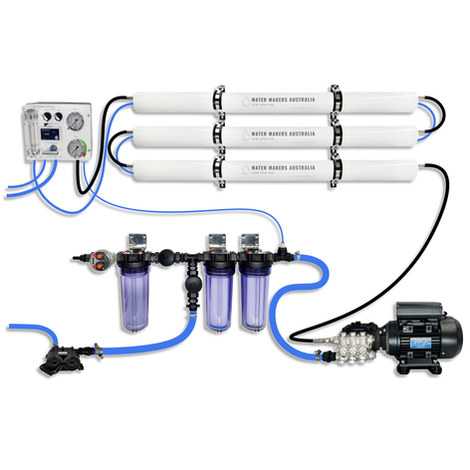
A three-membrane modular watermaker with 200 L/h nominal output and up to 240 L/h family-level marketing, for larger crews and heavy use.
Explore →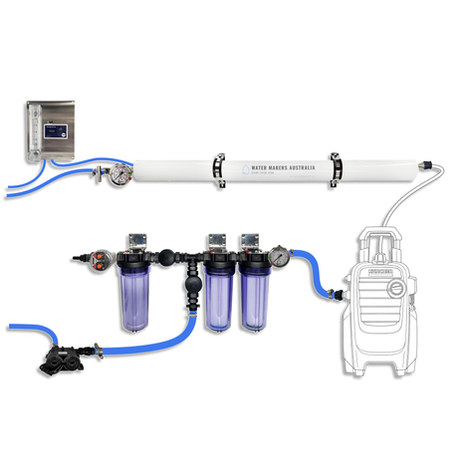
A one-membrane modular marine watermaker with 80 L/h nominal output, remote stainless control panel, standard consumables and direct Australian support.
Explore →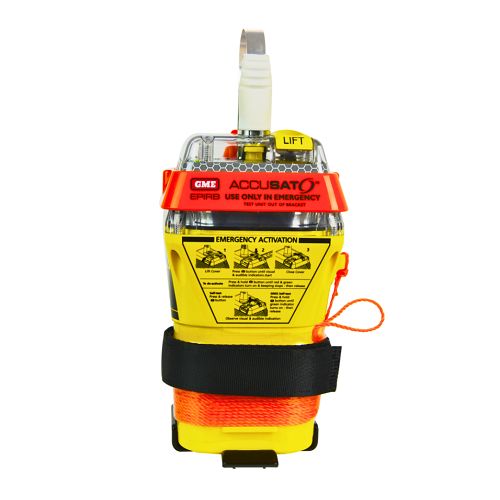
A 10‑year battery EPIRB with integrated GNSS (supports GPS and Galileo), infrared strobe and 121.5 MHz homing signal. Approved for worldwide COSPAS‑SARSAT operation.
Explore →