Loading this page…

Loading this page…
Sailing club
Brisbane Sailing Squadron is a volunteer-run, family-oriented sailing club based at Vic Lucas Park in Bulimba on the southern bank of the Brisbane River. The club runs organised dinghy sailing programs (Lasers, 16ft skiffs, 125s, Optimists and Sabots) and a comprehensive junior sailing program for ages ~7–16, with learn-to-sail and progression courses. Facilities described on the club website include a two-level clubhouse with change rooms, canteen/bar and deck, rigging areas, three launching ramps, limited on-site parking, and a small number of moorings available for short- to long-term hire. The lower clubhouse level stores over 40 boats and the hall is available for hire by members/community groups subject to committee approval.
About
Brisbane Sailing Squadron is a volunteer-run, family-oriented sailing club based at Vic Lucas Park in Bulimba on the southern bank of the Brisbane River. The club runs organised dinghy sailing programs (Lasers, 16ft skiffs, 125s, Optimists and Sabots) and a comprehensive junior sailing program for ages ~7–16, with learn-to-sail and progression courses. Facilities described on the club website include a two-level clubhouse with change rooms, canteen/bar and deck, rigging areas, three launching ramps, limited on-site parking, and a small number of moorings available for short- to long-term hire. The lower clubhouse level stores over 40 boats and the hall is available for hire by members/community groups subject to committee approval.
Service area: Bulimba, QLD
Keep exploring
Brisbane Sailing Squadron is a volunteer-run, family-oriented sailing club based at Vic Lucas Park in Bulimba on the southern bank of the Brisbane River. The club runs organised dinghy sailing programs (Lasers, 16ft skiffs, 125s, Optimists and Sabots) and a comprehensive junior sailing program for ages ~7–16, with learn-to-sail and progression courses. Facilities described on the club website include a two-level clubhouse with change rooms, canteen/bar and deck, rigging areas, three launching ramps, limited on-site parking, and a small number of moorings available for short- to long-term hire.
The lower clubhouse level stores over 40 boats and the hall is available for hire by members/community groups subject to committee approval.
Junior development is the squadron's engine room. Its comprehensive Junior Sailing Program accepts children from seven through sixteen and carries them from absolute beginner to advanced racer — growth has been rapid, with upwards of 150 juniors taking part within three years of the program's launch, as reported in 2023. The steps are plainly signposted on the club website: Try Sailing for a first taste, then Start Sailing and Better Sailing, and finally Race Skills for those bitten by competition.
Sabots serve as the dedicated training dinghies, small and forgiving on a working river. Adults and other newcomers enter through Discover Sailing days, Try Sailing sessions and Learn to Sail courses, and graduates are invited into membership — an effective conveyor belt from first sail to full club life. The squadron doesn't claim Discover Sailing Centre status; these are club-delivered courses in the Australian Sailing tradition.
Its programming also reaches sideways in a way few clubs attempt: Bulimba Point hosts the historical skiff classes and junior sailing of the Brisbane 18 Footers, making the site a shared campus for two clubs' next generations. Racing spans 16ft skiffs, full-rig and radial Lasers, RS Quests and 125s, so junior graduates face a genuine ladder rather than a dead end. Competitive heritage includes staging the 1970 Australian 16ft Skiff Championships, and the annual fixtures blend remembrance with racing in a way that binds the generations together.
A volunteer labour culture and function income from the deck underpin the whole operation's finances — fitting for a club whose stated character is family-oriented and community-run.
Vic Lucas Park at Bulimba Point gives the squadron a green waterfront toehold on the south side of the lower Brisbane River, where the stream bends between the Bulimba and Hamilton reaches. This is river sailing of the classic Australian kind. Tides here can run at up to six knots, and Hamilton Hill throws wind shadows across the course, so crews must read current against breeze constantly — local knowledge is worth boat lengths. Those quirks bring compensations.
River courses are far more sheltered than anything on Moreton Bay, meaning the squadron can complete its program on days when bay racing is cancelled, and with the bank never far away there is an extra margin of safety for learners and juniors. The infrastructure centres on the 1953 hall, raised to create undercroft boat storage and topped by the 2003 deck, which overlooks the water and hosts both presentation nights and private hire.
The reach itself carries layers of maritime memory — club archives hold photographs of the Royal Yacht Britannia's 1963 visit and the Tall Ships gathering in these same waters. For sailors living in Brisbane's inner east the convenience is hard to overstate: a boat rigged at Bulimba Point can be racing within minutes, on water that behaves like a tactical puzzle every single weekend.
The point also functions as a small sailing precinct in its own right: alongside the squadron's own fleets, the heritage skiffs and juniors of the Brisbane 18 Footers rig and launch from the same bank, so a Saturday here can take in a century of skiff design at a single glance.
A band of enthusiasts established the Hamilton Sailing Club in 1921 — the Australian Sailing profile records it as the Hamilton Skiff Club — gathering on Monday evenings at the Bulimba School of Arts while boats rigged at whichever local boatyard had space. The 16ft skiff was the founding weapon, the club was soon renamed the Brisbane 16ft Skiff Club, and the class has never left the river since.
Permanence arrived in 1953, when a clubhouse opened at the present Bulimba Point site after about twelve months of work performed largely by volunteers, with member-builders George Marks and Cyrill Hines directing the effort; the lowset hall was later jacked up to make room for boat storage underneath. The 1960s saw a forward-thinking alliance with the Brisbane Junior Sailing Squadron to foster young sailors, and when the club hosted the 1970 Australian Skiff Championships it extended the building to cope with the influx.
Modern identity was forged in 1994 through amalgamation with the neighbouring Brisbane Yacht Club, producing today's Brisbane Sailing Squadron. A spacious deck followed in 2003, its function-hire income later proving crucial when the committee, guided by an experienced treasurer, nursed cash flow through the COVID-19 shutdown. Centenary celebrations in 2021 featured a cocktail party marking one hundred years and the Lord Mayor's Cup, a multi-division race sailed on 28 August.
Across a century of mergers, floods of change and one pandemic, the constants remain: river, skiffs, volunteers. From Monday-night meetings in a School of Arts hall to a deck full of families on a Sunday afternoon, the club has grown without ever leaving the bend of river where it began.
Apollo Bay is a small working harbour on Victoria’s Great Ocean Road where sheltered inshore sailing meets the Southern Ocean. The character is a mix of protected harbour berths and an exposed open coast: pleasant day-sails and sheltered weekend cruising inside the bay, with demanding coastal passages immediately offshore where south‑westerly swell and strong winds from the Southern Ocean dominate. It suits coastal cruisers, trailer sailors who launch at the ramp, and experienced coastal sailors who understand bar and swell behaviour; it is not a casual open‑ocean anchorage for unprepared or

Look for a friendly club with beginner-focused training, accessible facilities and boats, a supportive community, clear safety practices, and opportunities to progress at your own pace.
Explore →
Late spring to summer is usually the best time for beginners to start learning to sail in Tasmania because the weather is generally warmer, days are longer and conditions are often more settled. Expect lighter to moderate winds with regular afternoon sea breees in summer, while spring and autumn bring more changeable and sometimes stronger conditions; winter is colder, wetter and typically windier with more fronts and swell.
Explore →
Pick a protected bay, estuary or river reach where you can rig, launch and arrive on calm water within a short, sheltered transit; choose a site with a good ramp or jetty, clear recovery options and a nearby sailing club, marina or commercial operator for local knowledge and help.
Explore →
Plan passages by overlaying predicted tides and tidal streams onto your charted route, timing departures to use favourable streams through constrictions and offshore features, avoiding local hazards (shoals, banks, strong rips) and building contingency waypoints. Confirm with current official tide tables, local pilotage notes and recent Notices to Mariners before departure.
Explore →
A practical guide for new sailors on picking the right Australian sailing club: training, boat access, racing, social fit, costs and the key questions to ask before joining.
Explore →A concise, practical introduction to the essential parts of a recreational sailing boat for beginners in Australia. Covers hull, deck, rigging, sails, steering, below-decks spaces and safety equipment, with simple explanations, common mistakes and a pre-decast checklist to help new sailors communicate and get underway.
Explore →
A practical guide for recreational sailors planning day sails or short coastal cruises in the southern section of the Great Barrier Reef. Covers prevailing conditions, route planning, anchorages, navigation, reef etiquette and safety considerations specific to this region.
Explore →
A practical guide to the safety equipment commonly carried on recreational sailing boats in Australia: lifejackets, EPIRBs/PLBs, flares, radios, fire extinguishers, liferafts, jacklines, first-aid and how state requirements influence what you must carry.
Explore →Burke Yachtsman Gear Bag 40L - Shop Now Zip Pay | Tamar Marine Skip to content 59 – 63 Holbrook Street, Invermay Online Shop Open 24/7 Products search Contact us 1300 MARINE $ 0.00 0 Cart Burke Yachtsman Gear Bag 40L $ 79.90 Colour Choose an option Black Blue Black Blue Clear - Burke Yachtsman Gear Bag 40L quantity + Add to cart Enquire about this product SKU BAGB-Y24/BLACK* Category Bags - Sail & Gear A Burke classic and customer favourite, the Yachtsman’s Gear Bag is built tough to handle wet, salty conditions while keeping your gear dry and protected. Made from double coated waterproof…
Explore →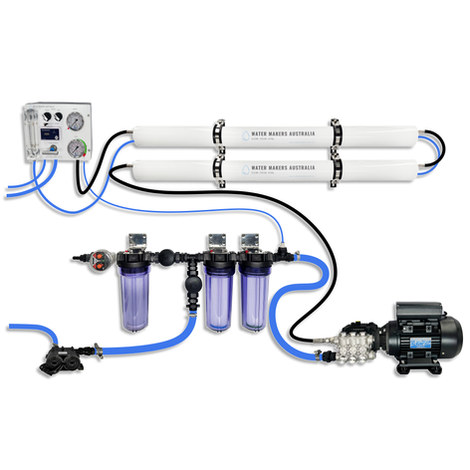
A two-membrane modular watermaker with 140 L/h nominal output, aimed at families and liveaboards that want more water per run.
Explore →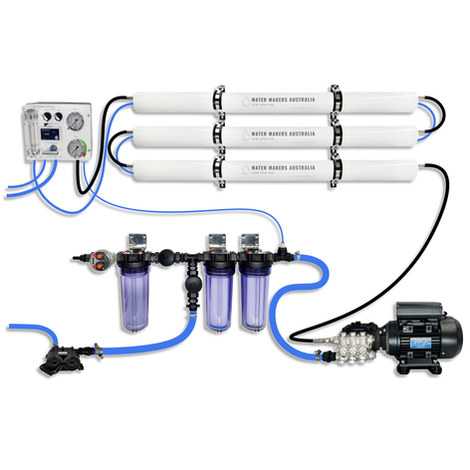
A three-membrane modular watermaker with 200 L/h nominal output and up to 240 L/h family-level marketing, for larger crews and heavy use.
Explore →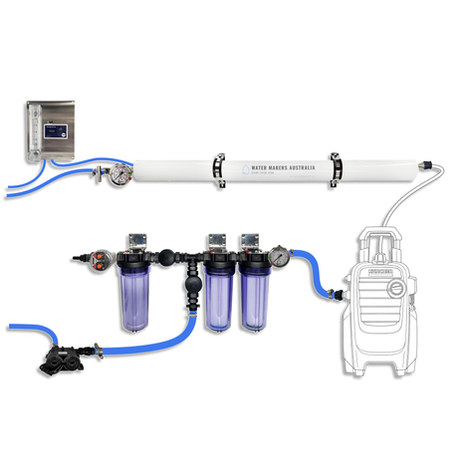
A one-membrane modular marine watermaker with 80 L/h nominal output, remote stainless control panel, standard consumables and direct Australian support.
Explore →