Loading this page…

Loading this page…
Sailing club
Bundaberg Sailing Club is a regional dinghy-focused sailing club based at Burnett Heads, beside the lower Burnett River about 20 km downstream from Bundaberg city. The club shares a precinct with Sailability Bundaberg and local dragon-boat groups, runs regular club racing on sheltered estuary waters with easy access to offshore courses, and is listed as an affiliated Australian Sailing club.
About
Bundaberg Sailing Club is a regional dinghy-focused sailing club based at Burnett Heads, beside the lower Burnett River about 20 km downstream from Bundaberg city. The club shares a precinct with Sailability Bundaberg and local dragon-boat groups, runs regular club racing on sheltered estuary waters with easy access to offshore courses, and is listed as an affiliated Australian Sailing club.
Service area: Burnett Heads / Bundaberg region (Wide Bay–Burnett), Queensland
Keep exploring
Community sailing club based at Burnett Heads, QLD offering organised sailing programs and member activities. Website available for club details and contact information.
Sail training runs deep in this club's past, even where the present-day course list is sparsely documented. The former club website spoke of a proud training tradition, and the historical record backs the claim: in an earlier era, Friday-afternoon raffles at the Club Hotel fed a Junior Boat Subsidy Committee that helped pay for new junior class boats — grassroots investment in youth sailing of the most practical kind.
The clearest current training role is as a host venue: Australian Sailing's course finder lists a Queensland Safety Boat Operator course scheduled at the club, the qualification that turns club volunteers into certified rescue-boat crews. No current Tackers program or Discover Sailing Centre accreditation is advertised, so families after structured junior instruction should ring the club for the latest position.
The most distinctive presence in the training space is a tenant rather than a club program: Sailability Bundaberg, which sails from the Burnett Heads Marina precinct on most Thursday mornings and gives people with disability time on the water — an operation the club describes as based at its home ground. Racing continues most weeks, aided by geography: with the river entrance close by, courses can be set either inside the estuary or offshore.
Between the 2023 Active Clubs grant and the club's part in the new offshore race, the trajectory is one of a small regional club still building capability. Volunteers clearly remain the engine: every element described in the record, from subsidised junior boats to safety-boat training, depends on members giving their time.
Few Queensland clubs enjoy a two-water setting as convenient as this one. The Burnett Heads site places the club beside the lower Burnett River, about twenty kilometres from Bundaberg near the port that ships the region's sugar and produce, with sheltered estuary water in one direction and open Coral Sea through the river entrance in the other. Current directories publish no street address — the spot is described simply as off the Port road — but locals know the precinct well, sitting as it does near the marina on the Harbour Esplanade side of town and shared with Sailability and the dragon boaters.
The sailing divides naturally into two playgrounds. River courses within the estuary suit weekly club racing and training in protected conditions, while the entrance gives quick passage to offshore courses along the coast, on the Hervey Bay side of the Coral Sea. Those offshore waters now carry extra significance: the 290-nautical-mile race from Brisbane, run in partnership with Royal Queensland Yacht Squadron, working alongside Bundaberg Regional Council, in 2026 and due again in June 2027, finishes here — effectively making Burnett Heads an offshore destination port, with a return bus service laid on for competitors.
Port Bundaberg's own tourism material cites the sailing club as part of the district's maritime character, and a clubhouse built where a fishing shack once stood — some of its old posts still visible near the groyne wall — matches that working-coast identity precisely. For visiting yachties the practical appeal is straightforward: a protected river, a marina precinct close at hand, and the open sea minutes away.
The paper trail reaches further back than the club itself can presently certify. Bundaberg's organised sailing was inaugurated in the 1890s and early 1900s by a Mr W. B. Mellor, though that early body had temporarily folded by 1905 — the revived rowing club then making use of the sailing shed. Newspaper archives pick the story up in the 1930s, showing an active club racing on the Burnett: a December 1932 report names Mercia, Secret, Mascot, Serious, Valencia and Mickey Too contesting President's Trophy points, and in February 1934 the opening heat of the club championship was decided over a twelve-mile course, Nettle defeating Eveleen.
The same period saw Bundaberg host a Queensland 18-footer championship won by the celebrated Aberdare. Activity continued after the war: in March 1950 the club was running mixed events and a lady-skippers' race that drew nine women to the line, sailing for Mrs Pashley's fast-time trophy. The precise founding or re-formation date of today's club isn't published. What is documented is the move: around 1982 the club shifted to its present Burnett Heads home, ground where Teddy and Freda Olsen had once kept their fishing shack.
The Olsens, who held the licence of the Club Hotel, became steadfast supporters, and their Friday-afternoon raffles financed the Junior Boat Subsidy Committee that subsidised new junior class boats. The modern chapter reads brightly: an Active Clubs grant in 2023, visits from state sailing staff, and in 2026 co-hosting the inaugural 290-mile race from Brisbane, with the next edition set down for 16 June 2027.
Batemans Bay and the Clyde River form a classic NSW South Coast cruising region where a sheltered, tidal estuary meets a short, island‑dotted entrance to the Tasman Sea. It’s distinctive for easy access from Canberra, a mix of river and bay sailing, a compact marina and mooring network, and a river entrance (the Clyde River bar) that can change rapidly. The area suits day sails, weekend cruising, trailer‑boat exploration and sheltered coastal passages; offshore or long‑passage plans require careful timing and local knowledge. Preparation for tidal flow, variable southerly swells and shallow, s

Pick a stable, simple, forgiving dinghy with a single sail or basic sloop rig, affordable handling and easy maintenance—ideally one with a local class or school nearby so you can access coaching and spare parts.
Explore →
Pick a protected bay, estuary or river reach where you can rig, launch and arrive on calm water within a short, sheltered transit; choose a site with a good ramp or jetty, clear recovery options and a nearby sailing club, marina or commercial operator for local knowledge and help.
Explore →
Late spring to summer is usually the best time for beginners to start learning to sail in Tasmania because the weather is generally warmer, days are longer and conditions are often more settled. Expect lighter to moderate winds with regular afternoon sea breees in summer, while spring and autumn bring more changeable and sometimes stronger conditions; winter is colder, wetter and typically windier with more fronts and swell.
Explore →
Plan to transit Sydney Heads and northern NSW estuary entrances to take advantage of favourable tidal streams or slack water; account for local acceleration over shoals, eddies, wind-on-current effects and river discharge, and always check the latest local observations and tide/stream products before departure.
Explore →
A practical guide for new sailors on picking the right Australian sailing club: training, boat access, racing, social fit, costs and the key questions to ask before joining.
Explore →
A practical, Australia-focused guide for planning and sailing around the Whitsunday Islands: weather and seasons, navigation and anchoring, moorings and parks, provisioning and charters, safety and common mistakes, plus checklists and next steps.
Explore →
Buying a Sailing Boat
Explore →
A practical, Australia‑focused introduction to sailing: key terms, common boat types, basic manoeuvres, where to learn, licence and club options, and planning your first trips with safety and local conditions in mind.
Explore →Burke Yachtsman Gear Bag 40L - Shop Now Zip Pay | Tamar Marine Skip to content 59 – 63 Holbrook Street, Invermay Online Shop Open 24/7 Products search Contact us 1300 MARINE $ 0.00 0 Cart Burke Yachtsman Gear Bag 40L $ 79.90 Colour Choose an option Black Blue Black Blue Clear - Burke Yachtsman Gear Bag 40L quantity + Add to cart Enquire about this product SKU BAGB-Y24/BLACK* Category Bags - Sail & Gear A Burke classic and customer favourite, the Yachtsman’s Gear Bag is built tough to handle wet, salty conditions while keeping your gear dry and protected. Made from double coated waterproof…
Explore →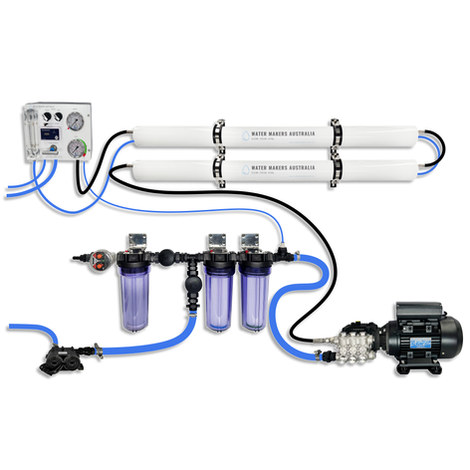
A two-membrane modular watermaker with 140 L/h nominal output, aimed at families and liveaboards that want more water per run.
Explore →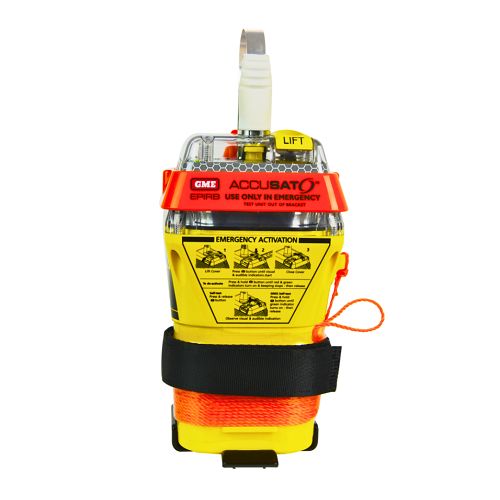
A 10‑year battery EPIRB with integrated GNSS (supports GPS and Galileo), infrared strobe and 121.5 MHz homing signal. Approved for worldwide COSPAS‑SARSAT operation.
Explore →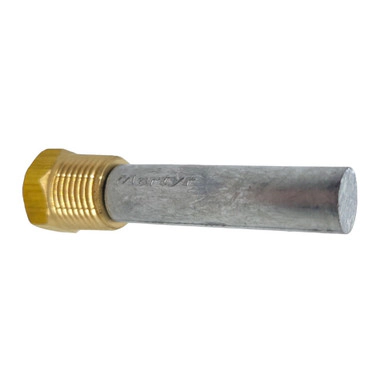
Imported from All Marine Spares. This draft has no editorial summary yet.
Explore →