Loading this page…

Loading this page…
Sailing club
Albert Park Yacht Club is an inland sailing club on Albert Park Lake (South Melbourne, VIC) offering organised sailing activities including regular Saturday club racing, monthly Discover Sailing Days, and learn-to-sail programs. The club promotes introductory and member training (Learn to Sail Level 1 and 2) and runs community sailing events.
About
Albert Park Yacht Club is an inland sailing club on Albert Park Lake (South Melbourne, VIC) offering organised sailing activities including regular Saturday club racing, monthly Discover Sailing Days, and learn-to-sail programs. The club promotes introductory and member training (Learn to Sail Level 1 and 2) and runs community sailing events.
Service area: Albert Park / South Melbourne, VIC
Keep exploring
A handful of Australian sailing clubs can point to a founding moment in the 1870s, and Albert Park Yacht Club is one of them, launched at a meeting in Melbourne's Clarendon Hotel in September 1871 with fifty members enrolled from day one. The club calls itself Victoria's oldest continuing inland yacht club, and the claim is hard to contest — only Port Phillip Yacht Club and Royal Yacht Club of Victoria have earlier origins in the state. What sets APYC apart from clubs of that vintage is the setting: not a bay or a river, but a shallow urban lake barely three kilometres from the Melbourne CBD, hemmed in by the Grand Prix circuit and a golf course.
The club that grew up on that water has always mattered beyond its own shoreline. Its early success popularised yachting so thoroughly that other clubs formed in its wake, among them the forerunners of Royal Brighton and Royal Melbourne Yacht Squadron. It shelters the very first Moth ever built, helped pioneer sailing for people with disability, opened membership to women at a reduced fee as early as 1897, and has spent a century acting, in its own words, as the lake's unofficial protector.
Today APYC is entirely volunteer-run, with 210 members recorded in 2022, roughly a third of them female, and fifteen per cent growth in 2021–22 driven overwhelmingly by sailors under eighteen. That trajectory earned the club recognition in 2022 as a national finalist in Australian Sailing's Club of the Year awards. Saturday racing is run jointly with the Albert Sailing Club next door, and the social calendar extends to live music in the clubrooms. Inner-city convenience and genuine inland sailing rarely come packaged together; here they do.
Where many clubs treat inclusion as an add-on, APYC helped invent it. The club took part in Vision Impaired Sailing back in the 1990s and went on to establish one of the country's earliest Sailability programs, modifying its clubrooms for disabled access along the way. That thread continues through a training program for women that runs across the winter months, and through City Sail, the regatta for women and girls held every September since 2016 — the 2022 edition drew 52 boats and 67 female sailors.
Community outreach is the other striking feature. Weekly sailing and leadership programs reach about 250 Year 8 pupils from the neighbouring Albert Park College; a fifteen-week course has been built for Korowa Anglican Girls' School alumni; a Mothers and Daughters program runs over a similar span; and targeted sessions are delivered with a local Scout group. The club has set out to become a social and sailing hub for the school and its neighbourhood.
The core pathway is an accredited Discover Sailing Centre offering Learn to Sail 1 and 2 on Saturday mornings under training coordinator Darryl Larcombe, backed by Discover Sailing experiences, monthly Social Sailing Sundays and a Learn to Race course. The junior calendar peaks each July with WinterSail, a regatta run since 2010 where the Minnow fleet is the biggest drawcard.
The regular class sheet runs from Optimists, Sabots and Minnows at the junior end through Mirrors, Pacers and Open Skiffs, to Solos, Impulses and Jubilees, with Moths, RS Quests, RS Aeros, Zoom 8s and every ILCA rig also on the water. Links with the Wooden Boat Association, and separately the Classic Dinghy Network, feed a growing Sunday social sailing scene.
Because Saturday racing is shared with Albert Sailing Club, results lists show both clubs' boats side by side — Sabres, RS Aeros and Zests, Pacers, scow Moths, ILCAs and Impulses all in the same fleets.
Albert Park Lake is a curious place to build a 150-year sailing tradition. The water is shallow — mostly between one and two metres — weedy in patches, and pressed on all sides by the Grand Prix circuit, the golf course and the approach roads into central Melbourne. Yet that fragility has defined the club's relationship with its home. Low water put a stop to year-round sailing back in the lagoon era; weed choked the surface in 1961 and drove the fleets off; closures returned in 1963 and in later decades. Sailing here has always meant negotiating with the lake rather than taking it for granted.
The clubhouse stands on the southern shore at Aquatic Drive, a two-storey complex extended in 1996 with boat storage, a galley, hot showers, a second hall and disabled-access upgrades. Australian Sailing's Victorian office sits practically next door at 3 Aquatic Drive. The club occupies public land and says so plainly: members recognise that the lake, in the club's phrase, "belongs to everyone", and that all comers are welcome to share it.
The view from the shore has changed beyond recognition: where a 1930s sailor looked across to the South Melbourne football ground and the mansions lining St Kilda Road and Queens Road, office towers now stand. What has not changed is the sailing itself — close-quarters dinghy racing on flat water, where shifts roll off the parkland and local knowledge counts for plenty. For Melburnians who want to race midweek or learn without a long drive to the bay, the lake's convenience is the whole point, and custodianship of this scrap of urban water is written into the club's sense of itself.
The story opens on a September evening in 1871 at the Clarendon Hotel, where fifty foundation members enrolled. Eight years later the members put up a clubhouse on the lake's north-western shore — a building the club describes as widely revered as Australia's first yacht club house in the true sense, as opposed to a boat shed. Presentation mattered to those early sailors: summer whites and winter blues, brass buttons stamped with an anchor, a navy cap carrying a gold APYC badge, gold braid for officers. In January 1897 the club opened its doors to women at half the standard subscription.
Racing milestones came steadily. The Easter Regatta joined the calendar in 1903, drawing fifteen entries and offering a ten-pound first prize — more than a fortnight's wages then. Through the 1910s the 25-footers were the glamour class on the lake, with interclub regattas against Ballarat and Colac; Joe White's Acrospire II, a Charlie Peel design from Port Melbourne, dominated that era, and her rating certificate is still held by the club. Dinghy sailing took root in 1911 through the Albert Park Boys Dinghy Club, sailing craft much like today's Minnows.
The club's most famous artefact arrived in 1944, when Moths first raced at Albert Park; the club now displays Olive, the original boat of the class, which Len Morris had built at Inverloch fifteen years earlier. September 1948 brought a schism: seven members left to found the Albert Sailing Club next door, the seed of the two-club arrangement that persists today. The clubhouse shifted to its present site in 1959, the same year the first woman joined as a full member; twelve were registered by 1962.
Norm Hammon's Frostbite Regatta of 1961 gave APYC Victoria's first regular winter program. A bitter 1961–62 campaign against a proposed bowling alley triggered a Board of Inquiry into park management — one fight in a long record of lobbying against dredging, bridges, restaurants and carparks. The 1971 centenary drew a Navy brass band and over two hundred guests, and the first 24-hour Sail-a-thon followed a year later.
Dinghy training courses, the Solo class's state championship and an Olympic sailing program run by the Victorian Institute of Sport all passed through the club in the 1990s, before a 2022 sesquicentenary marked by a commemorative book from Chris Davey.
Comprehensive sailing guide to Broughton Island (NSW) covering geography, seasonal conditions, main sailing areas, anchorages and overnight options, navigation and approach considerations, shore facilities, local hazards, regulations including marine park and national park rules, suggested sailing experiences and suitability for different sailors.

Yes — South Australian coastal waters include marine parks, aquatic reserves, harbour bylaws and local council restrictions that can affect anchoring, fishing, mooring and access; check the relevant state agencies, local councils and Notices to Mariners for location-specific rules and permit requirements.
Explore →
Local rules, marine‑park zoning and permit needs vary by reserve around South Australia’s coast — check the relevant marine park zoning map and SA Department for Environment and Water (DEW) information for the exact area before you go.
Explore →
A regular, layered maintenance routine combining hull cleaning, targeted anti-fouling management, cathodic protection and systems checks will substantially reduce marine growth and corrosion for boats kept year‑round in South Australian waters. Focus on preventing attachment and electrochemical attack, then inspect and act more often if you’re in warm, nutrient-rich or high‑traffic sheltered waters.
Explore →
Use ramps and beaches with respect for local conditions: check ramp layout, tide and swell, wind direction, vehicle access and crowding; prepare boat and crew before you launch or retrieve; and follow local signage, courtesy and safety practices. Specifics vary by ramp and beach, so confirm details for the exact site before you go.
Explore →
A practical guide for new sailors on picking the right Australian sailing club: training, boat access, racing, social fit, costs and the key questions to ask before joining.
Explore →
A practical, Australia‑focused introduction to sailing: key terms, common boat types, basic manoeuvres, where to learn, licence and club options, and planning your first trips with safety and local conditions in mind.
Explore →Practical guidance for recreational sailors in New South Wales on navigating marine parks, using moorings and anchoring responsibly. Covers how to plan passages, approach moorings, set and retrieve an anchor, minimise environmental impact and follow local rules.
Explore →A concise, practical guide for recreational sailors in New South Wales that explains southerly busters, sea breezes and east coast lows, how they form, how they affect coastal sailing, common signs to watch for, equipment and preparation, and clear next steps to plan safer outings.
Explore →Burke Yachtsman Gear Bag 40L - Shop Now Zip Pay | Tamar Marine Skip to content 59 – 63 Holbrook Street, Invermay Online Shop Open 24/7 Products search Contact us 1300 MARINE $ 0.00 0 Cart Burke Yachtsman Gear Bag 40L $ 79.90 Colour Choose an option Black Blue Black Blue Clear - Burke Yachtsman Gear Bag 40L quantity + Add to cart Enquire about this product SKU BAGB-Y24/BLACK* Category Bags - Sail & Gear A Burke classic and customer favourite, the Yachtsman’s Gear Bag is built tough to handle wet, salty conditions while keeping your gear dry and protected. Made from double coated waterproof…
Explore →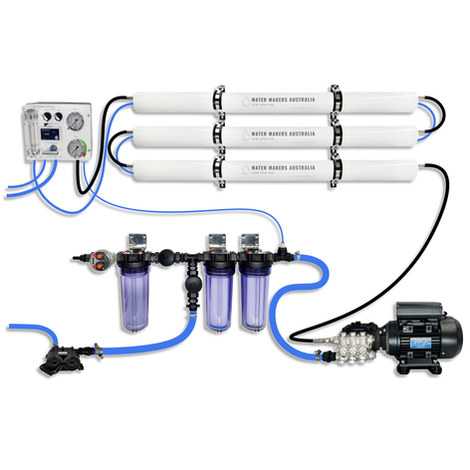
A three-membrane modular watermaker with 200 L/h nominal output and up to 240 L/h family-level marketing, for larger crews and heavy use.
Explore →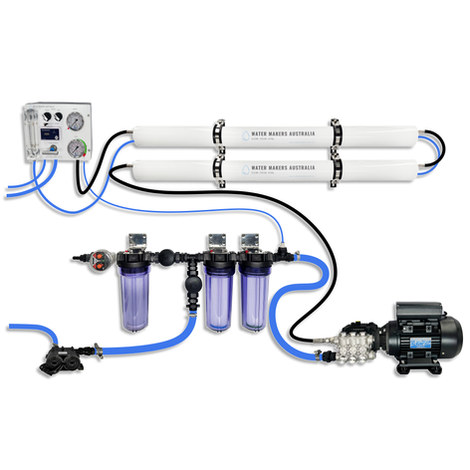
A two-membrane modular watermaker with 140 L/h nominal output, aimed at families and liveaboards that want more water per run.
Explore →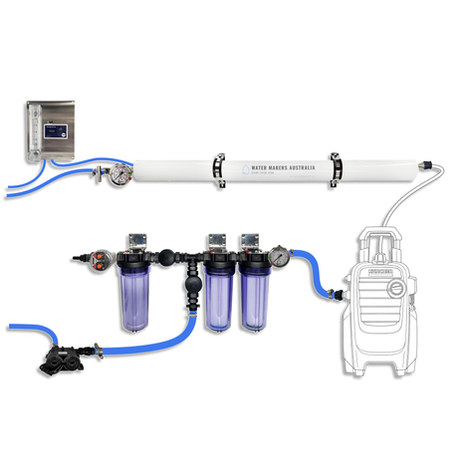
A one-membrane modular marine watermaker with 80 L/h nominal output, remote stainless control panel, standard consumables and direct Australian support.
Explore →