Loading this page…

Loading this page…
Sailing club
Apollo Bay Sailing Club (ABSC) is a community sailing club in Apollo Bay, VIC that runs organised sailing activities for a wide range of ages and abilities. The club holds weekly racing (November–April) for keelboats, Flying Fifteens and dinghies, supports an active cruising membership, and runs learn-to-sail programs including Tackers, Green Fleet, adult small-boat handling and Flying Fifteen introductory/intermediate sessions.
About
Apollo Bay Sailing Club (ABSC) is a community sailing club in Apollo Bay, VIC that runs organised sailing activities for a wide range of ages and abilities. The club holds weekly racing (November–April) for keelboats, Flying Fifteens and dinghies, supports an active cruising membership, and runs learn-to-sail programs including Tackers, Green Fleet, adult small-boat handling and Flying Fifteen introductory/intermediate sessions.
Service area: Apollo Bay, VIC
Keep exploring
Sailing on the edge of the Southern Ocean demands a certain seriousness, but Apollo Bay Sailing Club pairs it with an open door. This small club on the Great Ocean Road supports sailing at every level in and around the bay, and it states plainly that all ages, genders, cultural backgrounds and abilities are welcome — experience and boat ownership optional. It acknowledges Gadubanud country in its formal acknowledgement of country, and junior members hold a seat on the committee, which gathers monthly at 7:30pm on the second Tuesday.
The club's claim to wider fame is its keelboat centrepiece: Flying Fifteen International's Victorian branch counts Apollo Bay's as one of the largest Classic Flying Fifteen fleets anywhere in the world. The twenty-foot keelboat, a 1947 Uffa Fox design, thrives in the bay's demanding water, and on a typical Saturday the fleet numbers between four and eight of them alongside a handful of keelboats and a couple of dinghies, with numbers swelling through December and January. An active cruising membership runs alongside the racers, so the club's boats are as likely to be heading out for a quiet bay sail as rounding marks.
Community infrastructure matters here. The clubhouse at Apollo Bay Harbour doubles as a local events venue — it has hosted Winter Wild festival sessions at its Breakwater Road address — and the club is raising money through the Australian Sports Foundation for a dedicated facility to store its equipment, particularly the duty boats essential to race management, training and support work on the water. It is a club doing a lot with a little, in one of the more spectacular settings in Victorian sailing.
The recent establishment of a Discover Sailing Centre marks a new chapter for Apollo Bay, and the Flying Fifteen is woven directly into the teaching program in a way few clubs can match. Alongside junior learn-to-sail, the 2025–26 season offers introductory and intermediate sessions in the classic keelboat itself, giving newer sailors a rare chance to learn crewing and boat handling on a thoroughbred rather than only in dinghies. Adult small-boat handling sessions round out the menu, and the pathway includes Green Fleet for juniors moving from instruction into their first racing.
The weekly engine room is Friday night. From mid-October, learn-to-sail sessions run from 4pm to 7pm, coordinated week to week through a WhatsApp group, with a season fee of just $120 — deliberately cheap entry in a small coastal town where the club's stated aim is participation regardless of background or boat ownership. The club also frames its programs around access for people of all abilities.
Saturday is race day, and the format is genuinely mixed-ability: weekly racing is open to everyone from beginners to seasoned sailors, with Pacers among the dinghies raced and the Flying Fifteens forming the core fleet. Numbers build through the holiday months as visiting sailors swell the town. Because race management, training and on-water support all depend on the club's duty boats, the current fundraising campaign for proper equipment storage is directly tied to the training program's future.
A weekly "Tell Tales" newsletter keeps members across the calendar through the season. For a small club, it is an impressively complete pathway — Friday instruction, Saturday racing, and a classic keelboat fleet waiting at the top end to give graduates somewhere serious to aim.
Apollo Bay sits on the open curve of coast where the Great Ocean Road swings past the Otways, and the sailing water here is Bass Strait in no uncertain terms. The club describes a range that runs from peaceful bay cruising to adrenaline-charged racing in 25-knot winds, and the Flying Fifteen class association is blunter, warning of Bass Strait's "fickle nature" and its "sometimes massive swells". This is not sheltered-bay sailing dressed up as ocean work; when the swell stands up, Apollo Bay delivers the genuine article, which is precisely why the Flying Fifteen — a keelboat built for exactly these conditions — has found such a strong home here.
The club is based inside Apollo Bay Harbour, the small working port at the bay's eastern end, with the clubhouse near the boat ramp at 10 Breakwater Road. The harbour offers protected launching via its ramp, plus a hardstand area, and the port authority notes that the club's clubhouse and trailer-yacht storage sit on site alongside the public ramp and landing jetty. That harbour shelter matters: it gives the fleet a protected base from which to choose its conditions, whether that means a mild evening sail inside the bay or a full-tilt race in fresh ocean air.
The class association bills Apollo Bay as mainland Australia's most southerly village — a claim worth taking as promotional colour rather than surveyed fact — but the underlying point stands. This is deep-south sailing, on a coast where weather arrives off the Southern Ocean with little warning, and the after-race culture of "beer and banter" noted by the Flying Fifteen fleet is the time-honoured way sailors debrief a hard day on serious water.
The honest starting point for Apollo Bay's history is that its early chapters are not publicly recorded. No founding year, founders' names or written club history could be located on the club's own site, in local news archives or through class association pages, so any account has to be built from what can be verified in the present and recent past.
What is documented is a club that has become a fixture at the Port of Apollo Bay. The port authority records the club's base at the harbour, with a clubhouse and storage for trailered yachts, running a summer race program. The club has also made itself part of the wider ocean-racing calendar: when the Ocean Racing Club of Victoria's Melbourne to Apollo Bay race finishes in the bay, the sailing club provides the destination hospitality, with club spokesman Paul Cannon featuring in coverage of the 2019 edition. Welcoming an offshore fleet across Bass Strait is a natural role for a club that sails this coast every week.
The Flying Fifteen connection provides the strongest thread of documented competitive history. The class association's Victorian branch counts Apollo Bay among the world's great strongholds of the Classic Flying Fifteen, a status that takes decades of fleet-building to achieve and speaks to a long commitment to the boat. More recently the club has invested in its future: establishing a Discover Sailing Centre, expanding its learn-to-sail offering for the 2025–26 season, and mounting an Australian Sports Foundation campaign to fund a proper home for the duty boats that underpin its racing and training.
The founding story may be missing from the record, but the club's trajectory — from fishing-port sailing base to a small harbour club with international class recognition — is well evidenced.
Batemans Bay and the Clyde River form a classic NSW South Coast cruising region where a sheltered, tidal estuary meets a short, island‑dotted entrance to the Tasman Sea. It’s distinctive for easy access from Canberra, a mix of river and bay sailing, a compact marina and mooring network, and a river entrance (the Clyde River bar) that can change rapidly. The area suits day sails, weekend cruising, trailer‑boat exploration and sheltered coastal passages; offshore or long‑passage plans require careful timing and local knowledge. Preparation for tidal flow, variable southerly swells and shallow, s

Expect very different seasonal systems across Western Australia: the south‑west (Perth to Albany) has a strong summer afternoon sea breeze (the “Fremantle Doctor”) and winter westerly fronts, while northern WA follows a wet/dry monsoonal cycle with strong seasonal onshore winds, thunderstorms and cyclone risk in the wet season. Local headlands, estuaries and tidal flows often change what you actually feel on the water, so learn the local timing and sheltered venues first.
Explore →
Pick a stable, simple, forgiving dinghy with a single sail or basic sloop rig, affordable handling and easy maintenance—ideally one with a local class or school nearby so you can access coaching and spare parts.
Explore →
Pick a protected bay, estuary or river reach where you can rig, launch and arrive on calm water within a short, sheltered transit; choose a site with a good ramp or jetty, clear recovery options and a nearby sailing club, marina or commercial operator for local knowledge and help.
Explore →
Late spring to summer is usually the best time for beginners to start learning to sail in Tasmania because the weather is generally warmer, days are longer and conditions are often more settled. Expect lighter to moderate winds with regular afternoon sea breees in summer, while spring and autumn bring more changeable and sometimes stronger conditions; winter is colder, wetter and typically windier with more fronts and swell.
Explore →
A practical guide for new sailors on picking the right Australian sailing club: training, boat access, racing, social fit, costs and the key questions to ask before joining.
Explore →A concise, practical introduction to the essential parts of a recreational sailing boat for beginners in Australia. Covers hull, deck, rigging, sails, steering, below-decks spaces and safety equipment, with simple explanations, common mistakes and a pre-decast checklist to help new sailors communicate and get underway.
Explore →A practical guide for recreational sailors planning passages to, from or around Eden and Twofold Bay. Covers sheltered anchorages, shore facilities, local weather and tidal considerations, preparing for Bass Strait conditions and a focused equipment and safety checklist.
Explore →A practical guide for recreational sailors planning voyages to Esperance and the Recherche Archipelago: what to expect, key planning considerations, common anchorages, safety and communications, equipment recommendations and sensible steps for a successful trip in this remote southern WA cruising area.
Explore →Burke Yachtsman Gear Bag 40L - Shop Now Zip Pay | Tamar Marine Skip to content 59 – 63 Holbrook Street, Invermay Online Shop Open 24/7 Products search Contact us 1300 MARINE $ 0.00 0 Cart Burke Yachtsman Gear Bag 40L $ 79.90 Colour Choose an option Black Blue Black Blue Clear - Burke Yachtsman Gear Bag 40L quantity + Add to cart Enquire about this product SKU BAGB-Y24/BLACK* Category Bags - Sail & Gear A Burke classic and customer favourite, the Yachtsman’s Gear Bag is built tough to handle wet, salty conditions while keeping your gear dry and protected. Made from double coated waterproof…
Explore →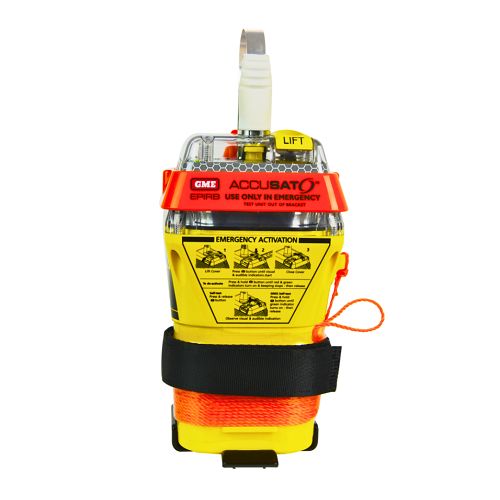
A 10‑year battery EPIRB with integrated GNSS (supports GPS and Galileo), infrared strobe and 121.5 MHz homing signal. Approved for worldwide COSPAS‑SARSAT operation.
Explore →
Self-contained, battery-powered plug‑and‑play autopilot designed for standard hydraulic steering systems.
Explore →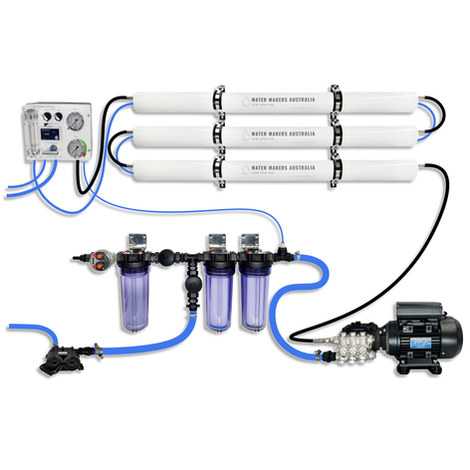
A three-membrane modular watermaker with 200 L/h nominal output and up to 240 L/h family-level marketing, for larger crews and heavy use.
Explore →