Loading this page…

Loading this page…
Sailing club
Albert Sailing Club is a community-based sailing club on Albert Park Lake (South Melbourne, VIC) that supports dinghy sailing year-round. The club offers membership options for adults, youth, juniors and families, runs regular club sailing (most Saturdays, some Sundays and midweeks), and promotes Learn to Sail / Discover Sailing programs. Clubrooms open from 10am on Saturdays; club sailing days are typically 10:00–13:00. Secure undercover boat storage is available to members. Contact details listed on the site include an email (membership@albertsc.org.au) and phone (03 9690 2374). The club posts race schedules, weekly news updates and guidance for visitors.
About
Albert Sailing Club is a community-based sailing club on Albert Park Lake (South Melbourne, VIC) that supports dinghy sailing year-round. The club offers membership options for adults, youth, juniors and families, runs regular club sailing (most Saturdays, some Sundays and midweeks), and promotes Learn to Sail / Discover Sailing programs. Clubrooms open from 10am on Saturdays; club sailing days are typically 10:00–13:00. Secure undercover boat storage is available to members. Contact details listed on the site include an email (membership@albertsc.org.au) and phone (03 9690 2374). The club posts race schedules, weekly news updates and guidance for visitors.
Service area: Albert Park Lake, South Melbourne, VIC
Keep exploring
On the northern shore of Albert Park Lake stands a club born, in a sense, from a marriage: in 1948, with the neighbouring Albert Park Yacht Club refusing to admit women, Bill Hooper helped establish a new club next door so that he could race alongside his wife. That beginning — described in one account as both controversial and progressive — set the tone for everything since. Where APYC carried nineteenth-century tradition, the Albert Sailing Club built its name as, in the tag long attached to it, The Famous Nursery Club, a place geared deliberately toward young sailors, families and newcomers to the sport.
The nursery label is not marketing. Tom King learned to sail on this water and grew into a world champion here before taking Finn gold at the Sydney 2000 Olympics; OK dinghy world champion Peter Milne came through the same club, and Albert sailors collected multiple Mirror world titles. For a small community club on a shallow city lake, that is a serious production line.
ASC is community-based and family-oriented, promoting dinghy sailing across ages, genders and experience levels, and it publicly commits to Child Safe Organisation standards. Boats go out most Saturdays all year, with Sunday and midweek additions through the warmer months, and sailors from other clubs are welcomed into the fleet over winter under a long-standing associate arrangement. A weekly newsletter, a busy social calendar and a clubhouse bar that opens after racing keep the place humming. The relationship with APYC next door — once a schism — is now a working partnership, with Saturday racing managed jointly in what Australian Sailing called a great spirit of cooperation.
The program that best captures ASC's nursery character is the Victorian Optimist Association winter training block it hosts from June to mid-September. Sunday afternoons bring more than forty juniors from clubs across Victoria to the lake, while a non-competitive green fleet in club-owned Ozi Opti boats gives newer kids a pressure-free way in. Arrangements like this quietly feed the whole state's junior pipeline.
Beyond it, the club operates as an accredited Australian Sailing Training Centre, running courses of its own and working alongside the Australian Sailing Boatshed operation next door. Beginners start in the club's own training dinghies, modern RS Zests among them, and the calendar includes a spring public open day under the Discover Sailing banner followed by spring learn-to-sail courses. In season, Saturday mornings pair informal racing and casual sailing with Better Sailing coaching, so improvement and competition sit side by side, and junior development flows through club and class association coaching rather than a single rigid ladder.
The racing fleet shows the depth that flow creates. Recent Summer Championship sheets list ILCA 6 and 7 divisions, OKs, RS Aeros in two rigs, Fireballs, scow Moths, an eighteen-boat Impulse fleet, Sabres and Pacers, with RS Zests, Zoom 8s and Optimists covering the juniors — plus wooden Heron, Sabre, Impulse and Pacer boats still campaigned by members. The event calendar is anchored by the Bill Hooper Series honouring the first Commodore, a Winter Regatta run over two days each June that drew about eighty boats in 2018, Saturday series across spring and summer, and January's short-course racing.
The ceiling is high: the club's RS Quest junior team won the 2022 Stonehaven Cup, Australia's 18-foot skiff teams racing trophy, proof the nursery still grows sailors who can take on anyone.
The club bills Albert Park Lake as Melbourne's safest and most convenient sailing spot, and for dinghy sailing the case is strong: a shallow urban sheet of water, one to two metres deep in most parts, sitting beside the Grand Prix circuit a few kilometres from the CBD. Flat water, no tides, no traffic to speak of, shorelines close enough that a capsize is an inconvenience rather than an emergency — precisely the environment a nursery club wants.
The lake does have a temper. Weed growth has shut it down repeatedly — 1961 and 1963 were bad years, with closures stretching into the 1980s — and water levels have swung enough over the decades to change how and when the club could sail. Older members still recall towing boats to Sandringham or Port Melbourne when the lake closed, so the convenience of home water is never taken for granted.
The clubhouse at 1 Aquatic Drive is well appointed for a volunteer-run dinghy club: a balcony looking over the lake, grassed rigging areas, secure undercover boat racking at what the club calls very reasonable rates, rescue craft, a fleet of sailing school boats, change rooms with hot showers, a canteen, a barbecue area and a bar that opens once racing is done. Member and visitor parking sits in the Albert Park Reserve directly behind the building.
On Saturday sailing days the doors open from ten in the morning, and late morning is the club's nominated window for prospective members to drop in, watch the fleets rig and get a feel for the place. Of the many clubs and boat businesses that lined the lake in the 1950s, only ASC, its neighbour APYC and the 1st Victorian Sea Scouts remain.
Seven men met on 15 September 1948 intending to form their own club on Albert Park Lake — Ramon Horsfield and Harry Miller among them, with Peter Casdorf, Nev Argaet and Kevin Thompson completing the group, and Bill Hooper the driving hand. They were dissatisfied with how APYC was run, and Hooper had his own reason: he wanted to sail with his wife. The gathering took place upstairs in the sail loft of the Hooper family's Jolly Roger hire-boat shed at the lake's northern end. The first race followed on 25 September, a pound-a-head winner-take-all affair whose prizes included a two-pound box of chocolates, a hundred cigarettes and a bottle of gin.
March 1949 brought the election of Bill Hooper as Commodore, with Dern Langlands taking the presidency; Jill Langlands, Louise Neeson and Marjorie Drew signed on as the first female sailing members, and Sue Hooper finished second in the inaugural Ladies' Race, sailed on Easter Sunday that year. The club even created its own class, The Albert, mating a Benson & Shaw Beaver hull to a VJ rig.
The 1950s fleet was wooden Gwen 12s, Sabots, Moths, VJs and Beavers; power and running water reached the shed in 1951, and members largely built the original brick clubhouse themselves from 1954. In 1959 the old MGS Rowing Shed became ASC's second clubhouse, and membership climbed to 83 with about twenty starters most weekends while rival clubs shrank.
The OK class arrived in May 1960 — member Walter Chapman called it a bloke's boat — and Peter Milne would later take an OK world title. Weed forced a hundred sailors off the lake in 1961, Sandringham Yacht Club hosting the fleet; closures in 1963 pushed ASC into combined operations with APYC from Port Melbourne's old building. Charlie Cass's 1964 proposal for a cheap winter membership for sailors of other clubs survives today as the Winter Associate category.
The 1970s brought Sabres and Impulses, then came the Mirror years: Albert sailors dominated state and national titles through the seventies and eighties, culminating in Tom King's 1991 Mirror world championship before his Olympic Finn gold in 2000. Membership peaked at 350 in 1981, an $81,000 rebuild added change rooms and a race control tower in 1982, and September 2018 saw seventy years marked with a dinner in the clubrooms — the nursery grown old, but still growing sailors.
Batemans Bay and the Clyde River form a classic NSW South Coast cruising region where a sheltered, tidal estuary meets a short, island‑dotted entrance to the Tasman Sea. It’s distinctive for easy access from Canberra, a mix of river and bay sailing, a compact marina and mooring network, and a river entrance (the Clyde River bar) that can change rapidly. The area suits day sails, weekend cruising, trailer‑boat exploration and sheltered coastal passages; offshore or long‑passage plans require careful timing and local knowledge. Preparation for tidal flow, variable southerly swells and shallow, s

A regular, layered maintenance routine combining hull cleaning, targeted anti-fouling management, cathodic protection and systems checks will substantially reduce marine growth and corrosion for boats kept year‑round in South Australian waters. Focus on preventing attachment and electrochemical attack, then inspect and act more often if you’re in warm, nutrient-rich or high‑traffic sheltered waters.
Explore →
Treat Tasmanian waters as cold year-round: prevent immersion where possible, wear appropriate layers and a lifejacket, carry reliable distress equipment, and have clear procedures to recover and rewarm anyone who gets wet.
Explore →
Yes — South Australian coastal waters include marine parks, aquatic reserves, harbour bylaws and local council restrictions that can affect anchoring, fishing, mooring and access; check the relevant state agencies, local councils and Notices to Mariners for location-specific rules and permit requirements.
Explore →
Local rules, marine‑park zoning and permit needs vary by reserve around South Australia’s coast — check the relevant marine park zoning map and SA Department for Environment and Water (DEW) information for the exact area before you go.
Explore →Practical guide for recreational sailors planning passage on the Hawkesbury River: how to plan around tides, choose anchorages, read local conditions and prepare the boat and crew for a safe, comfortable trip.
Explore →A practical guide for recreational sailors planning day sails or short cruises on Lake Macquarie. Covers the entrance, navigation considerations, popular anchorages, local weather and tide influences, mooring etiquette, safety checks and suggested itineraries around the lake.
Explore →
A practical guide for new sailors on picking the right Australian sailing club: training, boat access, racing, social fit, costs and the key questions to ask before joining.
Explore →A practical guide for recreational sailors planning day sails or short cruises around Batemans Bay, Broulee and the Clyde River. Covers local conditions, safe approaches, anchorages, launching, tides, common hazards, and checklists for trip planning and on-water decisions.
Explore →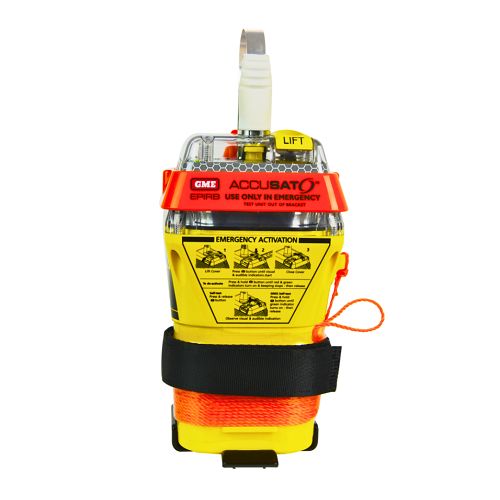
A 10‑year battery EPIRB with integrated GNSS (supports GPS and Galileo), infrared strobe and 121.5 MHz homing signal. Approved for worldwide COSPAS‑SARSAT operation.
Explore →Burke Yachtsman Gear Bag 40L - Shop Now Zip Pay | Tamar Marine Skip to content 59 – 63 Holbrook Street, Invermay Online Shop Open 24/7 Products search Contact us 1300 MARINE $ 0.00 0 Cart Burke Yachtsman Gear Bag 40L $ 79.90 Colour Choose an option Black Blue Black Blue Clear - Burke Yachtsman Gear Bag 40L quantity + Add to cart Enquire about this product SKU BAGB-Y24/BLACK* Category Bags - Sail & Gear A Burke classic and customer favourite, the Yachtsman’s Gear Bag is built tough to handle wet, salty conditions while keeping your gear dry and protected. Made from double coated waterproof…
Explore →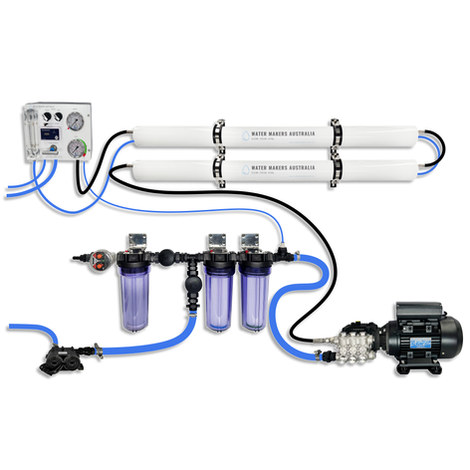
A two-membrane modular watermaker with 140 L/h nominal output, aimed at families and liveaboards that want more water per run.
Explore →
Self-contained, battery-powered plug‑and‑play autopilot designed for standard hydraulic steering systems.
Explore →