Loading this page…

Loading this page…
Sailing club
Altona Yacht Club is a community sailing club in Seaholme, Victoria. The club runs organised sailing programs and events and offers learn-to-sail courses for children and adults (including junior and intermediate squads), lease boats, and a Sail Pass program. Clubhouse facilities include a canteen, bar, members lounge, function facilities, observation lounge & deck, race control tower and hot showers. The site also references boat storage and a grassed rigging area with wash-down water; members use public ramps nearby for larger safety boats.
About
Altona Yacht Club is a community sailing club in Seaholme, Victoria. The club runs organised sailing programs and events and offers learn-to-sail courses for children and adults (including junior and intermediate squads), lease boats, and a Sail Pass program. Clubhouse facilities include a canteen, bar, members lounge, function facilities, observation lounge & deck, race control tower and hot showers. The site also references boat storage and a grassed rigging area with wash-down water; members use public ramps nearby for larger safety boats.
Service area: Seaholme, VIC
Keep exploring
Catamarans are the headline act at Altona Yacht Club, a volunteer-run dinghy and multihull club on the western shore of Port Phillip at Seaholme. There is no keelboat fleet here and no marina; boats are rigged on the grass at Cresser Reserve and wheeled straight across the sand into Altona Bay, which keeps the club's feet planted firmly in the off-the-beach tradition. That focus has made Altona a favoured venue for national and state title racing, particularly for the Arrow and Mosquito catamaran classes and the Impulse dinghy.
In recent seasons the club has run the combined 58th Arrow and 52nd Mosquito Australian Championships, a multi-day combined regatta that put more than 45 boats on the water off Altona Beach, along with the 40th Impulse nationals and Zoom8 state titles.
The membership is drawn mostly from Melbourne's western suburbs, and the club runs entirely on volunteer labour, from race officers in the tower to the people who built the clubhouse itself. Family involvement has been policy since the club's earliest days, and it remains the organising idea behind everything Altona does — its stated mission centres on active member participation, promoting sailing locally and keeping the place viable for the next generation.
A Victorian Government local-history grant citation went further, describing Altona as a nationally recognised training centre that produced top-level sailors from working-class, post-war beginnings. It is a club that measures itself less by silverware than by how many families are on the water each Saturday — though the silverware, accumulated across seven decades of championship hosting, is considerable all the same.
Rather than simply running the national junior pathway end to end, Altona has shaped its own follow-on step for young sailors. The club delivers Tackers 1 and 2 in eight-week blocks twice a year — October to December and again February to April, with occasional school-holiday courses — but deliberately skips Tackers 3, preferring a club-designed program that feeds graduates into Green Fleet racing. Tackers costs $325 per child, with a 25 per cent discount for siblings, a pricing structure that tells you plenty about the family-first ethos.
From there the pathway opens out in several directions. A Junior and Intermediate Squad keeps teenagers progressing, adults can start from scratch or brush up through dedicated beginner and improver options, and club lease boats remove the biggest barrier for newcomers who don't yet own a hull. The fleet mix is unusually broad for a single club: Lasers, Sabres, Tasars, Pacers and Impulse dinghies share the start line with Arrow, Mosquito and Hobie catamarans, while Zoom8s carry the junior load.
Club racing runs Saturday afternoons from 2:00pm, October through May, with multi-class handicap divisions that let dinghies and cats race in the same start — a practical arrangement that maximises fleet size and gives developing sailors a regular benchmark against quicker boats. Because the club so frequently hosts national and state championships, members also get repeated exposure to championship-level race management, protest rooms and big-fleet starts without leaving their own beach. For a sailor graduating from Green Fleet, that home-water advantage in major regattas is a genuine development asset, and it helps explain why the club's training reputation extends well beyond the western suburbs.
Altona's address is W.G. Cresser Reserve on Beach Street, Seaholme, fronting Altona Bay, a gentle indentation on Port Phillip's north-western shoreline. The setup is classic off-the-beach: rigging happens on the reserve, and hulls go straight down the sand. The club maintains that launching and retrieval is safe in all wind directions and nearly all wind strengths for beach boats and trailerables, with a protected harbour close by, which is a large part of why national-class associations keep choosing the venue for their titles.
The race course sits directly in front of the clubhouse, and this stretch of Port Phillip's western shoreline has a personality of its own. Summer sea breezes build across a long fetch and can serve up genuinely lively conditions — short, steep chop and pressure that rewards boats that plane readily. That suits fast catamarans and the livelier dinghy classes, and it explains the fleet mix that has gravitated here over the decades. Lighter mornings give learners and juniors kinder water before the afternoon breeze fills in.
Spectating is unusually good. A first-floor observation room looks across the entire course area, with the Melbourne city skyline rising across the bay as a backdrop, and it sits alongside the race control tower, so officials and onlookers share the same vantage point. For parents watching a child's first Green Fleet race, or for a race officer managing 45-plus catamarans at a national championship, that clear line of sight over the whole track is more than a nicety — it is part of what makes the venue work at both ends of the skill spectrum.
Altona Yacht Club dates from 1953, when local residents moved to organise the young people already sailing informally at Altona into a properly supervised club. The local historical society credits British migrants with driving the formation toward the end of that year, with cycle shop owner Fred Manning named as the man behind the idea; the first members built Cadets to Jack Holt's design, graduating later to Hornets. The migrant thread matters: at the 1961 census, 43 per cent of Altona's residents were born overseas, against 24 per cent for Melbourne as a whole, and the club's family-membership policy — unusual at the time — was baked in from the start.
Progress was slow at first. For six years the club had no clubrooms and nowhere to store boats, until Altona City Council helped it secure a permanent home at Cresser Reserve. Work on a clubhouse began in 1959, the first stage was finished in 1961, and members did the building themselves — a pattern of self-help that has characterised the club ever since.
In 2007–08 the club received a $4,400 Local History Grant from Public Record Office Victoria to produce "A History of Community Sailing by Ancient Mariners", a book capturing founding members' anecdotes. The grant citation described Altona as a nationally recognised training centre that had lifted sailors from working-class post-war roots to the highest level of the sport. That legacy is still visible in the present: recent seasons have seen the club host the combined 58th Arrow and 52nd Mosquito Australian Championships, the 40th Impulse national title and Zoom8 state titles, all run by volunteers off the same stretch of sand where Fred Manning's Cadets first launched.
Ashmore Reef is a remote, uninhabited oceanic reef and low-lying island group in the Timor Sea that offers a stark, conservation-led sailing environment rather than typical recreational cruising. It is distinctive for its exposed coral reef, vegetated sand islands and strong legal protections, including tightly controlled access and traditional Indonesian fishing arrangements. Visiting from a recreational yacht is logistically challenging, subject to regulatory limits, and suited only to well-prepared offshore passages or research/management charters rather than casual day sails.

Look for a friendly club with beginner-focused training, accessible facilities and boats, a supportive community, clear safety practices, and opportunities to progress at your own pace.
Explore →
Late spring to summer is usually the best time for beginners to start learning to sail in Tasmania because the weather is generally warmer, days are longer and conditions are often more settled. Expect lighter to moderate winds with regular afternoon sea breees in summer, while spring and autumn bring more changeable and sometimes stronger conditions; winter is colder, wetter and typically windier with more fronts and swell.
Explore →
Expect very different seasonal systems across Western Australia: the south‑west (Perth to Albany) has a strong summer afternoon sea breeze (the “Fremantle Doctor”) and winter westerly fronts, while northern WA follows a wet/dry monsoonal cycle with strong seasonal onshore winds, thunderstorms and cyclone risk in the wet season. Local headlands, estuaries and tidal flows often change what you actually feel on the water, so learn the local timing and sheltered venues first.
Explore →
Pick a stable, simple, forgiving dinghy with a single sail or basic sloop rig, affordable handling and easy maintenance—ideally one with a local class or school nearby so you can access coaching and spare parts.
Explore →
A concise, practical guide to the points of sail and how to trim sails effectively for common Australian conditions. Learn the basics of wind angles, sail shape, telltales, reefing considerations and simple steps to improve boat speed and balance.
Explore →
A practical guide for new sailors on picking the right Australian sailing club: training, boat access, racing, social fit, costs and the key questions to ask before joining.
Explore →A practical guide for recreational sailors planning voyages to Esperance and the Recherche Archipelago: what to expect, key planning considerations, common anchorages, safety and communications, equipment recommendations and sensible steps for a successful trip in this remote southern WA cruising area.
Explore →A practical guide for recreational sailors planning visits to Albany and King George Sound. Covers the main anchorage areas, typical local weather patterns, tidal and current considerations, navigational hazards, on-the-water etiquette and a pre-departure checklist to help you plan a safe passage and enjoyable stopover
Explore →Burke Yachtsman Gear Bag 40L - Shop Now Zip Pay | Tamar Marine Skip to content 59 – 63 Holbrook Street, Invermay Online Shop Open 24/7 Products search Contact us 1300 MARINE $ 0.00 0 Cart Burke Yachtsman Gear Bag 40L $ 79.90 Colour Choose an option Black Blue Black Blue Clear - Burke Yachtsman Gear Bag 40L quantity + Add to cart Enquire about this product SKU BAGB-Y24/BLACK* Category Bags - Sail & Gear A Burke classic and customer favourite, the Yachtsman’s Gear Bag is built tough to handle wet, salty conditions while keeping your gear dry and protected. Made from double coated waterproof…
Explore →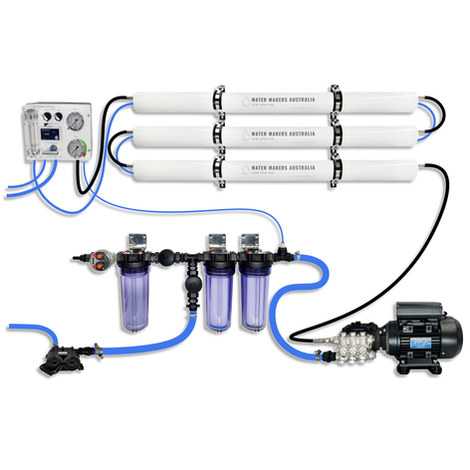
A three-membrane modular watermaker with 200 L/h nominal output and up to 240 L/h family-level marketing, for larger crews and heavy use.
Explore →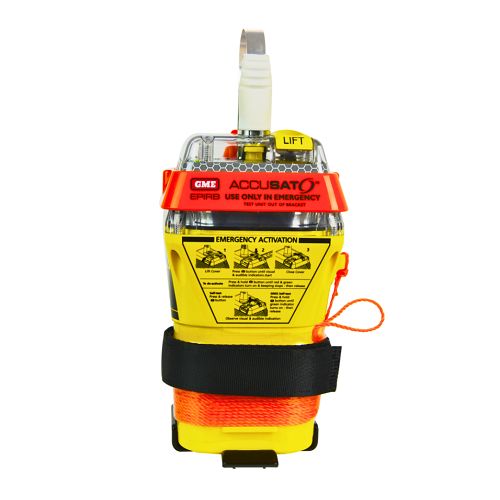
A 10‑year battery EPIRB with integrated GNSS (supports GPS and Galileo), infrared strobe and 121.5 MHz homing signal. Approved for worldwide COSPAS‑SARSAT operation.
Explore →
Self-contained, battery-powered plug‑and‑play autopilot designed for standard hydraulic steering systems.
Explore →