Loading this page…

Loading this page…
Sailing club
Ballarat Yacht Club is a family-oriented sailing club based on the southern foreshore of Lake Wendouree in Ballarat, Victoria. The club runs an organised sailing season (October–May, with a winter series), hosts racing and events, offers junior and Learn to Sail programs (including Tackers and youth coaching), and maintains a clubhouse with social facilities. The club web pages also reference jetties, moorings/pens and a boatyard/storage and note volunteer-led improvements to club facilities and infrastructure.
About
Ballarat Yacht Club is a family-oriented sailing club based on the southern foreshore of Lake Wendouree in Ballarat, Victoria. The club runs an organised sailing season (October–May, with a winter series), hosts racing and events, offers junior and Learn to Sail programs (including Tackers and youth coaching), and maintains a clubhouse with social facilities. The club web pages also reference jetties, moorings/pens and a boatyard/storage and note volunteer-led improvements to club facilities and infrastructure.
Service area: Ballarat (Lake Wendouree), VIC
Keep exploring
Few Australian clubs can point to a starting date in the 1870s, and fewer still sail on a shallow goldfields lake a hundred kilometres from the sea. Ballarat Yacht Club, founded in May 1877, has spent nearly a century and a half on the southern shore of Lake Wendouree, and it approaches its 150th year in 2027 with clubhouse improvements on the drawing board. It is a family club in the truest sense — the club itself notes that sailing at Wendouree is often enjoyed across generations, with grandparents, parents and children sharing the same water.
The lake has shaped a distinctive racing pedigree. Wendouree's variable, shifting breezes are notoriously tricky, and the club credits them with sharpening generations of sailors, including champions and juniors who carried their lake-honed skills into the wider yachting world. That racing tradition runs through everything: pennant race days are fixtures on the City of Ballarat's lake event schedule, and the club hosted the Hansa Nationals over the whole lake in April 2026.
The clubhouse holds a surprise for non-sailors. It houses the Ballarat Yacht Club Cafe — locals simply call it "The Yachty" — a long-standing lakeside institution in its own right. Volunteers are the club's engine — race management and safety crews report to the tower at noon on race days — and the club invests in them directly, paying for marine-licensed members to complete the Australian Sailing Powerboat Handling course. Between the sailing, the cafe and the lake's heritage-listed surrounds, this is one of regional Victoria's more distinctive sporting addresses.
Windsurfing is the program that sets Ballarat apart from most inland clubs. Alongside conventional dinghy instruction, the club offers Windsurfer LT lessons and demo days, giving members a second discipline on a lake whose variable airs reward adaptable sailors. It fits neatly with the club's broad class spread, which takes in the ILCA, Optimist, Sabre, Pacer, Impulse, Sharpie, Jubilee, Hansa and Windsurfer LT — one of the more eclectic fleet lists in Victorian country sailing, and one that spans junior trainers through to accessible Hansa boats and classic Sharpies.
Junior coaching runs on Friday nights and Saturday mornings, and the standard children's pathway is covered through Tackers for ages seven to twelve, delivered as summer-holiday courses in January with member and non-member pricing. Thursday evenings have added a social sailing session from 5pm to 7pm, a low-pressure midweek option that broadens the on-ramp for adults and families who find weekend racing a step too far at first.
The season runs October to May with racing typically starting at 2pm, and a Winter Series in June keeps the keenest members on the water through the cold months — no small commitment at Ballarat's altitude. Club pennant days anchor the competitive calendar, and hosting the 2026 Hansa Nationals demonstrated the club's capacity to run accessible-class championship racing on the lake.
Classic boats get their turn too: traditional sails are held on Ballarat Begonia weekend, and a Classic 10-ft Skiffs event is scheduled for April 2027, tying neatly into the club's sesquicentenary year. From a seven-year-old in a January Tackers course through to a Sharpie crew on a pennant day, the pathway is long and well worn.
Lake Wendouree is an artificial urban lake in the heart of Ballarat: 238 hectares of shallow water ringed by a 6.5-kilometre shoreline, with an average depth of just a metre and a half and barely two metres at its deepest. The club occupies the southern foreshore on Wendouree Parade. Shallow, enclosed and surrounded by the city, the lake produces famously fickle winds — pressure that bends around the treeline, headers and lifts arriving from odd angles — and generations of Ballarat sailors swear that learning to race here makes any other venue feel straightforward.
The lake carries serious sporting credentials. It was regional Victoria's only venue at the 1956 Melbourne Olympic Games, hosting the rowing and canoeing on a course dredged for the occasion, and its 2,000-metre rowing course still stages school, club and high-level competition — with sailing events, including the 2026 Hansa Nationals, booked across the whole lake on occasion. Wendouree sits on the Victorian Heritage Register, recognised for its role in the development of water-based sport in the state, which makes the yacht club's home water a piece of living sporting heritage.
Club facilities reflect a century and a half of accumulation. A race-management tower overlooks the course — the club calls it the best view in Ballarat — with patrol boats, a jetty, moorings and pens, boatyard storage and a rigging area supporting the fleet. The drought of the 2000s left the lake dry for six years, a stark reminder of how dependent an inland club is on its water, but the lake refilled and the club rebuilt. On a still summer evening, with the tower flag limp and the boathouse lights coming on along the parade, Wendouree remains one of the country's most atmospheric inland sailing venues.
Ballarat Yacht Club was founded on 29 May 1877, and its continuity since then — interrupted only by drought — makes it one of the oldest sailing clubs in Australia. The original clubhouse stood further east, toward View Point, and like many lakeside buildings of that era it was regarded as something of an eyesore. Replacing it took decades of false starts: in July 1934 members resolved to build a new shed to mark Victoria's centenary celebrations, but nothing came of it, and a 1938 fundraising scheme stalled with the Council.
The breakthrough arrived in Olympic year. In 1956, with the Games coming to Lake Wendouree, members voted to commit £3,500 in building materials and more than double that in volunteer labour toward a new clubhouse, the money raised through raffles, bottle drives, sweeps and endless working bees. Construction began in May 1957 and the official opening was held on 18 October 1958.
That building has grown with the club ever since: change rooms, an upper-floor race officials room and a viewing lounge arrived in the 1960s; a larger deck and bar in the 1970s; the current entry and public toilets in the 1990s; and in the 2010s a Commodores Lounge, jetty and mooring-pen upgrades, a deck extension and a boatyard fence.
The harshest test came in the 2000s, when drought emptied Lake Wendouree for six years and membership suffered badly. The club has spent the years since the water returned rebuilding its base, and the results are visible: a full training calendar, pennant racing, national-class hosting and plans for further clubhouse improvements as the 150th anniversary approaches in 2027. A club that has survived drought, depression-era fundraising failures and a six-year dry lake has earned its longevity many times over.
American River (Kangaroo Island, SA) is a small, sheltered inlet and township on the north‑eastern side of Kangaroo Island that acts as a calm staging point for cruising the eastern part of the island and for short hops through Backstairs Passage. It’s distinctive for its protected anchorage inside Eastern Cove and the adjacency of Pelican Lagoon — a shallow, ecologically important lagoon with sanctuary zoning — which shapes how and where boats can move. The area suits sheltered day sailing, weekend cruising and short coastal passages; it’s appropriate for trailer sailors, small cruisers and a

Before your first sail in South Australian waters check the weather and tide, make sure the boat and safety equipment are fit for the trip, confirm local rules and any area-specific hazards, and tell someone your plan.
Explore →
Watch for shallow entrance bars, shifting sandbanks and channels, tidal streams that accelerate through narrow channels or around headlands, drying mudflats and sills that expose at low water, and localised eddies or overfalls — and always confirm conditions for the specific estuary before you enter.
Explore →
Pack sun protection and lightweight, quick-drying layers for summer; insulation, waterproof outer layers and warm accessories for winter — plus basic safety and comfort gear for both seasons.
Explore →
Use ramps and beaches with respect for local conditions: check ramp layout, tide and swell, wind direction, vehicle access and crowding; prepare boat and crew before you launch or retrieve; and follow local signage, courtesy and safety practices. Specifics vary by ramp and beach, so confirm details for the exact site before you go.
Explore →
A practical guide for new sailors on picking the right Australian sailing club: training, boat access, racing, social fit, costs and the key questions to ask before joining.
Explore →A concise, practical introduction to the essential parts of a recreational sailing boat for beginners in Australia. Covers hull, deck, rigging, sails, steering, below-decks spaces and safety equipment, with simple explanations, common mistakes and a pre-decast checklist to help new sailors communicate and get underway.
Explore →
A practical guide for recreational sailors planning day sails or short coastal cruises in the southern section of the Great Barrier Reef. Covers prevailing conditions, route planning, anchorages, navigation, reef etiquette and safety considerations specific to this region.
Explore →
A practical guide to the safety equipment commonly carried on recreational sailing boats in Australia: lifejackets, EPIRBs/PLBs, flares, radios, fire extinguishers, liferafts, jacklines, first-aid and how state requirements influence what you must carry.
Explore →Burke Yachtsman Gear Bag 40L - Shop Now Zip Pay | Tamar Marine Skip to content 59 – 63 Holbrook Street, Invermay Online Shop Open 24/7 Products search Contact us 1300 MARINE $ 0.00 0 Cart Burke Yachtsman Gear Bag 40L $ 79.90 Colour Choose an option Black Blue Black Blue Clear - Burke Yachtsman Gear Bag 40L quantity + Add to cart Enquire about this product SKU BAGB-Y24/BLACK* Category Bags - Sail & Gear A Burke classic and customer favourite, the Yachtsman’s Gear Bag is built tough to handle wet, salty conditions while keeping your gear dry and protected. Made from double coated waterproof…
Explore →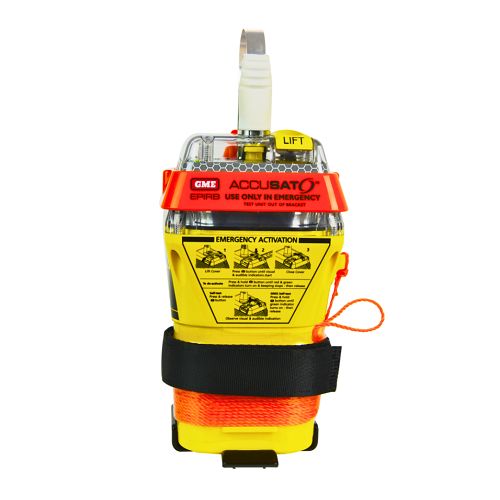
A 10‑year battery EPIRB with integrated GNSS (supports GPS and Galileo), infrared strobe and 121.5 MHz homing signal. Approved for worldwide COSPAS‑SARSAT operation.
Explore →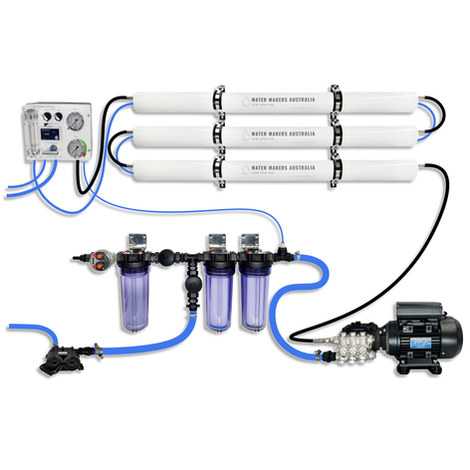
A three-membrane modular watermaker with 200 L/h nominal output and up to 240 L/h family-level marketing, for larger crews and heavy use.
Explore →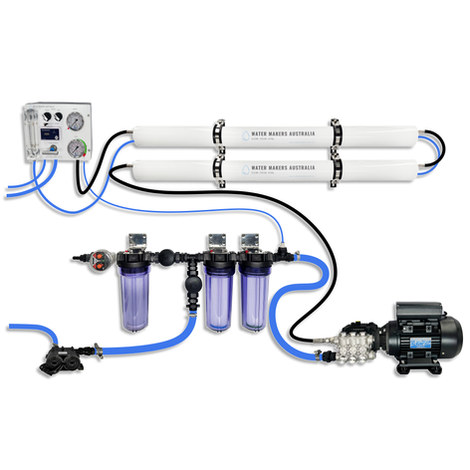
A two-membrane modular watermaker with 140 L/h nominal output, aimed at families and liveaboards that want more water per run.
Explore →