Loading this page…

Loading this page…
Sailing club
Bellerive Yacht Club is a family-focused yacht club and marina on Bellerive Quay, Bellerive (Hobart), Tasmania. The club runs active keelboat and dinghy racing programs (twilight, Saturday and Sunday series, offshore events), hosts large regattas and an extensive social calendar, and offers marina berths, a slipyard and on-site food and beverage facilities.
About
Bellerive Yacht Club is a family-focused yacht club and marina on Bellerive Quay, Bellerive (Hobart), Tasmania. The club runs active keelboat and dinghy racing programs (twilight, Saturday and Sunday series, offshore events), hosts large regattas and an extensive social calendar, and offers marina berths, a slipyard and on-site food and beverage facilities.
Service area: Bellerive Quay / Derwent Estuary, Hobart (Southern Tasmania)
Keep exploring
Bellerive Yacht Club (BYC) is a family-oriented club on Kangaroo Bay at 64 Cambridge Road, Bellerive, just across the Derwent from the Hobart CBD. It turns 100 in 2026, and with more than 1,000 members it's one of Tasmania's biggest and busiest sailing clubs.
Sailing and events. BYC runs Wednesday twilight sailing in summer, Saturday racing through the summer season and Sunday racing over winter. Its signature event is the annual Banjo's Shoreline Crown Series Bellerive Regatta each February, which in 2026 included the Tasmanian Yachting Championship for keelboats. The club also hosts the Tasmanian Women's Keelboat Regatta, combined-club series and offshore races. Racing spans off-the-beach classes, Elliott 6 keelboats and a performance cruising keelboat division.
Facilities and membership. The club has an upgraded marina of about 120 berths, including 10, 12 and 15 metre berths, a slipyard with crane for haul-out, dinghy storage, refuelling and ample parking. Ashore there are two bars, Anchors Restaurant, a barbecue area and a function centre.
Training. BYC promotes safety and learning, with Australian Sailing courses, Safety at Sea refreshers and women's Come and Try Sailing days on its calendar.
See our Bellerive sailing clubs page, Derwent River and Hobart pages for more.
The club supports a range of training and accreditation: Learn to Sail programs for off-the-beach sailors, Safety at Sea refresher courses and Australian Sailing courses such as regional judge training. Race training and combined-club race documents are published on the club website during each season.
BYC also runs targeted programs to bring new people into the sport, such as women-focused Come and Try Sailing days. With a large keelboat fleet racing on Wednesdays, Saturdays and Sundays, there are always skippers looking for crew, which makes crewing a great next step after a course. Wondering when to start? See our FAQ on the best season to learn to sail in Tasmania.
BYC sits on Kangaroo Bay at Bellerive, on the eastern shore of the Derwent estuary opposite Hobart. The club races on the sheltered but tidal waters of the Derwent and nearby approaches, running inshore twilight and Saturday series as well as offshore races that start locally.
The Derwent is one of Australia's great sailing rivers. It's broad, deep and scenic, with kunanyi/Mount Wellington as a backdrop, and it's known for shifty, gusty breezes that roll off the hills. Sea breezes usually fill in from the south-east on summer afternoons, while north-westerlies can bring strong, puffy conditions. Our FAQ on docking in gusty Tasmanian winds is worth a read before bringing a boat in.
Bellerive Yacht Club was established in 1926 to encourage sailing among the growing population on Hobart's eastern shore, in what's now the City of Clarence. Its beginnings were humble: a shed converted into a well-furnished clubhouse.
From that shed the club grew into one of Tasmania's largest sailing clubs, with a marina, slipyard, restaurant and more than 1,000 members. It has long organised the annual Bellerive Regatta, which has grown into the Crown Series Bellerive Regatta, one of the state's premier keelboat events.
In 2026 BYC celebrates its centenary under Commodore Hughie Lewis, with a centenary book, sailing re-enactments and a big regatta program marking 100 years of sailing on Kangaroo Bay.
Adelaide’s metropolitan coast fronts the eastern side of Gulf St Vincent and mixes short, sheltered bay sailing around Holdfast Bay and the Patawalonga with more exposed, open-water sailing north toward Outer Harbour and along the Le Fevre Peninsula. The area suits a wide range of activity — sheltered day sails, club and trailer-sailer racing, short coastal cruising into the Fleurieu and Yorke Peninsula, and launch-and-home-port racing — but demands local knowledge about shipping channels, tidal flows in the Port River/Outer Harbour approaches, and seasonal wind patterns.

Write a one‑page plan with the who/what/when/where/how of your trip, keep a copy on board and leave the main copy with a responsible person ashore (and optionally with your club, marina office or local volunteer rescue service).
Explore →
Pick a protected bay, estuary or river reach where you can rig, launch and arrive on calm water within a short, sheltered transit; choose a site with a good ramp or jetty, clear recovery options and a nearby sailing club, marina or commercial operator for local knowledge and help.
Explore →
Late spring to summer is usually the best time for beginners to start learning to sail in Tasmania because the weather is generally warmer, days are longer and conditions are often more settled. Expect lighter to moderate winds with regular afternoon sea breees in summer, while spring and autumn bring more changeable and sometimes stronger conditions; winter is colder, wetter and typically windier with more fronts and swell.
Explore →
Use ramps and beaches with respect for local conditions: check ramp layout, tide and swell, wind direction, vehicle access and crowding; prepare boat and crew before you launch or retrieve; and follow local signage, courtesy and safety practices. Specifics vary by ramp and beach, so confirm details for the exact site before you go.
Explore →
A practical guide for new sailors on picking the right Australian sailing club: training, boat access, racing, social fit, costs and the key questions to ask before joining.
Explore →A practical guide for recreational sailors planning visits to Albany and King George Sound. Covers the main anchorage areas, typical local weather patterns, tidal and current considerations, navigational hazards, on-the-water etiquette and a pre-departure checklist to help you plan a safe passage and enjoyable stopover
Explore →A practical guide to preparing, planning and executing a recreational offshore passage along the New South Wales coast. Covers route selection, weather and tidal considerations, vessel and crew checks, safety equipment, communication, watchkeeping and common mistakes, with clear pre‑departure and underway checklists.
Explore →
A practical, Australia-focused guide for planning and sailing around the Whitsunday Islands: weather and seasons, navigation and anchoring, moorings and parks, provisioning and charters, safety and common mistakes, plus checklists and next steps.
Explore →Burke Yachtsman Gear Bag 40L - Shop Now Zip Pay | Tamar Marine Skip to content 59 – 63 Holbrook Street, Invermay Online Shop Open 24/7 Products search Contact us 1300 MARINE $ 0.00 0 Cart Burke Yachtsman Gear Bag 40L $ 79.90 Colour Choose an option Black Blue Black Blue Clear - Burke Yachtsman Gear Bag 40L quantity + Add to cart Enquire about this product SKU BAGB-Y24/BLACK* Category Bags - Sail & Gear A Burke classic and customer favourite, the Yachtsman’s Gear Bag is built tough to handle wet, salty conditions while keeping your gear dry and protected. Made from double coated waterproof…
Explore →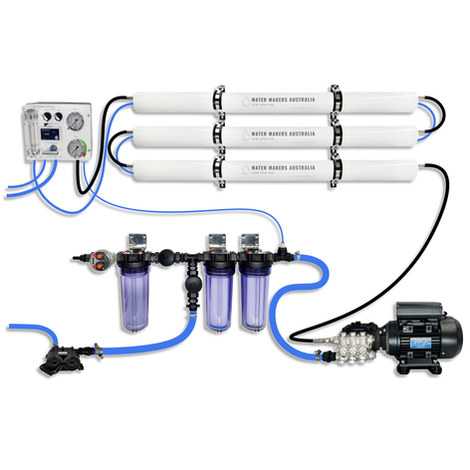
A three-membrane modular watermaker with 200 L/h nominal output and up to 240 L/h family-level marketing, for larger crews and heavy use.
Explore →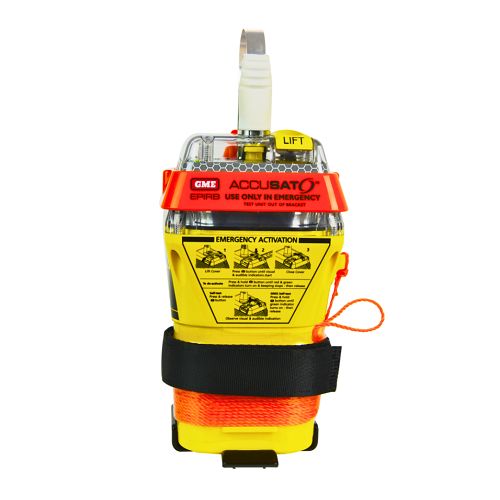
A 10‑year battery EPIRB with integrated GNSS (supports GPS and Galileo), infrared strobe and 121.5 MHz homing signal. Approved for worldwide COSPAS‑SARSAT operation.
Explore →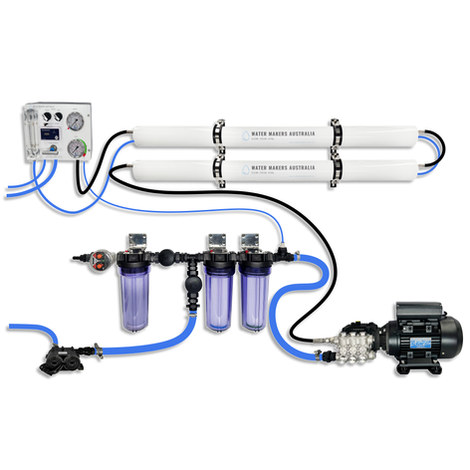
A two-membrane modular watermaker with 140 L/h nominal output, aimed at families and liveaboards that want more water per run.
Explore →