Loading this page…

Loading this page…
Sailing club
The Derwent Sailing Squadron is one of Hobart's busiest sailing clubs, running more than 150 racing events a year from its Sandy Bay marina on the River Derwent. Founded in 1906, it hosts the Launceston to Hobart race, twilights, SB20 and offshore series, runs the Sailtrain course program, and operates Tasmania's largest club marina with a slipyard and The Moorings restaurant and bar.
About
The Derwent Sailing Squadron is one of Hobart's busiest sailing clubs, running more than 150 racing events a year from its Sandy Bay marina on the River Derwent. Founded in 1906, it hosts the Launceston to Hobart race, twilights, SB20 and offshore series, runs the Sailtrain course program, and operates Tasmania's largest club marina with a slipyard and The Moorings restaurant and bar.
Service area: Sandy Bay, TAS
Keep exploring
The Derwent Sailing Squadron (DSS) sits at 23 Marieville Esplanade, Sandy Bay, right next door to the Royal Yacht Club of Tasmania on the western shore of the River Derwent. It is a big, busy racing club — more than 150 racing events a year — with a calendar that covers twilights, the SB20 Summer Pennant, the Combined Clubs Saturday Series, midweek racing, an offshore series and a winter pennant.
Off the water, DSS runs a marina with casual berth bookings, a slipyard (open weekdays, emergencies only on weekends), a fuel facility, and The Moorings Restaurant & Bar, plus function and conference spaces. Its Sailtrain program covers the MAST motor boat licence, marine radio (VHF), Safety and Sea Survival and Start Crewing courses. Membership options include a SailPass for people who want to get out on the water without owning a boat. Find other clubs nearby on our Sandy Bay sailing clubs page.
Sailtrain is the Squadron's training arm, and it is built around the skills that actually get people onto boats. Courses include the MAST Motor Boat Licence, the Marine Radio Short Range (VHF) certificate, Safety and Sea Survival — needed by many crews taking part in offshore races — and Start Crewing, a practical introduction for adults who want to join a race crew. Private tuition is available too, and the course calendar is published online so you can book a place ahead of time.
For people who would rather learn on the job, the Squadron's racing calendar is the best classroom in Hobart. Midweek racing, the twilight series and the Combined Clubs Saturday Series all need crew, and the SailPass membership is designed for exactly that: a way to sail regularly without the cost of owning a yacht. Radio-controlled sailors have their own home too, through the Squadron Radio Sailing Group, and the club supports Sailability Tasmania, which offers sailing for people of all abilities.
The clubhouse sits on the Sandy Bay foreshore at 23 Marieville Esplanade, a short walk from Hobart's city centre, with the Royal Yacht Club of Tasmania next door and Sandy Bay Sailing Club further along the shore at Long Point. The two neighbouring clubs share the river closely — the season opens each October with a combined sail-past of both fleets on Opening Day.
Racing happens on the River Derwent, a broad, deep estuary that offers everything from tight inshore courses off Sandy Bay to longer passage races heading south towards Storm Bay. Offshore events such as the Two Capes Race and the Launceston to Hobart take crews well beyond the river, while the String of Pearls cruising program links up anchorages for more relaxed weekends, with a mooring booking system for members.
The marina is the Squadron's pride. The Graham Blackwood Marina opened in 1985, and the Roy Barkas Marina Extension added 138 floating berths in 2015, taking total capacity to 277 vessels — the largest of any club in Tasmania. There is a slipyard for maintenance, fuel on site, and The Moorings Restaurant & Bar for lunch or a drink after racing. For more on sailing around the capital, see our Hobart destination guide.
The Squadron was founded in February 1906 as the Domain Sailing Squadron, and its first meetings were held aboard the Derwent Hunter, an old whaling ship moored at the Domain slipyard. When the Derwent Hunter was destroyed by fire in 1907, the club carried on without a home of its own for almost fifty years, meeting in taverns and later the RSL building in central Hobart.
The turning point came in 1953, when the Squadron leased Cheverton's Jetty on the Sandy Bay foreshore from the Cheverton family. Members bought the jetty outright in 1963 for £11,750, and in 1965 the permanent clubhouse — built for around $25,000 — was officially opened by Lady Gairdner, wife of the Governor of Tasmania.
The marina came next. The Graham Blackwood Marina opened in 1985 with 104 berths and was later expanded to 130, and in 2015 the Roy Barkas Marina Extension added a further 138 floating berths. Today the Squadron that once had nowhere to meet runs Tasmania's largest club marina and one of the busiest racing programs in the country.
Dangar Island sits in the lower Hawkesbury River close to Brooklyn and is one of Sydney’s small, boat‑access communities. From the water it reads as a wooded, low island with sandy foreshore, a public jetty and private moorings; its position at the mouth of Cowan Creek and close to the main river channel makes it an attractive short‑cruise destination for trailer sailors, runabouts and small cruisers but also one that requires careful local knowledge and respect for resident berths, ferry operations and tidal currents.

Late spring to summer is usually the best time for beginners to start learning to sail in Tasmania because the weather is generally warmer, days are longer and conditions are often more settled. Expect lighter to moderate winds with regular afternoon sea breees in summer, while spring and autumn bring more changeable and sometimes stronger conditions; winter is colder, wetter and typically windier with more fronts and swell.
Explore →
Pick a protected bay, estuary or river reach where you can rig, launch and arrive on calm water within a short, sheltered transit; choose a site with a good ramp or jetty, clear recovery options and a nearby sailing club, marina or commercial operator for local knowledge and help.
Explore →
Plan as a chain of conservative daily legs tied to your boat’s real-world fuel and speed in the expected sea state, with confirmed primary and alternate anchorages/berths, fuel legs and back-up fuel options, and a documented emergency/diversion plan (comms, tow and med-evac). Build tidal and weather gates into each leg and carry chart and comms redundancy.
Explore →
Expect light to moderate, thermally-driven sea breezes in summer with afternoon strengthening; more changeable and often stronger winds with frontal systems in autumn and spring; and the windiest, roughest conditions in winter when cold fronts and sou’westers are most frequent. Gulf St Vincent is more sheltered than the exposed coast but can still produce steep chop and sudden changes near Adelaide and headlands.
Explore →A concise, practical introduction to the essential parts of a recreational sailing boat for beginners in Australia. Covers hull, deck, rigging, sails, steering, below-decks spaces and safety equipment, with simple explanations, common mistakes and a pre-decast checklist to help new sailors communicate and get underway.
Explore →
A practical guide for new sailors on picking the right Australian sailing club: training, boat access, racing, social fit, costs and the key questions to ask before joining.
Explore →
A practical guide to Queensland’s top sailing areas, what to expect from each region, seasonal and safety considerations, suggested itineraries and useful planning checklists for recreational sailors.
Explore →
A practical, Australia‑focused introduction to sailing: key terms, common boat types, basic manoeuvres, where to learn, licence and club options, and planning your first trips with safety and local conditions in mind.
Explore →Burke Yachtsman Gear Bag 40L - Shop Now Zip Pay | Tamar Marine Skip to content 59 – 63 Holbrook Street, Invermay Online Shop Open 24/7 Products search Contact us 1300 MARINE $ 0.00 0 Cart Burke Yachtsman Gear Bag 40L $ 79.90 Colour Choose an option Black Blue Black Blue Clear - Burke Yachtsman Gear Bag 40L quantity + Add to cart Enquire about this product SKU BAGB-Y24/BLACK* Category Bags - Sail & Gear A Burke classic and customer favourite, the Yachtsman’s Gear Bag is built tough to handle wet, salty conditions while keeping your gear dry and protected. Made from double coated waterproof…
Explore →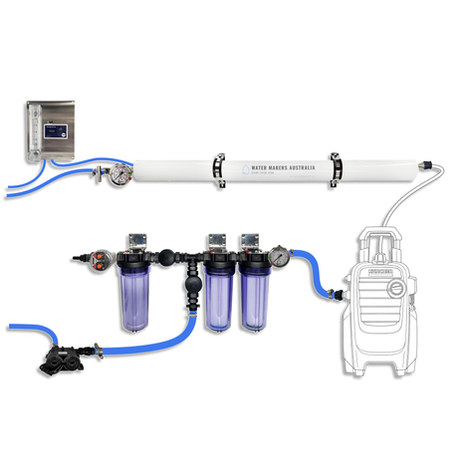
A one-membrane modular marine watermaker with 80 L/h nominal output, remote stainless control panel, standard consumables and direct Australian support.
Explore →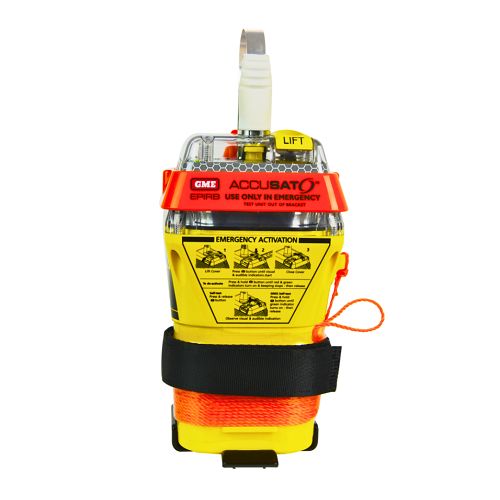
A 10‑year battery EPIRB with integrated GNSS (supports GPS and Galileo), infrared strobe and 121.5 MHz homing signal. Approved for worldwide COSPAS‑SARSAT operation.
Explore →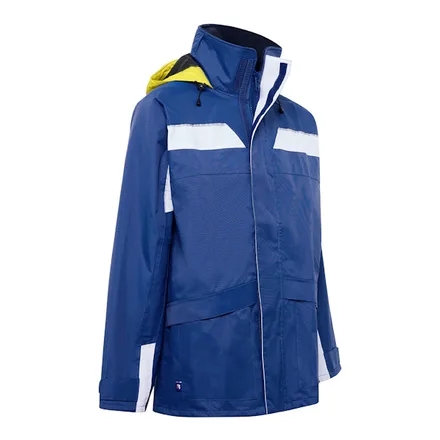
Burke Super Dry Jacket in Blue. Product codes shown: DRY228-XS, DRY228-S, DRY228-M, DRY228-L, DRY228-XL, DRY228-XXL. Available sizes listed: XS, S, M, L, XL, XXL.
Explore →