Loading this page…

Loading this page…
Sailing club
Black Rock Yacht Club is a not-for-profit water-based sporting club at Half Moon Bay, Black Rock (10 Cerberus Way). The club runs organised sailing programs including junior and youth sailing schools, youth and senior racing classes, learn-to-sail and race-training/coaching. The venue also hosts events, championships and social activities; the club bar and bistro are open to the public on set days. Contact options are listed on the club website.
About
Black Rock Yacht Club is a not-for-profit water-based sporting club at Half Moon Bay, Black Rock (10 Cerberus Way). The club runs organised sailing programs including junior and youth sailing schools, youth and senior racing classes, learn-to-sail and race-training/coaching. The venue also hosts events, championships and social activities; the club bar and bistro are open to the public on set days. Contact options are listed on the club website.
Service area: Black Rock, VIC
Keep exploring
A nineteenth-century ironclad warship guards the entrance to Black Rock's sailing water, and in many ways it sets the tone for the club behind it: substantial, storied and slightly larger than life. Black Rock Yacht Club sails from Half Moon Bay on Port Phillip's eastern shore, where the scuttled HMVS Cerberus, acquired by the club itself in 1926, still lies as a breakwater. The club describes itself as a leading off-the-beach club, and with membership now exceeding 700, grown from a founding group of just five, the scale is hard to dispute.
The competitive record is the club's pride. Its sailors have taken Victorian, Australian and World championship titles in numbers few beach clubs can match, a striking share of them having begun in its own junior program, and it has hosted numerous World Championship regattas, most notably the 1995 Finn Gold Cup — Olympic sailing's most storied heavyweight dinghy title, run off Black Rock's beach. Club historian Noel Sutcliffe records that among peer clubs, Black Rock is regarded as one that "does it right", a reputation built on race management as much as on results.
The fleet history reads like a survey of dinghy design: fishermen's boats, the 14ft Dinghy Class, three decades of Sharpie dominance, then Flying Dutchmen, Herons, Mirrors, Cherubs and Sabots, and on through Fireballs, Lasers, 125s, Sabres, 470s, 420s, Europe dinghies, Finns, trailable yachts and Contenders. An active women-in-sailing program, including a SheSails-sponsored WASZP foiling clinic for girls aged 14 to 21 in the 2025–26 season, keeps the club's edge current.
Adult learning is where Black Rock's sailing school makes its sharpest offer. The Adult Learn to Sail course runs over eight Sunday mornings, twice a year from February and October, capped at twelve students per intake and qualifying graduates for Australian Sailing's Start Sailing 1 and 2. At $485 — $415 for early birds — with complimentary club membership included, it is deliberately structured as a conversion: finish the course and you are already a member, already inside the club's social and racing life. Graduates are then invited into a "Learn to Race" pathway taught in Pacers and 125s, with single-handed Sabre coaching available for those who prefer to sail alone.
Beyond that, a Better Sailing course of twelve hours, run on demand, covers spinnaker and trapeze work, roll tacks and gybes, sailing backwards, buoyage and weather — a genuine skills upgrade rather than a certificate exercise. The junior side operates under the Team BRYC banner, with school-holiday Tackers courses in club training Optimists (life jackets supplied) feeding into school teams racing, OutThere Sailing for teenagers, race training and club coaching. Professional coaching services sit alongside the volunteer structure, reflecting the club's size and resources.
The proof of the system is in the honours board: the club notes that many of its Victorian, Australian and World champions started in the Junior Sailing Program. With a fully accredited sailing school, a structured pathway from first capsize to foiling clinics for young women, and championship-level fleets across a dozen classes, the development pipeline at Black Rock is as complete as any beach club in the country can reasonably claim.
Half Moon Bay is one of Port Phillip's natural amphitheatres: a curved, sheltered anchorage at Black Rock, framed by red sandstone bluffs and protected at its entrance by the most unusual breakwater in Australian sailing. HMVS Cerberus — the Victorian colonial navy's breastwork monitor, launched in 1868 — was towed from Williamstown and scuttled across the bay's mouth on 2 September 1926, after the club's Commodore Frank Campkin and Secretary Clarrie Loughead beat Sandringham Yacht Club's bid for the ship by ten minutes, securing her for £150 on a £10 deposit.
The old ironclad still lies there, half-submerged, knocking the edge off any sea that tries to enter. Sandringham's members later salvaged her remaining anchor and display it outside their own clubhouse — a lingering, good-natured rivalry over the ship.
Inside the breakwater, the bay offers genuinely protected water for off-the-beach sailing, which underpins everything the club does from training Optimists to world championship fleets. The beach at the end of Beach Road, where the club sits at number 250, has been a Melbourne bathing and boating destination for well over a century, and in the club's early days a rail line ran from the boat shed down to the water so the heavy boats of the era could be loaded and launched — a reminder of how much muscle sailing once demanded.
Modern launching is a good deal simpler, and the 1969 clubrooms look out over a bay that can host anything from a Sunday junior heat to a Finn Gold Cup start. Sheltered without being dull, scenic without being precious, Half Moon Bay has been the making of the club — and the club, in a very literal sense, made the bay what it is.
Black Rock began as a picnic. In 1899, members of the Brighton Yacht Club, the club that would one day become Royal Brighton, sailed down the coast to Half Moon Bay for an outing that became an annual fixture, growing to include a race from Brighton to the bay. The Black Rock branch of the Brighton club was formally established in 1904, with a founding membership of five, and the club has counted its own history from that point; its centenary in 2004 was marked with a published history, "One hundred years of sailing from Half Moon Bay".
The early decades were eventful. The original wooden club building burnt down in 1937 and was replaced by a two-storey wooden clubhouse, itself demolished in 1967 to make way for the modern clubrooms opened in 1969. The Cerberus acquisition of 1926 gave the bay its defining landmark and the club its most retold story. On the water, the fleet evolved with the sport: fishermen's boats gave way to the 14ft Dinghy Class, then the 12 Square Metre heavyweight Sharpie appeared during the 1930s, and Sharpies of both the heavy and lightweight persuasions ruled the club for thirty years.
The 1960s brought Herons, Mirrors, Flying Dutchmen, 14s, Cherubs and Sabots, the Sabot displacing the International Cadet as the training boat of the era.
Championship sailing crowns the modern record. The club has hosted a string of World Championship regattas, crowned by the 1995 Finn Gold Cup, and its sailors have collected Victorian, Australian and World titles across generations. From five men picnicking on the beach in 1899 to more than 700 members a century and a quarter later, Black Rock's arc is among the longest and best-documented in Victorian sailing — thanks in no small part to historian Noel Sutcliffe, whose published club history keeps even the ten-minute bidding duel for a battleship on the record.
Apollo Bay is a small working harbour on Victoria’s Great Ocean Road where sheltered inshore sailing meets the Southern Ocean. The character is a mix of protected harbour berths and an exposed open coast: pleasant day-sails and sheltered weekend cruising inside the bay, with demanding coastal passages immediately offshore where south‑westerly swell and strong winds from the Southern Ocean dominate. It suits coastal cruisers, trailer sailors who launch at the ramp, and experienced coastal sailors who understand bar and swell behaviour; it is not a casual open‑ocean anchorage for unprepared or

Use ramps and beaches with respect for local conditions: check ramp layout, tide and swell, wind direction, vehicle access and crowding; prepare boat and crew before you launch or retrieve; and follow local signage, courtesy and safety practices. Specifics vary by ramp and beach, so confirm details for the exact site before you go.
Explore →
A good float plan and a well-stocked emergency kit significantly improve your chances of a safe outcome when cruising remote parts of South Australia’s coastline. The float plan should give someone ashore all the information they need to find you and raise help if you don’t return; the emergency kit should allow you to stabilise the boat, care for injuries, signal for rescue and survive until help arrives.
Explore →
Progress gradually by increasing exposure, practising specific skills, sailing with more experienced crew/skippers, and deliberately training for each new step—start in calm sheltered bays, then move to longer trips, busier waters, stronger winds and finally open coastal passages when you and your crew are consistently competent and comfortable.
Explore →
Before your first sail in South Australian waters check the weather and tide, make sure the boat and safety equipment are fit for the trip, confirm local rules and any area-specific hazards, and tell someone your plan.
Explore →A practical guide for recreational sailors planning day sails or short cruises around Batemans Bay, Broulee and the Clyde River. Covers local conditions, safe approaches, anchorages, launching, tides, common hazards, and checklists for trip planning and on-water decisions.
Explore →A practical guide for recreational sailors planning passages to, from or around Eden and Twofold Bay. Covers sheltered anchorages, shore facilities, local weather and tidal considerations, preparing for Bass Strait conditions and a focused equipment and safety checklist.
Explore →A practical guide for recreational sailors planning visits to Albany and King George Sound. Covers the main anchorage areas, typical local weather patterns, tidal and current considerations, navigational hazards, on-the-water etiquette and a pre-departure checklist to help you plan a safe passage and enjoyable stopover
Explore →
A practical, Australia-focused guide for planning and sailing around the Whitsunday Islands: weather and seasons, navigation and anchoring, moorings and parks, provisioning and charters, safety and common mistakes, plus checklists and next steps.
Explore →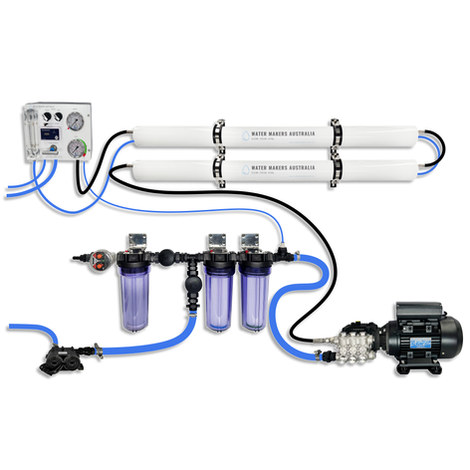
A two-membrane modular watermaker with 140 L/h nominal output, aimed at families and liveaboards that want more water per run.
Explore →Burke Yachtsman Gear Bag 40L - Shop Now Zip Pay | Tamar Marine Skip to content 59 – 63 Holbrook Street, Invermay Online Shop Open 24/7 Products search Contact us 1300 MARINE $ 0.00 0 Cart Burke Yachtsman Gear Bag 40L $ 79.90 Colour Choose an option Black Blue Black Blue Clear - Burke Yachtsman Gear Bag 40L quantity + Add to cart Enquire about this product SKU BAGB-Y24/BLACK* Category Bags - Sail & Gear A Burke classic and customer favourite, the Yachtsman’s Gear Bag is built tough to handle wet, salty conditions while keeping your gear dry and protected. Made from double coated waterproof…
Explore →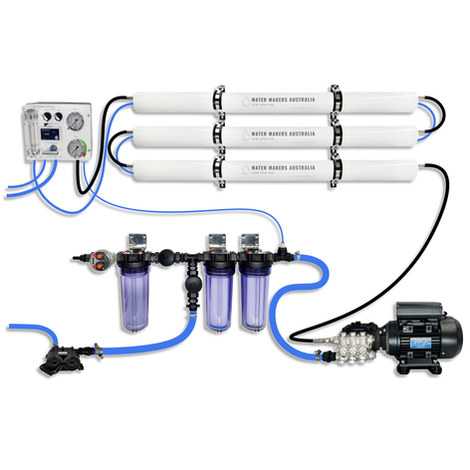
A three-membrane modular watermaker with 200 L/h nominal output and up to 240 L/h family-level marketing, for larger crews and heavy use.
Explore →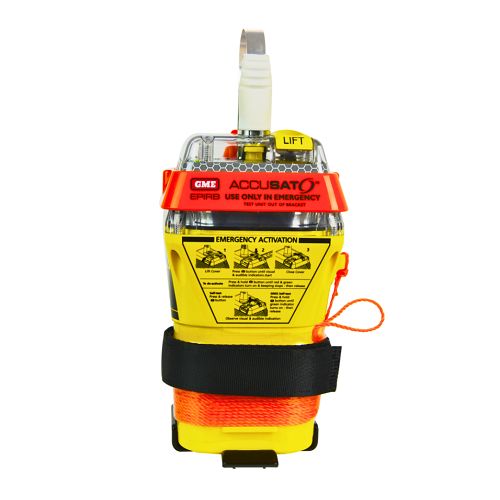
A 10‑year battery EPIRB with integrated GNSS (supports GPS and Galileo), infrared strobe and 121.5 MHz homing signal. Approved for worldwide COSPAS‑SARSAT operation.
Explore →