Loading this page…

Loading this page…
Sailing club
Blairgowrie Yacht Squadron is a large sailing club on the Mornington Peninsula offering organised sailing programs, regattas and community activities alongside marina and shore services. The club operates a marina with berth leasing and sales, a hardstand area and travel-lift/slipping infrastructure for moving vessels out of the water for maintenance or storage. BYS runs learn-to-sail and other training programs, operates clubhouse dining and event facilities, and provides marina support services to members and visitors.
About
Blairgowrie Yacht Squadron is a large sailing club on the Mornington Peninsula offering organised sailing programs, regattas and community activities alongside marina and shore services. The club operates a marina with berth leasing and sales, a hardstand area and travel-lift/slipping infrastructure for moving vessels out of the water for maintenance or storage. BYS runs learn-to-sail and other training programs, operates clubhouse dining and event facilities, and provides marina support services to members and visitors.
Service area: Blairgowrie, VIC
Keep exploring
Counting more than 2,200 members in recent seasons, Blairgowrie Yacht Squadron counts itself among the biggest sailing clubs anywhere on Port Phillip, and it wears that scale lightly indeed. The stated values are plain enough to fit on a burgee — "Family, Friendship, Sailing" — and the membership mix backs them up convincingly: off-the-beach dinghy sailors, J70 sportsboat crews, keelboat and powerboat owners, and a large social contingent drawn from the Mornington Peninsula's holiday population. Racing is the engine room.
The calendar has carried an extraordinary procession of state, national and world championships across the decades, from Sabres and Lasers through to A-Class catamarans, Hobie Cats, Musto Skiffs and 29ers, and the summer fixture everyone circles is the Petersville Regatta for keelboats, revived by the club in December 2015 and now sailed across the Christmas–New Year window.
Under Commodore Georgina Plumridge the squadron operates as a modern, professionally managed concern — it appointed its first club manager back in 1994 — yet the volunteer instinct never left. This is a club where members once made the clubhouse bricks by hand, and working bees still underpin the place. The annual Easter Art Show, first hung in 2009, channels fundraising into the patrol boat fleet that keeps the racing program safe.
Visitors encounter a popular function and wedding venue trading on the bay-front aspect; sailors know it primarily as a serious racing club with an unusually soft centre, where family sailing, training fleets and accessible programs matter every bit as much as the silverware.
If one program captures the squadron's character, it is the adult keelboat training fleet. Adult sail training only began in the 2016/17 season, built around three Elliott 5.9 sportsboats, and the club later moved to the J70 — a deliberate choice that hands graduates a direct bridge into the sportsboat racing scene. Alongside that sits SheSails, launched to lift female participation, and a substantial Sailability operation: eight Access dinghies established under Geoff and Eilly Watson, with member Brian Jones recognised at the 2022 Victorian Sailing Awards for 21 years of service to disabled sailing.
The junior pathway is older and deeper. Formal junior training took shape in the 1980s under Bryan McCarthy — whose name now graces the club's training centre — with twenty to forty youngsters in the early years, and by the 2001/02 season more than 127 junior members were sailing Minnows. Fifteen Ozi-Opti dinghies arrived in 2011 to launch the national Tackers program, which now feeds children into the junior and youth squads; the Laser 4.7 has become the key youth class for those stepping up.
The wider fleet list reads like a survey of Australian dinghy sailing. Minnows numbered around sixty boats in the 1980s and Sabres around fifty, with Mirrors, Lasers, 125s, Paper Tigers and A-Class catamarans alongside; an Etchells keelboat fleet peaked at eighteen, and the Contender emerged as a major class by 2020 with more than twenty boats. That depth of hardware lets the squadron run everything from a child's first tack to a world championship start line.
The squadron stands at 2900 Point Nepean Road, Blairgowrie, near the seaward end of the Mornington Peninsula, and everything about the place is oriented north across the broad water of Port Phillip. Racing takes place on the open bay off the clubhouse, where summer sea breezes build reliable afternoon pressure and winter delivers the strong north-westerlies that have shaped the club's shorefront engineering. Those winter winds drove the most consequential facility decision of the modern era: the construction of a safe boat harbour.
A seven-million-dollar, 170-berth marina went in during 2001, financed entirely through the sale of 21-year berth leases, and a later expansion added 118 full berths, 36 visitor berths, a thirty-boat hardstand, a new jetty and a travel lift. A floating wave attenuator, required under the harbour's approval conditions, failed in 2009 and was removed six years on — a reminder that this shoreline takes genuine punishment when the weather turns.
Ashore, the clubhouse opened in September 2015 and contains the Southern Waters Room, a Racing Lounge, The Deck, a year-round bistro, a junior lounge, change rooms, lawns and barbecues. The rebuilt Scotts' Shed houses the McCarthy training centre, the race control tower with its 180-degree outlook, and the Southern Peninsula Rescue Service. Accessibility is taken seriously, with accessible change rooms and a Changing Places facility — consistent with a club that fields a dedicated Sailability fleet.
For visiting trailer sailors, the combination of marina, hardstand, travel lift and ramp access makes Blairgowrie one of the best-equipped launch points on the peninsula's bay side.
The squadron began in 1952 with an act of hospitality: Louisa and Bert Scott, who ran Blairgowrie House as a guest house, let the first sailors use their slipway, jetty and boat shed. The founding clubhouse was a tin shed 3.7 by 12.2 metres, without water, electricity or a proper floor — the original "Scotts' Shed" that has become the club's founding story. Growth came quickly.
There were 169 members by 1956, when a purpose-built clubhouse was planned under Commodore Des Rowley; members made the bricks themselves, the permit issued on 28 May 1957, and the new rooms opened that November with a Miss Australia welcome event. Numbers reached 388 in 1959 and 500 by 1964, and a major eastward extension was finished in sixteen weeks for Opening Day 1966. Early race starts were fired with a real shotgun from the clubhouse; a westward extension in 1977 finally gave starters a room of their own.
By 1982 the club was already the bay's largest, with over 1,100 members, peaking above 1,800 later that decade before the recession cut numbers to 861 by 1994 — the long rebuild reached roughly 2,200 by the end of the 2010s. The championship record began in earnest in January 1981, when a 50-knot southerly capsized all but ten of a 79-boat Sabre national fleet, a blow that eventually produced the 1986 race control tower.
The club hosted 112 Lasers in 1985, the A-Class world championship in 1987, and in the late 1990s ran simultaneous Hobie Cat world titles — 178 boats in four sizes — alongside the Olympic Tornado championship. The Sleigh, later Petersville, Regatta ran from 1976, drew up to 650 diners in the 1980s, and was relaunched in 2015. The brick rebuilt Scotts' Shed opened in 1984 under Dr Edgar French, author of "The Miracle at Scotts' Shed"; a foundation followed in 2003, the marina in 2001, and the current clubhouse in September 2015.
Batemans Bay and the Clyde River form a classic NSW South Coast cruising region where a sheltered, tidal estuary meets a short, island‑dotted entrance to the Tasman Sea. It’s distinctive for easy access from Canberra, a mix of river and bay sailing, a compact marina and mooring network, and a river entrance (the Clyde River bar) that can change rapidly. The area suits day sails, weekend cruising, trailer‑boat exploration and sheltered coastal passages; offshore or long‑passage plans require careful timing and local knowledge. Preparation for tidal flow, variable southerly swells and shallow, s

Write a one‑page plan with the who/what/when/where/how of your trip, keep a copy on board and leave the main copy with a responsible person ashore (and optionally with your club, marina office or local volunteer rescue service).
Explore →
Pick a protected bay, estuary or river reach where you can rig, launch and arrive on calm water within a short, sheltered transit; choose a site with a good ramp or jetty, clear recovery options and a nearby sailing club, marina or commercial operator for local knowledge and help.
Explore →
Before your first sail in South Australian waters check the weather and tide, make sure the boat and safety equipment are fit for the trip, confirm local rules and any area-specific hazards, and tell someone your plan.
Explore →
Use ramps and beaches with respect for local conditions: check ramp layout, tide and swell, wind direction, vehicle access and crowding; prepare boat and crew before you launch or retrieve; and follow local signage, courtesy and safety practices. Specifics vary by ramp and beach, so confirm details for the exact site before you go.
Explore →
A practical guide for new sailors on picking the right Australian sailing club: training, boat access, racing, social fit, costs and the key questions to ask before joining.
Explore →A practical guide for recreational sailors planning visits to Albany and King George Sound. Covers the main anchorage areas, typical local weather patterns, tidal and current considerations, navigational hazards, on-the-water etiquette and a pre-departure checklist to help you plan a safe passage and enjoyable stopover
Explore →
A practical, Australia-focused guide for planning and sailing around the Whitsunday Islands: weather and seasons, navigation and anchoring, moorings and parks, provisioning and charters, safety and common mistakes, plus checklists and next steps.
Explore →A practical guide to the coastal weather systems that affect sailing along Western Australia's coast, focusing on the Fremantle Doctor, local sea breezes, and linked coastal phenomena. Explains how these systems form, when they tend to occur, how they influence boat handling and passage planning, common mistakes, and a
Explore →Burke Yachtsman Gear Bag 40L - Shop Now Zip Pay | Tamar Marine Skip to content 59 – 63 Holbrook Street, Invermay Online Shop Open 24/7 Products search Contact us 1300 MARINE $ 0.00 0 Cart Burke Yachtsman Gear Bag 40L $ 79.90 Colour Choose an option Black Blue Black Blue Clear - Burke Yachtsman Gear Bag 40L quantity + Add to cart Enquire about this product SKU BAGB-Y24/BLACK* Category Bags - Sail & Gear A Burke classic and customer favourite, the Yachtsman’s Gear Bag is built tough to handle wet, salty conditions while keeping your gear dry and protected. Made from double coated waterproof…
Explore →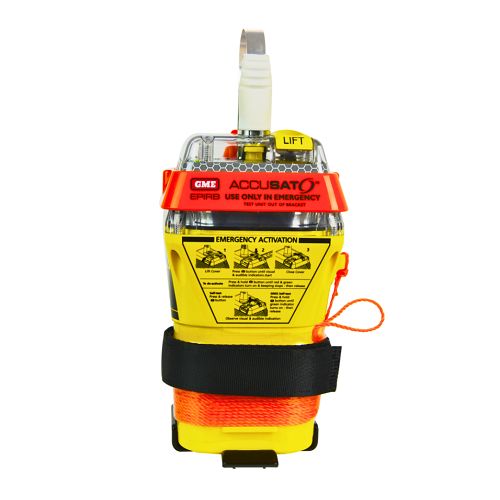
A 10‑year battery EPIRB with integrated GNSS (supports GPS and Galileo), infrared strobe and 121.5 MHz homing signal. Approved for worldwide COSPAS‑SARSAT operation.
Explore →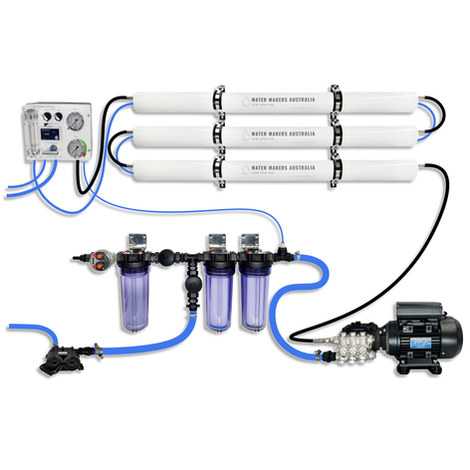
A three-membrane modular watermaker with 200 L/h nominal output and up to 240 L/h family-level marketing, for larger crews and heavy use.
Explore →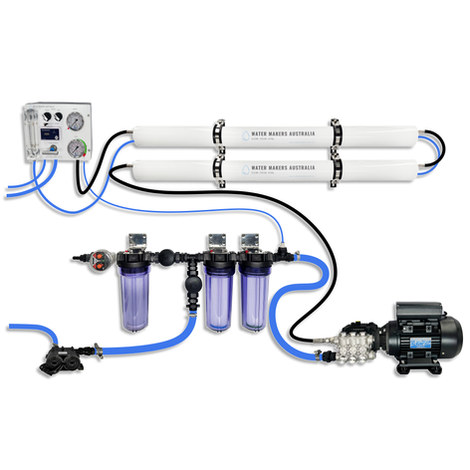
A two-membrane modular watermaker with 140 L/h nominal output, aimed at families and liveaboards that want more water per run.
Explore →