Loading this page…

Loading this page…
Sailing club
Cairn Curran Sailing Club is an inland sailing club based at the northern end of the Cairn Curran reservoir in Baringhup, Central Victoria (near Maldon). The club organises dinghy and recreational sailing, regattas and events, and runs sail-training programs (listed as Discover Sailing / Start Sailing events). The site lists club officers including a Boat Storage Officer and membership contacts.
About
Cairn Curran Sailing Club is an inland sailing club based at the northern end of the Cairn Curran reservoir in Baringhup, Central Victoria (near Maldon). The club organises dinghy and recreational sailing, regattas and events, and runs sail-training programs (listed as Discover Sailing / Start Sailing events). The site lists club officers including a Boat Storage Officer and membership contacts.
Service area: Baringhup; Central Victoria (near Maldon), VIC
Keep exploring
Sailing in goldfields country has its own logic, and Cairn Curran Sailing Club embodies it. Based at Baringhup on the reservoir of the same name, near the historic town of Maldon in central Victoria, this is a small, volunteer-run inland club whose stated purposes are disarmingly direct: encourage recreational and competitive sailing, and run regattas. What it lacks in size it has repeatedly made up in pedigree.
During the 1960s and 1970s the club stood among the most successful inland Victorian outfits in the Australian Sailfish class, producing a string of state and national titleholders from water impounded behind a dam wall on the Loddon River. That competitive instinct survives. The club's late-November off-the-beach regatta anchors its season, and its willingness to step up is well documented — in 2020 it rescued the Tasar state titles at short notice when the planned venue at Yarrawonga fell through. Local flavour runs deep here.
The 2014 Fireball Victorian Championship, sailed in gusts up to 30 knots, ran as part of the "Cairn Curran Classic" with sponsorship from Chapple's Cairn Curran Estate winery, and long-time Fireball sailor Arthur "Smiley" Chapple remains part of the club's orbit. Visitors are actively welcomed rather than merely tolerated, with training and sailing opportunities extended to newcomers and travellers alike, whether they arrive with a boat on the trailer or nothing but curiosity.
For sailors based in Bendigo, Castlemaine or the surrounding districts, this is the natural home port — unpretentious, resilient, and genuinely glad to see a new face rigging a boat on the shore.
The most distinctive item on the club's calendar is arguably its Classic Dinghy Classes Invitation Weekend, a November gathering at which historic boats — including Leigh Marriott's title-winning Sailfish "Mrs Vicious" — have been displayed, linking today's sailors directly to the classes that built the club's name. It captures the flavour of the place: education here is as much about handing down a sailing culture as it is about issuing certificates. Formal instruction does run, though.
The club delivers Australian Sailing's "Start Sailing" course across multiple weekends, and its season program has included Discover Sailing events scheduled between October and January, giving locals and visitors a structured first taste of small-boat sailing. Then there is "Sunday Sail Our Way", the club's own social sailing format — unhurried sessions where the emphasis falls on time afloat rather than results, and where newer sailors can build confidence alongside old hands.
Training opportunities are explicitly open to visitors and prospective members, an unusual generosity that reflects the club's reliance on word of mouth and personal welcome to keep numbers healthy. Racing development happens through the season program itself, which runs from October to April, and through the annual off-the-beach regatta held in late November, which draws visiting classes and gives local sailors a genuine benchmark.
There is no evidence of a Tackers junior program, Sailability fleet or formal Discover Sailing Centre listing, and the club makes no claim to them; what it offers instead is a compact, member-delivered pathway — try a Discover day, learn through a Start Sailing course, sharpen up on Sundays, then race the regatta — that suits an inland volunteer club operating on a storage whose water level sets the terms.
Cairn Curran Reservoir was built between 1947 and 1956 across the Loddon River, taking its name from an 1840 pastoral holding, and the club sits at the reservoir's northern end at Baringhup, on the eastern shore close by the dam wall. The geography places it about forty minutes from Bendigo, twenty from Castlemaine and roughly a hundred minutes from Melbourne — close enough for a day trip, far enough to feel like country.
The water itself is a broad irrigation storage ringed by farmland and low hills, capable of delivering proper pressure; when the Fireball Victorian Championship came in November 2014, crews raced in gusts to 30 knots. This is also a waterway governed by levels, and the club's season — regular events between October and April — lives with that reality. When the storage falls below 28 per cent capacity, boating above five knots is confined to Tower Bay; below 13 per cent, the reservoir closes to vessels over five knots entirely.
Public ramps around the shore each carry their own minimum operating level, with the Tower Bay ramp usable down to just two per cent capacity, and boat ramps, picnic areas and toilets sit near the club's side of the water. Sailors planning a visit can check the club's live Weathercloud station for current readings before hitching up the trailer. For inland sailors the arrangement has real appeal: open, uncrowded water, honest breeze, and a shoreline base with the essentials at hand, all within easy reach of central Victoria's larger towns and the gold-rush streetscapes of Maldon.
The club dates its beginnings to 1957, the year after the reservoir was completed, and a framed photograph of those modest first days hangs in the current clubhouse as a reminder. Among the founders was Jack Ginnivan, whose twin sons Brad and Craig would come through the club's Sailfish ranks. It was the Australian Sailfish — a light, home-buildable plywood dinghy that swept through Victoria in that era — that put Cairn Curran on the national map.
Leigh Marriott claimed the Victorian State Junior Title in 1966/67, then the Open and Junior titles together in 1967/68, a season in which clubmate Oliver Parnaby finished third overall and second junior. Marriott went further, taking out the inaugural Australian Sailfish National Titles at Elwood in a boat he had built himself — "Mrs Vicious", plan number 1375 — fitted with an unusual oval timber mast.
Then came the brothers Robert and James, who between them collected a remarkable run of national silverware: Robert took the Junior National titles of 1969/70 and 1970/71 and then the open National Title in 1972/73, a series sailed at Cairn Curran itself; James won the Junior Nationals of 1971/72, shared with Brian Carroll, and again in 1972/73. Later decades brought fresh associations.
The club developed a long connection with the Fireball class, and when the Fireball Victorian Championship returned in November 2014 it marked roughly thirty years since the class had last visited; local winery figure and Fireball sailor Arthur "Smiley" Chapple backed the event through his Cairn Curran Estate label. In 2020 the club answered a late call to host the Tasar Victorian State Titles after Yarrawonga dropped out — the kind of favour a small club can only do when its members are practiced at doing everything themselves.
Corner Inlet is a large, tide‑dominated embayment at the northern edge of Wilsons Promontory in South Gippsland, Victoria. It combines extensive tidal flats, shallow sheltered waters and a scattering of barrier islands and channels that make it a rich but exacting sailing destination. The inlet suits day sailing, trailer‑launched excursions, weekend cruises and coastal passagemaking when crews understand tidal flows, shallow channels and protected marine parks. The waters inside the inlet are generally much more sheltered than the exposed ocean around Wilsons Promontory, but strong tidal flows

Plan the trip by setting a clear route and timeline, checking tides and currents for your passage times, identifying safe anchorages/harbours as escape options, and building a conservative margin for delays and weather changes.
Explore →
Pick a protected bay, estuary or river reach where you can rig, launch and arrive on calm water within a short, sheltered transit; choose a site with a good ramp or jetty, clear recovery options and a nearby sailing club, marina or commercial operator for local knowledge and help.
Explore →
Plan to transit Sydney Heads and northern NSW estuary entrances to take advantage of favourable tidal streams or slack water; account for local acceleration over shoals, eddies, wind-on-current effects and river discharge, and always check the latest local observations and tide/stream products before departure.
Explore →
Expect light to moderate, thermally-driven sea breezes in summer with afternoon strengthening; more changeable and often stronger winds with frontal systems in autumn and spring; and the windiest, roughest conditions in winter when cold fronts and sou’westers are most frequent. Gulf St Vincent is more sheltered than the exposed coast but can still produce steep chop and sudden changes near Adelaide and headlands.
Explore →
A practical checklist and explanation of the safety equipment recreational sailors should carry in Australian waters, with how to choose gear, use it correctly, and common mistakes to avoid.
Explore →
A practical, Australia-focused guide for planning and sailing around the Whitsunday Islands: weather and seasons, navigation and anchoring, moorings and parks, provisioning and charters, safety and common mistakes, plus checklists and next steps.
Explore →A concise, practical introduction to the essential parts of a recreational sailing boat for beginners in Australia. Covers hull, deck, rigging, sails, steering, below-decks spaces and safety equipment, with simple explanations, common mistakes and a pre-decast checklist to help new sailors communicate and get underway.
Explore →Practical guide for recreational sailors navigating the Swan River and coastal waters around Perth. Covers local weather patterns, tides and currents, river navigation, launching and berthing options, safety equipment, common hazards, and step-by-step pre-departure and on-water checklists tailored to Western Australian
Explore →Burke Yachtsman Gear Bag 40L - Shop Now Zip Pay | Tamar Marine Skip to content 59 – 63 Holbrook Street, Invermay Online Shop Open 24/7 Products search Contact us 1300 MARINE $ 0.00 0 Cart Burke Yachtsman Gear Bag 40L $ 79.90 Colour Choose an option Black Blue Black Blue Clear - Burke Yachtsman Gear Bag 40L quantity + Add to cart Enquire about this product SKU BAGB-Y24/BLACK* Category Bags - Sail & Gear A Burke classic and customer favourite, the Yachtsman’s Gear Bag is built tough to handle wet, salty conditions while keeping your gear dry and protected. Made from double coated waterproof…
Explore →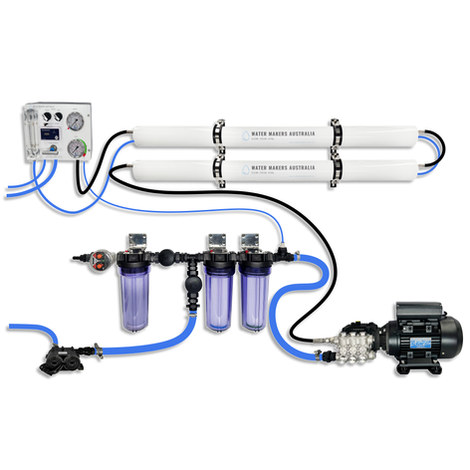
A two-membrane modular watermaker with 140 L/h nominal output, aimed at families and liveaboards that want more water per run.
Explore →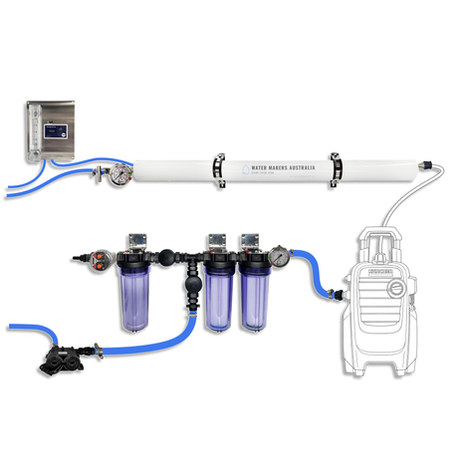
A one-membrane modular marine watermaker with 80 L/h nominal output, remote stainless control panel, standard consumables and direct Australian support.
Explore →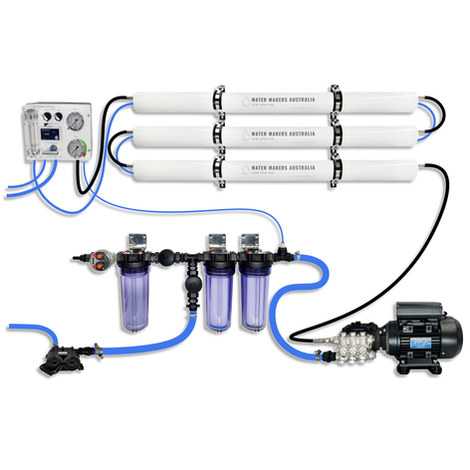
A three-membrane modular watermaker with 200 L/h nominal output and up to 240 L/h family-level marketing, for larger crews and heavy use.
Explore →