Loading this page…

Loading this page…
Sailing club
Cairns Yacht Club (CYC) is a mixed yacht and dinghy club based at Marlin Marina, Cairns, with a secondary off‑the‑beach base at Ellis Beach. It runs junior and youth courses, social keelboat sailing (WAGS), keelboat and multihull racing, and the SheSails women’s development program. The club operates a boatshed, marina finger and berths on Trinity Inlet and is an accredited Discover Sailing Centre offering structured Tackers and OutThere/Youth Sailing pathways.
About
Cairns Yacht Club (CYC) is a mixed yacht and dinghy club based at Marlin Marina, Cairns, with a secondary off‑the‑beach base at Ellis Beach. It runs junior and youth courses, social keelboat sailing (WAGS), keelboat and multihull racing, and the SheSails women’s development program. The club operates a boatshed, marina finger and berths on Trinity Inlet and is an accredited Discover Sailing Centre offering structured Tackers and OutThere/Youth Sailing pathways.
Service area: Marlin Marina and Trinity Inlet; Ellis Beach, Far North Queensland
Keep exploring
Cairns Yacht Club (CYC) is a long-established sailing club in Cairns offering organised keelboat and dinghy sailing, racing and social boating activities. The club runs junior and youth sailing programs (Australian Sailing Tackers and Youth Sailing), SheSails initiatives for women, periodic courses such as Start Crewing, and a calendar of races and events. Facilities described include clubrooms, a boatshed, marina fingers and berths at Marlin Marina, two clubhouses (including an Ellis Beach presence), training amenities and a fleet of club boats and rescue craft.
SheSails leads the story. Launched in 2023, the women's program has already attracted more than 400 participants to its land-based theory and on-water training and social events, while producing two female Australian Sailing instructors and two female sailing mentors — women teaching women, a self-sustaining model few clubs anywhere can point to. It sits inside a fully accredited Discover Sailing Centre, the only confirmed such accreditation in this region's club scene.
The junior pathway is compact: Tackers introduces seven-to-twelve-year-olds in Friday afternoon sessions, and the OutThere Sailing curriculum carries teenagers through Saturday mornings, both running across school terms two, three and four. Beyond the juniors, the club delivers regular dinghy and keelboat courses and hosts School Team Sailing regattas; keelboat instruction uses the club's J24s, and a joint introductory program with Cairns Cruising Yacht Squadron has run on the NQ Sailing-owned J24 fleet since 2005.
Then there is WAGS — Wednesday Afternoon Go Sailing — a social racing fixture that has gone ahead every Wednesday for over four decades and, on the club's estimate, has introduced upwards of 27,000 visitors to sailing on Trinity Inlet. Progression is built in: beginners start in Green Fleet, move through the Off-the-Beach divisions, and can finish in Keelboat and Multihull racing. Because the club owns its boats across every rung — Optimist, Pacer, Laser, Quest, Nacra, J24 and Masrm 720 — equipment is never the obstacle.
For visitors, the WAGS afternoon remains the easiest sailing introduction in the Far North: turn up on a Wednesday, step aboard, and let the inlet do the persuading.
Few Australian clubs can claim a city address like this one: Marlin Marina in the middle of Cairns, with clubhouse, boatshed, marina finger and berths facing Trinity Inlet, and a bar and restaurant run by Salt House animating the waterfront. The inlet itself is a broad tidal estuary walled by mangrove ranges — protected water equally suited to a child's first tack and a Wednesday fleet race.
Conditions are thoroughly tropical: warm water in every season, a generous tidal range that rewards local knowledge, and mid-year dry-season trade winds supplying the most dependable racing breeze, while the wet season and cyclone risk set the shape of the summer calendar. The club's second base spreads the load usefully. Ellis Beach, roughly thirty kilometres north of the city on a beachfront lease, hosts off-the-beach and junior sailing on open Coral Sea water — a very different classroom from the inlet, and a spectacular one.
Offshore, the traditional marks are the reef islands: Green Island and Fitzroy Island, with the club's inshore and offshore racing since 1975 spread across the coastline between Lizard Island in the north and Townsville in the south. That span reflects real offshore pedigree — in 1985 the club conducted Queensland's first inbound international yacht race, from Noumea, and it has long helped Royal Papua Yacht Club run the race north to Port Moresby.
City-marina convenience, an island-dotted cruising ground and a true tropical season: the complete package is hard to match anywhere along the Queensland coast, and harder still further south.
The club began in 1908 under the name Cairns Aquatic Club, established by prominent local businessmen keen to encourage sailing on the inlet. Meetings shifted among business houses until 1917, when members leased a disused rice mill in Wharf Street and turned it into clubrooms — a structure that stood over the water on stilts and was reached by gangplank. In those founding years the club erected some of the district's earliest navigation towers, including the first on Green Island.
Cyclone destruction arrived in 1920; the response was swift, members subscribing £1,000 through debentures while the Harbor Board contributed a pile driver, and replacement premises opened within months. Early fleets comprised 16- and 18-foot yachts, and before the Second World War the club collected a string of national and state championships; afterwards, amid the skiff boom, it was renamed Cairns Sailing Club and its fleets swelled with 16 and 18ft skiffs, VJs, sharpies, gwens and sabots.
Socially it was enormous — its big hall hosted Friday-night dances, debutante balls and receptions, making it, in its own history's words, "the prominent sporting and social club of the town". In 1977 the Ellis Beach-based Tropical Catamaran Club merged in, creating today's Cairns Yacht Club within a renovated licensed clubhouse; sailboarders and paddlers followed.
The toughest chapter opened in 2008 — the centenary year — when the Wharf Street building that had housed the club for a hundred years was demolished for waterfront redevelopment, forcing the move to Marlin Marina and a slide in membership. The rebuilding that followed, deliberately centred on family-friendly training and racing, delivered the Discover Sailing Centre, SheSails and the revitalised club that exists today.
Batemans Bay and the Clyde River form a classic NSW South Coast cruising region where a sheltered, tidal estuary meets a short, island‑dotted entrance to the Tasman Sea. It’s distinctive for easy access from Canberra, a mix of river and bay sailing, a compact marina and mooring network, and a river entrance (the Clyde River bar) that can change rapidly. The area suits day sails, weekend cruising, trailer‑boat exploration and sheltered coastal passages; offshore or long‑passage plans require careful timing and local knowledge. Preparation for tidal flow, variable southerly swells and shallow, s

Write a one‑page plan with the who/what/when/where/how of your trip, keep a copy on board and leave the main copy with a responsible person ashore (and optionally with your club, marina office or local volunteer rescue service).
Explore →
Pick a protected bay, estuary or river reach where you can rig, launch and arrive on calm water within a short, sheltered transit; choose a site with a good ramp or jetty, clear recovery options and a nearby sailing club, marina or commercial operator for local knowledge and help.
Explore →
Look for a friendly club with beginner-focused training, accessible facilities and boats, a supportive community, clear safety practices, and opportunities to progress at your own pace.
Explore →
Use ramps and beaches with respect for local conditions: check ramp layout, tide and swell, wind direction, vehicle access and crowding; prepare boat and crew before you launch or retrieve; and follow local signage, courtesy and safety practices. Specifics vary by ramp and beach, so confirm details for the exact site before you go.
Explore →
A practical guide for new sailors on picking the right Australian sailing club: training, boat access, racing, social fit, costs and the key questions to ask before joining.
Explore →
A practical, Australia-focused guide for planning and sailing around the Whitsunday Islands: weather and seasons, navigation and anchoring, moorings and parks, provisioning and charters, safety and common mistakes, plus checklists and next steps.
Explore →A practical guide for recreational sailors planning visits to Albany and King George Sound. Covers the main anchorage areas, typical local weather patterns, tidal and current considerations, navigational hazards, on-the-water etiquette and a pre-departure checklist to help you plan a safe passage and enjoyable stopover
Explore →A concise, practical introduction to the essential parts of a recreational sailing boat for beginners in Australia. Covers hull, deck, rigging, sails, steering, below-decks spaces and safety equipment, with simple explanations, common mistakes and a pre-decast checklist to help new sailors communicate and get underway.
Explore →Burke Yachtsman Gear Bag 40L - Shop Now Zip Pay | Tamar Marine Skip to content 59 – 63 Holbrook Street, Invermay Online Shop Open 24/7 Products search Contact us 1300 MARINE $ 0.00 0 Cart Burke Yachtsman Gear Bag 40L $ 79.90 Colour Choose an option Black Blue Black Blue Clear - Burke Yachtsman Gear Bag 40L quantity + Add to cart Enquire about this product SKU BAGB-Y24/BLACK* Category Bags - Sail & Gear A Burke classic and customer favourite, the Yachtsman’s Gear Bag is built tough to handle wet, salty conditions while keeping your gear dry and protected. Made from double coated waterproof…
Explore →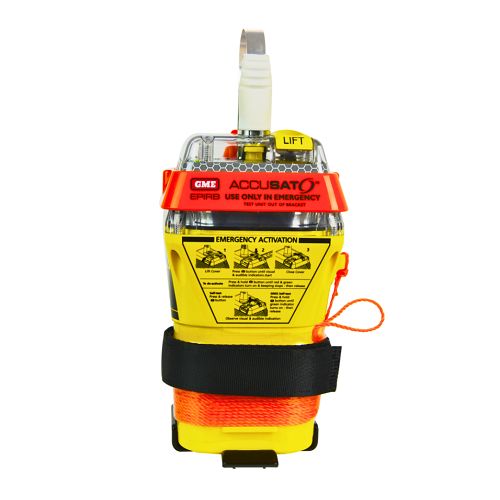
A 10‑year battery EPIRB with integrated GNSS (supports GPS and Galileo), infrared strobe and 121.5 MHz homing signal. Approved for worldwide COSPAS‑SARSAT operation.
Explore →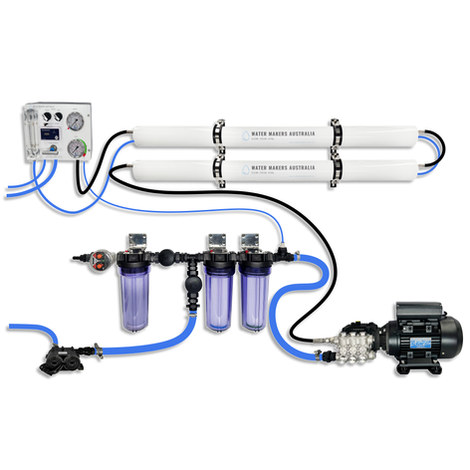
A two-membrane modular watermaker with 140 L/h nominal output, aimed at families and liveaboards that want more water per run.
Explore →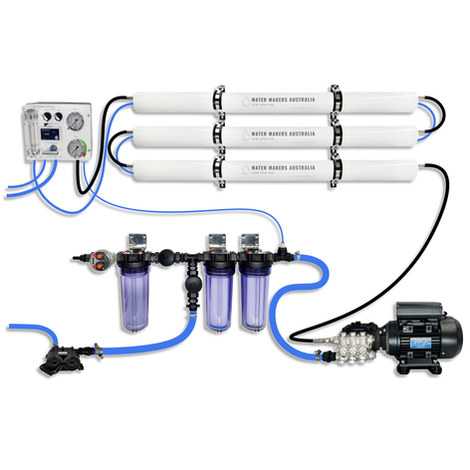
A three-membrane modular watermaker with 200 L/h nominal output and up to 240 L/h family-level marketing, for larger crews and heavy use.
Explore →