Loading this page…

Loading this page…
Sailing club
Capricornia Cruising Yacht Club (CCYC) is a keelboat-focused yacht club at Rosslyn Bay on the Capricorn Coast, Queensland. The club runs regular racing and cruising events (including the Keppel 100, 3 Island Race and Brass Monkey Series), operates a Discover Sailing Centre specialising in keelboat training, and provides shore facilities such as a clubhouse, jetty, hardstand and haul-out/storage area for keelboats. The clubhouse lies adjacent to Keppel Bay Marina and the Coast Guard at Rosslyn Bay, making Keppel Bay and the nearby Keppel Islands the club's local sailing waters.
About
Capricornia Cruising Yacht Club (CCYC) is a keelboat-focused yacht club at Rosslyn Bay on the Capricorn Coast, Queensland. The club runs regular racing and cruising events (including the Keppel 100, 3 Island Race and Brass Monkey Series), operates a Discover Sailing Centre specialising in keelboat training, and provides shore facilities such as a clubhouse, jetty, hardstand and haul-out/storage area for keelboats. The clubhouse lies adjacent to Keppel Bay Marina and the Coast Guard at Rosslyn Bay, making Keppel Bay and the nearby Keppel Islands the club's local sailing waters.
Service area: Rosslyn Bay / Keppel Bay, Capricorn Coast, Queensland
Keep exploring
Capricornia Cruising Yacht Club is a sailing club based at Rosslyn Bay (Yeppoon), established in 1974. The club operates a clubhouse near Keppel Bay Marina and runs club sailing activities including race events, race nominations and results, a sailing school with training courses, and social events and functions for members.
The distinctive piece of Capricornia's training offering is its specialisation: this is a Discover Sailing Centre that teaches on keelboats, and its syllabus climbs all the way to spinnaker work. When Australian Sailing profiled the club, it reported Capricornia as the only Discover Sailing Centre in the country offering Spinnaker courses at that time — a claim worth attributing to the profile, but a striking one for a regional club.
The pathway is structured in steps and delivered monthly. Step 1 covers Start Crewing and Start Helming; Step 2 moves graduates into Start Skippering; Step 3 branches into Spinnakers — both symmetric and asymmetric — and Start Racing, with further courses available on request. All of it happens aboard the club's own training yacht, an 8-metre Swarbrick (S80) called The Bendigo, sponsored by the Bendigo Bank's Emu Park Community Bank Branch.
The sailing school page lists course fees of $250 for members and $350 for non-members, with a minimum of two registrants needed before a course proceeds. For people wanting to test the water before joining, the club offers SailPass temporary memberships.
The club secured Australian Sailing accreditation as a Discover Sailing Centre in 2016, and the program has been a clear growth engine since. It sits inside a wider racing ecosystem managed through the club website, where members can nominate for races, check published results, follow yacht tracking and consult a yacht register. The combination — a dedicated training keelboat, a progressive course ladder that finishes in spinnaker handling and race craft, and a bank of regular club racing to practise in — gives newcomers an unusually complete route from first crewing gig to competitive skippering, all without leaving Keppel Bay.
The clubhouse stands at 1 John Howes Drive, Rosslyn Bay, within an easy walk of Keppel Bay Marina and roughly at 23.16 degrees south, 150.79 degrees east. The visitor entrance sits beside the Coast Guard building, and full members enjoy round-the-clock access to the clubhouse. It is a working sailors' facility rather than a showpiece: a licensed bar with three beers on tap (open noon to 7pm Saturday to Thursday, and until 10pm on Fridays), free WiFi, a barbecue, a club jetty and ramp, a boat wash-down area and a maintenance yard. The clubhouse deck, which catches sunset views over Rosslyn Bay harbour, is marketed for functions such as weddings and birthdays.
What sets the operation apart from most community clubs is its boat-handling capacity. According to Australian Sailing's profile, the club operates a 100-berth hardstand and storage area complete with haulout and work facilities — serious infrastructure for a volunteer-based organisation, and a genuine asset for cruising members maintaining keelboats between seasons.
The sailing waters are Keppel Bay itself, one of Queensland's most inviting cruising grounds. The Keppel Islands — Great Keppel Island chief among them — lie just offshore, giving weekend racers and cruisers alike a scatter of anchorages, beaches and island courses within a short sail of the harbour. The club's signature events take full advantage: the Keppel 100 and the 3 Island Race are built around these waters, while the Brass Monkey Series keeps competition ticking over through the cooler months. A short hop across the bay connects members with the dinghy sailors of Keppel Bay Sailing Club in Yeppoon, making this compact coastline home to two complementary clubs rather than rivals.
Capricornia Cruising Yacht Club began in 1974, started by a small band of sailors who lived on the Capricorn Coast, according to the account Australian Sailing published in its Club in Focus feature. The names of those founders and the details of any early clubhouse construction have not been documented publicly, so the club's first chapter survives mainly as that single, evocative sentence — a handful of locals who wanted organised keelboat sailing on their own stretch of coast.
The decades since can be read through a handful of well-documented milestones. The most consequential recent one came in 2016, when the club won its Discover Sailing Centre accreditation. That accreditation formalised the keelboat training that has since become the club's calling card, and it was the club's decision to extend its course ladder into spinnaker instruction — reported at the time as unique among Australian Discover Sailing Centres — that signalled real ambition. The purchase and operation of the Swarbrick S80 training yacht The Bendigo, backed by the Emu Park Community Bank Branch of Bendigo Bank, anchored the program in physical hardware.
Sporting heritage arrived through people as much as events. The club counts Joey Newton — RC44 World Champion and veteran of six America's Cup campaigns, twice on the winning side — as a home-club sailor, a connection highlighted by Australian Sailing. Meanwhile, the club built its own competitive traditions through the Keppel 100, the 3 Island Race and the Brass Monkey Series, which the national body credits with drawing strong competitor and spectator numbers year after year.
Membership figures tell the quiet success story: 334 members at the time of the Club in Focus profile, more than a third of them women — a healthy, growing community club half a century on from that 1974 beginning.
Bernier Island is a remote, conservation-focused island on the north-west edge of the Shark Bay World Heritage Area. It offers quiet, wildlife-rich cruising close to Dorre Island and the Shark Bay entrance, but the place is conservation-sensitive, has restricted visitor access and limited facilities — making it best for experienced cruising sailors planning day visits or short anchorage stops from Denham rather than casual overnight island-hopping.

Late spring to summer is usually the best time for beginners to start learning to sail in Tasmania because the weather is generally warmer, days are longer and conditions are often more settled. Expect lighter to moderate winds with regular afternoon sea breees in summer, while spring and autumn bring more changeable and sometimes stronger conditions; winter is colder, wetter and typically windier with more fronts and swell.
Explore →
Use ramps and beaches with respect for local conditions: check ramp layout, tide and swell, wind direction, vehicle access and crowding; prepare boat and crew before you launch or retrieve; and follow local signage, courtesy and safety practices. Specifics vary by ramp and beach, so confirm details for the exact site before you go.
Explore →
Expect very different seasonal systems across Western Australia: the south‑west (Perth to Albany) has a strong summer afternoon sea breeze (the “Fremantle Doctor”) and winter westerly fronts, while northern WA follows a wet/dry monsoonal cycle with strong seasonal onshore winds, thunderstorms and cyclone risk in the wet season. Local headlands, estuaries and tidal flows often change what you actually feel on the water, so learn the local timing and sheltered venues first.
Explore →
Write a one‑page plan with the who/what/when/where/how of your trip, keep a copy on board and leave the main copy with a responsible person ashore (and optionally with your club, marina office or local volunteer rescue service).
Explore →
A practical guide for recreational sailors planning trips around the Capricorn Coast and Keppel Islands, covering seasonal considerations, common routes, anchorages, hazards, provisioning and sensible safety planning for Australian conditions.
Explore →
A practical guide for new sailors on picking the right Australian sailing club: training, boat access, racing, social fit, costs and the key questions to ask before joining.
Explore →A practical guide for recreational sailors planning visits to Albany and King George Sound. Covers the main anchorage areas, typical local weather patterns, tidal and current considerations, navigational hazards, on-the-water etiquette and a pre-departure checklist to help you plan a safe passage and enjoyable stopover
Explore →A practical guide for recreational sailors planning trips around Shark Bay, focusing on Denham, Dirk Hartog Island and nearby protected anchorages. Covers local conditions, route planning, anchoring, hazards, tides, wildlife considerations and sensible trip planning for coastal cruising in this unique West Australian,́
Explore →Burke Yachtsman Gear Bag 40L - Shop Now Zip Pay | Tamar Marine Skip to content 59 – 63 Holbrook Street, Invermay Online Shop Open 24/7 Products search Contact us 1300 MARINE $ 0.00 0 Cart Burke Yachtsman Gear Bag 40L $ 79.90 Colour Choose an option Black Blue Black Blue Clear - Burke Yachtsman Gear Bag 40L quantity + Add to cart Enquire about this product SKU BAGB-Y24/BLACK* Category Bags - Sail & Gear A Burke classic and customer favourite, the Yachtsman’s Gear Bag is built tough to handle wet, salty conditions while keeping your gear dry and protected. Made from double coated waterproof…
Explore →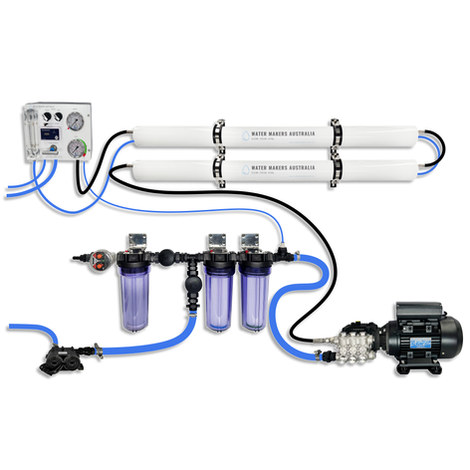
A two-membrane modular watermaker with 140 L/h nominal output, aimed at families and liveaboards that want more water per run.
Explore →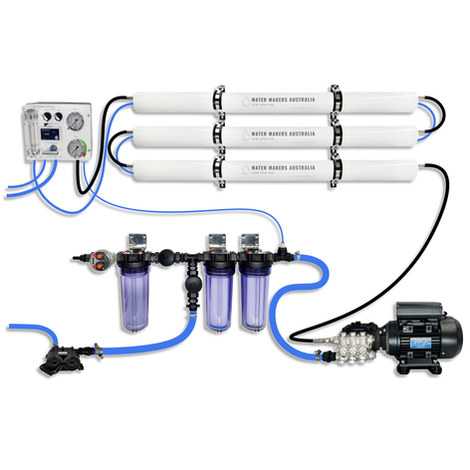
A three-membrane modular watermaker with 200 L/h nominal output and up to 240 L/h family-level marketing, for larger crews and heavy use.
Explore →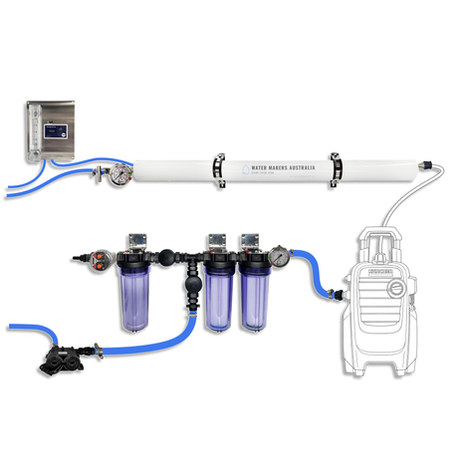
A one-membrane modular marine watermaker with 80 L/h nominal output, remote stainless control panel, standard consumables and direct Australian support.
Explore →