Loading this page…

Loading this page…
Sailing club
Chelsea Yacht Club is an off‑the‑beach sailing and community club on the Chelsea foreshore (Chelsea, VIC) offering organised dinghy and catamaran sailing programs, social events and venue hire. The club runs Learn to Sail courses (Tackers for primary school age through to adult Start Sailing/Better Sailing), Come & Try sessions (SailPass), regular on‑water racing and volunteer race‑officer activities. The club provides boat and board storage options at its foreshore clubhouse and at a nearby indoor facility called “The Boat Hub” (Chelsea Heights), and hosts social events, a members’ bar and catering for functions.
About
Chelsea Yacht Club is an off‑the‑beach sailing and community club on the Chelsea foreshore (Chelsea, VIC) offering organised dinghy and catamaran sailing programs, social events and venue hire. The club runs Learn to Sail courses (Tackers for primary school age through to adult Start Sailing/Better Sailing), Come & Try sessions (SailPass), regular on‑water racing and volunteer race‑officer activities. The club provides boat and board storage options at its foreshore clubhouse and at a nearby indoor facility called “The Boat Hub” (Chelsea Heights), and hosts social events, a members’ bar and catering for functions.
Service area: Chelsea, VIC
Keep exploring
Some clubs race; some clubs teach; Chelsea Yacht Club has spent more than eighty years refusing to choose between the two. Set directly on the Chelsea foreshore on Port Phillip's eastern shore, about forty minutes south-east of Melbourne, it is an off-the-beach dinghy and catamaran club where the clubhouse doors open straight onto the sand and kayakers, paddle boarders, windsurfers and swimmers share the membership categories with the racing fleet.
The numbers behind the sailing are striking: sailors flying Chelsea colours have, by the club's own tally, accumulated two world crowns, 46 national titles and 130 Victorian championships. The most famous name attached is John Bertrand — the Australia II skipper, Olympic Finn bronze medallist and two-time Etchells world champion — who began here aged seven as a cadet alongside his brother Lex, and who holds Extraordinary Membership to this day. Yet the club's modern identity is as much social as competitive.
Growth has been steady over recent years, a part-time paid club manager was appointed in 2019, and the calendar mixes racing with community dinners, live "music at the beach" sessions and functions in a room overlooking the bay. Signature events show the same breadth: the Four Of A Kind inter-class regatta with three decades behind it, an International Women's Day Regatta requiring at least one woman aboard every boat, and the Chelsea Classic for vintage and veteran dinghies and cats.
It amounts to a club that takes its sailing seriously and itself lightly — a combination that has clearly worked for generations of bayside families.
Where Chelsea genuinely stands apart is in the reach of its teaching. Beyond the usual club members, the club runs programs for primary and secondary students, specialist schools and community organisations — an outward-facing training operation that treats the beach as a public asset rather than a members' preserve. Delivery sits under a fully accredited Discover Sailing Program staffed by Australian Sailing qualified instructors, and the course menu is wide: Tackers for the youngest sailors, Start Sailing and Better Sailing for those building skills, Better Racing for the competitive-minded, SheSails for women, OutThere Sailing for teenagers, and Power Boat Handling for those going the other way.
The ambition stretches further still, with plans to expand the Discover Sailing Centre toward year-round operation spanning sailing, windsurfing, paddling and foiling. The pathway has genuine continuity behind it, too — Lex Bertrand, a member for seventy years, an Olympic coach and the recipient of the club's inaugural Significant Contribution Award, still helps run the Saturday learn-to-sail sessions. Racing then absorbs the graduates.
The season runs October to April with Saturday as the traditional race day, and the classes on the water reflect every stage of development: Optimists for juniors, Pacers for training and club racing, and Javelin, Sabre, Impulse, Laser, RS Aero and RS100 for the one-design sailors, with Windsurfers alongside. The club's own Pacer fleet is put to work at the International Women's Day Regatta so that women without a boat can still compete. Plans to expand social, winter and weekday sailing suggest the schedule will only broaden.
For a bayside family, the practical upshot is a complete ladder — first lesson to state championship — within one small, well-drilled club.
Chelsea's clubhouse stands on the foreshore at the end of Kelvin Grove, and its defining physical fact is that there is nothing between the building and the water but sand. This is a pure off-the-beach operation: boats are rigged on the beach and hand-launched into Port Phillip, with no marina, no travel lift and no moorings to manage. The bay here behaves as eastern Port Phillip generally does — a broad, relatively shallow expanse where summer afternoons bring a workable sea breeze and the fetch is long enough to reward good upwind work without producing dangerous seas for dinghies and beach cats.
Members talk of sunsets over the water and dolphins visiting the shoreline, and the beach doubles as a community asset for the kayakers, board paddlers and swimmers the club also serves. Because beach storage is finite, the club has been inventive: alongside boat and board storage at the foreshore building it operates a "Boat Hub", an undercover space for storage and boat maintenance housed in an industrial estate a few minutes away in Chelsea Heights — a practical answer to a constraint every beach club knows.
The clubhouse itself is a substantial multi-storey building, refurbished in recent years with lift access and accessible toilets, and containing a function space called The Bay Room overlooking the water, a members' lounge, commercial kitchen, licensed bar and a beach-front deck, with facilities open Friday, Saturday and Sunday nights and a large car park alongside. For visiting sailors the arithmetic is simple: tow the dinghy, rig on the sand, launch off the beach, and be racing within sight of the clubhouse balcony.
Few Melbourne clubs offer a shorter distance between car park and start line.
The club's own account fixes its founding to a meeting on 24 March 1938, when about twenty people gathered, elected the first officers and committee that same night, and placed ten yachts on the register — a roll call that says everything about the era: a VJ named Vyres, the 18-foot punt San Loo, the 18-footer Tom Thumb, the 10-footer Sea Chal, and two canvas canoes fitted with sails.
The idea had taken shape the previous year among a circle of people teaching themselves to sail on the bay, and remarkably the club has remained on the same Chelsea foreshore site ever since — more than eight decades of continuity on one patch of sand. The Bertrand brothers thread through the post-war decades: John and Lex won Sabot and Vaucluse Junior championships as Chelsea cadets, and in 1968, sailing the Lightweight Sharpie V93 "Triad" with Peter Evans, they won the Australian championship on their own club's water.
John went on to Olympic bronze and the America's Cup; Lex stayed, accumulating seventy years of membership, a career as an Olympic coach, and the club's inaugural Significant Contribution Award. The clubhouse has been modernised in stages, with recent major works installing lift access and accessible toilets and upgrading the function room, members' area, kitchen, bar and the deck facing the beach.
The strategic turn of recent years dates from 2019, when the club appointed its first paid part-time manager and set a direction built on growing membership, widening participation and becoming more open and accessible — an approach that brought national attention when Australian Sailing featured Chelsea as its Club in Focus in August 2021. Through it all the tally has kept climbing: two world, 46 national and 130 Victorian championships won by sailors flying Chelsea colours.
Comprehensive sailing guide to the Bundaberg region covering the Burnett River, Burnett Heads and nearby reefs and islands. Includes geography, seasonal conditions, principal sailing areas, anchorages and visitor berths, arriving and harbour navigation, facilities ashore, local hazards and limitations, regulatory and conservation constraints and suggested sailing experiences suited to day sailors through to passagemakers. Concludes with who the area suits and a short list of authoritative sources consulted.

Look for a friendly club with beginner-focused training, accessible facilities and boats, a supportive community, clear safety practices, and opportunities to progress at your own pace.
Explore →
Late spring to summer is usually the best time for beginners to start learning to sail in Tasmania because the weather is generally warmer, days are longer and conditions are often more settled. Expect lighter to moderate winds with regular afternoon sea breees in summer, while spring and autumn bring more changeable and sometimes stronger conditions; winter is colder, wetter and typically windier with more fronts and swell.
Explore →
Expect very different seasonal systems across Western Australia: the south‑west (Perth to Albany) has a strong summer afternoon sea breeze (the “Fremantle Doctor”) and winter westerly fronts, while northern WA follows a wet/dry monsoonal cycle with strong seasonal onshore winds, thunderstorms and cyclone risk in the wet season. Local headlands, estuaries and tidal flows often change what you actually feel on the water, so learn the local timing and sheltered venues first.
Explore →
Pick a stable, simple, forgiving dinghy with a single sail or basic sloop rig, affordable handling and easy maintenance—ideally one with a local class or school nearby so you can access coaching and spare parts.
Explore →
A concise, practical guide to the points of sail and how to trim sails effectively for common Australian conditions. Learn the basics of wind angles, sail shape, telltales, reefing considerations and simple steps to improve boat speed and balance.
Explore →
A practical guide for new sailors on picking the right Australian sailing club: training, boat access, racing, social fit, costs and the key questions to ask before joining.
Explore →
A practical, Australia‑focused introduction to sailing: key terms, common boat types, basic manoeuvres, where to learn, licence and club options, and planning your first trips with safety and local conditions in mind.
Explore →A practical guide for recreational sailors planning visits to Albany and King George Sound. Covers the main anchorage areas, typical local weather patterns, tidal and current considerations, navigational hazards, on-the-water etiquette and a pre-departure checklist to help you plan a safe passage and enjoyable stopover
Explore →Burke Yachtsman Gear Bag 40L - Shop Now Zip Pay | Tamar Marine Skip to content 59 – 63 Holbrook Street, Invermay Online Shop Open 24/7 Products search Contact us 1300 MARINE $ 0.00 0 Cart Burke Yachtsman Gear Bag 40L $ 79.90 Colour Choose an option Black Blue Black Blue Clear - Burke Yachtsman Gear Bag 40L quantity + Add to cart Enquire about this product SKU BAGB-Y24/BLACK* Category Bags - Sail & Gear A Burke classic and customer favourite, the Yachtsman’s Gear Bag is built tough to handle wet, salty conditions while keeping your gear dry and protected. Made from double coated waterproof…
Explore →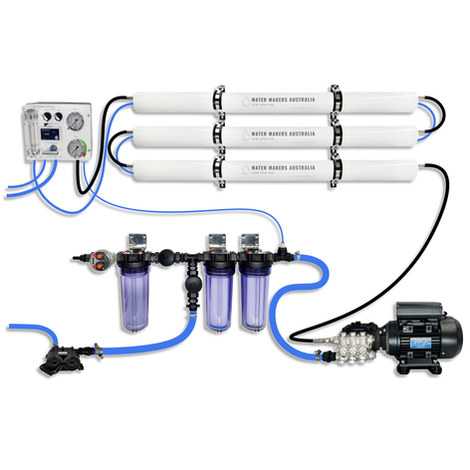
A three-membrane modular watermaker with 200 L/h nominal output and up to 240 L/h family-level marketing, for larger crews and heavy use.
Explore →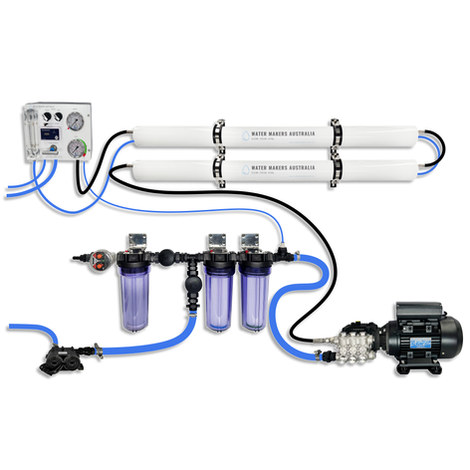
A two-membrane modular watermaker with 140 L/h nominal output, aimed at families and liveaboards that want more water per run.
Explore →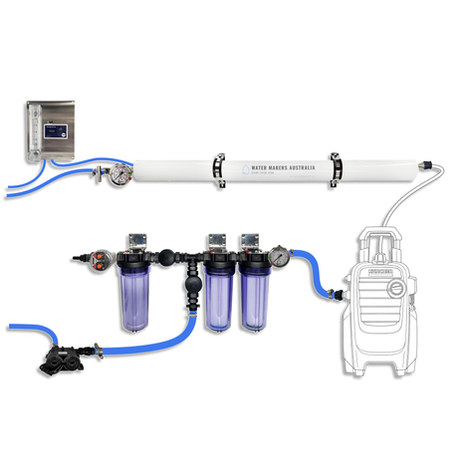
A one-membrane modular marine watermaker with 80 L/h nominal output, remote stainless control panel, standard consumables and direct Australian support.
Explore →