Loading this page…

Loading this page…
Sailing club
Cleveland Yacht Club (QLD) is a volunteer-run, family-friendly off-the-beach sailing club based at Cleveland Point on the Redlands Coast, providing direct launch access to southern Moreton Bay for dinghies, multihulls and trailer-sailers. The club runs regular Sunday racing through the summer, a winter series, training that converts newcomers into active racers and volunteers, and community events including the long-standing Peel Island Marathon.
About
Cleveland Yacht Club (QLD) is a volunteer-run, family-friendly off-the-beach sailing club based at Cleveland Point on the Redlands Coast, providing direct launch access to southern Moreton Bay for dinghies, multihulls and trailer-sailers. The club runs regular Sunday racing through the summer, a winter series, training that converts newcomers into active racers and volunteers, and community events including the long-standing Peel Island Marathon.
Service area: Cleveland Point / southern Moreton Bay (Redlands Coast), Queensland
Keep exploring
Cleveland Yacht Club is a not‑for‑profit sailing club on Moreton Bay in Cleveland, QLD (established 1904). The club runs regular off‑the‑beach racing for dinghies and catamarans (club racing most Sundays in summer and alternate Sundays in winter), hosts events such as the Peel Island Marathon, offers individualised Learn to Sail training for youth and adults (including boat hire for training), provides boat storage for members and non‑members, supports paddling sessions (surf skis and other paddlers), and operates a canteen. The club welcomes social sailors, competitors and visitors and publishes a club calendar of activities.
Cleveland's learn-to-sail offering is distinctive for its shape rather than its branding: individualised Sunday-morning training for youths and adults, priced at $80 per session, with boat hire included and the option to step straight into that afternoon's club racing. Instruction happens in the club's Pacer and Flying 11 dinghies — two- and three-person boats that forgive beginner mistakes — and the pathway beyond them is unusual for a club this size, leading toward high-performance racing catamarans. No Tackers age ladder here; the emphasis is on one-to-one attention and fast conversion into actual racing sailors.
That conversion is deliberate. Australian Sailing's awards coverage describes a reinvigorated training program organised around what the citation terms a conversion model, in which trainees become members, then volunteers, then lifelong sailors — the same pipeline that drove the club's recent membership and volunteer surges. A train-the-trainer program has been expanded with Australian Sailing training support, building instructor depth in-house. Notably, the club does not advertise Discover Sailing Centre accreditation; its training is deliberately individualised rather than delivered as packaged national courses.
Racing is the weekly heartbeat. Summer competition runs every Sunday from September through April or May, and winter racing — introduced in 2005 — fills roughly every second Sunday from May to August. A Club Championship is decided over ten races, with other series alongside, and both class and personal handicapping keep results open across a mixed fleet. That fleet is eclectic: Sabres, Pacers, 125s, Lasers, Corsairs and MGs on the dinghy side; Nacras, Hobies, Windrushes, Calypsos and Wetas among the multihulls; plus an active Yacht Group.
Off the racetrack, the calendar includes destination sails with a barbecue at the far end, an annual awards night and a Christmas party — and on Saturdays, paddler members take to the water on surf skis stored at the club.
The clubhouse address is 231 Shore Street North, Cleveland, right at historic Cleveland Point beside The Lighthouse restaurant. From the front of the building, a boat ramp gives direct access into Moreton Bay — a launching arrangement about as convenient as off-the-beach sailing gets, and one that explains much of the club's enduring appeal to time-poor families.
The sailing waters are southern Moreton Bay, a broad, island-sheltered expanse that rewards repeat exploration. Peel Island — namesake of the club's marathon — sits within easy reach, and local reporting on the club notes the bay's regular wildlife traffic: turtles, dolphins, fish and abundant birdlife sharing the water with the racing fleets. The clubhouse itself has a deck looking out over the bay, a canteen serving food and drinks with a bar operating after racing, safety boats crewed by qualified people, and boat storage and hire on site.
Cleveland Point is a heritage corner of the Redlands in its own right, and the club's presence there connects modern dinghy racing with one of the bay's oldest maritime localities. For visiting sailors, the practical picture is straightforward: rig on the grass, launch off the ramp, race within sight of the clubhouse, and return to a deck with food, drink and a view. Sustainability is woven into club life at the site — recycling through Containers for Change, reinvestment in solar, and organised bay clean-up events are all documented parts of the program. It is a compact, complete sailing facility in one of southern Moreton Bay's most storied spots.
Cleveland Yacht Club was established in 1904, which makes its recent membership record all the more satisfying: the 95 members of 2024–25 represented the largest roll in 120 years of continuous existence. The club's published record of its early decades is thin — founders' names and the story of the first clubhouse have not been documented on its current website — but the longevity itself, as a volunteer-run club on the same point, says plenty.
The modern competitive tradition is easier to trace. The Peel Island Marathon, now the club's flagship event, was first held around 1971–72 and ran its 53rd edition at Easter 2024, with the 54th following in April 2025. The 54th, sponsored by Sunstate WaterSports, was reimagined with social activities alongside racing and drew ten sailing classes — windsurfers, trailer sailers and yachts among them — evidence that a venerable event can still be reinvented. Winter series racing arrived in 2005, extending the club's season beyond the summer months.
Recognition arrived in force in 2025. After hosting the Nacra State Titles during 2024–25, the club collected the state Club of the Year (Category B) honour in September 2025 and went on to contest the national award as a finalist. The governing body's citation highlighted not just growth but its shape: a conversion-driven training model, expanded instructor development and a volunteer base that had grown 175 per cent.
Threaded through the record is a consistent philosophy. Commodore Brian Russell's 2004 statement — that the club has always strived to stay accessible to anyone interested in sailing, whatever their wealth or social standing — remains quoted on the club's about page today. Two decades later, with record membership and state honours in hand, that accessibility looks less like a slogan and more like a strategy that finally had its moment.
A detailed sailing guide to the Tollgate Islands area on the NSW south coast, focused on Batemans Bay, the Clyde River entrance and nearby sheltered waters. The guide explains geography, typical conditions, principal sailing zones, anchorages and moorings, facilities ashore and practical arrival notes. It highlights local hazards — exposed heads, shifting sand, bird-protection restrictions and commercial traffic — and outlines local rules and responsible-access requirements. Several suggested sailing experiences are provided for day sailors, weekend cruisers and passagemakers, with clear notes

Use ramps and beaches with respect for local conditions: check ramp layout, tide and swell, wind direction, vehicle access and crowding; prepare boat and crew before you launch or retrieve; and follow local signage, courtesy and safety practices. Specifics vary by ramp and beach, so confirm details for the exact site before you go.
Explore →
Pick a protected bay, estuary or river reach where you can rig, launch and arrive on calm water within a short, sheltered transit; choose a site with a good ramp or jetty, clear recovery options and a nearby sailing club, marina or commercial operator for local knowledge and help.
Explore →
Look for a friendly club with beginner-focused training, accessible facilities and boats, a supportive community, clear safety practices, and opportunities to progress at your own pace.
Explore →
Rig and de-rig a small dinghy by following a consistent, step-by-step sequence: prepare the boat on shore, fit spars and foils in a stable order, control sails and running rigging so lines don’t tangle, check fittings and safety gear, and reverse the process when coming ashore—always working with a partner when possible and staying aware of wind and tide.
Explore →
A practical guide for new sailors on picking the right Australian sailing club: training, boat access, racing, social fit, costs and the key questions to ask before joining.
Explore →Practical guide for recreational sailors planning a coastal cruise from Sydney north to the Queensland border. Covers route options, weather and tidal considerations, planning checklists, common hazards, anchorages and practical examples for a safe, enjoyable trip.
Explore →
A practical guide for recreational sailors planning trips on the Gold Coast Broadwater: key features, local weather and tide considerations, navigation tips, common hazards, equipment checklist and step‑by‑step trip planning tailored to Australian conditions.
Explore →A concise, practical introduction to the essential parts of a recreational sailing boat for beginners in Australia. Covers hull, deck, rigging, sails, steering, below-decks spaces and safety equipment, with simple explanations, common mistakes and a pre-decast checklist to help new sailors communicate and get underway.
Explore →Burke Yachtsman Gear Bag 40L - Shop Now Zip Pay | Tamar Marine Skip to content 59 – 63 Holbrook Street, Invermay Online Shop Open 24/7 Products search Contact us 1300 MARINE $ 0.00 0 Cart Burke Yachtsman Gear Bag 40L $ 79.90 Colour Choose an option Black Blue Black Blue Clear - Burke Yachtsman Gear Bag 40L quantity + Add to cart Enquire about this product SKU BAGB-Y24/BLACK* Category Bags - Sail & Gear A Burke classic and customer favourite, the Yachtsman’s Gear Bag is built tough to handle wet, salty conditions while keeping your gear dry and protected. Made from double coated waterproof…
Explore →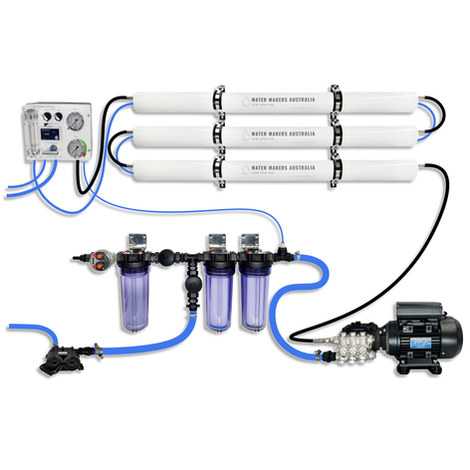
A three-membrane modular watermaker with 200 L/h nominal output and up to 240 L/h family-level marketing, for larger crews and heavy use.
Explore →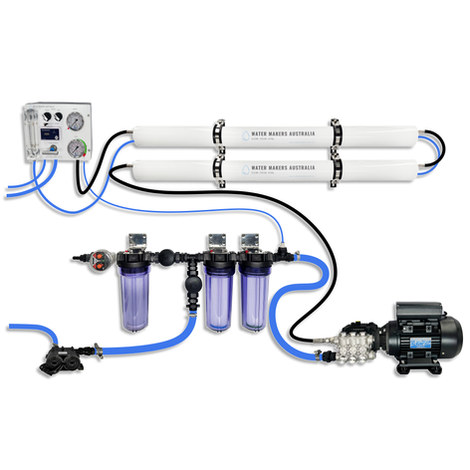
A two-membrane modular watermaker with 140 L/h nominal output, aimed at families and liveaboards that want more water per run.
Explore →
Self-contained, battery-powered plug‑and‑play autopilot designed for standard hydraulic steering systems.
Explore →