Loading this page…

Loading this page…
Sailing club
Colac Yacht Club is a family-friendly sailing club on the shore of Lake Colac in South West Victoria. The club runs organised sailing programs and events (including Discover Sailing days, a Learn-to-Sail program, regattas and pennant series) and encourages members and the wider community to participate in recreational and competitive sailing.
About
Colac Yacht Club is a family-friendly sailing club on the shore of Lake Colac in South West Victoria. The club runs organised sailing programs and events (including Discover Sailing days, a Learn-to-Sail program, regattas and pennant series) and encourages members and the wider community to participate in recreational and competitive sailing.
Service area: Colac, VIC
Keep exploring
Western Victoria's sailing tradition runs through Colac. The local club stands on the shore of Lake Colac, described as the largest natural freshwater lake in the state, and it carries itself with the quiet assurance of an organisation that may be older than almost any other in this directory — the club states that it was established more than 135 years ago, though the precise founding year has been lost to the record.
What is certain is the character of the place today: a family-friendly country club whose stated mission is fostering sailing and opening it up to the wider community, catering for everything from off-the-beach dinghies to trailable yachts in an atmosphere it describes as competitive and relaxed at once. The honour roll, the club says, includes past world champions, Olympians, and national and state titleholders across a variety of classes — names it keeps to itself, but the claim sits comfortably with the lake's long racing pedigree.
One name is firmly on the record: life member Ian Lane, whose sixty-plus years in the sport, with many championship wins and national and Victorian placings, were recognised with Honorary Lifetime Contributor honours at the 2022 Victorian Sailing Awards. Racing today centres on a Pennant Racing Series that splits into fleets such as Intermediate Mono — sailed in Impulse dinghies — and Trailable, where RL24s, a Coreel 22L and Flying Fifteens compete, with Sabres and 125s also in the mix.
For sailors in Victoria's south-west, Colac offers something the coast cannot: serious freshwater racing on a big, open lake, wrapped in one of the oldest sailing stories in the state.
The most unexpected line on Colac's program calendar has nothing to do with full-size boats at all: the club runs a Discover Remote Control Sailing Day, introducing people to the sport through radio-controlled yachts. It is a clever piece of outreach — RC sailing strips away the wet, the cold and the physical demands while teaching wind awareness, sail trim and racing tactics in their purest form, and it opens the club to older newcomers, the less mobile, and the simply curious.
On the full-size water, development happens through competition rather than classroom. The Pennant Racing Series is the backbone, and its structure reveals the fleet: an Intermediate Mono division raced in Impulse dinghies suits sailors stepping up from beginner level, while the Trailable division fields RL24s in both single and double keel configurations, a Coreel 22L and Flying Fifteens — proper inland racer-cruisers that reward crew work and give newer sailors a berth alongside experienced skippers.
Sabres and 125s also appear around the club, keeping the classic single-hander and two-up dinghy traditions alive. The club backs its on-water life with sound governance, formally supporting the Play By The Rules and Good Sports programs that underpin safe, family-oriented sport. There is no public evidence of a Tackers junior course, an accredited Discover Sailing Centre or a Sailability program, and the club does not claim them; its stated mission is accessibility in the broader sense — a welcoming country club where the path in runs through the RC sailing day, a crew spot on a trailable yacht, and the steady education of a pennant season raced against people who have known this lake for decades.
Lake Colac is a substantial sheet of water by Victorian standards — the state's largest natural freshwater lake, of volcanic origin, formed where outflows of Barongarook and Deans Creeks were blocked — and the club occupies its shoreline within easy reach of the town. Big natural lakes make honest sailing, and historic regatta reporting from this one describes a venue that can serve up a strong breeze and rough, choppy water that tests small boats properly; a freshwater chop, short and steep, is a sterner teacher than ocean swell, and generations of Colac sailors have learned their heavy-weather skills in it.
The lake's defining characteristic, though, is variability. Its level depends heavily on multi-year weather patterns, and prolonged drought has twice in recent memory emptied it almost entirely — in 2009 and once more in 2016 — leaving the yacht club's jetty, in one memorable description, "leading to nowhere". Inland sailors across Australia know this cycle: the years when the water disappears, and the wet seasons when it returns and the fleets come back with it.
When the lake is full, it offers open, uncrowded racing water with room for long courses, a genuine rarity so close to a regional centre, and the volcanic plains setting gives the place a big-sky feel quite unlike bay or river sailing. The club maintains a hire and bookings function, and contact is direct by phone or email for visiting sailors wanting to time a trip to conditions.
For anyone who has only ever sailed salt water, a pennant race on a full Lake Colac — flat light, farmland on the horizon, a working breeze and not a ferry in sight — is a reminder of how good Victorian inland sailing can be.
Exactly when Colac Yacht Club began, nobody can now say with certainty. The club itself states that it was established over 135 years ago, which would place its origins before about 1890, but the documentary trail online runs out before reaching a founding date. What survives instead is a vivid series of glimpses. The earliest press mention yet located comes from the Colac Herald of 5 March 1909, reporting matter-of-factly on "the sixth event in connection with the Colac Yacht Club's trophy" — proof of an established racing club by that date.
The lake's regatta tradition runs deeper still: the Colac Regatta was first held in 1879, with an official first regatta on 13 December that year attended by the Governor of Victoria, and yachts brought down from Melbourne by rail — boats also arriving overland from Ballarat, Geelong and Warrnambool in what ranks among Victoria's earliest inland aquatic events. By 1911 Colac had joined with Ballarat and Albert Park in a Lake Club Association, contesting three named trophy races at the regatta.
The 1912 regatta brought a sensation when Joe White's new Charles Peel-built 25-footer — later known as Acrospire II — reportedly "caused quite a stir", and in 1913 Arthur Surry of Albert Park won the Costello Trophy at Colac, named for the hotel-keeping family who were major regatta supporters. One secondary account credits Owen E. Edwards, first commodore of Ballarat Yacht Club, with involvement in starting the Colac club, though the claim awaits firmer confirmation.
The modern record resumes with the club sending a team under the Lake Colac Yacht Club banner to the 1990 Asia Pacific teams racing championship, and with Australian Sailfish class history noting the boats spreading through the lakes around Colac and Camperdown in the 1960s. Today the story continues with the Pennant series and sailors like Ian Lane, whose six decades in the sport were honoured at the 2022 Victorian Sailing Awards.
A practical, harbour-focused cruising guide to Trial Bay on the New South Wales Mid North Coast. The guide describes the bay’s sheltered and exposed zones, headlands and islands, local seasonal wind and swell patterns, principal sailing areas and recommended anchorages, shore facilities around South West Rocks and Arakoon, navigation and arrival considerations, specific hazards such as the Macleay River entrance, sand movement and reefs, local marine park and heritage restrictions, and three realistic sailing experiences ranging from sheltered family daysails to multi-day island circuits. It’s

Look for a friendly club with beginner-focused training, accessible facilities and boats, a supportive community, clear safety practices, and opportunities to progress at your own pace.
Explore →
Before your first sail in South Australian waters check the weather and tide, make sure the boat and safety equipment are fit for the trip, confirm local rules and any area-specific hazards, and tell someone your plan.
Explore →
Expect very different seasonal systems across Western Australia: the south‑west (Perth to Albany) has a strong summer afternoon sea breeze (the “Fremantle Doctor”) and winter westerly fronts, while northern WA follows a wet/dry monsoonal cycle with strong seasonal onshore winds, thunderstorms and cyclone risk in the wet season. Local headlands, estuaries and tidal flows often change what you actually feel on the water, so learn the local timing and sheltered venues first.
Explore →
Late spring to summer is usually the best time for beginners to start learning to sail in Tasmania because the weather is generally warmer, days are longer and conditions are often more settled. Expect lighter to moderate winds with regular afternoon sea breees in summer, while spring and autumn bring more changeable and sometimes stronger conditions; winter is colder, wetter and typically windier with more fronts and swell.
Explore →
A concise, practical guide to the points of sail and how to trim sails effectively for common Australian conditions. Learn the basics of wind angles, sail shape, telltales, reefing considerations and simple steps to improve boat speed and balance.
Explore →
A practical guide for new sailors on picking the right Australian sailing club: training, boat access, racing, social fit, costs and the key questions to ask before joining.
Explore →A concise, practical introduction to the essential parts of a recreational sailing boat for beginners in Australia. Covers hull, deck, rigging, sails, steering, below-decks spaces and safety equipment, with simple explanations, common mistakes and a pre-decast checklist to help new sailors communicate and get underway.
Explore →A practical guide for recreational sailors planning visits to Albany and King George Sound. Covers the main anchorage areas, typical local weather patterns, tidal and current considerations, navigational hazards, on-the-water etiquette and a pre-departure checklist to help you plan a safe passage and enjoyable stopover
Explore →Burke Yachtsman Gear Bag 40L - Shop Now Zip Pay | Tamar Marine Skip to content 59 – 63 Holbrook Street, Invermay Online Shop Open 24/7 Products search Contact us 1300 MARINE $ 0.00 0 Cart Burke Yachtsman Gear Bag 40L $ 79.90 Colour Choose an option Black Blue Black Blue Clear - Burke Yachtsman Gear Bag 40L quantity + Add to cart Enquire about this product SKU BAGB-Y24/BLACK* Category Bags - Sail & Gear A Burke classic and customer favourite, the Yachtsman’s Gear Bag is built tough to handle wet, salty conditions while keeping your gear dry and protected. Made from double coated waterproof…
Explore →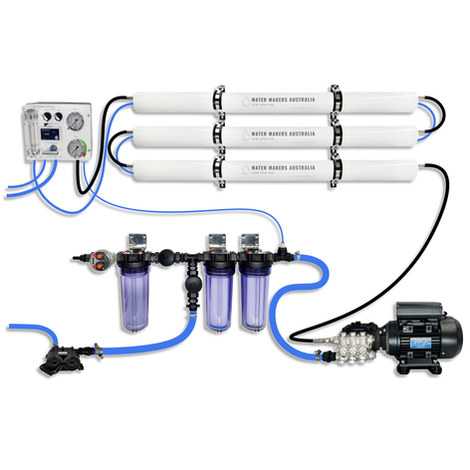
A three-membrane modular watermaker with 200 L/h nominal output and up to 240 L/h family-level marketing, for larger crews and heavy use.
Explore →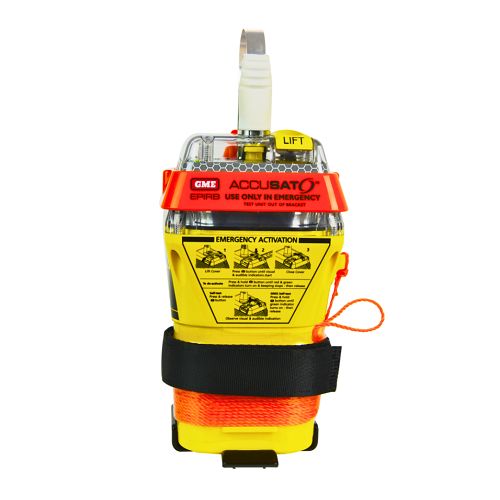
A 10‑year battery EPIRB with integrated GNSS (supports GPS and Galileo), infrared strobe and 121.5 MHz homing signal. Approved for worldwide COSPAS‑SARSAT operation.
Explore →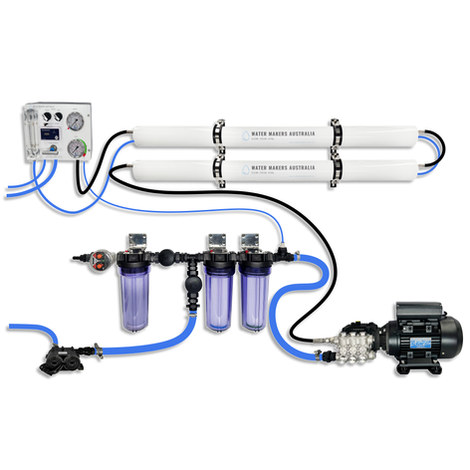
A two-membrane modular watermaker with 140 L/h nominal output, aimed at families and liveaboards that want more water per run.
Explore →