Loading this page…

Loading this page…
Sailing club
Port Hacking's all-classes sailing club on the Gunnamatta Bay waterfront, formed by merging the VJ, VS and Port Hacking Ocean Yacht clubs, with sailing for ages 8 to 80 and Friday twilights in summer.
About
Port Hacking's all-classes sailing club on the Gunnamatta Bay waterfront, formed by merging the VJ, VS and Port Hacking Ocean Yacht clubs, with sailing for ages 8 to 80 and Friday twilights in summer.
Service area: Cronulla, NSW
Keep exploring
Port Hacking has been home to organised dinghy racing since 1934, and Cronulla Sailing Club is where that whole tradition now lives — under one roof, right on the Gunnamatta Bay waterfront. The modern club is the product of three mergers of circumstance and logic: the old VJ and VS clubs combined in 1963, and in December 1991 the Port Hacking Ocean Yacht Club folded in, giving Port Hacking, for the first time, one club catering for all classes and, as the club history puts it, sailors aged from 8 to 80.
The weekly program reflects that full spectrum. Friday twilight sailing runs at 6pm through daylight saving, October to April, deliberately open to every yacht in the district as a way of tempting guests into the sport. Saturdays belong to yacht racing; Sundays to dinghies, with the strong MG14 fleet putting 10 to 15 boats on Figure-8 and Triangle courses in the estuary from 1400 hours, a Laser division sharing the course. Yacht sailors can choose from an Offshore Series, a Short Ocean Series of up to about 20 nautical miles, Estuary, Passage and Triangle Series in Bate Bay, a one-design Sprint Series for J24s and Etchells, and winter pursuit and short ocean racing.
There's a stated philosophy underpinning it all, articulated by then-Commodore Peter McLachlan in 1994: the club "has always sought members who are actively engaged in some aspect of sailing" and, in his words, "does not seek to be just another social club". That said, Friday nights at the clubhouse have their own social program — the distinction is that here, the sailing always comes first.
The most distinctive thing in Cronulla's teaching program is that adults can learn to sail on a yacht. The Adult Learn to Sail stream for over-16s offers "Start Crewing" — four weekly three-hour sessions aboard a Beneteau yacht or a J24 with an instructor on board, following the Australian Sailing keelboat pathway. For a club with serious ocean and J24 racing, it's a smart piece of pipeline engineering: graduates arrive already fluent in the boats the club actually races. A parallel dinghy stream, Start Sailing 1, runs over six two-hour sessions using the club's NS14, MG and Laser dinghies.
Junior Learn to Sail follows the Australian Sailing-endorsed sequence — Start Sailing 1, Start Sailing 2 and Better Sailing — led by accredited instructors on Sunday mornings and during school holidays. The club's "In the Bay" fleet gives juniors their own racing ecosystem inside Gunnamatta Bay: Bic O'pen Skiffs, Optimists and Manly Juniors sailing triangle courses that mix training and racing, so the transition from student to racer happens almost without noticing.
Beyond the courses, the infrastructure keeps graduates sailing. Club Lasers are available for hire for weekly racing, lowering the ownership barrier, and the junior and training fleets share the sheltered bay while seniors race the wider estuary. Junior training has been integral to the club since the Heron class was brought in decades ago specifically to encourage families — a deliberate broadening of the club's base that today's programs continue. The through-line is unmistakable: teach people in the boats they'll race, on the water they'll race on, and they'll stay.
The clubhouse at 50 Waratah Street stands right on the water at Gunnamatta Bay's head, with a waterfront deck, a crane and a small hardstand — a compact but complete working base. Gunnamatta Bay itself is the sheltered, confined water where the junior and twilight sailing happens: protected, manageable and ideal for teaching and close-quarters racing.
Beyond the bay, the estate opens up dramatically. Dinghy racing takes place in the Port Hacking estuary, while the yacht program ranges from the estuary and Bate Bay offshore as far afield as Botany Bay, Sydney Harbour, Flinders Island and Shellharbour — a cruising and racing reach that takes in ocean passages and island destinations, not just round-the-cans afternoons. The Short Ocean Series works Bate Bay out to about 20 nautical miles, and the Triangle Series covers roughly 11, giving keelboat crews genuine variety within a short sail of the moorings.
Port Hacking is one of Sydney's great natural waterways — a drowned valley system south of the city, ringed by national park along much of its southern shore — and sailing here carries a different feel from the working harbour further north. The club's position at the bay's head puts it minutes from Cronulla's beaches, train station and town centre, which helps explain the steady flow of Friday-twilight guests. Venue hire and functions, with online charter booking, keep the waterfront clubhouse earning between race days. For a sailor weighing up Sydney clubs, the proposition is simple: sheltered bay for learning, estuary for week-to-week racing, and open ocean over the bar when you want it.
The story starts with the Port Hacking VJ Amateur Sailing Club, which first raced on Gunnamatta Bay in 1934 with no clubhouse at all — dinghies lived in private boatsheds around the bay. Racing was patchy through the war years of 1939–45, but the postwar boom put as many as 30 VJs on the water each Sunday in 1948. Two large wartime huts in Willarong Road, formerly a RAAF radar station, came into the club's hands, and members dismantled them, hauled them to the present site and reassembled them with modifications — an act of self-reliance that set the club's tone.
In 1948 the Cronulla VS Sailing Club was formed for graduates of the junior VJ years, building its own clubhouse beside the VJs' in 1951. When declining numbers in both classes forced the issue, the two amalgamated in 1963 as Cronulla Sailing Club, incorporated with limited liability. The Moth class arrived and promptly produced the club's greatest champion: David McKay won two Moth World Titles in 1969 and 1970, and later became a leading J24 sailor, taking out the NSW J24 championship at a Cronulla-hosted regatta aboard McKay Marine. The Heron came in expressly to encourage families, and junior training became established — and remains integral.
Come 1980 the ex-Air Force huts were both too small and deteriorating; with Sutherland Shire Council assistance and a Department of Sport and Recreation grant and loan, a new clubhouse was built, officially opened on 13 December 1981. A decade later, in December 1991, the Port Hacking Ocean Yacht Club — itself formed in 1964 for deep-keel yachts — merged in, completing the all-classes club. In 2026 the club convened general meetings to adopt a new constitution for Cronulla Sailing Club Limited, governance catching up with ninety years of sailing.
A practical cruising guide for the Moyne River port at the mouth of the Moyne River on Victoria’s south-west coast. It explains harbour geometry, seasonal conditions, principal sailing zones, anchorages, visitor facilities, known local hazards (bar, reefs, strong currents, surf and commercial traffic), regulatory controls and realistic experiences for day sailors, trailer-sailors and coastal cruisers. The guide draws on local port plans, state boating authorities, the yacht club’s visiting-boat practice and regional marine management documents.

Plan passages across Spencer Gulf or to Kangaroo Island by basing fuel on your boat’s actual consumption plus a generous reserve, choosing sensible staging/stop options that match your boat and crew, and prioritising shelter and weather windows (gale fronts, strong winds and tidal streams can make the gulf uncomfortable or unsafe). Confirm fuel availability, safe anchorages or marinas on your route, and check up-to-date local weather, tide and navigation information before you go.
Explore →
Use ramps and beaches with respect for local conditions: check ramp layout, tide and swell, wind direction, vehicle access and crowding; prepare boat and crew before you launch or retrieve; and follow local signage, courtesy and safety practices. Specifics vary by ramp and beach, so confirm details for the exact site before you go.
Explore →
Write a one‑page plan with the who/what/when/where/how of your trip, keep a copy on board and leave the main copy with a responsible person ashore (and optionally with your club, marina office or local volunteer rescue service).
Explore →
Before your first sail in South Australian waters check the weather and tide, make sure the boat and safety equipment are fit for the trip, confirm local rules and any area-specific hazards, and tell someone your plan.
Explore →
A practical guide for new sailors on picking the right Australian sailing club: training, boat access, racing, social fit, costs and the key questions to ask before joining.
Explore →
A practical, Australia‑focused introduction to sailing: key terms, common boat types, basic manoeuvres, where to learn, licence and club options, and planning your first trips with safety and local conditions in mind.
Explore →A practical guide for recreational sailors planning voyages to Esperance and the Recherche Archipelago: what to expect, key planning considerations, common anchorages, safety and communications, equipment recommendations and sensible steps for a successful trip in this remote southern WA cruising area.
Explore →A practical guide for recreational sailors planning day sails or short cruises around Batemans Bay, Broulee and the Clyde River. Covers local conditions, safe approaches, anchorages, launching, tides, common hazards, and checklists for trip planning and on-water decisions.
Explore →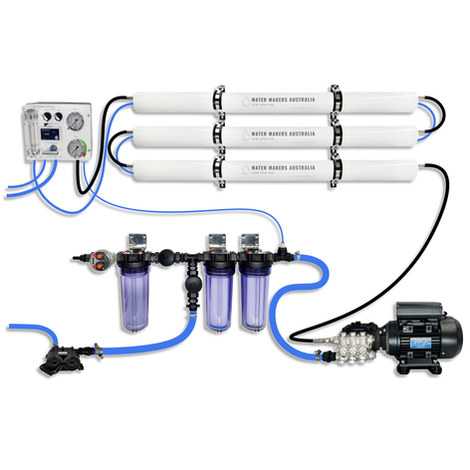
A three-membrane modular watermaker with 200 L/h nominal output and up to 240 L/h family-level marketing, for larger crews and heavy use.
Explore →Burke Yachtsman Gear Bag 40L - Shop Now Zip Pay | Tamar Marine Skip to content 59 – 63 Holbrook Street, Invermay Online Shop Open 24/7 Products search Contact us 1300 MARINE $ 0.00 0 Cart Burke Yachtsman Gear Bag 40L $ 79.90 Colour Choose an option Black Blue Black Blue Clear - Burke Yachtsman Gear Bag 40L quantity + Add to cart Enquire about this product SKU BAGB-Y24/BLACK* Category Bags - Sail & Gear A Burke classic and customer favourite, the Yachtsman’s Gear Bag is built tough to handle wet, salty conditions while keeping your gear dry and protected. Made from double coated waterproof…
Explore →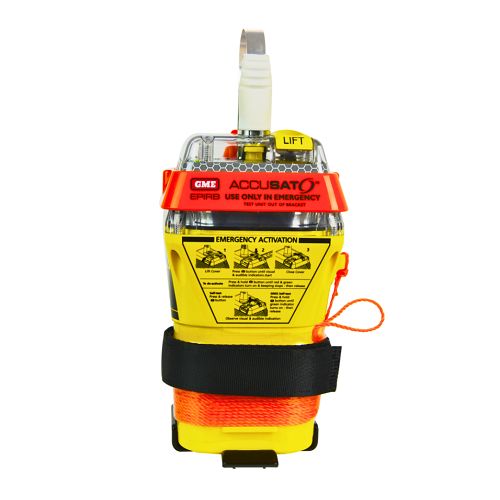
A 10‑year battery EPIRB with integrated GNSS (supports GPS and Galileo), infrared strobe and 121.5 MHz homing signal. Approved for worldwide COSPAS‑SARSAT operation.
Explore →
Self-contained, battery-powered plug‑and‑play autopilot designed for standard hydraulic steering systems.
Explore →