Loading this page…

Loading this page…
Sailing club
Darling Downs Sailing Club is a volunteer-run, family-oriented inland sailing club based at Loveday Cove on Cooby Dam (Cooby Creek Reservoir) near Meringandan, Queensland. The club promotes freshwater dinghy and small catamaran sailing for the Toowoomba and broader Darling Downs community, operating on designated weekend sailing days and hosting Sailability sessions for sailors with disabilities. Club activity has been intermittently affected by dam closures and low water levels, but the club recently marked a resumption of regular sailing following a period of reduced activity.
About
Darling Downs Sailing Club is a volunteer-run, family-oriented inland sailing club based at Loveday Cove on Cooby Dam (Cooby Creek Reservoir) near Meringandan, Queensland. The club promotes freshwater dinghy and small catamaran sailing for the Toowoomba and broader Darling Downs community, operating on designated weekend sailing days and hosting Sailability sessions for sailors with disabilities. Club activity has been intermittently affected by dam closures and low water levels, but the club recently marked a resumption of regular sailing following a period of reduced activity.
Service area: Loveday Cove, Cooby Dam (Meringandan) serving Toowoomba and the Darling Downs
Keep exploring
Darling Downs Sailing Club is a local sailing club serving Toowoomba and the Darling Downs area. The club website presents sailing calendars, a photo gallery, club history and membership information and indicates the club runs organised sailing programs and events. The site also notes the club’s online calendar has moved/redirects to a new site.
The most distinctive element of the club's program is not a course but a partnership: Sailability Darling Downs operates from the same Loveday Cove site on the third Thursday of every month, opening the dam's calm, engine-free water to sailors with disabilities. For an inland club of modest means, hosting a Sailability operation gives its training story real depth.
Beyond that, the club's teaching is practical and fleet-based rather than accreditation-based. The club owns two Lasers and a Corsair that members can use — simple, proven boats on which newcomers can learn the essentials — and directory listings describe the club as offering sail training, although no Discover Sailing Centre accreditation or formal Australian Sailing course structure has been published. Instruction, such as it is, happens the old way: on designated club weekends, aboard club boats, under the eye of more experienced members, with two Yamaha-powered rescue boats standing by.
The rhythm of the program follows the club sailing calendar. Gates open at 9am on sailing days, and the designated weekends mix social sailing with race days, keeping the pressure low and the welcome wide. Members bring a variety of craft — catamarans and monohulls both — so a novice can see several styles of small-boat sailing in a single morning.
Honesty is required about scale: this is a small volunteer club whose structured training footprint is thin compared with metropolitan Discover Sailing Centres, and years of drought shrank activity considerably. What it provides instead is rare in Queensland — a safe, enclosed, powerboat-free stretch of fresh water where families can rig a dinghy in peace, learn at their own pace and sail without salt, swell or jet-ski wash. For the Darling Downs, that alone is a service worth having.
Loveday Cove, the club's home, sits on Cooby Dam — formally the Cooby Creek Reservoir — at 730 Cooby Dam Road, Meringandan, Queensland. The dam lies roughly 17 to 35 kilometres north of Toowoomba, depending on your route, reached by a dirt road between Highfields and Meringandan that is suitable for two-wheel-drive vehicles. Toowoomba Regional Council manages the area.
The reservoir itself is modest but perfectly sailable: a surface area of around 2.7 to 3 square kilometres, a maximum depth near 12.5 metres, a capacity of about 23,092 megalitres and a navigable sailing area of roughly 8.7 kilometres. Cooby Dam is the oldest of the three dams supplying Toowoomba's water, built between 1938 and 1941 on Cooby Creek, which feeds the Condamine River. Its water-supply status dictates the rules of use: no combustion engines, no swimming and no dogs — restrictions that, for sailors, amount to a gift. The water stays quiet, clean and uncrowded.
Shore facilities are simple and functional. A single boat ramp at Loveday Cove sits beside the club building, with a picnic ground, playground and fishing pontoon nearby — enough to make a club day a family outing rather than a sailors-only affair.
The defining fact of the location, though, is variability. As a storage dam on the western slopes of the Great Dividing Range, Cooby's water level rises and falls with the seasons and the drought cycles, and the dam closes at times for maintenance, floods, low water or firefighting operations. When the dam is full, the club enjoys one of the few freshwater sailing venues in Queensland set well inland on the range — a distinction the club claims outright. When it is not, everyone waits for rain.
The club's history is, more than most, a story about water — its pursuit, its permission and its disappearance. Darling Downs Sailing Club was established in the early 1970s by a group the club's own history calls movers and shakers: Dr Sandy Milne, Brian Gale, Ian Templeman, Tony Loveday and John Bestmann. Curiously, the club did not begin on the dam it now calls home. Its first operations were at Leslie Dam near Warwick, and it took persistent lobbying — the club credits Brian Gale's approach to Clive Berghofer — before, on 14 June 1977, the club received official permission to conduct sailing on Cooby Dam.
That permission unlocked the club's best years. On 5 October 1983 it became an Incorporated Association, and the club remembers the 1980s as a very successful period with a large, active membership racing on the reservoir above Toowoomba.
Then came the dry. The droughts of 2005 to 2011 hit the club hard, and a later dry spell lasting until early 2022 hit harder still — compounded by COVID restrictions and dam closures for water quality. The club's own history records years with virtually no sailable water and little club activity, an existential stretch for any club whose entire sport depends on a reservoir's level.
The turnaround is recent and, by the club's telling, heartfelt. Having lately celebrated its 50-year anniversary — consistent with those early-1970s origins — the club is rebuilding membership and activity, announcing simply that we are back. The cove it sails from carries an echo of the founding era: the club history notes a founding member named Tony Loveday, and the sailing base is called Loveday Cove — a connection that is plausible but unverified, and best left as a pleasing possibility rather than stated fact.
Apollo Bay is a small working harbour on Victoria’s Great Ocean Road where sheltered inshore sailing meets the Southern Ocean. The character is a mix of protected harbour berths and an exposed open coast: pleasant day-sails and sheltered weekend cruising inside the bay, with demanding coastal passages immediately offshore where south‑westerly swell and strong winds from the Southern Ocean dominate. It suits coastal cruisers, trailer sailors who launch at the ramp, and experienced coastal sailors who understand bar and swell behaviour; it is not a casual open‑ocean anchorage for unprepared or

Look for a friendly club with beginner-focused training, accessible facilities and boats, a supportive community, clear safety practices, and opportunities to progress at your own pace.
Explore →
Late spring to summer is usually the best time for beginners to start learning to sail in Tasmania because the weather is generally warmer, days are longer and conditions are often more settled. Expect lighter to moderate winds with regular afternoon sea breees in summer, while spring and autumn bring more changeable and sometimes stronger conditions; winter is colder, wetter and typically windier with more fronts and swell.
Explore →
Plan to use tide and local knowledge, slow and steerable power, and deliberate positioning to work with—rather than fight—strong streams and eddies when entering or leaving Tasmanian harbours.
Explore →
Plan passages by overlaying predicted tides and tidal streams onto your charted route, timing departures to use favourable streams through constrictions and offshore features, avoiding local hazards (shoals, banks, strong rips) and building contingency waypoints. Confirm with current official tide tables, local pilotage notes and recent Notices to Mariners before departure.
Explore →
A practical guide for new sailors on picking the right Australian sailing club: training, boat access, racing, social fit, costs and the key questions to ask before joining.
Explore →
A practical, Australia-focused guide for planning and sailing around the Whitsunday Islands: weather and seasons, navigation and anchoring, moorings and parks, provisioning and charters, safety and common mistakes, plus checklists and next steps.
Explore →A practical guide for recreational sailors planning visits to Albany and King George Sound. Covers the main anchorage areas, typical local weather patterns, tidal and current considerations, navigational hazards, on-the-water etiquette and a pre-departure checklist to help you plan a safe passage and enjoyable stopover
Explore →A practical guide to the coastal weather systems that affect sailing along Western Australia's coast, focusing on the Fremantle Doctor, local sea breezes, and linked coastal phenomena. Explains how these systems form, when they tend to occur, how they influence boat handling and passage planning, common mistakes, and a
Explore →Burke Yachtsman Gear Bag 40L - Shop Now Zip Pay | Tamar Marine Skip to content 59 – 63 Holbrook Street, Invermay Online Shop Open 24/7 Products search Contact us 1300 MARINE $ 0.00 0 Cart Burke Yachtsman Gear Bag 40L $ 79.90 Colour Choose an option Black Blue Black Blue Clear - Burke Yachtsman Gear Bag 40L quantity + Add to cart Enquire about this product SKU BAGB-Y24/BLACK* Category Bags - Sail & Gear A Burke classic and customer favourite, the Yachtsman’s Gear Bag is built tough to handle wet, salty conditions while keeping your gear dry and protected. Made from double coated waterproof…
Explore →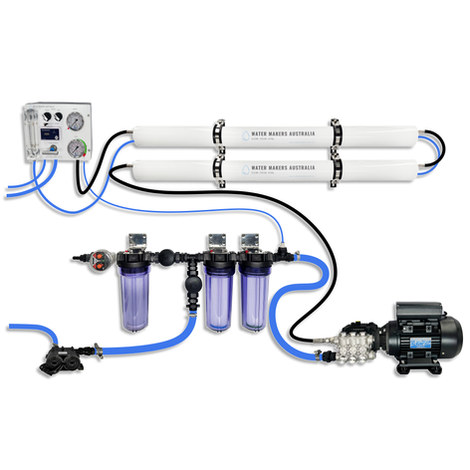
A two-membrane modular watermaker with 140 L/h nominal output, aimed at families and liveaboards that want more water per run.
Explore →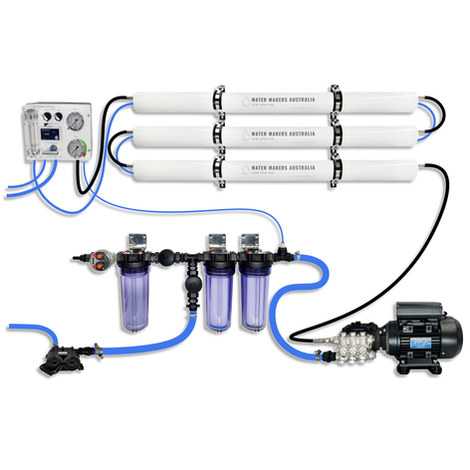
A three-membrane modular watermaker with 200 L/h nominal output and up to 240 L/h family-level marketing, for larger crews and heavy use.
Explore →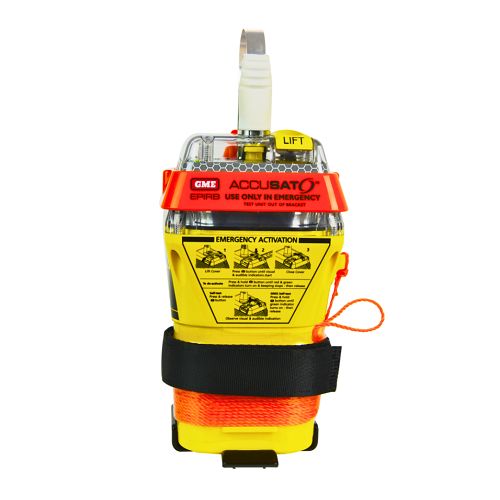
A 10‑year battery EPIRB with integrated GNSS (supports GPS and Galileo), infrared strobe and 121.5 MHz homing signal. Approved for worldwide COSPAS‑SARSAT operation.
Explore →