Loading this page…

Loading this page…
Sailing club
Darling Point Sailing Squadron (DPSS) is a volunteer-run, community dinghy and skiff club based at Norfolk Point in Manly Boat Harbour, Manly (Moreton Bay), Queensland. The club focuses on off-the-beach dinghy and 16ft skiff sailing, runs Australian Sailing–aligned learn-to-sail courses, junior development in Sabots and Dolphins, Sunday racing through the summer season and monthly winter sailing. DPSS promotes affordable, family-friendly sailing and shares facilities with community programmes including Sailability Bayside.
About
Darling Point Sailing Squadron (DPSS) is a volunteer-run, community dinghy and skiff club based at Norfolk Point in Manly Boat Harbour, Manly (Moreton Bay), Queensland. The club focuses on off-the-beach dinghy and 16ft skiff sailing, runs Australian Sailing–aligned learn-to-sail courses, junior development in Sabots and Dolphins, Sunday racing through the summer season and monthly winter sailing. DPSS promotes affordable, family-friendly sailing and shares facilities with community programmes including Sailability Bayside.
Service area: Manly (Moreton Bay), QLD
Keep exploring
Darling Point Sailing Squadron is a volunteer-run sailing club based at the northern end of Manly Boat Harbour on Norfolk Point, Manly (Brisbane). The club caters for off-the-beach dinghies and skiffs, runs regular Sunday sailing (summer season Sept–Apr, monthly winter May–Aug), operates multiple fleet classes (Sabots, MG14s, 16ft skiffs, 505s, Impulses and all-boats fleets) and offers Learn to Sail courses for all ages plus a sailing pathway and afternoon racing for more competitive sailors.
The standout piece of the squadron's training pathway is Dolphins — a Sunday-morning program that picks up where beginner courses finish. Sailed in Sabots, a class the squadron sponsors as its junior development pathway, Dolphins is the bridge between first lessons and club racing, and entry requires completion of the earlier levels plus club membership: by design, it converts course graduates into junior members with a class of their own.
The pathway into Dolphins runs through an accredited structure. DPSS is an Australian Sailing-accredited Discover Sailing Centre, with courses led by a Senior Instructor backed by AS-qualified instructors and assistants. Tackers 1 and 2 cover the entry level for primary-school-aged children — the club's promotion specifies ages six to twelve who can swim 50 metres — run on weekend mornings through the summer season and in school holidays.
From there the options widen: OutThere Sailing experiences give 13-to-17-year-olds non-competitive social sailing across dinghies, stand-up paddleboards and powerboat adventures, while Start Sailing courses for teenagers and adults are taught in the club's RS Quests with three students per instructor.
That adult stream comes with an unusually practical incentive: graduates who reach proficiency can hire the club's RS Quests and go straight into Sunday afternoon racing. It is a hire-and-race arrangement that removes the biggest barrier for new adult sailors — boat ownership — at exactly the moment enthusiasm peaks.
Racing itself runs on Sunday afternoons through the summer season, September to April, with monthly sailing through the winter months of May to August, all for off-the-beach dinghies and skiffs. And on weekdays in school terms, the same ramps and training waters serve Sailability Bayside's programs. Altogether, the squadron's offering reads as a complete small-boat education system: accredited beginner courses, a sponsored junior class, teen social sailing, adult hire-and-race, and community disability sailing in the gaps.
The clubhouse occupies Norfolk Point, up at Manly Boat Harbour's northern end, with a sporting pontoon off Trafalgar Street, Manly. The building sits on land that reclamation created and that was thrown open to community clubs when the harbour was developed — an origin story the club shares with several of its neighbours.
And what neighbours they are. Manly is among Brisbane's most concentrated boating precincts: within a short radius stand the Royal Queensland Yacht Squadron, the Wynnum Manly Yacht Club and the Moreton Bay Trailer Boat Club, along with the marina and its marine services. For a small volunteer club, holding ground in this company for decades is an achievement in itself, and it means members enjoy big-harbour infrastructure — ramps, pontoons, chandleries and repair services — without big-club fees.
The sailing waters are Waterloo Bay, the corner of Moreton Bay lying between Darling Point and Norfolk Point. It is classic Moreton Bay dinghy water: broad enough for full-length skiff courses, sheltered enough by the points and islands for junior training, and tidal in a way that keeps race officers thinking. The 16ft skiffs that made the club's racing name have always demanded room to carry their big rigs, and Waterloo Bay has provided it since the 1940s — including for a national championship in January 1983.
Practically, the site works the way an off-the-beach club should. Boats rig beside the clubhouse, launch via ramp and pontoon into sheltered water, and race within sight of shore. The name itself preserves the geography: the club began at Darling Point, on the Wynnum side of the bay, and carried the name across the water when it moved to Norfolk Point — a two-point identity that maps neatly onto the bay it sails.
The squadron began in 1927 under the name Wynnum Imperial Sailing Club, racing 10-footers off Darling Point on the Wynnum-Manly foreshore. Six years later came the object that still anchors the club's trophy cabinet: in 1933, T.O.M. Sopwith — the celebrated English yachtsman and aircraft-industry magnate — presented the club with the Sopwith Cup, and the cup remains in club hands today.
The post-war years reshaped the racing. In 1946 the squadron took up the 16ft skiff as its senior class, beginning a class association that would define it. Two artefacts from that era are still treasured: a 10-footer hull built in 1946, and the 16ft skiff Joyous — built in 1943 and winner of the club's first 16ft skiff club championship. Around the same period the club built a clubhouse at Darling Point in the 1950s; when reclamation at Manly Boat Harbour created land that was opened to community clubs in the 1970s, the building was moved to its present Norfolk Point site.
The high point of the skiff era arrived in the summer of 1982–83, when DPSS hosted the 61st Australian 16ft Skiff Championship on Waterloo Bay from 1 to 12 January 1983 — under club president Doug Culley and commodore M. Hazell. The event carries a footnote of class significance: it is remembered as the first nationals sailed with large spinnakers. Nearly four decades on, the club's skiff connection endured, with RW Retail contesting the 2021/22 nationals at Belmont.
Through all of it, the squadron has stayed continuously operating — a claim a heritage record extends to the whole Wynnum-Manly district's sporting landscape — and it has kept its 1927 founding name alive in spirit even as Wynnum Imperial became Darling Point Sailing Squadron. The Sopwith Cup, the old hulls and the unbroken race calendar together form a heritage few bayside clubs can match.
Adelaide’s metropolitan coast fronts the eastern side of Gulf St Vincent and mixes short, sheltered bay sailing around Holdfast Bay and the Patawalonga with more exposed, open-water sailing north toward Outer Harbour and along the Le Fevre Peninsula. The area suits a wide range of activity — sheltered day sails, club and trailer-sailer racing, short coastal cruising into the Fleurieu and Yorke Peninsula, and launch-and-home-port racing — but demands local knowledge about shipping channels, tidal flows in the Port River/Outer Harbour approaches, and seasonal wind patterns.

Use ramps and beaches with respect for local conditions: check ramp layout, tide and swell, wind direction, vehicle access and crowding; prepare boat and crew before you launch or retrieve; and follow local signage, courtesy and safety practices. Specifics vary by ramp and beach, so confirm details for the exact site before you go.
Explore →
Look for a friendly club with beginner-focused training, accessible facilities and boats, a supportive community, clear safety practices, and opportunities to progress at your own pace.
Explore →
Rig and de-rig a small dinghy by following a consistent, step-by-step sequence: prepare the boat on shore, fit spars and foils in a stable order, control sails and running rigging so lines don’t tangle, check fittings and safety gear, and reverse the process when coming ashore—always working with a partner when possible and staying aware of wind and tide.
Explore →
Learn boat-handling basics (steering, points of sail and sail trim), safety and seamanship (personal flotation, wind awareness, man-overboard procedure), and simple anchoring/mooring — these give you the core skills to sail safely and enjoyably.
Explore →
A practical guide for new sailors on picking the right Australian sailing club: training, boat access, racing, social fit, costs and the key questions to ask before joining.
Explore →
Buying a Sailing Boat
Explore →
Practical guidance for recreational sailors planning day trips or short cruises in Moreton Bay — local weather patterns, tides, safe anchorages, common hazards, equipment checklists and sensible trip planning for islands such as Moreton, North Stradbroke and the smaller bayside islands.
Explore →A concise, practical introduction to the essential parts of a recreational sailing boat for beginners in Australia. Covers hull, deck, rigging, sails, steering, below-decks spaces and safety equipment, with simple explanations, common mistakes and a pre-decast checklist to help new sailors communicate and get underway.
Explore →Burke Yachtsman Gear Bag 40L - Shop Now Zip Pay | Tamar Marine Skip to content 59 – 63 Holbrook Street, Invermay Online Shop Open 24/7 Products search Contact us 1300 MARINE $ 0.00 0 Cart Burke Yachtsman Gear Bag 40L $ 79.90 Colour Choose an option Black Blue Black Blue Clear - Burke Yachtsman Gear Bag 40L quantity + Add to cart Enquire about this product SKU BAGB-Y24/BLACK* Category Bags - Sail & Gear A Burke classic and customer favourite, the Yachtsman’s Gear Bag is built tough to handle wet, salty conditions while keeping your gear dry and protected. Made from double coated waterproof…
Explore →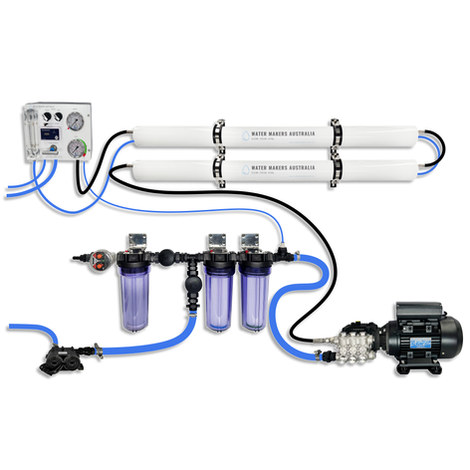
A two-membrane modular watermaker with 140 L/h nominal output, aimed at families and liveaboards that want more water per run.
Explore →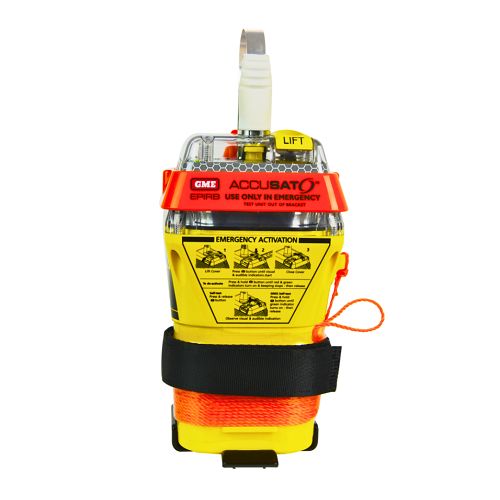
A 10‑year battery EPIRB with integrated GNSS (supports GPS and Galileo), infrared strobe and 121.5 MHz homing signal. Approved for worldwide COSPAS‑SARSAT operation.
Explore →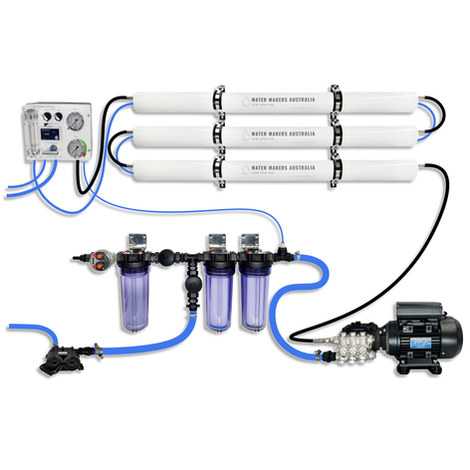
A three-membrane modular watermaker with 200 L/h nominal output and up to 240 L/h family-level marketing, for larger crews and heavy use.
Explore →