Loading this page…

Loading this page…
Sailing club
Davey’s Bay Yacht Club is a member-based sailing club on Davey’s Bay at Mount Eliza (Port Phillip Bay). Founded in 1909, the club runs junior, youth and adult sailing programs and courses for all skill levels, organised on Friday evenings and Sundays during the season. The club hosts off‑the‑beach and keelboat racing, regattas and class events (Optimist, Pacer, 420, ILCA, Finn and Flying 15 are mentioned). Facilities and activities also support sailboarding, stand‑up paddleboards and kayaks. The club invites new members and lists volunteer and instructor opportunities.
About
Davey’s Bay Yacht Club is a member-based sailing club on Davey’s Bay at Mount Eliza (Port Phillip Bay). Founded in 1909, the club runs junior, youth and adult sailing programs and courses for all skill levels, organised on Friday evenings and Sundays during the season. The club hosts off‑the‑beach and keelboat racing, regattas and class events (Optimist, Pacer, 420, ILCA, Finn and Flying 15 are mentioned). Facilities and activities also support sailboarding, stand‑up paddleboards and kayaks. The club invites new members and lists volunteer and instructor opportunities.
Service area: Mount Eliza, VIC (Davey's Bay / Port Phillip Bay)
Keep exploring
"The Jewel on the Bay" is the tagline Davey's Bay Yacht Club gives itself, and for once the small club's self-assessment is widely echoed by those who sail against it. Tucked into a sheltered cove at Mount Eliza on Port Phillip's eastern shore, it is among the oldest yacht clubs in Victoria, founded in 1909, and it has spent more than a century demonstrating that size and achievement are loosely related.
From this compact membership have come state, national and world titleholders, plus three Olympians — among them Jenni Lidgett, who crewed with Addy Bucek in the 470 at Barcelona in 1992 and Atlanta in 1996. The club's soul, though, belongs to one boat above all: the Flying Fifteen, the Uffa Fox-designed sports keelboat that dominates its senior fleet, launches from the club's two cranes, and brought the Australian championship to this little bay over the 2012–13 new year.
Around that keelboat core runs a busy off-the-beach scene — Optimists and OziOptis for the juniors, Pacers for training and racing, with Sabres, 420s, Fireballs, ILCAs and even Finns regularly afloat, plus room for sailboards, paddle boards and kayaks. The weekly rhythm is distinctive: Friday evenings and Sundays carry the training and racing, and on Sundays the juniors take the morning while the Flying Fifteens and dinghies race the afternoon away.
The social side has a century of practice behind it, and the whole operation rests, by the club's own account, on a committed band of members and volunteers with as many ways to help as to sail. It is, in short, the complete small yacht club.
The signature here is not a learn-to-sail course but a boat: the Flying Fifteen, and the club's "Try a F15" program, which offers trial sails on the big, elegant sports keelboat to anyone curious about stepping beyond dinghies. It is an inspired bit of recruitment — the Fifteen planes, carries a spinnaker, sails in almost any weather, and needs a crew of two, so every trial sail doubles as an introduction to the club's tight-knit keelboat community. The junior engine runs with equal clarity.
Children as young as eight take to the water from nine o'clock most Sunday mornings, starting in Optimists and OziOptis through the club's Tackers program, then moving into structured junior courses as skills build; school sailing programs bring local students into the same stream. Adults are not left to fend for themselves — dedicated adult courses run through the season, and the whole training effort, junior, youth and senior, operates across Friday evenings and Sundays, taking beginners through to competitive sailors within one continuous framework.
The fleet of Pacers does the heavy lifting for instruction and club racing alike, while Sabres, 420s and Fireballs give graduates somewhere lively to land. Racing follows on Sunday afternoons from October through April, off-the-beach boats and Flying Fifteens sharing the bay, and the pathway has proven itself at the highest level: this is the club that produced a dual Olympian in Jenni Lidgett and an Uffa Fox Medallist in Nigel Peck.
There is no Discover Sailing Centre listing or Sailability fleet on the public record — the offering is the classic club model done thoroughly, where the instructor, the mentor and the person who helps you crane your boat in are all the same members.
Davey's Bay is a small, shallow, secluded indentation of Port Phillip beneath the Mount Eliza bluffs, about forty-five minutes from Melbourne's city centre, and the club sits on Daveys Bay Road at the site that gave the place its name — James Davey built a jetty here in the 1840s to ship local produce across the bay to Melbourne. The shelter is the point. Ringed by high land, the cove allows launching and retrieving in most wind directions, a priceless asset for a club whose fleet mixes beach-launched dinghies with crane-launched keelboats, and the two cranes that lift the Flying Fifteens in and out are fixtures of the shoreline scene.
Out on the bay, the sailing is classic eastern Port Phillip: summer afternoons frequently bring a light to moderate south-westerly sea breeze, sometimes arriving over a residual swell that makes for tricky, technical going — crews at the 2012–13 Flying Fifteen nationals raced in five to eight knots of south-wester with a difficult leftover lump, conditions that reward the local knowledge regulars accumulate over seasons.
The clubhouse matches the setting's scale: clubrooms that feel modern, with a deck looking out over the water, from which the whole race area is visible — an easy place for families to spend a Sunday while the fleets work their way around the course. A webcam and weather page keep members across conditions before they leave home. The surrounding Mornington Peninsula context adds to the appeal: beaches, walking trails and wineries close by, and a foreshore that still feels like a local secret despite the metropolitan sprawl an hour behind it.
For sailors who like their water protected, their club intimate and their competition sharp, this corner of the bay is hard to argue with.
Founded in 1909, Davey's Bay Yacht Club celebrated its centenary through the 2009 season — one hundred unbroken years on the same small cove, which places it among Victoria's most venerable sailing institutions. The site had been working waterfront long before the first yacht was rigged: James Davey's 1840s jetty shipped the district's produce to Melbourne, and the bay carries his name still.
The club's early decades are illuminated by remarkable photographic collections donated by three of its prominent sailing families — the Pecks, the Grimwades and the Symes — names that recur through the club's records and, in the Peck family's case, right into the modern era: Nigel Peck holds the Uffa Fox Medal, the Flying Fifteen class's international honour for service. That Flying Fifteen connection became the club's modern signature.
The fleet grew into the senior mainstay, launched by crane and raced on Sundays, and over the 2012–13 new year the club hosted the Australian Flying Fifteen Championships, bringing the national class to its home water. Achievement at Davey's Bay has always punched above the membership roll: state, national and world champions have sailed from here, along with three Olympians — most prominently Jenni Lidgett, whose Wikipedia biography references the club and who represented Australia in the 470 class at consecutive Games in 1992 and 1996 with Addy Bucek.
Through it all, as the club's own history puts it, this has been a great social club across a hundred years, with an active calendar alongside the racing. That balance — a serious sailing record carried lightly, in a beautiful small bay, by families whose names span the whole century — is the Davey's Bay story in a sentence. The second century is already underway, with the juniors on the water at nine on Sunday mornings, exactly as they have been for generations.
Batemans Bay and the Clyde River form a classic NSW South Coast cruising region where a sheltered, tidal estuary meets a short, island‑dotted entrance to the Tasman Sea. It’s distinctive for easy access from Canberra, a mix of river and bay sailing, a compact marina and mooring network, and a river entrance (the Clyde River bar) that can change rapidly. The area suits day sails, weekend cruising, trailer‑boat exploration and sheltered coastal passages; offshore or long‑passage plans require careful timing and local knowledge. Preparation for tidal flow, variable southerly swells and shallow, s

Progress gradually by increasing exposure, practising specific skills, sailing with more experienced crew/skippers, and deliberately training for each new step—start in calm sheltered bays, then move to longer trips, busier waters, stronger winds and finally open coastal passages when you and your crew are consistently competent and comfortable.
Explore →
Look for a friendly club with beginner-focused training, accessible facilities and boats, a supportive community, clear safety practices, and opportunities to progress at your own pace.
Explore →
Plan passages across Spencer Gulf or to Kangaroo Island by basing fuel on your boat’s actual consumption plus a generous reserve, choosing sensible staging/stop options that match your boat and crew, and prioritising shelter and weather windows (gale fronts, strong winds and tidal streams can make the gulf uncomfortable or unsafe). Confirm fuel availability, safe anchorages or marinas on your route, and check up-to-date local weather, tide and navigation information before you go.
Explore →
Use ramps and beaches with respect for local conditions: check ramp layout, tide and swell, wind direction, vehicle access and crowding; prepare boat and crew before you launch or retrieve; and follow local signage, courtesy and safety practices. Specifics vary by ramp and beach, so confirm details for the exact site before you go.
Explore →
A practical guide for new sailors on picking the right Australian sailing club: training, boat access, racing, social fit, costs and the key questions to ask before joining.
Explore →A practical guide for recreational sailors planning day sails or short cruises around Batemans Bay, Broulee and the Clyde River. Covers local conditions, safe approaches, anchorages, launching, tides, common hazards, and checklists for trip planning and on-water decisions.
Explore →A practical guide for recreational sailors planning passages to, from or around Eden and Twofold Bay. Covers sheltered anchorages, shore facilities, local weather and tidal considerations, preparing for Bass Strait conditions and a focused equipment and safety checklist.
Explore →A practical guide for recreational sailors planning voyages to Esperance and the Recherche Archipelago: what to expect, key planning considerations, common anchorages, safety and communications, equipment recommendations and sensible steps for a successful trip in this remote southern WA cruising area.
Explore →Burke Yachtsman Gear Bag 40L - Shop Now Zip Pay | Tamar Marine Skip to content 59 – 63 Holbrook Street, Invermay Online Shop Open 24/7 Products search Contact us 1300 MARINE $ 0.00 0 Cart Burke Yachtsman Gear Bag 40L $ 79.90 Colour Choose an option Black Blue Black Blue Clear - Burke Yachtsman Gear Bag 40L quantity + Add to cart Enquire about this product SKU BAGB-Y24/BLACK* Category Bags - Sail & Gear A Burke classic and customer favourite, the Yachtsman’s Gear Bag is built tough to handle wet, salty conditions while keeping your gear dry and protected. Made from double coated waterproof…
Explore →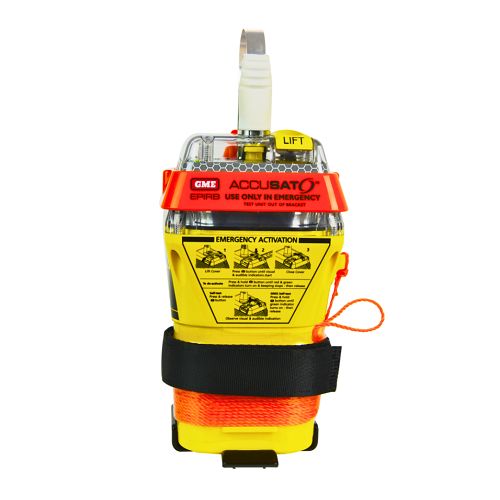
A 10‑year battery EPIRB with integrated GNSS (supports GPS and Galileo), infrared strobe and 121.5 MHz homing signal. Approved for worldwide COSPAS‑SARSAT operation.
Explore →
Self-contained, battery-powered plug‑and‑play autopilot designed for standard hydraulic steering systems.
Explore →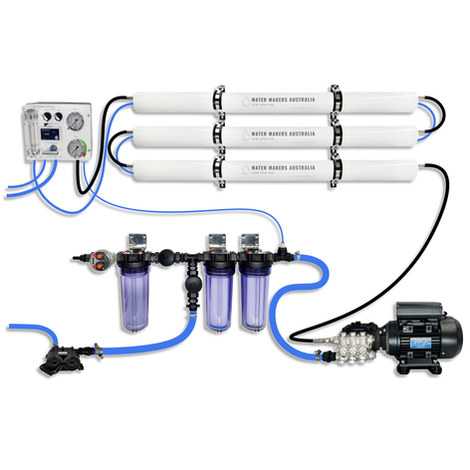
A three-membrane modular watermaker with 200 L/h nominal output and up to 240 L/h family-level marketing, for larger crews and heavy use.
Explore →