Loading this page…

Loading this page…
Sailing club
Dobroyd Aquatic Club (DAC) is an inclusive sailing club based at Rodd Point on the quiet waters of Iron Cove in Sydney Harbour, NSW. The club runs a Saturday racing season (September–April) for a range of classes including dinghies, skiffs, sailboards and radio-controlled boats, and runs junior Optimist training and Learn to Sail programs for children and adults. DAC also offers Learn to Windsurf and ongoing windsurf training sessions, hosts Sailability sessions for sailors with disability, and makes its elevated clubhouse available for hire. The club runs community exercise classes (karate, yoga, pilates) and publishes a calendar of events and training courses.
About
Dobroyd Aquatic Club (DAC) is an inclusive sailing club based at Rodd Point on the quiet waters of Iron Cove in Sydney Harbour, NSW. The club runs a Saturday racing season (September–April) for a range of classes including dinghies, skiffs, sailboards and radio-controlled boats, and runs junior Optimist training and Learn to Sail programs for children and adults. DAC also offers Learn to Windsurf and ongoing windsurf training sessions, hosts Sailability sessions for sailors with disability, and makes its elevated clubhouse available for hire. The club runs community exercise classes (karate, yoga, pilates) and publishes a calendar of events and training courses.
Service area: Rodd Point, NSW
Keep exploring
Dobroyd Aquatic Club (DAC) is an inclusive sailing club based at Rodd Point on the quiet waters of Iron Cove in Sydney Harbour, NSW. The club runs a Saturday racing season (September–April) for a range of classes including dinghies, skiffs, sailboards and radio-controlled boats, and runs junior Optimist training and Learn to Sail programs for children and adults. DAC also offers Learn to Windsurf and ongoing windsurf training sessions, hosts Sailability sessions for sailors with disability, and makes its elevated clubhouse available for hire. The club runs community exercise classes (karate, yoga, pilates) and publishes a calendar of events and training courses.
Everything in Dobroyd's teaching program is shaped by its inclusive mission, and the clearest expression is Sailability Dobroyd. "Sunday Have a Go Sailing" runs every second Sunday year-round, with sailing between 11am and 3pm, open to people of every ability and backed by volunteer training, a low-cost barbecue and a social debrief. The racing arm, "Saturday Better Sailing and Racing", has competed within the club's regular competition for 11 years as of 2026 — it began alongside the juniors and these days races in the Open A fleet, frequently the biggest fleet on the start line, with its sailors going on to State, National and International regattas.
The Hansa 303 sits at the centre of the pathway, used across Learn to Sail, Transition to Racing and open days and described by the club as among the best one-on-one coaching platforms going. Sailability even delivers the club's Powerboat Handling and Safety Boat training — inclusion running the machinery, not just riding in it. Ad-hoc programs have stretched further still: paired sailing and powerboat courses for Indigenous high-schoolers, feeding VET and TAFE maritime pathways and Indigenous ranger programs; instruction for hearing-impaired sailors; come-and-try days for vision-impaired sailors and visiting Japanese students; and a long-running special schools program that paused at Covid.
The mainstream pathway is thorough in its own right. Children's Learn to Sail, from age 8, runs Saturdays from 9:00 to 10:45am right across the season, followed immediately by a Transition class from 10:45 to noon that bridges kids into racing. Adult Learn to Sail and Learn to Windsurf courses are all delivered by club volunteers, and the club hosts Australian Sailing instructor training on site. Members can hire windsurf gear whenever the club is open — Wednesday evenings during daylight saving and Saturdays from 12:30.
Rodd Point, where the club stands, is a quieter corner of Sydney Harbour — no ferry stops, few power boats, and the broad basin of Iron Cove in front of the clubhouse. The point itself carries older history: it's named for the Rodd family, who purchased land here in 1836, with local streets named after Brent Clements Rodd's twelve children. The clubhouse stands next to Rodd Park and its memorial, with the popular Bay Run walking and cycling path passing the door and Rodd Island — part of the Sydney Harbour National Park — just offshore.
Iron Cove, an embayment of the Parramatta River on Sydney's Inner West fringe, is well suited to what this club does. Protected and relatively free of through-traffic, it offers safe water for Hansa dinghies, junior fleets, windsurfers and radio-controlled boats — all of which share the club's calendar. Saturday sailing runs weekly in summer and monthly in winter; the radio-controlled Lasers race most Thursdays; windsurfers contest Wednesday twilights through the warmer months. A solar-powered weather station on site feeds public wind data, a small but telling sign of a club that takes its conditions seriously.
The clubhouse — rebuilt by members after a devastating fire, of which more below — carries a large deck over the water, and in 2023 the club put aside an estimated $160,000 to replace that deck after it degraded, describing it as vital for accessibility. Between sailing days the hall hosts community exercise classes — karate, yoga and pilates among them — keeping the building in daily use. It's a waterfront venue that works hard for its community, in a spot most of Sydney drives past without knowing.
Twenty-five people gathered at the Scouts Hall in Ramsey Road, Haberfield, on 21 May 1937, adopted a constitution and founded Dobroyd Aquatic Club — the name reflecting an ambition to cater for all water sports. F. Somers became president, J. Roberts secretary and Alf Guest treasurer, and the venture was financed by 25 debentures at £4 apiece. Following two years of lobbying, Ashfield Council granted land at the Hawthorn Canal mouth on 25 July 1939; work began at once, and the walls stood when war broke out.
The first clubhouse was a single-storey timber structure about 40 by 20 feet, housing 12 VSs and 16 VJs. Records from 1945 to 1949 were lost, but the postwar picture is clear: members built a jetty ramp and pontoon, and adopted maroon-and-white colours. The club thrived as a VJ and VS stronghold through 1946–59, when members put up a larger timber clubhouse — only for the Department of Main Roads to resume the site for the Hawthorn Canal bridge.
Member Jeff Mulray secured £12,000 in compensation and sold the building for another £1,000; in 1962 arrangements with Drummoyne Council and the Maritime Services Board secured a lease on a tidal island called Vault at Rodd Point. The new clubhouse cost $34,000 and was opened on 11 October 1964 by Mayor Alderman C.J. Halliday, with members building the internal fittings plus the retaining wall and fill under today's car park.
The darkest chapter was the fire that destroyed the clubhouse — by the club's own reckoning an arson attack in 2006, though a Rodd Point history dates it to 2005 — in which every member's boat stored inside was lost. The building was insured and rebuilt while the boats were not, and the community rallied to fund replacement boats. Membership had swelled ahead of the 2000 Sydney Olympics, and the rebuilt clubhouse stands today with its big deck over the water.
Bathurst Harbour (Port Davey system), in south‑west Tasmania, is a vast, almost land‑locked estuarine harbour inside the Southwest National Park and World Heritage Area. It offers a remote, sheltered anchoring environment protected from the Roaring Forties, but demands careful planning, an awareness of marine‑reserve rules, and a willingness to operate in shallow, tannin‑stained waters. Best suited to experienced coastal cruisers and small expedition yachts prepared for self‑sufficiency, Bathurst Harbour is more a place to linger and explore on foot and by tender than a port of call for busy,

Expect the usual IALA-B lateral system (red and green), cardinal and isolated-danger marks, safe-water and special marks, plus harbour-specific fairway buoys, leading/transit marks and exclusion or speed‑limit buoys. Check local harbour charts and Notices to Mariners for exact positions and light characteristics before entry.
Explore →
Plan to transit Sydney Heads and northern NSW estuary entrances to take advantage of favourable tidal streams or slack water; account for local acceleration over shoals, eddies, wind-on-current effects and river discharge, and always check the latest local observations and tide/stream products before departure.
Explore →
Plan as a chain of conservative daily legs tied to your boat’s real-world fuel and speed in the expected sea state, with confirmed primary and alternate anchorages/berths, fuel legs and back-up fuel options, and a documented emergency/diversion plan (comms, tow and med-evac). Build tidal and weather gates into each leg and carry chart and comms redundancy.
Explore →
Before the season: confirm seaworthiness — hull, rig, engine, electrics, sails and safety gear — and replace or service wearable items. After the season: wash, dry and protect gear, service consumables and record what you did so the boat’s ready and reliable next season.
Explore →
A practical guide for new sailors on picking the right Australian sailing club: training, boat access, racing, social fit, costs and the key questions to ask before joining.
Explore →A concise, practical introduction to the essential parts of a recreational sailing boat for beginners in Australia. Covers hull, deck, rigging, sails, steering, below-decks spaces and safety equipment, with simple explanations, common mistakes and a pre-decast checklist to help new sailors communicate and get underway.
Explore →A practical, step‑by‑step guide for recreational sailors on Sydney Harbour covering navigation, local weather and tides, safe anchoring, berthing, common routes, rules of the road, and useful checklists tailored to Australian conditions.
Explore →Practical guide for recreational sailors planning a coastal cruise from Sydney north to the Queensland border. Covers route options, weather and tidal considerations, planning checklists, common hazards, anchorages and practical examples for a safe, enjoyable trip.
Explore →Burke Yachtsman Gear Bag 40L - Shop Now Zip Pay | Tamar Marine Skip to content 59 – 63 Holbrook Street, Invermay Online Shop Open 24/7 Products search Contact us 1300 MARINE $ 0.00 0 Cart Burke Yachtsman Gear Bag 40L $ 79.90 Colour Choose an option Black Blue Black Blue Clear - Burke Yachtsman Gear Bag 40L quantity + Add to cart Enquire about this product SKU BAGB-Y24/BLACK* Category Bags - Sail & Gear A Burke classic and customer favourite, the Yachtsman’s Gear Bag is built tough to handle wet, salty conditions while keeping your gear dry and protected. Made from double coated waterproof…
Explore →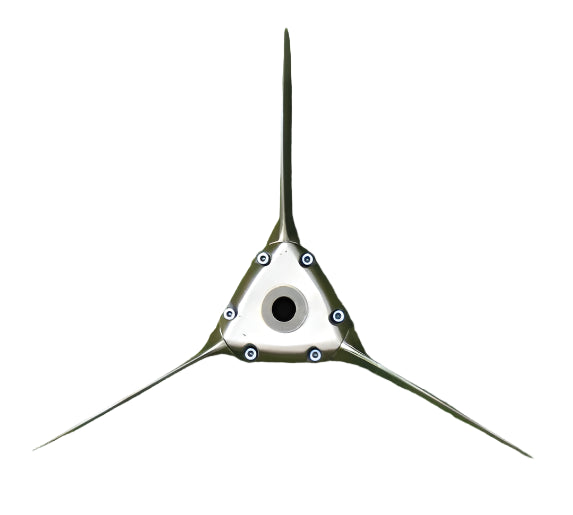
Feathering propeller designed for larger cruising yachts. Diameter range 18"–25"; shaft range 1¼"–1¾"; hub lengths 120mm or 165mm (with anode). Sail drive option available.
Explore →
Self-contained, battery-powered plug‑and‑play autopilot designed for standard hydraulic steering systems.
Explore →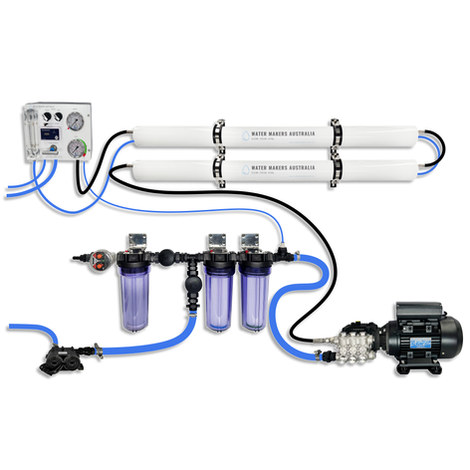
A two-membrane modular watermaker with 140 L/h nominal output, aimed at families and liveaboards that want more water per run.
Explore →