Loading this page…

Loading this page…
Sailing club
Inclusive city sailing club on Victoria Harbour, less than a kilometre from the Melbourne GPO. Merged with Docklands Sailability and built around the "Sailing For Everyone" philosophy.
About
Inclusive city sailing club on Victoria Harbour, less than a kilometre from the Melbourne GPO. Merged with Docklands Sailability and built around the "Sailing For Everyone" philosophy.
Service area: Docklands, VIC
Keep exploring
Nowhere else in this directory can you rig a boat less than a kilometre from the Melbourne GPO. Docklands Yacht Club sails on Victoria Harbour, in the literal heart of the city, and it has turned that improbable location into a mission: making sailing available to absolutely everyone, including those the sport usually leaves ashore. The club has wholeheartedly adopted the Sailability philosophy of "Sailing For Everyone", merged with Docklands Sailability to pool equipment, align objectives and sharpen promotion, and signed on to Yachting Victoria's 2014 Inclusive Clubs Standard.
Its members are, by and large, families and individuals from inner urban Melbourne, with significant participation by people with disability — a profile unlike any bay or country club in the state. The scale is modest but the reach is wide: at the turn of the last decade the club counted 87 financial members yet around 500 casual participants a year, across roughly fifty days of on-water activity. Sailing days run on every month's second and fourth Sundays, from eleven until three, keeping the barrier to turning up as low as the harbour is sheltered.
The club shares its base at the Community Hub at The Dock with Dragon Boat Victoria and the Melbourne Outrigger Canoe Club, an arrangement that captures its cooperative spirit — this is an organisation that has spent its whole existence sharing water, sharing facilities and sharing the sport. It is also the club that once hosted the Australian and International Access Dinghy Championships as part of a Volvo Ocean Race stopover, on water touted at the time as the best teams racing venue in the country. Small club, city address, outsized contribution.
Everything at Docklands starts with the Hansa — the ballasted, stable Access-class dinghy that a sailor of almost any ability can helm safely, and the boat around which the entire club is built. The fleet recorded in 2011 comprised two Access Breezes, five Access 2.3s and two Access 303s, all club-owned, backed by three safety boats, race buoys and management gear, and a C-Crane personal transfer hoist so sailors with significant physical disability can be lifted aboard with dignity.
The protected Docklands waterway is noted by the club itself as ideal for this work, and the programs built on it range from introductory sailing and basic skills development through to Hansa class coaching and championship racing. The school program has been remarkable: at its height it involved 24 schools, with around twenty days of school participation and ten of school training each year and School Team Racing Championships held every March.
Then there is the Short Course Series, a fixture since October 2007 that runs monthly on a Sunday, typically between May and August — four to six races of ten to twenty minutes each day, no prior racing experience needed, designed chiefly for Hansa sailors and explicitly framed as the first rung of competitive sailing. Perhaps most distinctive of all is the partnership with Virtual Sailing, which runs a sailing simulator program for spinal cord injury patients at the Royal Talbot Rehabilitation Centre; patients graduate from the simulator to real boats at Docklands for on-water testing.
Discover Sailing events run both to promote the community program and, commercially, at other organisations' shore-based events. The club's stated vision, set out in 2010, was "a world-leading training and racing programme for Access class sailors" — ambitious words, but the record shows a club systematically building exactly that.
Victoria Harbour is a rare thing in Australian sailing: a fully enclosed, protected waterway in the middle of a capital city, with the Melbourne skyline rising straight off the race course. The club sails from a sixty-metre pontoon at Shed 2 on North Wharf Road, where its facilities overlook the harbour, and sits beside a modern public marina, with club storage facilities held on a peppercorn lease close by, all within a kilometre of the CBD. For the sailing it does, the water is close to perfect.
Flat, sheltered and compact, the harbour removes nearly every physical risk that open water presents to sailors with disability, nervous beginners or school groups, while still offering enough room for short-course racing; organisers in 2005 went so far as to tout Victoria Harbour as the best teams racing venue in Australia, pointing to the way spectators can watch every tack from the surrounding promenade.
The skyline amphitheatre that makes the sailing so watchable also makes it genuinely urban — this is the only club in this directory where the post-race debrief can happen within a short stroll of Southern Cross Station, and where a lunchtime sail is a realistic proposition for city workers. The central location has pulled the club into the city's biggest maritime moments, most notably when the Volvo Ocean Race called at Melbourne and the Access dinghy championships ran as part of the stopover festival.
Facilities are deliberately modest — pontoon, shed, storage, club boats — reflecting a club that has always put its money into boats and programs rather than buildings, and which once joined its dragon boat and outrigger neighbours in proposing a shared two-storey community boating centre for the precinct. For inclusive sailing, few venues anywhere match it.
The club's own website concedes it has "a short but colourful history", begun by "a small group of passionate sailors" — and, unusually for this directory, the precise founding year has not been pinned down. What the record shows is a club already operating by 2004, when the Victorian Access dinghy Championships were staged on Victoria Harbour, and running dock-based events from at least November 2005, when a test event trialled the facilities for something much larger.
That something arrived over the Australia Day weekend of 2006: the Australian and International Access Dinghy Championships, sailed from 26 to 29 January alongside Sailability Docklands and folded into the festivities of the Volvo Ocean Race's Melbourne stopover. The regatta drew divisions across the International 2.3, Access 303 and Liberty classes and entries from six Australian states plus New Zealand, Singapore, Japan, Canada, the United States and Great Britain — a genuinely international event on a city-centre waterway, barely out of the club's infancy.
Momentum built from there. A Short Course Series aimed mainly at Hansa classes began in October 2007 and has run monthly through the winters ever since. By 2010–11 the club reported 87 financial members, around 500 casual participants annually, fourteen boats and about fifty days of on-water activity a year, its school program touching two dozen schools. In 2010 it joined the Victorian Dragon Boat Association and the Melbourne Outrigger Canoe Club in proposing a shared two-level community boating centre of roughly a thousand square metres on Victoria Harbour, estimated at five to seven million dollars — a plan that spoke to the club's collaborative instincts even if the building itself did not proceed on that scale.
Along the way the club amalgamated with Docklands Sailability, formalising the inclusive purpose that had defined it from the start, and adopted the 2014 Inclusive Clubs Standard. Two decades on, the Sunday rhythm continues: second and fourth weekends, eleven till three, on the water in the middle of Melbourne.
Bathurst Harbour (Port Davey system), in south‑west Tasmania, is a vast, almost land‑locked estuarine harbour inside the Southwest National Park and World Heritage Area. It offers a remote, sheltered anchoring environment protected from the Roaring Forties, but demands careful planning, an awareness of marine‑reserve rules, and a willingness to operate in shallow, tannin‑stained waters. Best suited to experienced coastal cruisers and small expedition yachts prepared for self‑sufficiency, Bathurst Harbour is more a place to linger and explore on foot and by tender than a port of call for busy,

Pick a protected bay, estuary or river reach where you can rig, launch and arrive on calm water within a short, sheltered transit; choose a site with a good ramp or jetty, clear recovery options and a nearby sailing club, marina or commercial operator for local knowledge and help.
Explore →
Use ramps and beaches with respect for local conditions: check ramp layout, tide and swell, wind direction, vehicle access and crowding; prepare boat and crew before you launch or retrieve; and follow local signage, courtesy and safety practices. Specifics vary by ramp and beach, so confirm details for the exact site before you go.
Explore →
Write a one‑page plan with the who/what/when/where/how of your trip, keep a copy on board and leave the main copy with a responsible person ashore (and optionally with your club, marina office or local volunteer rescue service).
Explore →
Plan to transit Sydney Heads and northern NSW estuary entrances to take advantage of favourable tidal streams or slack water; account for local acceleration over shoals, eddies, wind-on-current effects and river discharge, and always check the latest local observations and tide/stream products before departure.
Explore →
A practical guide for new sailors on picking the right Australian sailing club: training, boat access, racing, social fit, costs and the key questions to ask before joining.
Explore →
A practical, Australia-focused guide for planning and sailing around the Whitsunday Islands: weather and seasons, navigation and anchoring, moorings and parks, provisioning and charters, safety and common mistakes, plus checklists and next steps.
Explore →A practical guide for recreational sailors planning voyages to Esperance and the Recherche Archipelago: what to expect, key planning considerations, common anchorages, safety and communications, equipment recommendations and sensible steps for a successful trip in this remote southern WA cruising area.
Explore →Practical guide for recreational sailors planning passage on the Hawkesbury River: how to plan around tides, choose anchorages, read local conditions and prepare the boat and crew for a safe, comfortable trip.
Explore →Burke Yachtsman Gear Bag 40L - Shop Now Zip Pay | Tamar Marine Skip to content 59 – 63 Holbrook Street, Invermay Online Shop Open 24/7 Products search Contact us 1300 MARINE $ 0.00 0 Cart Burke Yachtsman Gear Bag 40L $ 79.90 Colour Choose an option Black Blue Black Blue Clear - Burke Yachtsman Gear Bag 40L quantity + Add to cart Enquire about this product SKU BAGB-Y24/BLACK* Category Bags - Sail & Gear A Burke classic and customer favourite, the Yachtsman’s Gear Bag is built tough to handle wet, salty conditions while keeping your gear dry and protected. Made from double coated waterproof…
Explore →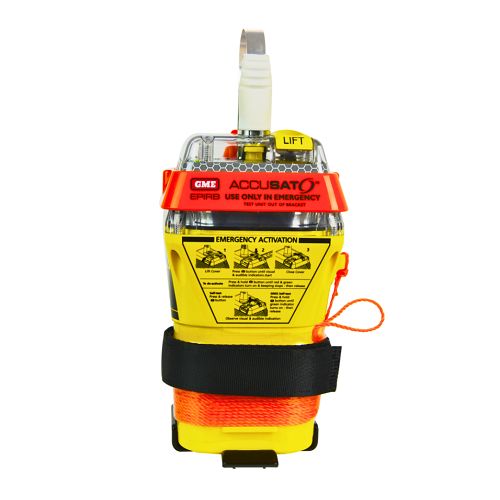
A 10‑year battery EPIRB with integrated GNSS (supports GPS and Galileo), infrared strobe and 121.5 MHz homing signal. Approved for worldwide COSPAS‑SARSAT operation.
Explore →
Self-contained, battery-powered plug‑and‑play autopilot designed for standard hydraulic steering systems.
Explore →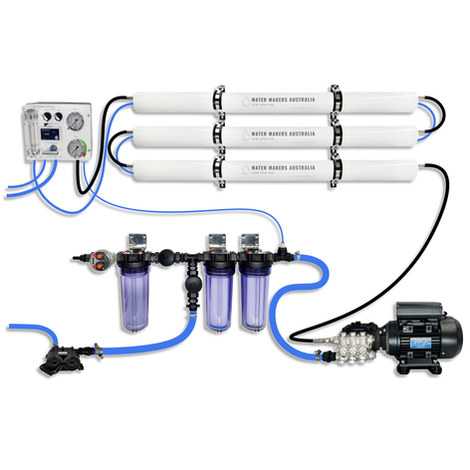
A three-membrane modular watermaker with 200 L/h nominal output and up to 240 L/h family-level marketing, for larger crews and heavy use.
Explore →