Loading this page…

Loading this page…
Sailing club
Douglas Sailing Club is a family-friendly, member-run dinghy and catamaran club based at Four Mile Beach, Solander Boulevard, Port Douglas (Queensland). The club runs monthly ‘come and try’ and club sailing days, welcomes visiting sailors with a day-pass option, and offers secure on-beach boat storage for members' trailer-launched craft.
About
Douglas Sailing Club is a family-friendly, member-run dinghy and catamaran club based at Four Mile Beach, Solander Boulevard, Port Douglas (Queensland). The club runs monthly ‘come and try’ and club sailing days, welcomes visiting sailors with a day-pass option, and offers secure on-beach boat storage for members' trailer-launched craft.
Service area: Four Mile Beach / Port Douglas coastline (Far North Queensland)
Keep exploring
Douglas Sailing Club is a family-friendly dinghy and catamaran sailing club based on Four Mile Beach in Port Douglas. The club runs regular club sailing days and monthly “Come and Try” events, hosts skill-building workshops and social gatherings, encourages members to bring their own boats, and offers dedicated boat storage facilities. Contact details listed include an email and phone number.
Douglas Sailing Club does not run a conventional junior training pipeline, and no accredited learn-to-sail centre appears anywhere on the club's own pages; what it offers instead is a distinctive, low-pressure sailing weekend built around shared practice rather than classroom instruction. The main sailing days fall on the last weekend of each month, when members gather for rigging, launching and boat-handling work before heading out, then regroup over a barbecue lunch and an afternoon of racing or workshops. That format lets newer sailors absorb skills directly from experienced catamaran and dinghy hands during a working session on the water.
Two further touchpoints — an informal sail on the first Saturday and another on the last Sunday of every month — keep boats and people active between the headline weekends. For visitors, or locals testing the water before committing, a day pass opens casual sailing without full membership, an unusually flexible arrangement for a beach club.
The club explicitly encourages new members to bring their own boats, whatever the class, and backs that invitation with secure storage facilities at Four Mile Beach, so masts stay up and boats stay ready. Racing craft from the club also campaign away from home: a Douglas crew contested Sail Airlie at Whitsunday Sailing Club in 2021. For anyone wanting formal tuition, the town's separate Port Douglas Yacht Club and the wider Far North Queensland sailing scene sit close at hand — but Douglas Sailing Club's own philosophy is firmly hands-on, social and member-driven, with skill passed sailor to sailor on the sand and on the water rather than through a syllabus.
The club sails from Four Mile Beach, the long curve of coastline that defines Port Douglas, rigging on the sand at Solander Boulevard and launching directly into the sheltered waters offshore. Geography does the club considerable favours. As Port Douglas Magazine describes it, the local sailing waters sit protected by the reef and enjoy consistent breezes, with the south-east trade winds dominating from May through October — the long dry season that makes this coast such reliable winter sailing country.
Inside the reef, seas stay moderate enough for beach-launched catamarans and dinghies, while the horizon is dotted with landmarks that double as race marks: passage racing in the district traditionally rounds Snapper Island and the Low Isles, both within reach of the beach. That reef-and-island setting also explains the club's sponsor list, which draws on the local adventure-tourism economy — kite and paddleboard operators, tour companies and beachfront hospitality among them.
Four Mile Beach itself offers a wide, gently shelving launch area with room to rig a fleet of cats, and the secure storage beside the beach removes the set-up time that so often erodes participation at trailer-dependent clubs. The position within Far North Queensland puts the club on one of the state's great touring routes, and the day-pass option makes it an easy stopover for sailors travelling through with a boat on the trailer. For members, the practical picture is simple: park, walk the boat out of storage, launch off the sand, and sail reef-sheltered water with trade-wind reliability for more than half the year.
When Douglas Sailing Club was founded is a question its own website leaves unanswered — no formation date, founder list or anniversary appears anywhere in the club's published material. What the record does show is a young, growing organisation firmly embedded in the Port Douglas sailing scene.
A 2024 article in Port Douglas Magazine profiled a sailor who learned the sport through the Port Douglas Yacht Club before joining what it described as the Douglas Sailing Club on Four Mile Beach — evidence that, by then, the club was an established second sailing home in town with its own identity. Competition records push the timeline a little further back: in 2021 a Douglas Sailing Club crew, Luke McMullen and Luke Duncan sailing the Nacra 5.8 "Jack Who", contested the Sail Airlie regatta at Whitsunday Sailing Club, travelling well south of home waters to race.
The club's own account describes steady growth into a hub for sailing families and individuals on Four Mile Beach, and its digital presence runs on the revolutioniseSPORT platform, with membership registration, an events calendar, a shop and venue-hire pages — the infrastructure of a club building for the long term. Formal recognition arrived in 2023, when Australian Sailing listed the club among recipients of the Queensland Government's Active Clubs funding round.
The wider historical context belongs to the town's older organisation: Port Douglas Race Week, including its Clipper Cup lineage, has run since the mid-1990s under the Port Douglas Yacht Club. Douglas Sailing Club's members take part in that local scene while keeping their own identity distinct — beach-based, informal and deliberately accessible, the sandy counterpart to the marina club across town.
Adelaide’s metropolitan coast fronts the eastern side of Gulf St Vincent and mixes short, sheltered bay sailing around Holdfast Bay and the Patawalonga with more exposed, open-water sailing north toward Outer Harbour and along the Le Fevre Peninsula. The area suits a wide range of activity — sheltered day sails, club and trailer-sailer racing, short coastal cruising into the Fleurieu and Yorke Peninsula, and launch-and-home-port racing — but demands local knowledge about shipping channels, tidal flows in the Port River/Outer Harbour approaches, and seasonal wind patterns.

Look for a friendly club with beginner-focused training, accessible facilities and boats, a supportive community, clear safety practices, and opportunities to progress at your own pace.
Explore →
Late spring to summer is usually the best time for beginners to start learning to sail in Tasmania because the weather is generally warmer, days are longer and conditions are often more settled. Expect lighter to moderate winds with regular afternoon sea breees in summer, while spring and autumn bring more changeable and sometimes stronger conditions; winter is colder, wetter and typically windier with more fronts and swell.
Explore →
Pick a protected bay, estuary or river reach where you can rig, launch and arrive on calm water within a short, sheltered transit; choose a site with a good ramp or jetty, clear recovery options and a nearby sailing club, marina or commercial operator for local knowledge and help.
Explore →
Rig and de-rig a small dinghy by following a consistent, step-by-step sequence: prepare the boat on shore, fit spars and foils in a stable order, control sails and running rigging so lines don’t tangle, check fittings and safety gear, and reverse the process when coming ashore—always working with a partner when possible and staying aware of wind and tide.
Explore →
A practical, Australia-focused guide for planning and sailing around the Whitsunday Islands: weather and seasons, navigation and anchoring, moorings and parks, provisioning and charters, safety and common mistakes, plus checklists and next steps.
Explore →A practical guide for recreational sailors planning visits to Albany and King George Sound. Covers the main anchorage areas, typical local weather patterns, tidal and current considerations, navigational hazards, on-the-water etiquette and a pre-departure checklist to help you plan a safe passage and enjoyable stopover
Explore →
A practical guide for new sailors on picking the right Australian sailing club: training, boat access, racing, social fit, costs and the key questions to ask before joining.
Explore →Practical guide for recreational sailors planning a coastal cruise from Sydney north to the Queensland border. Covers route options, weather and tidal considerations, planning checklists, common hazards, anchorages and practical examples for a safe, enjoyable trip.
Explore →Burke Yachtsman Gear Bag 40L - Shop Now Zip Pay | Tamar Marine Skip to content 59 – 63 Holbrook Street, Invermay Online Shop Open 24/7 Products search Contact us 1300 MARINE $ 0.00 0 Cart Burke Yachtsman Gear Bag 40L $ 79.90 Colour Choose an option Black Blue Black Blue Clear - Burke Yachtsman Gear Bag 40L quantity + Add to cart Enquire about this product SKU BAGB-Y24/BLACK* Category Bags - Sail & Gear A Burke classic and customer favourite, the Yachtsman’s Gear Bag is built tough to handle wet, salty conditions while keeping your gear dry and protected. Made from double coated waterproof…
Explore →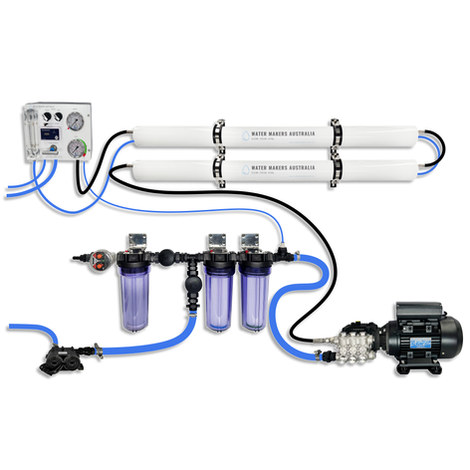
A two-membrane modular watermaker with 140 L/h nominal output, aimed at families and liveaboards that want more water per run.
Explore →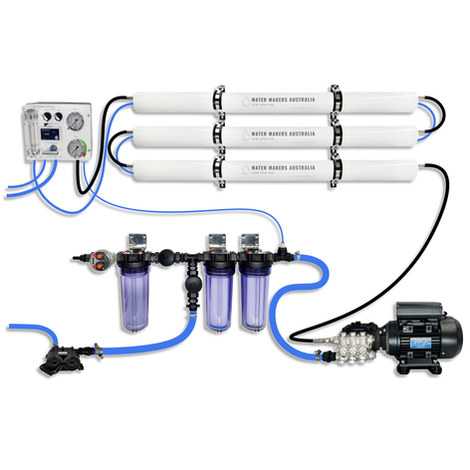
A three-membrane modular watermaker with 200 L/h nominal output and up to 240 L/h family-level marketing, for larger crews and heavy use.
Explore →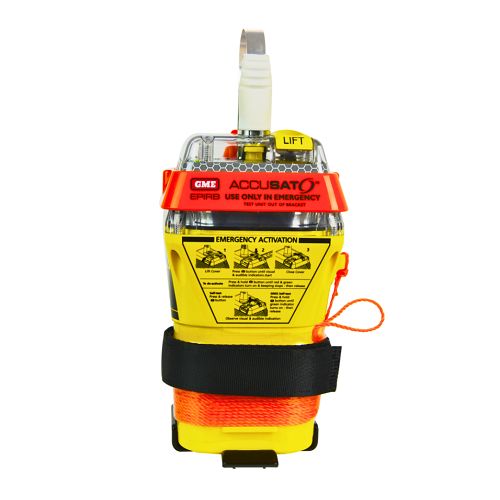
A 10‑year battery EPIRB with integrated GNSS (supports GPS and Galileo), infrared strobe and 121.5 MHz homing signal. Approved for worldwide COSPAS‑SARSAT operation.
Explore →