Loading this page…

Loading this page…
Sailing club
Drummoyne Sailing Club (DSC) is a long-established Sydney Harbour racing club founded in 1913 and based on St Georges Crescent, Drummoyne. The three-storey waterfront clubhouse overlooks the Parramatta River and hosts active skiff and yacht fleets, junior training through the Drummoyne Sailing Academy, regular club racing and social facilities including dining. DSC blends a strong high-performance skiff tradition with broad participation sailing and accredited beginner courses.
About
Drummoyne Sailing Club (DSC) is a long-established Sydney Harbour racing club founded in 1913 and based on St Georges Crescent, Drummoyne. The three-storey waterfront clubhouse overlooks the Parramatta River and hosts active skiff and yacht fleets, junior training through the Drummoyne Sailing Academy, regular club racing and social facilities including dining. DSC blends a strong high-performance skiff tradition with broad participation sailing and accredited beginner courses.
Service area: Drummoyne, Parramatta River / West Harbour (Sydney Harbour), New South Wales
Keep exploring
Drummoyne Sailing Club is a waterfront sailing club on Sydney Harbour (Drummoyne, NSW) established in 1913. The club operates a recently refurbished clubhouse with dining and function facilities and runs organised sailing activities for juniors, competitors and beginners.
The clearest proof of what Drummoyne's training pathway can do sailed at two Olympics: Olivia Price, who won silver in Women's Match Racing at London 2012, and Evie Haseldine, who crewed the 49erFX at Paris 2024, both learned their sailing here and both came back to instruct in the junior program. Haseldine reportedly chose the Olympic path after seeing Price's medal as a ten-year-old — the kind of internal inspiration loop most academies only dream about.
The formal engine is the Drummoyne Sailing Academy, launched in March 2015 as an Australian Sailing accredited Discover Sailing Centre. Its Junior Start Sailing 1 and 2 course takes complete beginners aged eight to fourteen through capsize recovery, sail trim, tacking, gybing, points of sail and water safety, sailing Pacers, Sabots and RS dinghies with every piece of equipment supplied. Courses run Saturday and Sunday mornings across eight weeks, in spring and summer blocks, with school-holiday options listed on the national course finder.
Graduates step into a Better Sailing course or a Learn to Race program, and the club's own by-laws describe the Academy as the principal pipeline channelling new junior and adult sailors into club racing.
From there the pathway fans out across the week: Tuesday twilight yacht racing alongside junior training, Saturday afternoons for the skiffs and Hartley TS16s, and Sundays for juniors and yachts. Ambitious juniors grow up watching — and one day crewing — 16ft skiffs, a class contested by more than fifty boats at its Australian Championships each year.
Drummoyne sits on the Parramatta River, the enclosed upper reach of Sydney Harbour that the club describes as safe water suited to everyone from first-timers to hardened racing sailors. That stretch between Birkenhead Point and Snapper Island is a rare compromise: sheltered enough for an eight-year-old's first capsize drill, yet open enough to catch the summer nor'easter. Seahorse magazine has characterised the reach as protected from harsh winter westerlies but receptive to east and northeast sea breezes, which explains why racing here is a year-round proposition.
The site itself drops sharply from St Georges Crescent to the shoreline, wedged between Salton Reserve and the Bay Run walking track. The 2001 clubhouse answers that slope with three levels, each with a terrace facing the water; the panorama sweeps from Birchgrove to Hunters Hill and takes in Spectacle, Cockatoo and Snapper Islands, with views claimed across 180 degrees toward North Sydney, Balmain and Woolwich.
Practical infrastructure backs the scenery. Courtesy moorings are kept for members and visiting crews, arranged through the Sailing Manager with fees for overnight stays, and the club fields a designated support fleet — an Arvor and several RIBs among them — assigned to race days. The ground floor is given over to sailing operations, keeping the wet, sandy business of dinghy and skiff racing separate from the dining rooms above. For a learn-to-sail family, it means rigging lawns, rescue craft and a hot lunch all within the one footprint. Visiting yacht crews can also pick up a courtesy mooring and come ashore for dinner, which keeps the place lively well beyond race days.
The club formed in 1913 as Drummoyne Park Sailing Club, apparently growing from a mixed sporting group active around the area marked "Drummoyne Park" on municipal maps from about 1911. Its founding purpose was specific: racing the 16ft skiff, a class popularised on Sydney Harbour by the Port Jackson Skiff Club and adapted in the early 1900s from the rowing skiffs that once ferried crews out to merchant ships at anchor. In the winter off-season, those early members turned to model yachts, racing them on the river between Drummoyne and Huntley's Point — a pastime later sponsored in the 1930s and 40s by local bookmaker Bill Bowry, part of a working-man's sailing culture that also included bailing-boy apprenticeships.
The present name, Drummoyne Sailing Club, was adopted in 1924 and has carried the club through a century of change. The skiffs remained the headline act — the club has hosted heats of the NSW 16ft Skiff Championship and, in seasons past, the national titles remembered by visiting crews as "the Drummoyne nationals" — while yachts gradually overtook them in sheer weekly numbers.
A new chapter opened in 2001 when the current three-storey clubhouse replaced its predecessor, an occasion marked even in Ireland by a pennant exchange with Howth Yacht Club. Then came the Olympic era: Olivia Price's London 2012 silver in Women's Match Racing, and her return at Paris 2024 alongside fellow Drummoyne junior Evie Haseldine in the 49erFX, where they finished ninth. A club born to race one uncompromising boat now measures its history in both skiff championships and Olympic campaigns.
Adelaide’s metropolitan coast fronts the eastern side of Gulf St Vincent and mixes short, sheltered bay sailing around Holdfast Bay and the Patawalonga with more exposed, open-water sailing north toward Outer Harbour and along the Le Fevre Peninsula. The area suits a wide range of activity — sheltered day sails, club and trailer-sailer racing, short coastal cruising into the Fleurieu and Yorke Peninsula, and launch-and-home-port racing — but demands local knowledge about shipping channels, tidal flows in the Port River/Outer Harbour approaches, and seasonal wind patterns.

Late spring to summer is usually the best time for beginners to start learning to sail in Tasmania because the weather is generally warmer, days are longer and conditions are often more settled. Expect lighter to moderate winds with regular afternoon sea breees in summer, while spring and autumn bring more changeable and sometimes stronger conditions; winter is colder, wetter and typically windier with more fronts and swell.
Explore →
Look for a friendly club with beginner-focused training, accessible facilities and boats, a supportive community, clear safety practices, and opportunities to progress at your own pace.
Explore →
Pick a protected bay, estuary or river reach where you can rig, launch and arrive on calm water within a short, sheltered transit; choose a site with a good ramp or jetty, clear recovery options and a nearby sailing club, marina or commercial operator for local knowledge and help.
Explore →
Plan to transit Sydney Heads and northern NSW estuary entrances to take advantage of favourable tidal streams or slack water; account for local acceleration over shoals, eddies, wind-on-current effects and river discharge, and always check the latest local observations and tide/stream products before departure.
Explore →
A practical guide for new sailors on picking the right Australian sailing club: training, boat access, racing, social fit, costs and the key questions to ask before joining.
Explore →Practical guide for recreational sailors planning passage on the Hawkesbury River: how to plan around tides, choose anchorages, read local conditions and prepare the boat and crew for a safe, comfortable trip.
Explore →A practical guide for recreational sailors planning visits to Albany and King George Sound. Covers the main anchorage areas, typical local weather patterns, tidal and current considerations, navigational hazards, on-the-water etiquette and a pre-departure checklist to help you plan a safe passage and enjoyable stopover
Explore →A practical guide for recreational sailors planning day sails or short cruises around Batemans Bay, Broulee and the Clyde River. Covers local conditions, safe approaches, anchorages, launching, tides, common hazards, and checklists for trip planning and on-water decisions.
Explore →Burke Yachtsman Gear Bag 40L - Shop Now Zip Pay | Tamar Marine Skip to content 59 – 63 Holbrook Street, Invermay Online Shop Open 24/7 Products search Contact us 1300 MARINE $ 0.00 0 Cart Burke Yachtsman Gear Bag 40L $ 79.90 Colour Choose an option Black Blue Black Blue Clear - Burke Yachtsman Gear Bag 40L quantity + Add to cart Enquire about this product SKU BAGB-Y24/BLACK* Category Bags - Sail & Gear A Burke classic and customer favourite, the Yachtsman’s Gear Bag is built tough to handle wet, salty conditions while keeping your gear dry and protected. Made from double coated waterproof…
Explore →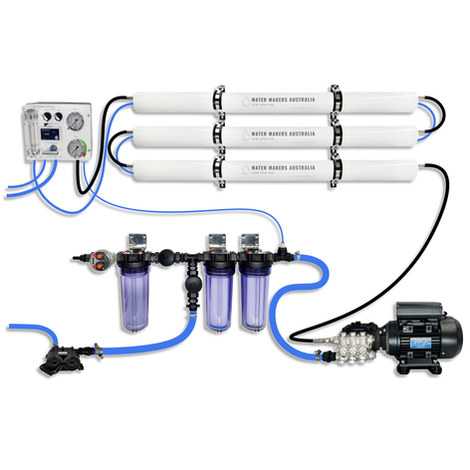
A three-membrane modular watermaker with 200 L/h nominal output and up to 240 L/h family-level marketing, for larger crews and heavy use.
Explore →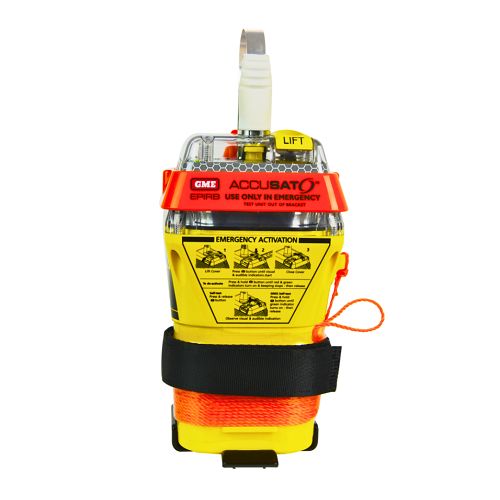
A 10‑year battery EPIRB with integrated GNSS (supports GPS and Galileo), infrared strobe and 121.5 MHz homing signal. Approved for worldwide COSPAS‑SARSAT operation.
Explore →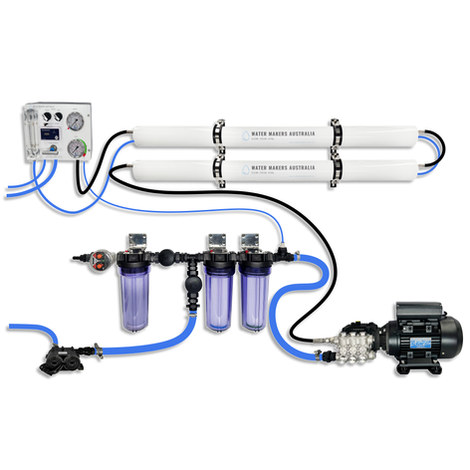
A two-membrane modular watermaker with 140 L/h nominal output, aimed at families and liveaboards that want more water per run.
Explore →