Loading this page…

Loading this page…
Sailing club
Esperance Bay Yacht Club is a community sailing club based on The Esplanade in Esperance, WA. The club runs organised sailing programs and fleets (juniors, centreboard classes, cruisers and multihulls), hosts regattas and events, and publishes information about a new marina. The site also advertises sail training (including a SailPass registration) and contact details for club officers and class contacts. Function-room hire and visitor information are also mentioned.
About
Esperance Bay Yacht Club is a community sailing club based on The Esplanade in Esperance, WA. The club runs organised sailing programs and fleets (juniors, centreboard classes, cruisers and multihulls), hosts regattas and events, and publishes information about a new marina. The site also advertises sail training (including a SailPass registration) and contact details for club officers and class contacts. Function-room hire and visitor information are also mentioned.
Service area: Esperance, WA
Keep exploring
Seven hundred kilometres southeast of Perth, where the Southern Ocean meets one of Australia's whitest coastlines, Esperance Bay Yacht Club occupies a foreshore site in the centre of town. The address — Lot 921 The Esplanade, on the corner of William Street — puts the clubhouse a short stroll from everything Esperance has, with views across the bay and the club's own marina. Founded in 1995, it is young by yacht club standards, yet its business plan holds up the member-built clubhouse as proof of the membership's drive and determination, and that volunteering energy remains the club's defining trait.
The numbers tell a story of broad community reach: the 2020/21 year counted 76 senior, 79 associate and 55 junior members, and the clubhouse trades as a licensed restaurant every Friday evening throughout the year, serving more than a hundred meals a week. The same business plan calls the venue the leading function space in Esperance, and it genuinely does host weddings, funerals and business events alongside the sailing. Affiliated with Australian Sailing, the club also holds a reciprocal relationship with the Puerto Galera Yacht Club in the Philippines — an unusual international thread for a remote southern port.
What anchors everything, though, is the water. Beyond the marina lies Esperance Bay and, further out, the granite islands of the Recherche Archipelago, giving members cruising grounds that most Australian sailors only see in photographs. Visiting sailors are welcomed through Australian Sailing's SailPass day-membership system, and the club keeps a phone line and an admin email for travellers planning the long run down the coast.
The standout program here is one few clubs anywhere can claim: "Give Sailing a Go" days run in partnership with Wongutha CAPS, a Christian Aboriginal boarding school, through which as many as 55 Aboriginal students at a time learn to sail on Pacer dinghies. The program had been running five years as of 2021, and it speaks directly to the club's community purpose. Alongside it, the club partners with Esperance Senior High School on an annual Sailing Teams event, with sailing on offer as an aquatic activity in Years 9 and 10 and students travelling to Perth to race against other schools.
The formal instruction sits on an accredited foundation: the club is an accredited Australian Sailing training facility whose members regularly teach the TL1, TL2, TL3 and TL7 course levels. Public learn-to-sail courses run annually and, according to the club's business plan, are always fully subscribed, while juniors train each Saturday. Unusually for a sailing club, the annual course calendar also covers the practical tickets a boating community needs — Marine Radio Operator certification, Marine Safety Accreditation and the Skippers Ticket — reflecting how closely sailing, fishing and cruising interlock in a town this remote.
Open days round out the pathway: "Have a Go" and "Try Sailing" sessions aimed at both youths and adults, together with dedicated days for young people with disabilities. On the racing side, the club fields a strong Flying Fifteen fleet — ten boats registered — racing on Saturdays through the season, with twilight events as well, and it has hosted the Flying Fifteen Nationals. Visiting sailors can join racing through SailPass.
Esperance sits on the Southern Ocean roughly 700 kilometres from Perth, and the club commands the town foreshore on Esperance Bay, with the marina immediately in front and the bay's islands strung along the horizon. The marina — at 33° 51′ 57″ south, 121° 53′ 46″ east — was built for 34 boats, with 32 usable berths, and it has been fully occupied by a mix of 13 power boats and 19 yachts; a hardstand facility and launching by crane or off the beach serve the trailer and dinghy fleets.
The sailing water divides neatly in two. Inside the bay, Esperance Bay offers protected racing and training water right off the town beach — home water for the Flying Fifteen fleet and the Saturday juniors. Beyond the heads lies the Recherche Archipelago, a scattering of granite islands ringed by white beaches and turquoise water that ranks among the most striking cruising grounds on the entire Australian coast. It is genuine Southern Ocean sailing, with the exposure and reward that implies, and it begins at the club's front gate.
Ashore, the clubhouse combines bar, restaurant and function centre in a single member-built complex overlooking the marina; on Friday evenings through the whole year it trades as a licensed restaurant putting out more than 100 meals weekly, which makes it as much a town institution as a sailing one. For a club at this distance from the capital, the infrastructure is remarkably complete — marina, hardstand, crane launching and a full hospitality operation within one foreshore block.
The documented story is short but vigorous. The club was established in 1995, according to the Flying Fifteen International association's Western Australian club directory, and from the outset its members built rather than bought: the clubhouse was raised by the membership itself, a fact the club's 2021 business plan holds up as proof of its volunteering spirit. The names of the founders and any pre-1995 precursor club aren't published, though Royal Perth Yacht Club's history notes sailing was established at Esperance by the 1920s — an intriguing hint of earlier yachting in the town.
By the 2020/21 season the club counted 76 senior members, 79 associates and 55 juniors, with membership fees that year set at $408 for seniors plus a $55 nomination, $112 for juniors, and a $55 introductory social category.
The most consequential recent chapter is the club's 2021 Business Plan, which tackles the redevelopment of the Esperance Bay Marina. The plan proposed installing floating jetties alongside each berth, lifting both safety and accessibility — a significant upgrade for a marina already fully occupied — and laid out the club's case for investing in the waterfront it manages.
It also documented, in passing, how much the club had come to carry: a training facility, a restaurant serving the town weekly, a function venue, and a ten-boat Flying Fifteen fleet that had already brought a national championship to this remote southern shore. For a club founded only in 1995, it is a record built almost entirely on member labour.

Pick a protected bay, estuary or river reach where you can rig, launch and arrive on calm water within a short, sheltered transit; choose a site with a good ramp or jetty, clear recovery options and a nearby sailing club, marina or commercial operator for local knowledge and help.
Explore →
Choose an anchor that penetrates the seabed you expect, carry enough chain and scope, set by reversing under control until the anchor bites, then test and monitor frequently — in sand and clean mud a plough or fluke-style can work well, in weed look for clean patches or use a claw/Delta-style or dedicated weed anchor and more scope.
Explore →
Expect very different seasonal systems across Western Australia: the south‑west (Perth to Albany) has a strong summer afternoon sea breeze (the “Fremantle Doctor”) and winter westerly fronts, while northern WA follows a wet/dry monsoonal cycle with strong seasonal onshore winds, thunderstorms and cyclone risk in the wet season. Local headlands, estuaries and tidal flows often change what you actually feel on the water, so learn the local timing and sheltered venues first.
Explore →
Practise early, repeatable depowering (reefing and flattening), controlled sail-trim changes and deliberate, crew-led tacks/gybes so you keep heel, steerage and speed in a safe window as the Fremantle Doctor builds. Rehearse routines in sheltered water until they are second nature—clear commands, disciplined weight moves to windward and aft, and a quick, practised reef routine will prevent panicked mistakes.
Explore →A practical guide for recreational sailors planning voyages to Esperance and the Recherche Archipelago: what to expect, key planning considerations, common anchorages, safety and communications, equipment recommendations and sensible steps for a successful trip in this remote southern WA cruising area.
Explore →
A practical guide for new sailors on picking the right Australian sailing club: training, boat access, racing, social fit, costs and the key questions to ask before joining.
Explore →A practical guide for recreational sailors planning day sails or short cruises around Batemans Bay, Broulee and the Clyde River. Covers local conditions, safe approaches, anchorages, launching, tides, common hazards, and checklists for trip planning and on-water decisions.
Explore →
A practical, Australia-focused guide for planning and sailing around the Whitsunday Islands: weather and seasons, navigation and anchoring, moorings and parks, provisioning and charters, safety and common mistakes, plus checklists and next steps.
Explore →
Push-to-talk radio that uses 4G mobile networks where there is coverage and a built-in 16-channel analog radio where there is none, with GPS and SOS. Sold as a two-pack.
Explore →
Metal-bodied 4G push-to-talk radio with GPS and SOS in the GPS variant and a lifetime SIM plan included. Sold as a two-pack.
Explore →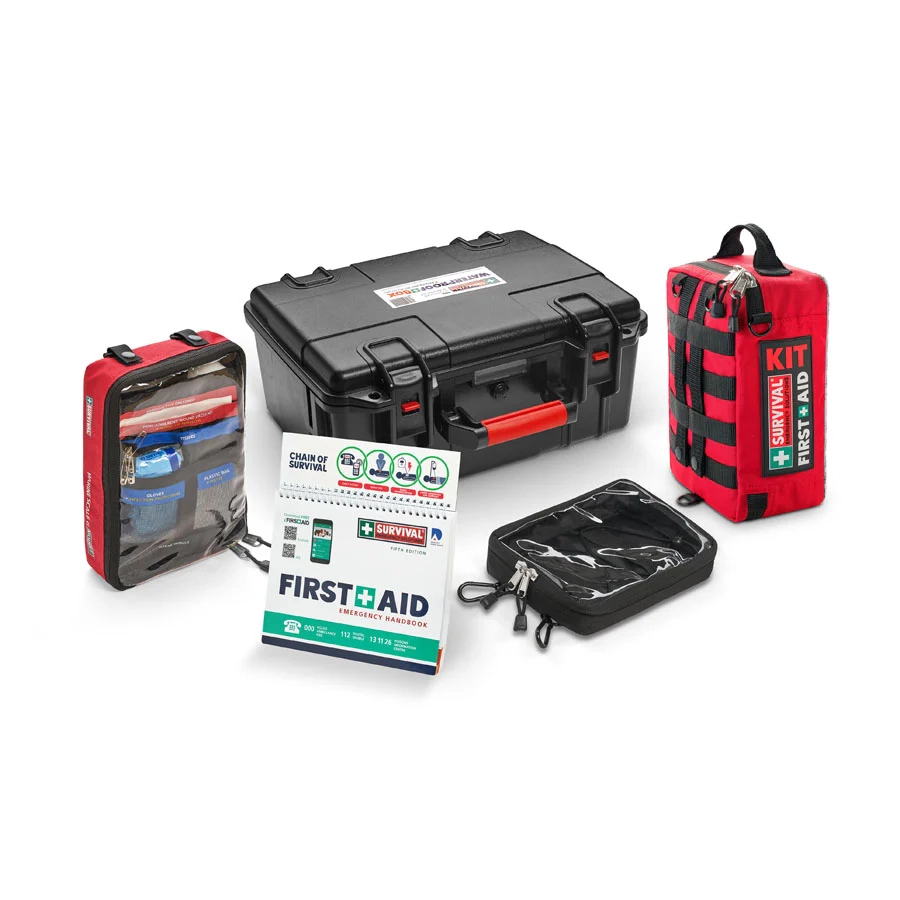
A 142-item marine first aid kit built around the Australian Scale G requirement, with a workplace kit, a Scale G module and a handbook packed in a large waterproof box.
Explore →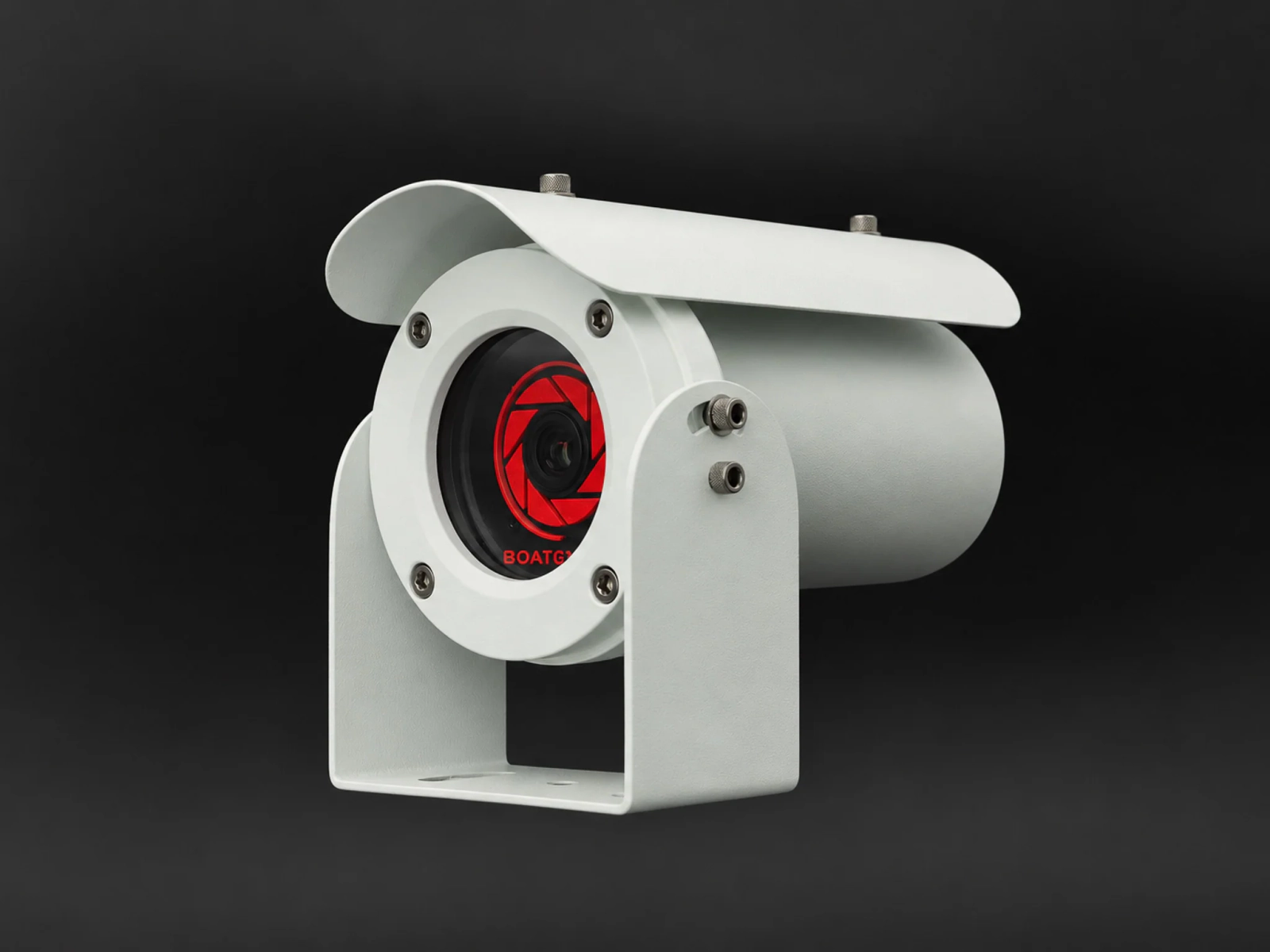
The original BoatEye360 full-colour low-light camera: the same 0.0001 lux sensor as the V2 in a larger 316L stainless housing, with HDMI and analog output, at a lower price.
Explore →