Loading this page…

Loading this page…
Sailing club
Volunteer-run sailing club based in Exmouth, WA, on the Exmouth Gulf. The club provides information and activities including sailing courses and learn-to-sail programs, racing and organised sailing, membership options, club boats, venue hire/venue enquiries, and vessel storage (terms & conditions are referenced). The clubhouse is open Sundays (seasonal opening hours listed on the site). Contact emails and a phone number are published on the website.
About
Volunteer-run sailing club based in Exmouth, WA, on the Exmouth Gulf. The club provides information and activities including sailing courses and learn-to-sail programs, racing and organised sailing, membership options, club boats, venue hire/venue enquiries, and vessel storage (terms & conditions are referenced). The clubhouse is open Sundays (seasonal opening hours listed on the site). Contact emails and a phone number are published on the website.
Service area: Exmouth, WA
Keep exploring
At the top of Western Australia's coral coast, some 1,260 kilometres north of Perth, Exmouth Yacht Club serves a town that exists between two extraordinary bodies of water: Exmouth Gulf on one side and the Ningaloo region on the other. It is a volunteer-based club on the gulf foreshore, and everything about it reflects remote-area practicality — membership for the 2022/23 year cost just $75 for an adult, $10 for a junior aged five to seventeen, and $20 for a social non-sailing member, with the membership year running from 1 July to 30 June. New members require committee approval, and provisional members hold full rights except a vote.
The club sits on Australian Sailing's affiliation schedule despite its isolation, and that connection matters: qualified instructors fly in from Perth or interstate each spring to run the training season, because a town this far from anywhere cannot grow its own coaching base unaided. The clubhouse opens every Sunday — from 4pm in the April-to-September off-season and 5pm through the October-to-March sailing months — welcoming members, guests and visitors for a $2 visitor fee. Venue enquiries go to a dedicated events address, while the club secretary handles membership matters and a Facebook page keeps the wider community informed.
The member resources listed on the club website tell their own story about remoteness: alongside club boats and a boats-for-sale page sit instructional sailing videos and even "virtual sailing," ways of keeping skills and interest alive in a town where the sailing season and the instructor visits are necessarily compressed into a few golden months each year.
What sets training at Exmouth apart is how it arrives: in a burst, each spring, delivered by visiting Australian Sailing-qualified instructors flown in from Perth or interstate. The pre-season learn-to-sail programs run through September and early October, compressed into a few intensive weeks before the October-to-March sailing season begins. The September–October 2024 block shows the pattern: across three weeks the club delivered Tackers 1, 2 and 3 for children aged seven to twelve, Start Sailing 1 for teens and adults, a Discover Sailing session for grown-ups, an Out There Sailing fun day, and private lessons.
The structured pathway continues in season. Out There Sailing serves twelve-to-seventeen-year-olds, while Start Sailing Levels 1 and 2 take sailors from age thirteen through to adult, taught on Laser dinghies. Instruction is provided with an accredited Australian Sailing coach, session numbers are kept small, and private lessons remain available — an arrangement that suits a small remote club where every place matters.
Racing runs fortnightly from October, kicked off by the Open Trophy Day, staged on the season's first Sunday of that month. The fleet is mainly Windrush 14 catamarans, though other classes are welcomed and handicapped into the results. Practical supports include SailPass day membership for visitors, hardstand and boat-shed storage at $200 a year for adults and $50 for juniors, and a club-fleet maintenance fee of $150 for adults and $90 for juniors — modest sums that keep boats available for those who do not own one. The whole system is engineered around a simple reality: in Exmouth, sailing opportunity is seasonal, and the club makes those weeks count.
The clubhouse stands at 2 Truscott Crescent on the Town Beach foreshore, close to the Exmouth Marina precinct and within easy reach of Mantarays Resort, the Whalers restaurant and the Exmouth Game Fishing Club — the small cluster of venues that anchors the town's tourist strip. Exmouth itself lies on the western shore of Exmouth Gulf, about 1,260 kilometres by road north of Perth, and serves as the gateway to the Ningaloo region, whose reef fringes the ocean side of the North West Cape.
The club's sailing water is the gulf, and the club describes it as safe and convenient provided sailors pay attention to tides and weather forecasts — sound advice on a shallow tropical gulf where tidal range dictates launching and the wet season brings serious weather. In character, Exmouth Gulf is sheltered, warm and flat compared with the open Indian Ocean beyond the cape: an ideal classroom for the visiting-instructor courses, and forgiving racing water for the Windrush fleet. The trade-off for that shelter is the remoteness itself — the nearest neighbouring club of any size is hundreds of kilometres away, which is why Australian Sailing's regional servicing visits, rather than interclub racing, supply much of the club's outside contact.
The town's rhythm shapes the club's year. Sailing runs October to March, the clubhouse opens on Sunday afternoons year-round, and the off-season months coincide with the cooler tourist peak when the Ningaloo region fills with visitors. For a sailor, few clubhouses in Australia sit closer to genuinely wild country.
Ask when Exmouth Yacht Club was founded and the honest answer is that no founding date has been published — not even on the club's own website. Clubs in remote towns frequently begin informally, with a handful of sailors and a shed, and formal records arrive later; whether that was Exmouth's path is something only the club's own minute books could settle, and they are not publicly available.
What is documented is the club's recent emergence as a training outpost. In 2022 the national body, Australian Sailing, conducted an instructor mentoring and training week at the club under the WA Regional Servicing Grant program, funded by the Department of Local Government, Sport and Cultural Industries. The week produced 18 graduates at Tackers 1 level and 6 at Tackers 2, kept seven Green Fleet sailors training all week, and qualified ten new Safety Boat Operators — a single week that materially deepened the club's capacity to teach and to run safe racing.
Three years later, in 2025, Australian Sailing's WA team returned to work with the club under the Gascoyne regional servicing program, together with Carnarvon Yacht Club, confirming that the national body regards this remote outpost as worth the long journey north.
Beyond those milestones, the institutional picture comes from the club's own rules and routines: a committee-gated membership process, a July-to-June membership year, a Sunday-afternoon clubhouse that stays open through the off-season, and storage and fleet-maintenance fees that keep shared boats affordable. It reads like what it is — a young-ish volunteer club, still building its story, in one of the most isolated sailing towns in the country.
Comprehensive sailing guide to the Bundaberg region covering the Burnett River, Burnett Heads and nearby reefs and islands. Includes geography, seasonal conditions, principal sailing areas, anchorages and visitor berths, arriving and harbour navigation, facilities ashore, local hazards and limitations, regulatory and conservation constraints and suggested sailing experiences suited to day sailors through to passagemakers. Concludes with who the area suits and a short list of authoritative sources consulted.

Look for a friendly club with beginner-focused training, accessible facilities and boats, a supportive community, clear safety practices, and opportunities to progress at your own pace.
Explore →
Late spring to summer is usually the best time for beginners to start learning to sail in Tasmania because the weather is generally warmer, days are longer and conditions are often more settled. Expect lighter to moderate winds with regular afternoon sea breees in summer, while spring and autumn bring more changeable and sometimes stronger conditions; winter is colder, wetter and typically windier with more fronts and swell.
Explore →
Pick a protected bay, estuary or river reach where you can rig, launch and arrive on calm water within a short, sheltered transit; choose a site with a good ramp or jetty, clear recovery options and a nearby sailing club, marina or commercial operator for local knowledge and help.
Explore →
Expect very different seasonal systems across Western Australia: the south‑west (Perth to Albany) has a strong summer afternoon sea breeze (the “Fremantle Doctor”) and winter westerly fronts, while northern WA follows a wet/dry monsoonal cycle with strong seasonal onshore winds, thunderstorms and cyclone risk in the wet season. Local headlands, estuaries and tidal flows often change what you actually feel on the water, so learn the local timing and sheltered venues first.
Explore →
A concise, practical guide to the points of sail and how to trim sails effectively for common Australian conditions. Learn the basics of wind angles, sail shape, telltales, reefing considerations and simple steps to improve boat speed and balance.
Explore →
A practical guide for new sailors on picking the right Australian sailing club: training, boat access, racing, social fit, costs and the key questions to ask before joining.
Explore →
A practical, Australia‑focused introduction to sailing: key terms, common boat types, basic manoeuvres, where to learn, licence and club options, and planning your first trips with safety and local conditions in mind.
Explore →Practical guide for recreational sailors planning passages, anchorages and visits to Ningaloo Reef and the Exmouth coast. Covers anchoring considerations, marine park rules and how local weather, tides and currents affect safety and enjoyment.
Explore →Burke Yachtsman Gear Bag 40L - Shop Now Zip Pay | Tamar Marine Skip to content 59 – 63 Holbrook Street, Invermay Online Shop Open 24/7 Products search Contact us 1300 MARINE $ 0.00 0 Cart Burke Yachtsman Gear Bag 40L $ 79.90 Colour Choose an option Black Blue Black Blue Clear - Burke Yachtsman Gear Bag 40L quantity + Add to cart Enquire about this product SKU BAGB-Y24/BLACK* Category Bags - Sail & Gear A Burke classic and customer favourite, the Yachtsman’s Gear Bag is built tough to handle wet, salty conditions while keeping your gear dry and protected. Made from double coated waterproof…
Explore →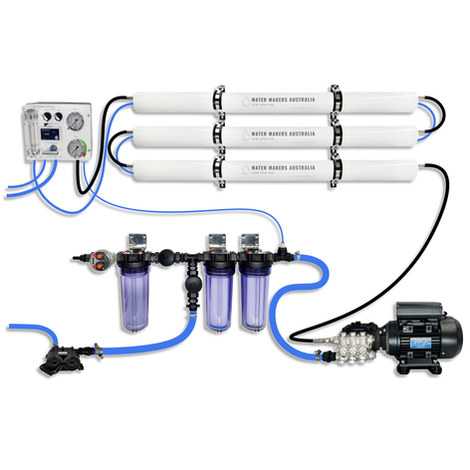
A three-membrane modular watermaker with 200 L/h nominal output and up to 240 L/h family-level marketing, for larger crews and heavy use.
Explore →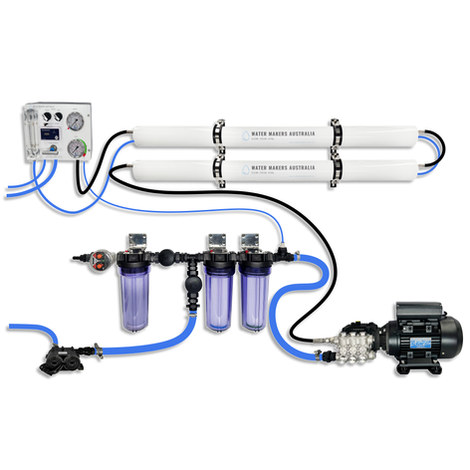
A two-membrane modular watermaker with 140 L/h nominal output, aimed at families and liveaboards that want more water per run.
Explore →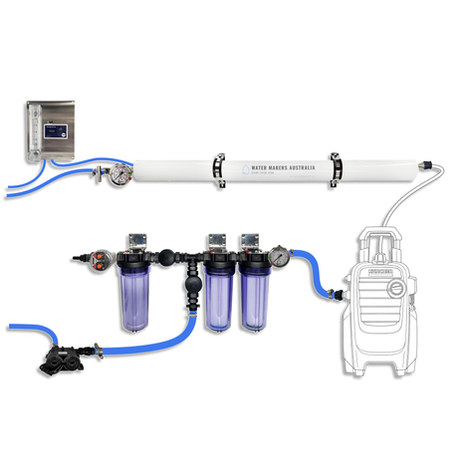
A one-membrane modular marine watermaker with 80 L/h nominal output, remote stainless control panel, standard consumables and direct Australian support.
Explore →