Loading this page…

Loading this page…
Sailing club
Flinders Yacht Club is a small, family-oriented sailing club on the Flinders foreshore overlooking Westernport Bay and Phillip Island. Established in 1976, the club runs an active sailing program (season November–April) with Sunday races, a summer program with regular races and adventure sails, and a sailing school and junior training (ages 8 to adult) staffed by certified instructors. Facilities include a clubhouse with function room and deck, showers, semi-commercial kitchen and BBQs, beach-front dinghy launch access, a fenced secure year-round boat storage compound, pier moorings for keel and couta boats, patrol boats, boat washing stations, control tower and marine-communication facilities, and space for storing off-the-beach dinghies, tenders, kayaks and trailer sailors. The club also offers social events and club-hire for private functions.
About
Flinders Yacht Club is a small, family-oriented sailing club on the Flinders foreshore overlooking Westernport Bay and Phillip Island. Established in 1976, the club runs an active sailing program (season November–April) with Sunday races, a summer program with regular races and adventure sails, and a sailing school and junior training (ages 8 to adult) staffed by certified instructors. Facilities include a clubhouse with function room and deck, showers, semi-commercial kitchen and BBQs, beach-front dinghy launch access, a fenced secure year-round boat storage compound, pier moorings for keel and couta boats, patrol boats, boat washing stations, control tower and marine-communication facilities, and space for storing off-the-beach dinghies, tenders, kayaks and trailer sailors. The club also offers social events and club-hire for private functions.
Service area: Flinders VIC
Keep exploring
Every summer the population of Flinders swells with holidaymakers, and the little yacht club on the foreshore swells with them. Flinders Yacht Club is, by design, a holiday sailing club: its season runs from November to April with racing every Sunday, and its membership mixes locals with families who return to this corner of Western Port year after year. The fleet reflects the place.
Off-the-beach dinghies launch straight from the sand in front of the clubhouse, while the keel boat and couta boat fleet lies on moorings at Flinders Pier, their tenders either launched at the pier ramp or kept in the club's secure compound. The club has occupied its beachfront position since 1976, looking out across Westernport Bay toward Phillip Island, and it runs on volunteer energy — an active committee of sailors steers the program, with a junior committee making sure events carry something for the kids as well.
That junior thread runs deep here: the children's party after the annual sailing school, with its celebrated ice-cream eating competition, is as much a fixture as any trophy race. The clubhouse itself, with a large function room and a deck overlooking the bay, does double duty as a community venue, hired for weddings, birthdays and meetings by local groups such as the Flinders Lions Club.
Racing is serious enough — aggregate and championship series, twilight and ocean events, even a race across to Cowes — but the club's real measure is the number of families who learned to sail here on their holidays and kept coming back.
The centrepiece of Flinders' teaching year is not a weekend course but a full holiday institution: a sailing school run every year from 27 to 31 December, delivered by the Smooth Sailing School — also known as The Boatshed and backed by the Bendigo Bank at Balnarring. The timing is deliberate. Families are on holidays, the bay is at its warmest, and children, teenagers and adults can all be slotted into courses at every level across a single five-day block.
The syllabus covers Tackers at levels one through three for the youngest, Start Sailing courses for adults and teenagers, and OutThere Sailing for those ready to broaden out. Certified instructors run the junior training program, which takes sailors from age eight through to adulthood.
Beyond the school itself, the summer program keeps the learning going with regular racing, supported social sailing and adventure sails — including a much-loved Adventure Sail across to Balnarring, part expedition and part picnic. Racing development happens inside a full calendar: off-the-beach aggregate and championship series, a keel boat aggregate, twilight races and an ocean series that includes the race to Cowes and the Westernport Challenge, plus novelty silverware such as the Christmas Cup Pacer Challenge, the Brian Coleman Cup, the Ian Freeland Memorial Trophy and the Vignerons Trophy.
The club has also hosted International 14 and B14 skiff events and Westernport Team Racing across 2018–19, giving juniors a close look at sharp-end racing. And because this is a club that takes its juniors seriously in every sense, the season's teaching is bookended by junior progressive dinners, beach parties and that famous ice-cream contest.
Flinders sits near the eastern tip of the Mornington Peninsula, where Westernport Bay opens wide toward Phillip Island, and the club commands that view from its clubhouse at 35 Lacey View. The sailing water is classic Western Port: broad, tidal and open enough to give ocean-flavoured racing in the club's offshore series, yet sheltered along the foreshore for dinghy launching straight off the beach. The keel and couta boat fleet moors at Flinders Pier, a short hop away, with tenders either run down the pier boat ramp or kept inside the compound.
For a small club the shore setup is thorough. The fenced storage compound holds boats securely year-round — off-the-beach dinghies, tenders, kayaks, stand-up paddleboards and larger trailer-sailers — and there is generous parking on the foreshore for cars and boat trailers alike. Launching is by beachfront access, with boat washing stations for the pack-up afterwards.
Three patrol boats cover the racing, coordinated from a control tower fitted with marine communications, and the club keeps its own dinghies and trailer-sailers available for member use — a practical touch for families not yet ready to buy. The clubhouse holds a large function room with a bay-facing deck, two restrooms with showers, a semi-commercial kitchen, outdoor barbecues and handicap access throughout.
On a still summer evening, with the tide flooding past the pier and the lights of Cowes visible across the water, the deck earns its place among the better spots on Western Port to finish a sailing day. The club also swaps hospitality with its neighbours: the race-and-lunch and Fiesta Dinner with Royal Melbourne Yacht Squadron and the Merricks Yacht Club barbecue are fixtures.
On 27 October 1976, thirty-seven people crowded into the meeting room at the old Flinders Caravan Park and voted to form a club whose purpose was recorded simply: to "foster interest in boating" in the town. A smaller group had done the groundwork earlier that year, and things moved quickly — the first race was sailed on Sunday 28 November 1976, barely a month later. At the first annual general meeting in August 1977, the members settled a sailing program for dinghies and trailer-sailers for the 1977–78 season and elected Graham Pittard as the club's first Commodore, with Tom Delaney Senior, a Port Phillip Sea Pilot, as Vice Commodore.
The site they chose came with layers of history of its own. It sat beside the West Head Gunnery Range and extended roughly six hundred feet toward the jetty, on ground that had earlier held a fishing village and later formed part of the golf course. From that toehold the club built the compound, clubhouse and tower that stand today, and it has held the same beachfront position ever since.
The character set in those first seasons has proved durable: a family club on a holiday coast, running its racing on Sundays through the warmer months, folding children into the program from the start, and sharing its rooms with the town. Reciprocal ties with clubs across the water, Royal Melbourne Yacht Squadron and Merricks among them, followed in due course. Approaching its fiftieth year, Flinders remains close to the shape its founders sketched in the caravan park: small, volunteer-run, and pointed squarely at the bay.
Apollo Bay is a small working harbour on Victoria’s Great Ocean Road where sheltered inshore sailing meets the Southern Ocean. The character is a mix of protected harbour berths and an exposed open coast: pleasant day-sails and sheltered weekend cruising inside the bay, with demanding coastal passages immediately offshore where south‑westerly swell and strong winds from the Southern Ocean dominate. It suits coastal cruisers, trailer sailors who launch at the ramp, and experienced coastal sailors who understand bar and swell behaviour; it is not a casual open‑ocean anchorage for unprepared or

Use ramps and beaches with respect for local conditions: check ramp layout, tide and swell, wind direction, vehicle access and crowding; prepare boat and crew before you launch or retrieve; and follow local signage, courtesy and safety practices. Specifics vary by ramp and beach, so confirm details for the exact site before you go.
Explore →
Expect very different seasonal systems across Western Australia: the south‑west (Perth to Albany) has a strong summer afternoon sea breeze (the “Fremantle Doctor”) and winter westerly fronts, while northern WA follows a wet/dry monsoonal cycle with strong seasonal onshore winds, thunderstorms and cyclone risk in the wet season. Local headlands, estuaries and tidal flows often change what you actually feel on the water, so learn the local timing and sheltered venues first.
Explore →
Write a one‑page plan with the who/what/when/where/how of your trip, keep a copy on board and leave the main copy with a responsible person ashore (and optionally with your club, marina office or local volunteer rescue service).
Explore →
Late spring to summer is usually the best time for beginners to start learning to sail in Tasmania because the weather is generally warmer, days are longer and conditions are often more settled. Expect lighter to moderate winds with regular afternoon sea breees in summer, while spring and autumn bring more changeable and sometimes stronger conditions; winter is colder, wetter and typically windier with more fronts and swell.
Explore →
A practical guide for new sailors on picking the right Australian sailing club: training, boat access, racing, social fit, costs and the key questions to ask before joining.
Explore →A practical guide for recreational sailors planning visits to Albany and King George Sound. Covers the main anchorage areas, typical local weather patterns, tidal and current considerations, navigational hazards, on-the-water etiquette and a pre-departure checklist to help you plan a safe passage and enjoyable stopover
Explore →A practical guide for recreational sailors planning trips around Shark Bay, focusing on Denham, Dirk Hartog Island and nearby protected anchorages. Covers local conditions, route planning, anchoring, hazards, tides, wildlife considerations and sensible trip planning for coastal cruising in this unique West Australian,́
Explore →A practical guide for recreational sailors planning day sails or short cruises around Batemans Bay, Broulee and the Clyde River. Covers local conditions, safe approaches, anchorages, launching, tides, common hazards, and checklists for trip planning and on-water decisions.
Explore →Burke Yachtsman Gear Bag 40L - Shop Now Zip Pay | Tamar Marine Skip to content 59 – 63 Holbrook Street, Invermay Online Shop Open 24/7 Products search Contact us 1300 MARINE $ 0.00 0 Cart Burke Yachtsman Gear Bag 40L $ 79.90 Colour Choose an option Black Blue Black Blue Clear - Burke Yachtsman Gear Bag 40L quantity + Add to cart Enquire about this product SKU BAGB-Y24/BLACK* Category Bags - Sail & Gear A Burke classic and customer favourite, the Yachtsman’s Gear Bag is built tough to handle wet, salty conditions while keeping your gear dry and protected. Made from double coated waterproof…
Explore →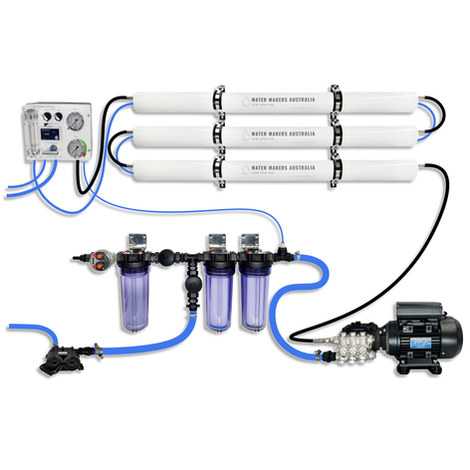
A three-membrane modular watermaker with 200 L/h nominal output and up to 240 L/h family-level marketing, for larger crews and heavy use.
Explore →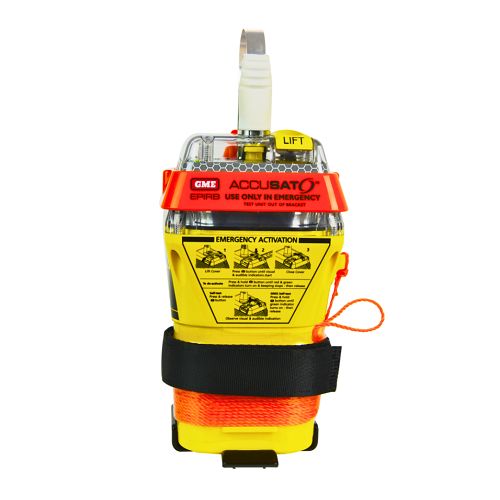
A 10‑year battery EPIRB with integrated GNSS (supports GPS and Galileo), infrared strobe and 121.5 MHz homing signal. Approved for worldwide COSPAS‑SARSAT operation.
Explore →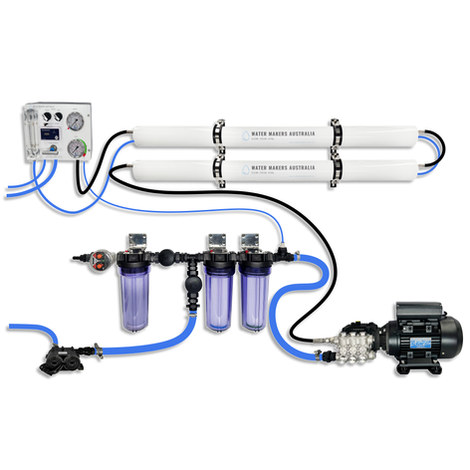
A two-membrane modular watermaker with 140 L/h nominal output, aimed at families and liveaboards that want more water per run.
Explore →