Loading this page…

Loading this page…
Sailing club
Frankston Yacht Club is a community sailing and waterfront club on the foreshore of Port Phillip Bay in Frankston, Victoria. The club runs a range of sailing programs and Learn-to-Sail courses for different ages and skill levels, organises regattas and community events, supports youth engagement and paddleboarding, offers membership options, and promotes the venue as a waterfront location for events such as weddings and corporate functions.
About
Frankston Yacht Club is a community sailing and waterfront club on the foreshore of Port Phillip Bay in Frankston, Victoria. The club runs a range of sailing programs and Learn-to-Sail courses for different ages and skill levels, organises regattas and community events, supports youth engagement and paddleboarding, offers membership options, and promotes the venue as a waterfront location for events such as weddings and corporate functions.
Service area: Frankston, VIC
Keep exploring
Frankston Yacht Club's clubhouse turns heads before a single sail is hoisted. The two-storey building that rose from an eleven-million-dollar redevelopment of the foreshore, designed by architect Gregory Burgess and shaped by the coastal tea tree and banksia dunes around it, opened with a ground-floor café in 2022 and carries floor-to-ceiling views sweeping one hundred and eighty degrees across Port Phillip Bay. It is a statement of intent from a club founded in 1937 and now home to around two hundred members.
The membership is broader than sailing alone: stand-up paddleboarding and kayaking have their own membership categories, and the Mornington Peninsula Triathlon Club shares the facilities. Yet sailing remains the core. The club runs its Learn2Sail program as a recognised Discover Sailing centre, races on the bay, and opens its doors to prospective members on Saturdays from May through October.
The atmosphere is deliberately family-oriented — the lounge looks over the water toward Melbourne, and the ground-floor Oliver's Corner café keeps the clubhouse humming on non-sailing days. Perched beside the mouth of Kananook Creek on Long Island Drive, a short walk from Frankston Station and the city centre, the club sits at the meeting point of creek, beach and bay, with a boardwalk, boat ramp and landmark bridge tying the precinct together.
It is a suburban sailing club that has reinvented itself without losing sight of what it was: a group of locals who simply wanted to race boats off their own beach — and who would, in time, build one of the busier sailing communities on the eastern side of Port Phillip.
Ask what distinguishes Frankston's teaching program and the answer is breadth. The club's OutThere Sailing courses for twelve-to-seventeen-year-olds refuse to stay inside one discipline: teenagers sample dinghy sailing and keelboat sailing, take to stand-up paddleboards and get time in powerboats — an approach built to hold the attention of an age group clubs often lose. It sits inside a full Learn2Sail operation run as a recognised Discover Sailing centre under qualified Australian Sailing instructors, taking beginners and intermediates alike.
The standard pathway is all here, from Tackers for seven-to-twelve-year-olds across three levels on Saturdays with every piece of equipment supplied, while adults get their own Discover Sailing dinghy program, building from essential boat handling toward race readiness. It is a structure that lets a family arrive with no boat and no experience and end up, a season or two later, on a start line off the Frankston foreshore.
Racing development leans on the club's long competitive memory. In the 1970s and 1980s Frankston's membership was closed at four hundred and racing ran across both Saturday and Sunday; the Australia Day long weekend regatta regularly drew fields of more than one hundred and twenty boats from across the bay and country Victoria. Historic fleets included lightweight Sharpies — Carl Thurkle crewed a twenty-foot 'six-metre' example alongside Commodore Leigh Gloury — and the Yvonne 20 catamarans, which contested three Australian championships split between Frankston and Perth.
Today's sailors inherit that culture in modern boats, with the bay's afternoon breezes providing the classroom and the club's patrol boats and second-storey lookout keeping watch.
Frankston fronts the eastern curve of Port Phillip Bay, and the club occupies one of the foreshore's natural focal points: the mouth of Kananook Creek, where the creek's boardwalk, landmark bridge and boat ramp meet the beach. The sailing water is classic eastern Port Phillip — open bay with reliable afternoon breezes through the warmer months, a sandy shoreline and enough fetch in a southerly to keep crews honest. Melbourne's skyline is visible across the water on clear days, a reminder that this is very much a city sailing venue; Frankston Station and the shopping centre are a short walk away, which makes the club unusually accessible for a bayside fleet.
The redevelopment that transformed the site was a complete rebuild: the old buildings and seawall came down, and in their place rose a replacement seawall, a beach boardwalk, boat shed, yard for boat storage, access ramp and car parking alongside the two-storey clubhouse. Inside, the building works hard. The ground floor houses patrol boat storage, public toilets, leasable community space and the café; the first floor carries the restaurant and function room with those wide bay views; and the top level serves as a safety lookout and navigation room, giving race officials a commanding view of the course area.
Boat storage and launching sit immediately alongside, so the walk from car park to waterline is short. For visiting sailors the practical notes are simple: ramp access beside the creek, storage in the yard, and a clubhouse that can feed a fleet after racing. For locals, the building has become something more — a foreshore gathering place that happens to have a yacht club at its heart.
Frankston Yacht Club began in 1937, when a group of local yachting enthusiasts started sailing out of Kananook Creek. Among the founders, Bert Grice is remembered by the club as one of its greatest members, and the generation that followed him built something substantial. Carl Thurkle, named the club's first life member in 1969 when he was thirty-nine after six years as Club Captain and who lived to ninety-two, personified that era.
Through the 1970s and 1980s the club capped its membership at four hundred, raced across both days of the weekend, and — by its own fond account — stood among the strongest sailing clubs on Port Phillip. Its Australia Day long weekend regatta was the flagship fixture, often attracting more than one hundred and twenty boats from across the bay and country Victoria.
The boats of that golden period had character: lightweight Sharpies, including the twenty-footer Thurkle crewed with Commodore Leigh Gloury, and the Yvonne 20 catamarans that chased national titles between Frankston and Perth.
The twenty-first century brought a different kind of ambition. The foreshore precinct beside the creek was redeveloped in an eleven-million-dollar project that demolished the old clubhouse and seawall and replaced them with a new two-storey clubhouse, seawall, boardwalk, boat shed, storage yard and ramp. Architect Gregory Burgess — whose other work includes Peninsula Hot Springs and the refurbishment of the Sidney Myer Music Bowl — drew the building's forms from the coastal tea tree and banksia dunes. The café on the ground floor opened in 2022, and the club that began with a handful of enthusiasts on a creek bank now sails from one of the most striking clubhouses on the bay.
Adelaide’s metropolitan coast fronts the eastern side of Gulf St Vincent and mixes short, sheltered bay sailing around Holdfast Bay and the Patawalonga with more exposed, open-water sailing north toward Outer Harbour and along the Le Fevre Peninsula. The area suits a wide range of activity — sheltered day sails, club and trailer-sailer racing, short coastal cruising into the Fleurieu and Yorke Peninsula, and launch-and-home-port racing — but demands local knowledge about shipping channels, tidal flows in the Port River/Outer Harbour approaches, and seasonal wind patterns.

Look for a friendly club with beginner-focused training, accessible facilities and boats, a supportive community, clear safety practices, and opportunities to progress at your own pace.
Explore →
Late spring to summer is usually the best time for beginners to start learning to sail in Tasmania because the weather is generally warmer, days are longer and conditions are often more settled. Expect lighter to moderate winds with regular afternoon sea breees in summer, while spring and autumn bring more changeable and sometimes stronger conditions; winter is colder, wetter and typically windier with more fronts and swell.
Explore →
Expect very different seasonal systems across Western Australia: the south‑west (Perth to Albany) has a strong summer afternoon sea breeze (the “Fremantle Doctor”) and winter westerly fronts, while northern WA follows a wet/dry monsoonal cycle with strong seasonal onshore winds, thunderstorms and cyclone risk in the wet season. Local headlands, estuaries and tidal flows often change what you actually feel on the water, so learn the local timing and sheltered venues first.
Explore →
Progress gradually by increasing exposure, practising specific skills, sailing with more experienced crew/skippers, and deliberately training for each new step—start in calm sheltered bays, then move to longer trips, busier waters, stronger winds and finally open coastal passages when you and your crew are consistently competent and comfortable.
Explore →
A concise, practical guide to the points of sail and how to trim sails effectively for common Australian conditions. Learn the basics of wind angles, sail shape, telltales, reefing considerations and simple steps to improve boat speed and balance.
Explore →A practical, Australian-focused guide explaining how sails generate drive, the points of sail, and how to trim sails for different conditions. Includes simple explanations of aerodynamic concepts, step-by-step trim checks, common mistakes and clear next steps for practice on the water.
Explore →
A practical guide for new sailors on picking the right Australian sailing club: training, boat access, racing, social fit, costs and the key questions to ask before joining.
Explore →A concise, practical introduction to the essential parts of a recreational sailing boat for beginners in Australia. Covers hull, deck, rigging, sails, steering, below-decks spaces and safety equipment, with simple explanations, common mistakes and a pre-decast checklist to help new sailors communicate and get underway.
Explore →Burke Yachtsman Gear Bag 40L - Shop Now Zip Pay | Tamar Marine Skip to content 59 – 63 Holbrook Street, Invermay Online Shop Open 24/7 Products search Contact us 1300 MARINE $ 0.00 0 Cart Burke Yachtsman Gear Bag 40L $ 79.90 Colour Choose an option Black Blue Black Blue Clear - Burke Yachtsman Gear Bag 40L quantity + Add to cart Enquire about this product SKU BAGB-Y24/BLACK* Category Bags - Sail & Gear A Burke classic and customer favourite, the Yachtsman’s Gear Bag is built tough to handle wet, salty conditions while keeping your gear dry and protected. Made from double coated waterproof…
Explore →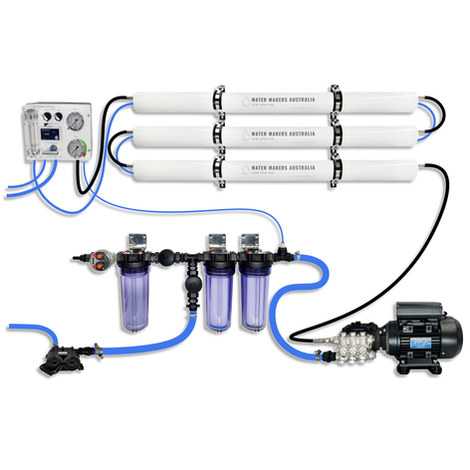
A three-membrane modular watermaker with 200 L/h nominal output and up to 240 L/h family-level marketing, for larger crews and heavy use.
Explore →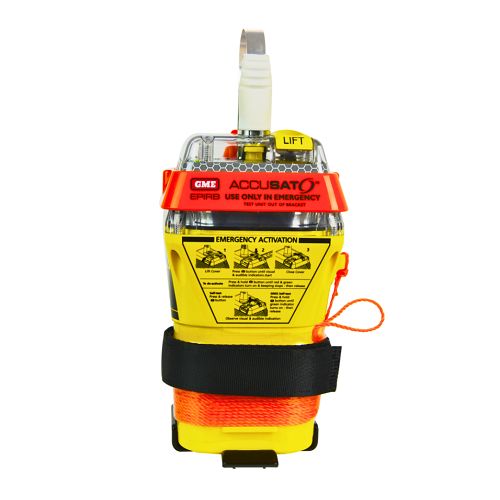
A 10‑year battery EPIRB with integrated GNSS (supports GPS and Galileo), infrared strobe and 121.5 MHz homing signal. Approved for worldwide COSPAS‑SARSAT operation.
Explore →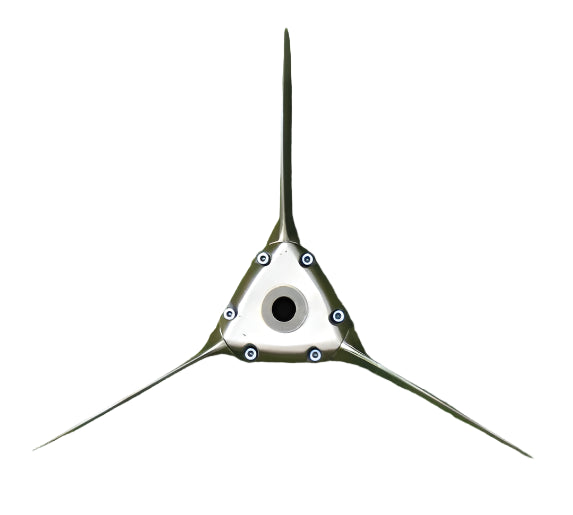
Feathering propeller designed for larger cruising yachts. Diameter range 18"–25"; shaft range 1¼"–1¾"; hub lengths 120mm or 165mm (with anode). Sail drive option available.
Explore →