Loading this page…

Loading this page…
Sailing club
Geographe Bay Yacht Club (GBYC) is the small but nationally recognised yacht club based on Margaret Street, West Busselton, Western Australia, overlooking the sheltered sweep of Geographe Bay. The club runs a broad program of sailing that ranges from junior learn-to-sail and Australian Sailing-accredited training courses to regular club racing, cruiser passage races and the high-profile Geographe Bay Race Week each February.
About
Geographe Bay Yacht Club (GBYC) is the small but nationally recognised yacht club based on Margaret Street, West Busselton, Western Australia, overlooking the sheltered sweep of Geographe Bay. The club runs a broad program of sailing that ranges from junior learn-to-sail and Australian Sailing-accredited training courses to regular club racing, cruiser passage races and the high-profile Geographe Bay Race Week each February.
Service area: Busselton, Geographe Bay (South West WA)
Keep exploring
Race Week is the program that defines this club, so it deserves first mention: the Geographe Bay Race Week each February attracted 43 vessels in 2023 and swelled to 74 the following year, with the 2025 edition running 15 to 21 February. Recent divisions have included a Super 30 fleet and a Viper fleet running its own mini-regatta on the same course as the Flying 15s, while invitations have gone out to sports boats — classes such as the Melges 24 and Platu 25, joined by the J70, Elliot 7 and Fremantle 8. Backing comes from the City of Busselton, Shelter Brewing Co, Southern Ports and Port Geographe Marina, and a delivery fleet makes the trip south from the RPYC Annexe with an overnight stop in Mandurah, turning the regatta into a genuine coastal campaign for visiting crews.
Underneath that showcase sits a fully accredited Australian Sailing Centre: the menu runs from Discover Sailing and junior Tackers 1 and 2 through Start Sailing and learn-to-sail options for every age, while RST, powerboat handling and safety boat qualifications can be arranged via the national body. The weekly rhythm is Saturday sailing, when the regular fleets turn out — Pelicans and 420s, Sharpies, and catamarans sailed off the beach — and a large Tasar fleet assembles during the junior training and coaching programs, the same Tasar strength that underpins the club's championship record.
For bigger boats, Cruiser Divisions 1 and 2 range further afield, contesting passage races out to Meelup, across to Dunsborough and on toward Cape Naturaliste. Add a winter Tasar series on Sunday mornings from 10:30am, and the program runs in every season — which helps explain how a club this small keeps producing national-calibre sailors year after year.
Geographe Bay is a broad, north-facing sweep of water on the South West coast, sweeping between Capel at its eastern end and Cape Naturaliste at the western one, and it behaves very differently from the open-ocean racing off Fremantle: sheltered, largely free of ocean swell, and governed by the region's summer sea-breeze cycle, which usually builds as the afternoon wears on. Morning glass-offs and reliable afternoon pressure make it superb water for junior training, championship racing and long summer series alike — one reason so many State titles have been decided here.
The club's grounds sit on Margaret Street, West Busselton, directly overlooking that water. The site is shared with the Geographe Outriggers and the Naturaliste Game & Sport Fishing Club, and the acres of lawn between clubhouse and beach give trailer sailors and championship regattas the rigging room that cramped metropolitan clubs can only envy. Busselton's famous jetty — 1.8 kilometres long, begun in 1865 at a modest 161 metres — stands along the foreshore, and the club's original 1959 clubhouse sat at its base, tying the club's geography to the town's best-known landmark.
For cruiser racers, the bay reads like a chart of the region's beauty spots: passage races run west to Meelup and Dunsborough and on toward Cape Naturaliste, where the coastline turns and the water deepens. Visiting boats for Race Week find Port Geographe Marina — a regatta partner — nearby, and the delivery trip from Perth, broken at Mandurah, has become part of the event's own tradition.
The club owes its existence to two Busselton locals who decided, in early 1959, that the town's sailing needed organising. Perth-area yachts had been visiting for years — racing down to the jetty and using the bay's safe anchorage — and the spectacle had stirred local interest. The founders met at one member's home in January of that year, and the Geographe Bay Sailing Club was born. Its first clubhouse was built that same year at the base of the Busselton Jetty; twelve years later, in 1971, the club pulled that first building down and shifted to its present site.
The competitive record accumulated steadily from there. Over 30 State Championships have been hosted at the club, and in 2015 it landed the World Tasar Championship — a remarkable get for a club of its size. Eleven Australian Champions have come through its fleets. In the Tasar class especially, GBYC became a power: it hosted the 33rd WA Tasar State Championships on 27–28 January 2018 and took Champion Club honours at the 2020–21 and 2021–22 editions. Fittingly, Tasar Association records still referred to the club by its original name, Geographe Bay Sailing Club, as late as 2015–2021 — a small archival echo of the 1959 founding.
The modern chapter is Race Week, which has grown into a fixture of the national sailing summer, nearly doubling its fleet in the two years to 2024. From two organisers and a borrowed sitting room to a world championship host, the arc is one of the more striking in Western Australian club sailing — achieved without ever becoming a large club.
American River (Kangaroo Island, SA) is a small, sheltered inlet and township on the north‑eastern side of Kangaroo Island that acts as a calm staging point for cruising the eastern part of the island and for short hops through Backstairs Passage. It’s distinctive for its protected anchorage inside Eastern Cove and the adjacency of Pelican Lagoon — a shallow, ecologically important lagoon with sanctuary zoning — which shapes how and where boats can move. The area suits sheltered day sailing, weekend cruising and short coastal passages; it’s appropriate for trailer sailors, small cruisers and a

Expect very different seasonal systems across Western Australia: the south‑west (Perth to Albany) has a strong summer afternoon sea breeze (the “Fremantle Doctor”) and winter westerly fronts, while northern WA follows a wet/dry monsoonal cycle with strong seasonal onshore winds, thunderstorms and cyclone risk in the wet season. Local headlands, estuaries and tidal flows often change what you actually feel on the water, so learn the local timing and sheltered venues first.
Explore →
There are legal obligations in Western Australia for recreational boat owners and skippers covering vessel registration, carriage of safety equipment and general skipper responsibilities, but the exact requirements depend on vessel type, size, where you sail and whether the vessel is commercial or recreational. Check the Western Australian Department of Transport (DoT WA) and the national authority for the precise checklist that applies to your boat and voyage.
Explore →
Look for a friendly club with beginner-focused training, accessible facilities and boats, a supportive community, clear safety practices, and opportunities to progress at your own pace.
Explore →
Use ramps and beaches with respect for local conditions: check ramp layout, tide and swell, wind direction, vehicle access and crowding; prepare boat and crew before you launch or retrieve; and follow local signage, courtesy and safety practices. Specifics vary by ramp and beach, so confirm details for the exact site before you go.
Explore →
A practical guide for new sailors on picking the right Australian sailing club: training, boat access, racing, social fit, costs and the key questions to ask before joining.
Explore →A practical guide to the coastal weather systems that affect sailing along Western Australia's coast, focusing on the Fremantle Doctor, local sea breezes, and linked coastal phenomena. Explains how these systems form, when they tend to occur, how they influence boat handling and passage planning, common mistakes, and a
Explore →Practical guidance to help recreational cruising sailors choose and use anchorages around Western Australia. Covers types of sheltered anchorages, seasonal and tidal considerations, anchoring technique, local conditions, common mistakes and a checklist for planning stays from sheltered south coast bays to remote Kimber
Explore →Practical guide for recreational sailors planning day sails and short cruises in Geographe Bay, focusing on launching, local conditions, anchorages and safety around Busselton, Dunsborough and Cape Naturaliste.
Explore →Burke Yachtsman Gear Bag 40L - Shop Now Zip Pay | Tamar Marine Skip to content 59 – 63 Holbrook Street, Invermay Online Shop Open 24/7 Products search Contact us 1300 MARINE $ 0.00 0 Cart Burke Yachtsman Gear Bag 40L $ 79.90 Colour Choose an option Black Blue Black Blue Clear - Burke Yachtsman Gear Bag 40L quantity + Add to cart Enquire about this product SKU BAGB-Y24/BLACK* Category Bags - Sail & Gear A Burke classic and customer favourite, the Yachtsman’s Gear Bag is built tough to handle wet, salty conditions while keeping your gear dry and protected. Made from double coated waterproof…
Explore →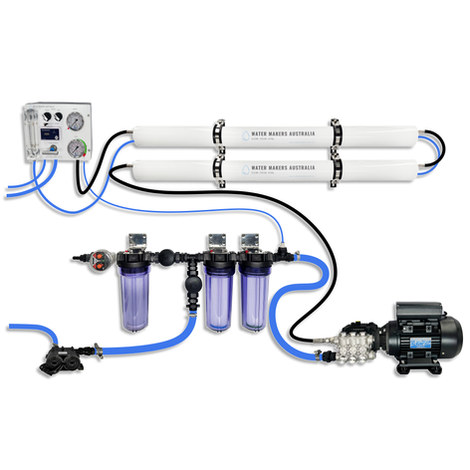
A two-membrane modular watermaker with 140 L/h nominal output, aimed at families and liveaboards that want more water per run.
Explore →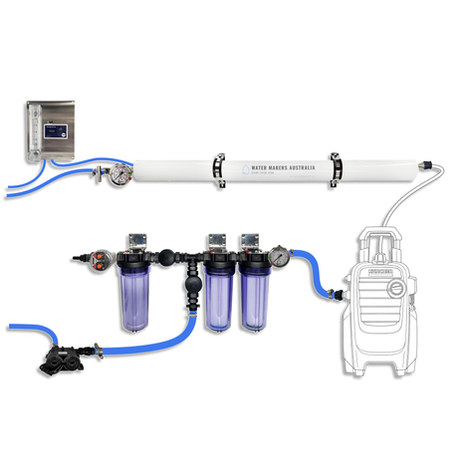
A one-membrane modular marine watermaker with 80 L/h nominal output, remote stainless control panel, standard consumables and direct Australian support.
Explore →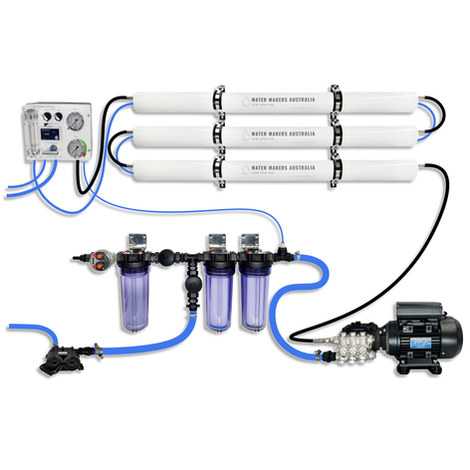
A three-membrane modular watermaker with 200 L/h nominal output and up to 240 L/h family-level marketing, for larger crews and heavy use.
Explore →