Loading this page…

Loading this page…
Sailing club
Geraldton Yacht Club is a long-established sailing and community club on the Geraldton foreshore (Champion Bay) offering organised sailing activities, club racing, regattas, youth and learn-to-sail programs, social events, licensed dining and function spaces. The club webpage references marina facilities including pen hire/booking contact, launching ramps and boat storage, and notes community programs such as Sailability and an affiliated offshore fishing club.
About
Geraldton Yacht Club is a long-established sailing and community club on the Geraldton foreshore (Champion Bay) offering organised sailing activities, club racing, regattas, youth and learn-to-sail programs, social events, licensed dining and function spaces. The club webpage references marina facilities including pen hire/booking contact, launching ramps and boat storage, and notes community programs such as Sailability and an affiliated offshore fishing club.
Service area: Geraldton, WA
Keep exploring
On the foreshore of Champion Bay, on Western Australia's Batavia Coast, stands a club that celebrated its centenary on 1 October 2014 — exactly one hundred years after it was formed. Geraldton Yacht Club is one of the state's oldest surviving sailing institutions, and its stated purpose is wide: encouraging sailing and fishing, championing marine safety, and offering a welcoming home to competitive sailors and social members equally.
That breadth is visible in the membership mix. The club races four fleets and a cruising section, but it also absorbed the Geraldton & District Offshore Fishing Club in 2021 — an organisation established in 1985 whose foreshore premises were built in 1991 — with fishing club memberships now including a social membership of the yacht club. Sailability runs here too, through a partnership with disability services provider Atlas aimed at lifting participation by people with disability across the Mid West.
The physical club matches the ambition. At 214 Marine Terrace, the site includes a licensed clubhouse, a function room, three hire venues and "The Deck," a dining and bar space with ocean views that opens on Fridays and Sundays. Behind the clubhouse, marina pens built in 2006 stand against the Batavia Marina's outer wall, managed by the club's own Marina Manager.
Affiliated with Australian Sailing, with an office open Wednesday to Friday, GYC operates with the polish of a metropolitan club while serving a city more than four hundred kilometres up the coast from Perth — the sporting and social anchor of Geraldton's waterfront. Few clubs of its size can point to a marina operation managed under the same roof as the racing program.
The distinctive thread in Geraldton's program is access. Through a partnership with Atlas, a disability services organisation, the club works to bring people with disabilities into sailing across the Mid West region — a Sailability commitment few regional clubs match. And to keep the whole training pipeline viable, the club has turned to the Australian Sports Foundation, raising funds for new training boats and safety equipment so it can grow its youth, community and school outreach programs.
Formal instruction covers learn-to-sail programs for all ages, and the coaching base was deliberately deepened in 2022, when six new Dinghy Instructors were trained at the club under Australian Sailing's WA Regional Servicing Grant program — capacity-building that keeps courses viable in a regional city where instructors cannot simply be borrowed from a neighbouring club.
Racing spans four fleets — Pelicans, Mixed Monohulls, Mixed Catamarans and Flying Fifteens make up the competitive divisions, with a cruising yachts section alongside — and visitors can join in through SailPass day membership. The flagship competitive connection, though, is offshore: GYC lends its support to South of Perth Yacht Club for the Geraldton Ocean Classic, Western Australia's only annual Category 2 ocean race, run from Fremantle to Geraldton and return, which marked its 50th anniversary in 2018.
The race pairs with the Lobster Pot Regatta held in Geraldton to make a complete regatta series — so each year the club helps turn the arrival of the ocean racing fleet into a home festival of sailing. It is a role that suits a centenarian club: part teacher, part host, part guardian of the state's offshore tradition.
Geraldton faces the Indian Ocean across Champion Bay, the broad anchorage on the Batavia Coast that made the town a port long before it made it a sailing centre. The club occupies the foreshore at 214 Marine Terrace, with the bay and its marina immediately in front — genuine ocean sailing water, moderated by the bay's curve and by the offshore reefs and islands that guard this stretch of coast. This is the Mid West, where the sea breeze is a daily certainty of summer and winter fronts test offshore crews; it is no accident that the state's only annual Category 2 ocean race finishes here, for arriving yachts find both a safe harbour and a clubhouse waiting.
Onshore, the facilities read like a small marina resort: boat storage and launching ramps, a licensed clubhouse, and three hire venues — the GYC Lounge, Gybes and the Junior Room — alongside "The Deck," the dining and bar space with ocean views that opens Fridays (bar from 4pm, meals from 5pm) and Sundays (bar from 11:30am, meals from 12pm). The 1932 club hall next door now operates as a fully catered function room under lease.
Keelboat owners are especially well served. In 2006 the Port Authority facilitated the building of club pens against the Batavia Marina's outer wall, and pen hire is managed by the club's Marina Manager — so members step from bar to berth in a couple of minutes. A 42-year lease secured on the club's land in recent years underpins the whole site, giving the club the certainty to keep improving the building.
Sailing clubs in Geraldton died young, at first. Around 1887, half a dozen men each put in £25 at the Victoria Hotel to found a "Victorian Sailing Club"; a "Geraldton Sailing Club" is recorded around the turn of the century. Neither lasted. The third attempt, formed on 1 October 1914, is the one that stuck — and the State Library of WA holds its Register of Yachts from that founding year, with race results covering every season from 1914/15 to 1933/34.
The early club was nomadic, moving up and down the foreshore and housing boats in an old Rowing Club shed and a set of former stables. Permanence arrived with the hall, built and dedicated in 1932; its weekly dances became a centrepiece of Geraldton entertainment, and during the Second World War the proceeds went to the Camp Comforts Fund. After the war, two air-force Nissen huts were shifted to the West End as the first true clubhouse; the present clubhouse went up in 1964 and shares a wall with that hall. One 1965 ambition failed: the club sought "Royal" status from the Royal Yachting Association in London, only for the application to be knocked back.
Ocean racing runs through the archive: the 1982 Geraldton Blue Water Classic; the Fremantle–Geraldton and back contests run between 1977 and 1979; the 1981 Cliffminex Fremantle–Bali classic, whose race control sat in Geraldton; and the Geraldton–Dongara event of 1990–91. Larger yachts moved from the Fishing Boat Harbour to a marina, then to the club's own pens in 2006. The library's holdings — minute books dating to 1916, a ladies' committee minute set beginning in 1950, and 1950s film that captures the cyclone of 4 March 1956 — make this one of the best-documented clubs in the state. It marked its centenary on 1 October 2014.
Adelaide’s metropolitan coast fronts the eastern side of Gulf St Vincent and mixes short, sheltered bay sailing around Holdfast Bay and the Patawalonga with more exposed, open-water sailing north toward Outer Harbour and along the Le Fevre Peninsula. The area suits a wide range of activity — sheltered day sails, club and trailer-sailer racing, short coastal cruising into the Fleurieu and Yorke Peninsula, and launch-and-home-port racing — but demands local knowledge about shipping channels, tidal flows in the Port River/Outer Harbour approaches, and seasonal wind patterns.

Look for a friendly club with beginner-focused training, accessible facilities and boats, a supportive community, clear safety practices, and opportunities to progress at your own pace.
Explore →
Late spring to summer is usually the best time for beginners to start learning to sail in Tasmania because the weather is generally warmer, days are longer and conditions are often more settled. Expect lighter to moderate winds with regular afternoon sea breees in summer, while spring and autumn bring more changeable and sometimes stronger conditions; winter is colder, wetter and typically windier with more fronts and swell.
Explore →
Expect very different seasonal systems across Western Australia: the south‑west (Perth to Albany) has a strong summer afternoon sea breeze (the “Fremantle Doctor”) and winter westerly fronts, while northern WA follows a wet/dry monsoonal cycle with strong seasonal onshore winds, thunderstorms and cyclone risk in the wet season. Local headlands, estuaries and tidal flows often change what you actually feel on the water, so learn the local timing and sheltered venues first.
Explore →
Progress gradually by increasing exposure, practising specific skills, sailing with more experienced crew/skippers, and deliberately training for each new step—start in calm sheltered bays, then move to longer trips, busier waters, stronger winds and finally open coastal passages when you and your crew are consistently competent and comfortable.
Explore →
A practical guide for new sailors on picking the right Australian sailing club: training, boat access, racing, social fit, costs and the key questions to ask before joining.
Explore →
A concise, practical guide to the points of sail and how to trim sails effectively for common Australian conditions. Learn the basics of wind angles, sail shape, telltales, reefing considerations and simple steps to improve boat speed and balance.
Explore →A practical guide for recreational sailors planning visits to Albany and King George Sound. Covers the main anchorage areas, typical local weather patterns, tidal and current considerations, navigational hazards, on-the-water etiquette and a pre-departure checklist to help you plan a safe passage and enjoyable stopover
Explore →A practical guide to the coastal weather systems that affect sailing along Western Australia's coast, focusing on the Fremantle Doctor, local sea breezes, and linked coastal phenomena. Explains how these systems form, when they tend to occur, how they influence boat handling and passage planning, common mistakes, and a
Explore →Burke Yachtsman Gear Bag 40L - Shop Now Zip Pay | Tamar Marine Skip to content 59 – 63 Holbrook Street, Invermay Online Shop Open 24/7 Products search Contact us 1300 MARINE $ 0.00 0 Cart Burke Yachtsman Gear Bag 40L $ 79.90 Colour Choose an option Black Blue Black Blue Clear - Burke Yachtsman Gear Bag 40L quantity + Add to cart Enquire about this product SKU BAGB-Y24/BLACK* Category Bags - Sail & Gear A Burke classic and customer favourite, the Yachtsman’s Gear Bag is built tough to handle wet, salty conditions while keeping your gear dry and protected. Made from double coated waterproof…
Explore →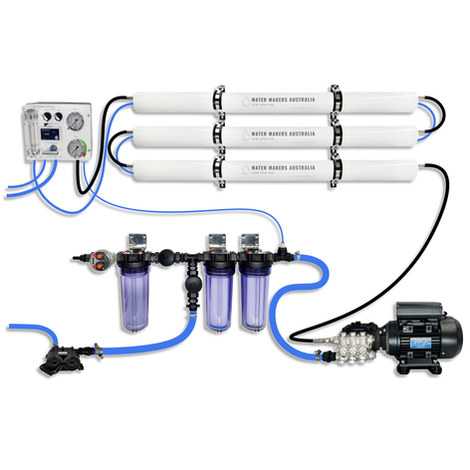
A three-membrane modular watermaker with 200 L/h nominal output and up to 240 L/h family-level marketing, for larger crews and heavy use.
Explore →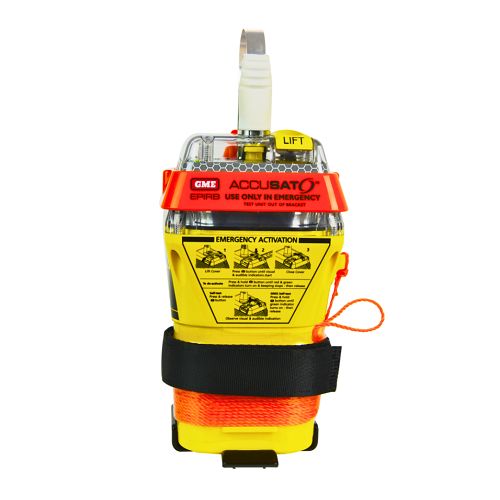
A 10‑year battery EPIRB with integrated GNSS (supports GPS and Galileo), infrared strobe and 121.5 MHz homing signal. Approved for worldwide COSPAS‑SARSAT operation.
Explore →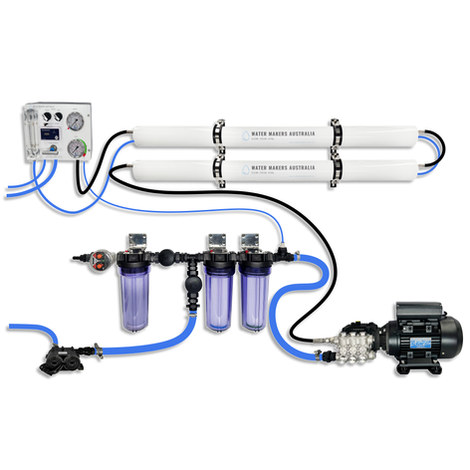
A two-membrane modular watermaker with 140 L/h nominal output, aimed at families and liveaboards that want more water per run.
Explore →