Loading this page…

Loading this page…
Sailing club
Gippsland Lakes Yacht Club (GLYC) is a volunteer-run sailing club on the foreshore of McMillan Straits and Lake Victoria at Paynesville, VIC. The club runs year-round organised sailing including Sunday fleet racing, twilight series, Ancient Mariners races, and regattas (including an annual Easter Regatta). Facilities described on the website include a fully‑licenced bar and club rooms with lake views, launching area with ramp and crane, mooring jetties, wet berths, hardstand and undercover boat storage, and venue/hall hire. GLYC is an accredited Discover Sailing Centre and offers sail programs (sailing school, Tackers holiday programs, Sailability sessions, adult/teen programs and school sailing). Visitors may obtain a free Sailpass to sail with the club and are asked to have proof of insurance if racing their own yacht.
About
Gippsland Lakes Yacht Club (GLYC) is a volunteer-run sailing club on the foreshore of McMillan Straits and Lake Victoria at Paynesville, VIC. The club runs year-round organised sailing including Sunday fleet racing, twilight series, Ancient Mariners races, and regattas (including an annual Easter Regatta). Facilities described on the website include a fully‑licenced bar and club rooms with lake views, launching area with ramp and crane, mooring jetties, wet berths, hardstand and undercover boat storage, and venue/hall hire. GLYC is an accredited Discover Sailing Centre and offers sail programs (sailing school, Tackers holiday programs, Sailability sessions, adult/teen programs and school sailing). Visitors may obtain a free Sailpass to sail with the club and are asked to have proof of insurance if racing their own yacht.
Service area: Paynesville, VIC
Keep exploring
Paynesville measures itself by the water, and the Gippsland Lakes Yacht Club has been one of the town's fixed points since 1937. Standing on the foreshore where McMillan Straits meets Lake Victoria, it is an entirely volunteer-run club that sails all year round — a rarity among country clubs — and describes itself as one of Victoria's most successful family sailing clubs and among the most active in country Victoria.
The numbers give that claim some weight: two hundred and fifty-eight members plus another hundred and forty-three family members as of 2020, with membership still growing through the bushfire and COVID years. The clubhouse, seating a hundred, is Paynesville's biggest venue and the town's default gathering place — Probus clubs, quilters, the CFA awards dinner, the Bendigo Community Bank board, the Business and Tourism Association, the Lions seniors' Christmas dinner and the Cancer Council's Biggest Morning Tea have all used the rooms.
On the water the club's personality splits two ways: a deep competitive program across classes from Flying Fifteens to trailer-sailers, and an unusually strong women's and youth cohort. Monthly Female Skipper races run within the Twilight Series, a female Race Officer officiates at club level and beyond, and an annual Female Sailor of the Year award keeps the pathway visible. Each March the town hosts the finish of the Marlay Point Overnight Race, and the club is woven into all three of Paynesville's big annual events.
This is a country yacht club that functions as a genuine community institution, on and off the water, twelve months a year.
The most telling program at Gippsland Lakes isn't for beginners at all. 'Division Cool' takes over on Sunday mornings once the sailing school season wraps up, extending young sailors past the basics into broader boat-handling, team skills and the simple fun of mucking about in boats with purpose — the bridge that stops new graduates drifting away. It caps a structured teaching operation: the club is an accredited Australian Sailing Discover Sailing Centre, running school-holiday Tackers programs, school-group sessions and Green Fleet racing for its newest racers.
From there the pathways multiply, and one of them is distinctly the club's own. Women sailors are supported by monthly Female Skipper races inside the Twilight Series, a female Race Officer working at club level and beyond, and an annual Female Sailor of the Year award — a pipeline that has made the club's women's cohort one of its strengths.
Racing development runs across a remarkably mixed register. Flying Fifteens, Mosquito catamarans, Sabres, Castle 650s, Sonata 6s and 7s and Timpenny 770s all have homes here, alongside a combined dinghy, trailer-sailer and keelboat fleet that includes Etchells. The calendar fills accordingly: full-fleet racing on Sundays from October to May, a winter series one Sunday a month, the Tuesday-evening Twilight stern-chaser through daylight saving followed by a social meal, and the Ancient Mariners social race at one o'clock every Thursday, year-round, for trailable and keel boats.
The club also runs summer regattas on behalf of class associations and Yachting Victoria, including the 47th Minnow Nationals in January 2026, and visitors can join the racing via a free Sailpass. Few regional clubs keep this many fleets this busy.
The Gippsland Lakes form Australia's largest network of inland waterways, and the club occupies a prime corner of them: the Paynesville foreshore where McMillan Straits — the channel between Raymond Island and the mainland — opens into Lake Victoria. It is superb small-boat and trailer-sailer water: enclosed, scenic, big enough for long beats and varied courses, and busy with the cruising traffic the lakes attract. A weather station on the roof of the club's Starter's Box keeps a running record of local conditions.
The shore facilities match a club that hosts national championships. A launching area provides a ramp, a crane and mooring jetties, backed by wet berths, hardstand space and undercover boat storage, so members can keep anything from a Sabot to an Etchells on site. The clubhouse — the region's largest yacht club building and, at a hundred seats, Paynesville's biggest venue, according to East Gippsland Shire's renewal documentation — has a fully licensed bar and club rooms looking over the lake.
Paynesville itself is a boating town through and through: the Marlay Point Overnight Race finishes here each year, the Classic Boat Rally fills the waterfront, and the club is involved in all three of the town's major annual events. The ferry to Raymond Island leaves from just along the foreshore, and the lakes' sheltered reaches mean sailing continues in some form every month of the year.
For visitors hauling a trailer-sailer east, the combination of ramp, crane, berthing and a licensed clubhouse overlooking the course area is about as complete as country Victoria offers.
On 19 January 1937, twenty-four people answered John Kingswell Lloyd's call to a meeting at the Soldiers Memorial Hall in Bairnsdale, where the plan was to establish a combined motor boat and sailing club. It was Robert Simpson who moved that the new body take the name Gippsland Lakes Yacht Club. The meeting elected Ralph Sinclair Thomson as first President and A. Holden as first Commodore, with Thomson taking the Commodore's role in 1938.
Money was the immediate problem, and a retired jeweller and pawnbroker, William D'Avila Tilley, solved it with a hundred-dollar interest-free loan to build a clubhouse on land at Sunset Cove on the Newlands Backwater; he became the club's first Life Member in 1938. Opening day came on 3 December 1938, with Mrs Annie Thomson, the Commodore's wife, cutting the ribbon. The pre-war fleet included Lloyd's Monsoon — a fourteen-foot cedar dinghy once owned by Jock Sturrock — along with Boomerang and Hiker.
War put the club into recess; it restarted in March 1945 and repaid the balance of Tilley's loan. Two years later Charles Gordon Drummond arranged the move that defined the club's future: the clubhouse was dismantled at Sunset Cove, carried along the foreshore, redesigned and extended, and re-erected on the present site in a single extraordinary weekend working bee.
The current building still contains that relocated structure beneath its later extensions, though the foundations have deteriorated enough to prompt a planned redevelopment as a Gippsland Lakes Shared Community Hub. Through the middle decades Douglas Gordon Potter — his boat Four Winds now commemorated in the Ocean Grange race trophy — served twenty-two years as Vice-Commodore, Secretary and Treasurer, becoming a Life Member in 1969.
The Easter Regatta, three days of racing across Easter, has been supported for more than fifty years, and the newsletter The Wanderer and Leigh Robinson's history series keep the record straight. Approaching ninety, the club sails on the same water it chose in 1947.
American River (Kangaroo Island, SA) is a small, sheltered inlet and township on the north‑eastern side of Kangaroo Island that acts as a calm staging point for cruising the eastern part of the island and for short hops through Backstairs Passage. It’s distinctive for its protected anchorage inside Eastern Cove and the adjacency of Pelican Lagoon — a shallow, ecologically important lagoon with sanctuary zoning — which shapes how and where boats can move. The area suits sheltered day sailing, weekend cruising and short coastal passages; it’s appropriate for trailer sailors, small cruisers and a

A regular, layered maintenance routine combining hull cleaning, targeted anti-fouling management, cathodic protection and systems checks will substantially reduce marine growth and corrosion for boats kept year‑round in South Australian waters. Focus on preventing attachment and electrochemical attack, then inspect and act more often if you’re in warm, nutrient-rich or high‑traffic sheltered waters.
Explore →
Treat Tasmanian waters as cold year-round: prevent immersion where possible, wear appropriate layers and a lifejacket, carry reliable distress equipment, and have clear procedures to recover and rewarm anyone who gets wet.
Explore →
Look for a friendly club with beginner-focused training, accessible facilities and boats, a supportive community, clear safety practices, and opportunities to progress at your own pace.
Explore →
Use ramps and beaches with respect for local conditions: check ramp layout, tide and swell, wind direction, vehicle access and crowding; prepare boat and crew before you launch or retrieve; and follow local signage, courtesy and safety practices. Specifics vary by ramp and beach, so confirm details for the exact site before you go.
Explore →
A practical guide for new sailors on picking the right Australian sailing club: training, boat access, racing, social fit, costs and the key questions to ask before joining.
Explore →A practical guide for recreational sailors planning visits to Albany and King George Sound. Covers the main anchorage areas, typical local weather patterns, tidal and current considerations, navigational hazards, on-the-water etiquette and a pre-departure checklist to help you plan a safe passage and enjoyable stopover
Explore →A practical guide for recreational sailors planning day sails or short cruises on Lake Macquarie. Covers the entrance, navigation considerations, popular anchorages, local weather and tide influences, mooring etiquette, safety checks and suggested itineraries around the lake.
Explore →A concise, practical introduction to the essential parts of a recreational sailing boat for beginners in Australia. Covers hull, deck, rigging, sails, steering, below-decks spaces and safety equipment, with simple explanations, common mistakes and a pre-decast checklist to help new sailors communicate and get underway.
Explore →Burke Yachtsman Gear Bag 40L - Shop Now Zip Pay | Tamar Marine Skip to content 59 – 63 Holbrook Street, Invermay Online Shop Open 24/7 Products search Contact us 1300 MARINE $ 0.00 0 Cart Burke Yachtsman Gear Bag 40L $ 79.90 Colour Choose an option Black Blue Black Blue Clear - Burke Yachtsman Gear Bag 40L quantity + Add to cart Enquire about this product SKU BAGB-Y24/BLACK* Category Bags - Sail & Gear A Burke classic and customer favourite, the Yachtsman’s Gear Bag is built tough to handle wet, salty conditions while keeping your gear dry and protected. Made from double coated waterproof…
Explore →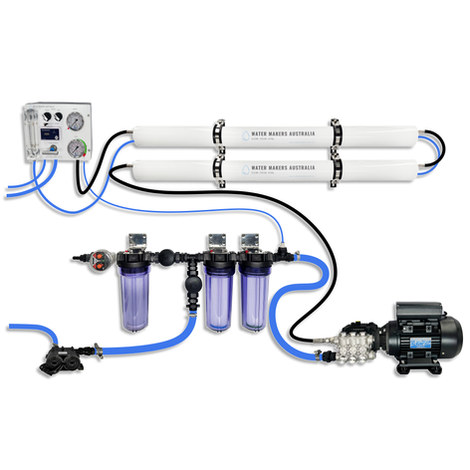
A two-membrane modular watermaker with 140 L/h nominal output, aimed at families and liveaboards that want more water per run.
Explore →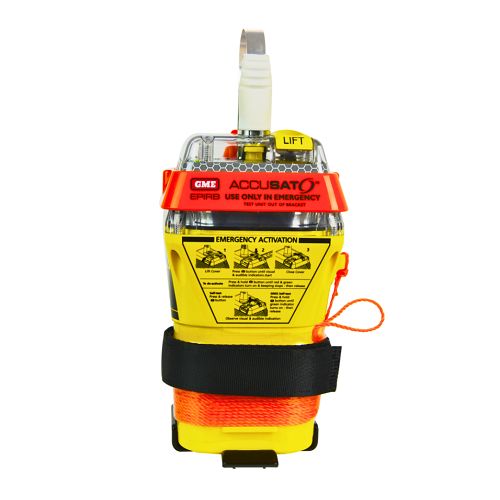
A 10‑year battery EPIRB with integrated GNSS (supports GPS and Galileo), infrared strobe and 121.5 MHz homing signal. Approved for worldwide COSPAS‑SARSAT operation.
Explore →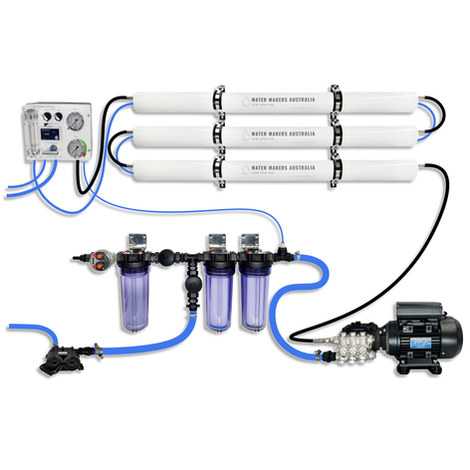
A three-membrane modular watermaker with 200 L/h nominal output and up to 240 L/h family-level marketing, for larger crews and heavy use.
Explore →