Loading this page…

Loading this page…
Sailing club
Greenwich Flying Squadron (GFS) is a volunteer-run sailing club at Bay Street Wharf, Greenwich, on the Lane Cove River entrance to Sydney Harbour. Established in 1924, the club runs year-round keelboat and dinghy racing — including popular Wednesday twilight series — and an active junior Sabot learn-to-race programme. GFS hosts moorings, clubhouse facilities and community social events, and preserves a long local sailing heritage while campaigning competitive modern boats.
About
Greenwich Flying Squadron (GFS) is a volunteer-run sailing club at Bay Street Wharf, Greenwich, on the Lane Cove River entrance to Sydney Harbour. Established in 1924, the club runs year-round keelboat and dinghy racing — including popular Wednesday twilight series — and an active junior Sabot learn-to-race programme. GFS hosts moorings, clubhouse facilities and community social events, and preserves a long local sailing heritage while campaigning competitive modern boats.
Service area: Greenwich / Lane Cove River entrance, Sydney Harbour
Keep exploring
Greenwich Flying Squadron is a volunteer-run sailing club in Greenwich, NSW (Bay Street Wharf). Established in 1924, the club runs friendly and competitive yacht racing (up to 40 ft), dinghy sailing, junior and learn-to-sail programs. The club offers a club mooring at the mouth of Gore Cove (suitable for yachts up to 40 ft) available for short-term and weekly rental, and members may book the clubhouse for private functions. Postal contact: PO Box 5092 Greenwich NSW 2065; email listed on the site.
The junior program here is built on an unusually honest premise: the goal is to teach children to race, on the stated reasoning that racing is the best measure of skill progression. Everything in the Greenwich Flying Squadron junior setup serves that aim. Volunteer-led with qualified coaches, it takes children from about eight to fourteen in club-provided Sabots — beginners sail two-up, each child assigned a boat for the whole season, while advanced sailors go one-up — across structured courses from beginner to advanced level.
Progress is deliberately unhurried. Most children spend around two seasons in the beginner and intermediate streams before advancing, and the pathway runs from triangle-course exercises into informal club races, then practice races against nearby clubs — two neighbouring clubs also race Sabots, which makes genuine interclub competition possible — and finally state championship travel for the advanced group, whose results count toward a club championship trophy.
Seasons run spring (October-December) and autumn (February-April) every Sunday of school term, with open days and trial sails before each intake. All boats, life jackets and helmets are supplied; children must swim fifty metres, and parents receive a free associate membership in exchange for helping with rigging and rostered duties.
The proof of the system is measurable: ex-GFS Sabot junior Miles Davey became the 2017 Australian 29er National Champion — defeating the reigning world champions in the process — and earned selection for the Australian Sailing Youth Team at the Youth Worlds. Adults, meanwhile, develop through racing itself: Sunday Laser sailing, the twilight divisions, the Australia Day Regatta — the world's oldest continuously run annual sailing event, begun in 1837, in which GFS participates as a satellite — and winter competition against three neighbouring clubs.
The clubhouse occupies Bay Street Wharf, Greenwich, on Gore Creek Bay where the Lane Cove River meets the harbour — the same site it has held since 1928, when then-president Alf Jerrems, a Lane Cove Council alderman, secured a council lease over the boatshed at the foot of the street. That original shed still forms part of the clubhouse today, extended in the early 1950s by incorporating part of the wharf's old ferry waiting shed, once home to a barber. Swing moorings fill the bay alongside.
For teaching, the geography is close to ideal. The junior program describes the spot as tucked into the Lane Cove River entrance — relatively sheltered water where beginners can learn without the harbour's wash and traffic, yet with easy access to open water as skills grow. That graduation path is literal: as sailors improve, courses push out onto Sydney Harbour proper, where race tracks reference Goat Island — and its famous wind shadow, the "Goat doldrums" — Cockatoo Island, Onion Point, Spectacle and Snapper Islands, and the Humbug reach.
Racing logistics are well drilled: on-water communications use VHF Channel 73, covering twilight and Saturday racing alike. Summer Wednesday evenings follow a formula members plainly cherish — twilight racing in the colour divisions, then a barbecue and drinks at the clubhouse, a ritual the club calls a feature of its summer Wednesdays. Committee meetings are held at the clubhouse on the second Tuesday of each month and are open to members and prospective members alike. After a fatal 2025 twilight racing accident elsewhere on the harbour, the club also took a public safety lead, promoting Australian Sailing's advice that skippers carry the Emergency Plus app.
The breakaway of 1924 came at a pivotal moment for the 12ft skiff class: that same year the class adopted unrestricted sail area, producing extravagant rigs — gaff mains, ringtails and enormous spinnakers set over tiny cedar hulls carrying crews of four. The young club wasted no time making its mark nationally. In 1926, member Ben Roff carried his club-champion 12-footer SCHEMER north to Brisbane, spreading interest in the class and prompting the first Australian 12ft Skiff Championship, won by Alf Whereat's Brisbane-built DEFIANCE. The Australian Register of Historic Vessels records the squadron's formation as a landmark in the class's history.
Early organisation was improvised — the committee first met in a local school classroom — until the 1928 council lease of the Bay Street boatshed, which hosted its first on-site committee meeting that December. The Depression years saw the clubhouse shelter disadvantaged people overnight; later it hosted meetings of the Short Handed Sailing Association of Australia as well as the Boat Owners Association. By 1974, with few 12ft skiffs still racing, the club dropped "12ft" from its name and became simply Greenwich Flying Squadron.
The club's story is well documented in "Greenwich Flying Squadron: The First 75 Years" by Rosalie Lucas, published in 1999 and held at Lane Cove and Greenwich libraries. Its centenary in 2024 was marked twice: a 14 February twilight race echoing the very first, and a clubhouse reception that April. Recent chapters keep the racing lineage current — Miles Davey's national 29er title, GFS crews in the Sydney Hobart's Double Handed Division, and club boats such as Cardinal Syn and Restless flying the flag at the Sydney Pride Regatta.
Bathurst Harbour (Port Davey system), in south‑west Tasmania, is a vast, almost land‑locked estuarine harbour inside the Southwest National Park and World Heritage Area. It offers a remote, sheltered anchoring environment protected from the Roaring Forties, but demands careful planning, an awareness of marine‑reserve rules, and a willingness to operate in shallow, tannin‑stained waters. Best suited to experienced coastal cruisers and small expedition yachts prepared for self‑sufficiency, Bathurst Harbour is more a place to linger and explore on foot and by tender than a port of call for busy,

A regular, layered maintenance routine combining hull cleaning, targeted anti-fouling management, cathodic protection and systems checks will substantially reduce marine growth and corrosion for boats kept year‑round in South Australian waters. Focus on preventing attachment and electrochemical attack, then inspect and act more often if you’re in warm, nutrient-rich or high‑traffic sheltered waters.
Explore →
Anchor in rocky coves, sandy bays and tidal flats by choosing the right ground and anchor, giving plenty of scope, setting the anchor slowly and testing it, and planning for tidal change and swing room.
Explore →
Treat Tasmanian waters as cold year-round: prevent immersion where possible, wear appropriate layers and a lifejacket, carry reliable distress equipment, and have clear procedures to recover and rewarm anyone who gets wet.
Explore →
Late spring to summer is usually the best time for beginners to start learning to sail in Tasmania because the weather is generally warmer, days are longer and conditions are often more settled. Expect lighter to moderate winds with regular afternoon sea breees in summer, while spring and autumn bring more changeable and sometimes stronger conditions; winter is colder, wetter and typically windier with more fronts and swell.
Explore →
A practical guide for new sailors on picking the right Australian sailing club: training, boat access, racing, social fit, costs and the key questions to ask before joining.
Explore →A practical guide for recreational sailors planning visits to Albany and King George Sound. Covers the main anchorage areas, typical local weather patterns, tidal and current considerations, navigational hazards, on-the-water etiquette and a pre-departure checklist to help you plan a safe passage and enjoyable stopover
Explore →A practical guide for recreational sailors planning day sails or short cruises around Batemans Bay, Broulee and the Clyde River. Covers local conditions, safe approaches, anchorages, launching, tides, common hazards, and checklists for trip planning and on-water decisions.
Explore →Practical guide for recreational sailors planning passage on the Hawkesbury River: how to plan around tides, choose anchorages, read local conditions and prepare the boat and crew for a safe, comfortable trip.
Explore →Burke Yachtsman Gear Bag 40L - Shop Now Zip Pay | Tamar Marine Skip to content 59 – 63 Holbrook Street, Invermay Online Shop Open 24/7 Products search Contact us 1300 MARINE $ 0.00 0 Cart Burke Yachtsman Gear Bag 40L $ 79.90 Colour Choose an option Black Blue Black Blue Clear - Burke Yachtsman Gear Bag 40L quantity + Add to cart Enquire about this product SKU BAGB-Y24/BLACK* Category Bags - Sail & Gear A Burke classic and customer favourite, the Yachtsman’s Gear Bag is built tough to handle wet, salty conditions while keeping your gear dry and protected. Made from double coated waterproof…
Explore →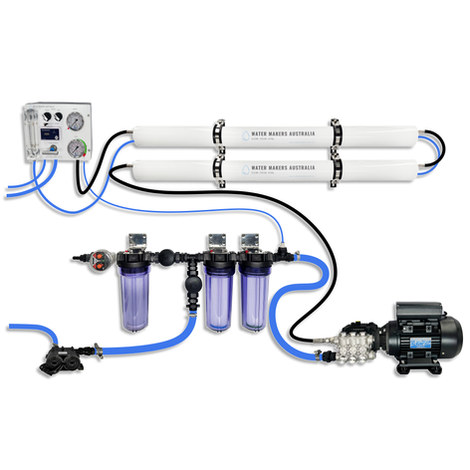
A two-membrane modular watermaker with 140 L/h nominal output, aimed at families and liveaboards that want more water per run.
Explore →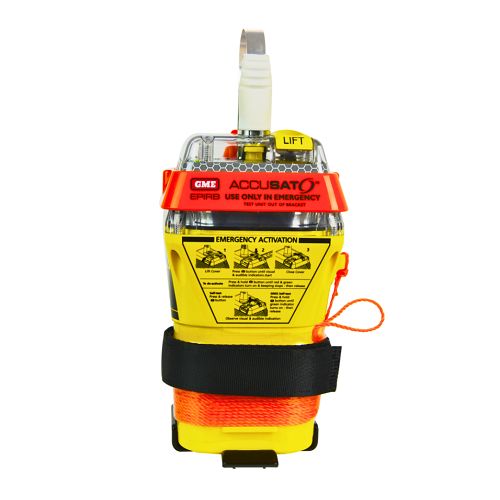
A 10‑year battery EPIRB with integrated GNSS (supports GPS and Galileo), infrared strobe and 121.5 MHz homing signal. Approved for worldwide COSPAS‑SARSAT operation.
Explore →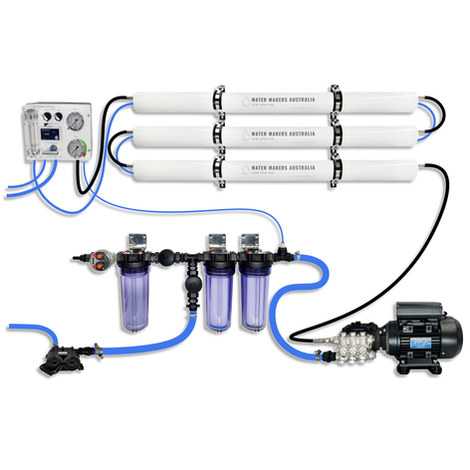
A three-membrane modular watermaker with 200 L/h nominal output and up to 240 L/h family-level marketing, for larger crews and heavy use.
Explore →