Loading this page…

Loading this page…
Sailing club
Hamilton Island Yacht Club is a waterfront yacht club and hospitality complex on Hamilton Island in the Whitsundays, Queensland. Built as part of the island’s marina and villas development, the clubhouse is a contemporary, sail‑inspired landmark overlooking Dent Passage and the wider Whitsunday island group. The site is the home base for Hamilton Island Race Week and sits alongside a large marina and luxury Yacht Club Villas.
About
Hamilton Island Yacht Club is a waterfront yacht club and hospitality complex on Hamilton Island in the Whitsundays, Queensland. Built as part of the island’s marina and villas development, the clubhouse is a contemporary, sail‑inspired landmark overlooking Dent Passage and the wider Whitsunday island group. The site is the home base for Hamilton Island Race Week and sits alongside a large marina and luxury Yacht Club Villas.
Service area: Whitsunday Islands (Dent Passage), Queensland
Keep exploring
Waterfront yacht club and hospitality venue on Hamilton Island offering waterfront dining, luxury Yacht Club villas with marina-side location and views over Dent Passage. The site describes the Hamilton Island Marina located beside the Yacht Club with berths and “a full range of facilities and services.” The club is presented as a design-focused destination and hub for sailing activity on the island.
Hamilton Island Yacht Club is, deliberately and unapologetically, not a training club. The MySailing directory records no kids' learn-to-sail program, and no junior pathway, Tackers course or sailing school exists here — the club's purpose lies elsewhere entirely. Its competitive calendar revolves around a single towering fixture: Hamilton Island Race Week, staged each August, whose breadth of competition substitutes for any conventional club program.
Race Week divisions have spanned Grand Prix and IRC Passage racing, performance classes, sports boats, cruising and corporate fleets, bareboat entries and non-spinnaker classes, with multihulls added to the lineup in 2013 — a spread built to draw everyone from professional grand-prix crews to charter-boat holidaymakers onto the same Whitsunday courses. Between regattas, the club runs occasional weekday races serving the small population in and around the island, keeping race-management skills warm in a place where permanent residents are few.
The club's contribution to sailor development happens at the elite end rather than the grassroots. It backed Team Australia's tilt at the 35th America's Cup from the Challenger of Record position, with Iain Murray as chief executive, and in 2014 it was among the sponsors of Australia's Olympic sailing team. Closer to home, owners of the adjoining Yacht Club Villas were granted Founding Membership, folding them into the club's racing and social orbit. Visitors chasing learn-to-sail courses will find them at other Whitsunday clubs; Hamilton Island Yacht Club's program identity is the August regatta itself, and everything else the club does orbits around that week.
The clubhouse stands beside the island's 245-berth marina, its copper sail-roof looking out across Dent Passage toward the broader Whitsunday Passage. The island lies roughly 900 miles north of Sydney and about fourteen miles off the Queensland coast among the Whitsunday group, and Sailing World notes that no island offers closer access to the Great Barrier Reef — the fact that underpins both its tourism economy and its sailing appeal. Race Week courses fan out through these island-studded waters, where the passages between islands create the tactical, scenery-heavy racing on which the regatta trades.
Inside the building, the signature Bommie Restaurant takes its name from the shallow coral bommies — bomboras — scattered through local waters, and the Bommie Bar occupies the end of a deck known as the Horn of Plenty. A members-only level holds a private restaurant and library, with a members' health club and lap pool running along the deck. Beside the club stand thirty-five four-bedroom Yacht Club Villas, built as part of the same development, their owners granted Founding Membership of the club.
The marina below handles everything from club racers to superyachts, placing the club at the junction of charter tourism and serious offshore racing. As a sailing venue the combination is rare anywhere in the country: tropical island surroundings, sheltered passage waters, a deep-capacity marina at the doorstep and reef anchorages within day-sail range — all owned and managed by the same family enterprise that operates the island itself.
Before the landmark building existed, an earlier Hamilton Island Yacht Club was, per Sailing World, run out of a local pub. The transformation began when the Oatley family bought Hamilton Island in 2003 for a reported $200 million and invested heavily across the island; roughly $85 million of that went into the Yacht Club and Villas development. Bob Oatley's stated ambition was a building of global architectural significance, and architect Walter Barda — with input from Iain Murray — delivered the sail-shaped design. Sandy Oatley has explained that the roofline was laid out to resemble a starfish seen from above, with sterns and rudders worked into the nautical theme.
On the flag deck stands a genuine piece of Australian ocean-racing history: a mast that once carried the sails of Bumblebee IV, the maxi yacht that took line honours in the 1979 Sydney to Hobart. Later salvaged from Sydney Harbour, it was given from Sid Fisher's warehouse after Iain Murray suggested it would suit the new club.
The boldest chapter came when the club carried the Challenger of Record role into the 35th America's Cup with Team Australia; the challenge collapsed in July 2014 after terms could not be agreed with defender Oracle Team USA. Bob Oatley — appointed an Officer of the Order of Australia in 2014 for service to wine, tourism and yacht racing, and honoured with Yachting Australia's lifetime achievement award in 2015 — died on 10 January 2016, aged 87.
The regatta the club hosts predates the building by decades: Race Week began as David Hutchen's 1983 concept, first sailed in April 1984 with 93 yachts, shifted to August within its first decade, and reached its 40th edition in August 2025. The family's supermaxi Wild Oats XI took a record nine Sydney Hobart line honours, and Sandy Oatley has contested twenty-three Race Weeks.
Dangar Island sits in the lower Hawkesbury River close to Brooklyn and is one of Sydney’s small, boat‑access communities. From the water it reads as a wooded, low island with sandy foreshore, a public jetty and private moorings; its position at the mouth of Cowan Creek and close to the main river channel makes it an attractive short‑cruise destination for trailer sailors, runabouts and small cruisers but also one that requires careful local knowledge and respect for resident berths, ferry operations and tidal currents.

Write a one‑page plan with the who/what/when/where/how of your trip, keep a copy on board and leave the main copy with a responsible person ashore (and optionally with your club, marina office or local volunteer rescue service).
Explore →
Pick a protected bay, estuary or river reach where you can rig, launch and arrive on calm water within a short, sheltered transit; choose a site with a good ramp or jetty, clear recovery options and a nearby sailing club, marina or commercial operator for local knowledge and help.
Explore →
Use ramps and beaches with respect for local conditions: check ramp layout, tide and swell, wind direction, vehicle access and crowding; prepare boat and crew before you launch or retrieve; and follow local signage, courtesy and safety practices. Specifics vary by ramp and beach, so confirm details for the exact site before you go.
Explore →
Expect light to moderate, thermally-driven sea breezes in summer with afternoon strengthening; more changeable and often stronger winds with frontal systems in autumn and spring; and the windiest, roughest conditions in winter when cold fronts and sou’westers are most frequent. Gulf St Vincent is more sheltered than the exposed coast but can still produce steep chop and sudden changes near Adelaide and headlands.
Explore →
A practical guide for new sailors on picking the right Australian sailing club: training, boat access, racing, social fit, costs and the key questions to ask before joining.
Explore →A practical guide for recreational sailors planning visits to Albany and King George Sound. Covers the main anchorage areas, typical local weather patterns, tidal and current considerations, navigational hazards, on-the-water etiquette and a pre-departure checklist to help you plan a safe passage and enjoyable stopover
Explore →
A concise, practical guide to the points of sail and how to trim sails effectively for common Australian conditions. Learn the basics of wind angles, sail shape, telltales, reefing considerations and simple steps to improve boat speed and balance.
Explore →
Practical guidance for recreational sailors in Australia on assessing swell, tide and wind, choosing the safest time to cross a coastal bar, preparing crew and gear, and making the decision to go or turn back.
Explore →Burke Yachtsman Gear Bag 40L - Shop Now Zip Pay | Tamar Marine Skip to content 59 – 63 Holbrook Street, Invermay Online Shop Open 24/7 Products search Contact us 1300 MARINE $ 0.00 0 Cart Burke Yachtsman Gear Bag 40L $ 79.90 Colour Choose an option Black Blue Black Blue Clear - Burke Yachtsman Gear Bag 40L quantity + Add to cart Enquire about this product SKU BAGB-Y24/BLACK* Category Bags - Sail & Gear A Burke classic and customer favourite, the Yachtsman’s Gear Bag is built tough to handle wet, salty conditions while keeping your gear dry and protected. Made from double coated waterproof…
Explore →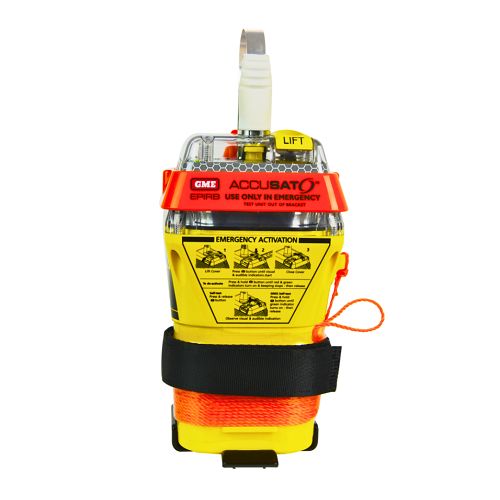
A 10‑year battery EPIRB with integrated GNSS (supports GPS and Galileo), infrared strobe and 121.5 MHz homing signal. Approved for worldwide COSPAS‑SARSAT operation.
Explore →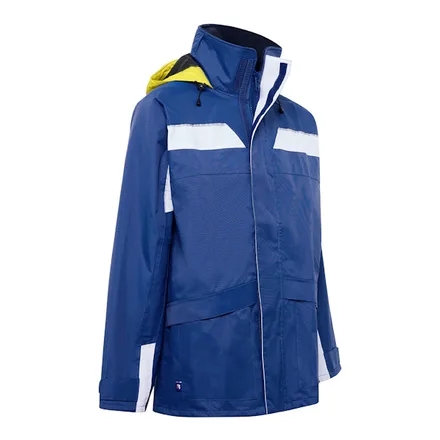
Burke Super Dry Jacket in Blue. Product codes shown: DRY228-XS, DRY228-S, DRY228-M, DRY228-L, DRY228-XL, DRY228-XXL. Available sizes listed: XS, S, M, L, XL, XXL.
Explore →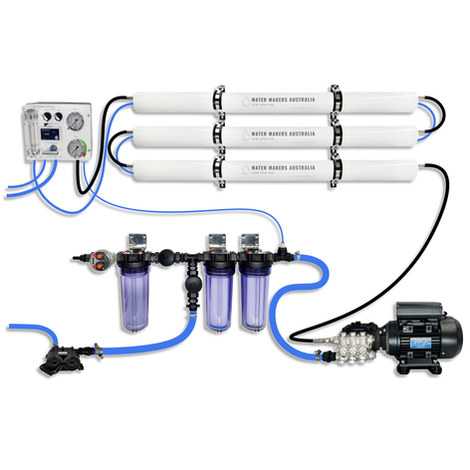
A three-membrane modular watermaker with 200 L/h nominal output and up to 240 L/h family-level marketing, for larger crews and heavy use.
Explore →