Loading this page…

Loading this page…
Sailing club
Hampton Harbour Boat & Sailing Club is a member-run boating and social club at 17 The Esplanade, Dampier (Western Australia). The clubhouse overlooks Hampton Harbour inside the Port of Dampier and provides marina pens, hardstand, four floating ramp lanes, fuel (PULP and diesel), wash-down and slipway facilities, a restaurant and licensed bar, function hire and secure member parking. The club is an active local centre for sailing, fishing and recreational boating and also participates in harbour infrastructure management.
About
Hampton Harbour Boat & Sailing Club is a member-run boating and social club at 17 The Esplanade, Dampier (Western Australia). The clubhouse overlooks Hampton Harbour inside the Port of Dampier and provides marina pens, hardstand, four floating ramp lanes, fuel (PULP and diesel), wash-down and slipway facilities, a restaurant and licensed bar, function hire and secure member parking. The club is an active local centre for sailing, fishing and recreational boating and also participates in harbour infrastructure management.
Service area: Dampier, Western Australia
Keep exploring
There's no accredited training centre here: the club doesn't advertise Discover Sailing Centre status, Tackers courses or formal learn-to-sail programs. What the club does have is an active racing culture inside Hampton Harbour — the Dampier Archipelago management report notes members racing regularly within the harbour — and, historically, a structure for bringing juniors through, with a Dolphin Perpetual Junior trophy contested as far back as the 1978 season.
In practice, clubs of this kind — remote, member-driven, far from any accredited coaching base — tend to teach the way they always have: newcomers and juniors learning informally from experienced members, graduating from crewing on keelboats and trailer yachts to helming their own dinghies, with skills passed down on race days rather than in classrooms. That is a general pattern across remote Australian clubs rather than a documented program at Hampton Harbour, but the club's long racing tradition and its junior trophy suggest the pathway has worked for generations.
The historical record gives a flavour of the fleet those pathways fed. At the 1978 season opening, racing ran in four divisions covering RL24 trailer yachts and half-tonners through to Lasers, Hobie 16 catamarans and the off-the-beach fleet — a genuinely mixed collection suited to a harbour of this size. Today the emphasis is as much social and maritime as competitive: the club is the harbour's infrastructure partner, its marina operator and its function venue, and sailing sits within that broader identity as one of several ways members use the water at their doorstep.
Hampton Harbour exists because of a causeway: the link built between East Intercourse Island and the mainland created a sheltered basin within the Port of Dampier, and that basin is the club's front yard. The water is protected and warm, the sailing year-round, and the backdrop is the 42-island Dampier Archipelago — a cruising, fishing and diving ground of genuine grandeur roughly twenty kilometres from Karratha. One caution applies to everyone on this water, from yacht crews to paddlers: strong tidal currents run through the archipelago, and the management authorities urge care.
The club's footprint on the harbour is unusually deep. With the Department of Transport and the Shire of Roebourne, it shares responsibility for the harbour's jetties, refuelling facilities and boat ramps, and a public boat ramp sits right at the club. At the eastern end of the harbour, a small marina — first constructed for port service vessels — is today operated by the club and provides about 33 pens for recreational yachts and other vessels. That combination of ramp, fuel, pens and clubhouse makes 17 The Esplanade the effective centre of recreational boating in Dampier.
The town's origins explain the club's scale. Dampier itself dates only to the 1960s, when Hamersley Iron created it to export the iron ore mined at Tom Price and Paraburdoo, and the town was named for the buccaneer William Dampier; the population that grew with the port needed recreation, and the harbour supplied it. For visitors today, the clubhouse verandah offers what The West Australian called a great view and welcome — sunset over the harbour, with the archipelago strung along the horizon.
The club began with an iron ore boom. In 1967, D.W. Nielson drove the founding and won financial backing from Hamersley Iron — which had only just established its Dampier workforce — and J.D. Holden became the first Commodore. The first general meeting followed in November 1968, convened in what is now the club's cool room, with sailing yachts stowed beneath it. Members built the first shed themselves, and the clubhouse was officially opened by Mrs Nielson in 1971.
Through the 1970s the club's Northwest championships stood as the Pilbara regatta scene's most coveted prize, frequently attracting fields of 60 to 80 boats. A snapshot survives from the 1978 season opening on 15 April: the sail-past mustered 58 yachts plus 14 powerboats, Warren Gilhome was Commodore, the season was opened by Ian Burston, and opening-day racing split into divisions for RL24s, half-tonners, Lasers and Hobie 16s, with off-the-beach classes as well and the Dolphin Perpetual Junior trophy for the young sailors.
Growth continued member by member. A 1985 verandah extension was championed by Ross Barnett, and in 2003 "The Galley" restaurant opened on the back of successful Friday night barbecues. Industrial reality also shaped the club: when 12-hour mining shifts began cutting member numbers, the town's fishing club merged with the sailors — the union that produced the "Boat & Sailing" identity the club carries today. Club lore honours identities including Peter Nash, Dan Daniels, John Lally, and Ross and Sue Barnett. The State Library of WA even preserves a photographic record of sailing at the club in Dampier — a small but fitting archive for a club built by a mining town.
Bathurst Harbour (Port Davey system), in south‑west Tasmania, is a vast, almost land‑locked estuarine harbour inside the Southwest National Park and World Heritage Area. It offers a remote, sheltered anchoring environment protected from the Roaring Forties, but demands careful planning, an awareness of marine‑reserve rules, and a willingness to operate in shallow, tannin‑stained waters. Best suited to experienced coastal cruisers and small expedition yachts prepared for self‑sufficiency, Bathurst Harbour is more a place to linger and explore on foot and by tender than a port of call for busy,

Look for a friendly club with beginner-focused training, accessible facilities and boats, a supportive community, clear safety practices, and opportunities to progress at your own pace.
Explore →
There are legal obligations in Western Australia for recreational boat owners and skippers covering vessel registration, carriage of safety equipment and general skipper responsibilities, but the exact requirements depend on vessel type, size, where you sail and whether the vessel is commercial or recreational. Check the Western Australian Department of Transport (DoT WA) and the national authority for the precise checklist that applies to your boat and voyage.
Explore →
Expect very different seasonal systems across Western Australia: the south‑west (Perth to Albany) has a strong summer afternoon sea breeze (the “Fremantle Doctor”) and winter westerly fronts, while northern WA follows a wet/dry monsoonal cycle with strong seasonal onshore winds, thunderstorms and cyclone risk in the wet season. Local headlands, estuaries and tidal flows often change what you actually feel on the water, so learn the local timing and sheltered venues first.
Explore →
Legal safety equipment for recreational boats in South Australia depends on the type, size and where you operate; you must check the current SA government requirements for your vessel. Independently of legal minimums, carry a sensible set of recommended items (lifejackets, means of communication, signaling, fire protection, anchor and basic tools) and make them usable and maintained.
Explore →A practical guide to the coastal weather systems that affect sailing along Western Australia's coast, focusing on the Fremantle Doctor, local sea breezes, and linked coastal phenomena. Explains how these systems form, when they tend to occur, how they influence boat handling and passage planning, common mistakes, and a
Explore →A concise, practical introduction to the essential parts of a recreational sailing boat for beginners in Australia. Covers hull, deck, rigging, sails, steering, below-decks spaces and safety equipment, with simple explanations, common mistakes and a pre-decast checklist to help new sailors communicate and get underway.
Explore →
A practical guide for new sailors on picking the right Australian sailing club: training, boat access, racing, social fit, costs and the key questions to ask before joining.
Explore →
Buying a Sailing Boat
Explore →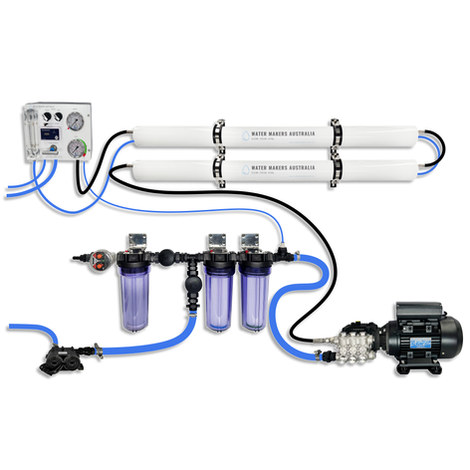
A two-membrane modular watermaker with 140 L/h nominal output, aimed at families and liveaboards that want more water per run.
Explore →Burke Yachtsman Gear Bag 40L - Shop Now Zip Pay | Tamar Marine Skip to content 59 – 63 Holbrook Street, Invermay Online Shop Open 24/7 Products search Contact us 1300 MARINE $ 0.00 0 Cart Burke Yachtsman Gear Bag 40L $ 79.90 Colour Choose an option Black Blue Black Blue Clear - Burke Yachtsman Gear Bag 40L quantity + Add to cart Enquire about this product SKU BAGB-Y24/BLACK* Category Bags - Sail & Gear A Burke classic and customer favourite, the Yachtsman’s Gear Bag is built tough to handle wet, salty conditions while keeping your gear dry and protected. Made from double coated waterproof…
Explore →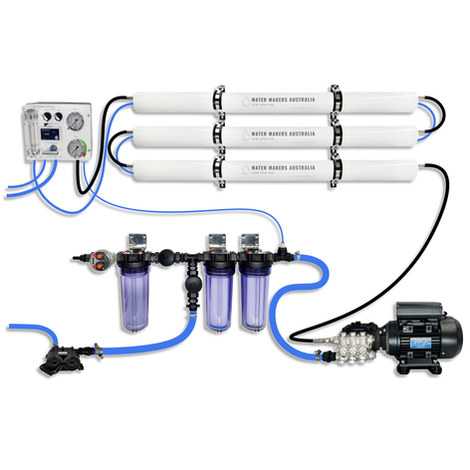
A three-membrane modular watermaker with 200 L/h nominal output and up to 240 L/h family-level marketing, for larger crews and heavy use.
Explore →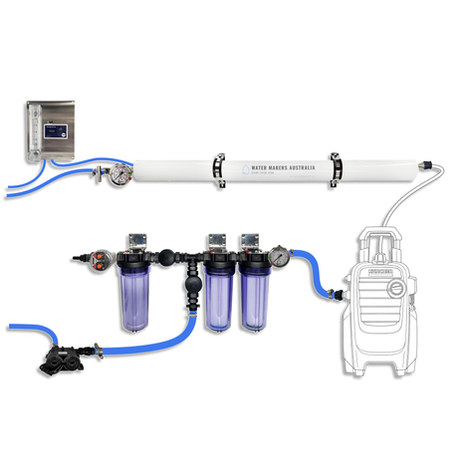
A one-membrane modular marine watermaker with 80 L/h nominal output, remote stainless control panel, standard consumables and direct Australian support.
Explore →