Loading this page…

Loading this page…
Sailing club
Hampton Sailing Club is a volunteer-run sailing and watersports club on the Sandringham foreshore, operating on Port Phillip Bay. The club runs an active dinghy racing program (Sunday racing, monthly winter events and social Tuesday sails), offers club dinghies and a SailPass for newcomers, supports kayaking and stand-up paddleboarding with club craft, hosts social events from its clubhouse, and provides storage for active dinghy, kayak and SUP members.
About
Hampton Sailing Club is a volunteer-run sailing and watersports club on the Sandringham foreshore, operating on Port Phillip Bay. The club runs an active dinghy racing program (Sunday racing, monthly winter events and social Tuesday sails), offers club dinghies and a SailPass for newcomers, supports kayaking and stand-up paddleboarding with club craft, hosts social events from its clubhouse, and provides storage for active dinghy, kayak and SUP members.
Service area: Hampton, VIC
Keep exploring
Hampton Sailing Club began with a group of young women, a borrowed shed and a fleet of Sabots. Founded back in 1945 under the name Victorian Ladies Yacht Club, it gave girls and women a place to race at a time when Melbourne's bayside clubs largely didn't — neighbouring Sandringham Yacht Club, for instance, then restricted female membership. Eighty years on, the anniversary acknowledged in federal Parliament by local member Tim Wilson in October 2025, the club is open to all but still carries its founding character: small, volunteer-run, unpretentious and unusually welcoming.
It is a one hundred per cent volunteer organisation, with its race management team running Sunday afternoon racing from spring through autumn. The fleet policy is equally distinctive: there are no preferred or sponsored classes, and the club accepts all watercraft types up to five metres in length — with the exception of catamarans — so the start line mixes dinghy classes that would rarely meet elsewhere. Not everyone here races; the club encourages unhurried cruising inside Hampton harbour and up and down the bayside coast just as warmly.
The clubhouse sits on the Sandringham foreshore facing Hampton Beach, just west of Hampton Pier, its deck looking out across the bay to the Melbourne skyline, and its social life can be as simple as a communal barbecue dinner on that deck after sailing. Wilson described the club in Parliament as "an active and accessible venue" for the Bayside community — a fair summary of a place that has been lowering the barriers to sailing since 1945.
Hampton's approach to developing sailors mirrors its approach to membership: keep the gate wide and the structure light. There is no favoured class to buy into, which makes the club a natural home for people learning to race — whatever dinghy they have, up to five metres, is welcome on the Sunday start line, and mixed-fleet handicap racing is itself one of sailing's best teachers. Races run on Sunday afternoons from spring to autumn, organised entirely by the volunteer race management team, and for those not yet ready for a start line the club actively encourages leisurely cruising about the harbour and along the bayside shoreline — a low-pressure way to build boat-handling hours in familiar, sheltered water.
The teaching tradition runs to the club's roots. The founding women of 1945 assembled a fleet of Sabots specifically for sail training, and through the following decades the club gave girls a racing education in classes such as the Gwen 12 and the International Cadet — boats that demanded real skill and produced capable sailors. That lineage matters because it explains the club's instincts today: sailing learned young, in small boats, in company.
Current details of formal national junior programs aren't published, so families looking at accredited courses should check with the club directly. What can be said with confidence is that Hampton's model — small craft, all comers, volunteers, a social deck to land on afterwards — has been turning foreshore locals into sailors for eight decades, and that the club's hundred-per-cent volunteer structure means every race officer, rescue-boat driver and mentor is someone who learned the same way.
For an accessible entry into bay sailing without the cost or formality of a large club, that is a durable formula.
The club faces Hampton Beach from the Sandringham foreshore, just west of Hampton Pier, on one of Port Phillip's most settled suburban stretches of sand. The water off the beach is classic northern-bay sailing: reasonably protected, with the afternoon sea breeze providing the engine for Sunday racing and the Melbourne CBD rising clearly across the water — the clubhouse deck frames that skyline directly. Hampton harbour sits immediately adjacent, giving the cruising members a handy destination and a bit of shelter, and the coastline north toward Brighton and south toward Sandringham offers easy day-sailing in either direction.
Ashore, the club is compact and practical, matching its small-boat fleet. Undercover storage accommodates craft up to four metres, so boats live ready-rigged and close to the sand. The clubhouse hosts the social program, and the commercial barbecue on the deck is the centre of it — members cook and eat overlooking the bay, which is about as honest a summary of the club's style as exists.
Everything is run by volunteers, from race management to maintenance, and the scale keeps it manageable: a fleet of sub-five-metre craft, a pier, a beach and a clubhouse. The location also explains the club's longevity. Hampton's foreshore has been densely used for generations, and a small, accessible sailing club — open to off-beach watercraft of nearly every kind, as its parliamentary citation noted — fits the way Bayside actually uses its waterfront.
It is not a marina club and doesn't try to be; the beach is the point, and for eight decades it has been enough.
In 1945, with the war barely over, a band of young women from the Rangers branch of the Girl Guide movement secured an old shed on the Sandringham foreshore for their use and founded the Victorian Ladies Yacht Club. Their first act of organisation was characteristically practical: they assembled a fleet of Sabots for sail training, and the club prospered, its boat classes growing with its membership. By 1946 the club occupied a position facing Hampton Beach, and in the 1960s it shifted to its current premises just west of Hampton Pier.
For its first four decades it remained what its founders made it — a club where women and girls could learn, race and hold office, at a time when that combination was rare on Port Phillip. Classes such as the Gwen 12 and the International Cadet gave those sailors a serious racing education, and the club stood as an avenue into the sport while other bayside clubs still restricted female membership.
Change arrived through legislation rather than argument: when Victoria's equal opportunity laws took effect in the early 1980s, men became eligible to join, and a few years later the club renamed itself Hampton Sailing Club. The essentials did not change with the name — the same foreshore, the same volunteer structure, the same small boats and Sunday afternoons.
One clarification is worth noting for the record: this Hampton has no connection to the English club of the same name on the Thames, founded a year earlier in 1944; the shared name is coincidence. In October 2025 the Melbourne club's eightieth birthday was acknowledged in the federal Parliament, where Tim Wilson MP recalled the Rangers, the old shed and the Sabot fleet — a founding story the club has every reason to keep telling.
Apollo Bay is a small working harbour on Victoria’s Great Ocean Road where sheltered inshore sailing meets the Southern Ocean. The character is a mix of protected harbour berths and an exposed open coast: pleasant day-sails and sheltered weekend cruising inside the bay, with demanding coastal passages immediately offshore where south‑westerly swell and strong winds from the Southern Ocean dominate. It suits coastal cruisers, trailer sailors who launch at the ramp, and experienced coastal sailors who understand bar and swell behaviour; it is not a casual open‑ocean anchorage for unprepared or

Look for a friendly club with beginner-focused training, accessible facilities and boats, a supportive community, clear safety practices, and opportunities to progress at your own pace.
Explore →
Plan passages across Spencer Gulf or to Kangaroo Island by basing fuel on your boat’s actual consumption plus a generous reserve, choosing sensible staging/stop options that match your boat and crew, and prioritising shelter and weather windows (gale fronts, strong winds and tidal streams can make the gulf uncomfortable or unsafe). Confirm fuel availability, safe anchorages or marinas on your route, and check up-to-date local weather, tide and navigation information before you go.
Explore →
Late spring to summer is usually the best time for beginners to start learning to sail in Tasmania because the weather is generally warmer, days are longer and conditions are often more settled. Expect lighter to moderate winds with regular afternoon sea breees in summer, while spring and autumn bring more changeable and sometimes stronger conditions; winter is colder, wetter and typically windier with more fronts and swell.
Explore →
Learn boat-handling basics (steering, points of sail and sail trim), safety and seamanship (personal flotation, wind awareness, man-overboard procedure), and simple anchoring/mooring — these give you the core skills to sail safely and enjoyably.
Explore →
A practical guide for new sailors on picking the right Australian sailing club: training, boat access, racing, social fit, costs and the key questions to ask before joining.
Explore →A practical guide for recreational sailors planning visits to Albany and King George Sound. Covers the main anchorage areas, typical local weather patterns, tidal and current considerations, navigational hazards, on-the-water etiquette and a pre-departure checklist to help you plan a safe passage and enjoyable stopover
Explore →A practical guide to the coastal weather systems that affect sailing along Western Australia's coast, focusing on the Fremantle Doctor, local sea breezes, and linked coastal phenomena. Explains how these systems form, when they tend to occur, how they influence boat handling and passage planning, common mistakes, and a
Explore →A practical guide for recreational sailors planning day sails or short cruises around Batemans Bay, Broulee and the Clyde River. Covers local conditions, safe approaches, anchorages, launching, tides, common hazards, and checklists for trip planning and on-water decisions.
Explore →Burke Yachtsman Gear Bag 40L - Shop Now Zip Pay | Tamar Marine Skip to content 59 – 63 Holbrook Street, Invermay Online Shop Open 24/7 Products search Contact us 1300 MARINE $ 0.00 0 Cart Burke Yachtsman Gear Bag 40L $ 79.90 Colour Choose an option Black Blue Black Blue Clear - Burke Yachtsman Gear Bag 40L quantity + Add to cart Enquire about this product SKU BAGB-Y24/BLACK* Category Bags - Sail & Gear A Burke classic and customer favourite, the Yachtsman’s Gear Bag is built tough to handle wet, salty conditions while keeping your gear dry and protected. Made from double coated waterproof…
Explore →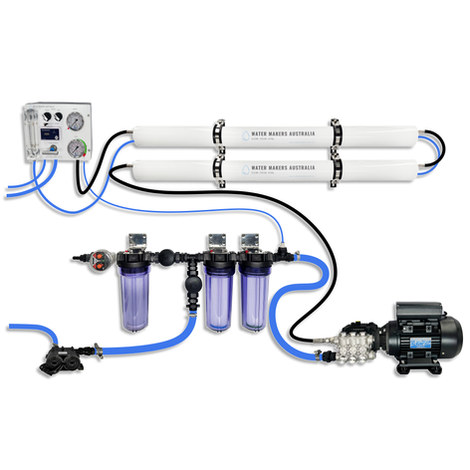
A two-membrane modular watermaker with 140 L/h nominal output, aimed at families and liveaboards that want more water per run.
Explore →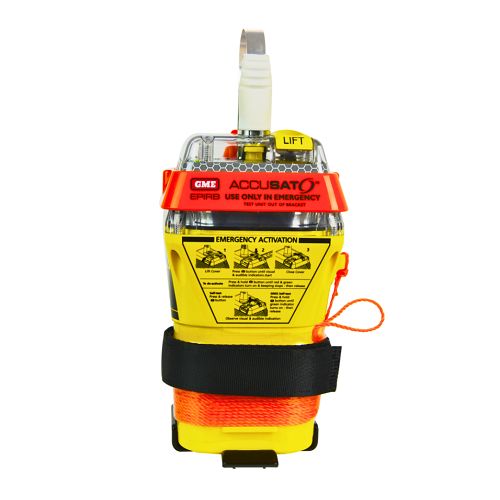
A 10‑year battery EPIRB with integrated GNSS (supports GPS and Galileo), infrared strobe and 121.5 MHz homing signal. Approved for worldwide COSPAS‑SARSAT operation.
Explore →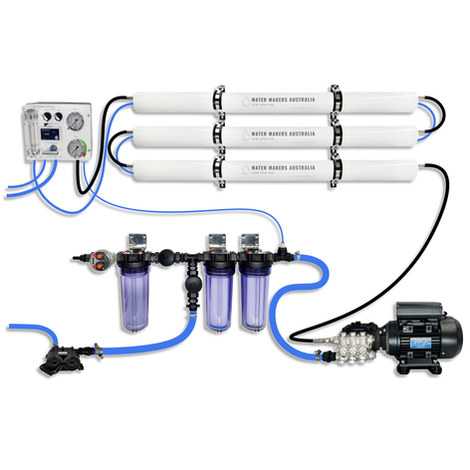
A three-membrane modular watermaker with 200 L/h nominal output and up to 240 L/h family-level marketing, for larger crews and heavy use.
Explore →