Loading this page…

Loading this page…
Sailing club
Hervey Bay Sailing Club is an off-the-beach dinghy and catamaran club based on the Charlton Esplanade foreshore at Torquay, Hervey Bay (QLD). The club runs regular club racing from a north-facing white-sand beach, hosts the long-running Bay to Bay trailable-yacht passage race, and has experience staging state, national and international championship events.
About
Hervey Bay Sailing Club is an off-the-beach dinghy and catamaran club based on the Charlton Esplanade foreshore at Torquay, Hervey Bay (QLD). The club runs regular club racing from a north-facing white-sand beach, hosts the long-running Bay to Bay trailable-yacht passage race, and has experience staging state, national and international championship events.
Service area: Torquay / Hervey Bay foreshore, Fraser Coast, QLD
Keep exploring
Hervey Bay Sailing Club is a community sailing club based at 427 Charlton Esplanade, Torquay (Hervey Bay), QLD. The club promotes off-the-beach sailing on the Fraser Coast, runs club racing, regattas and social events, and organises the annual Bay to Bay Trailerable Yacht Race.
The club website also lists membership information, contacts for race enquiries and a venue-hire contact for the clubhouse/boatshed.
The club's competitive identity rests on an unusually broad class spread for a regional beach club. Sabots, Herons, Tasars, Corsairs, MG14s and Lasers race from the foreshore alongside Cobra, A-Class, Nacra and Arrow catamarans, giving members progression paths from single-handed dinghies to high-performance cats without ever leaving the club.
Junior and adult learn-to-sail delivery on the Fraser Coast has recently been reshaped: the Fraser Coast Sailing Academy, a new commercial Discover Sailing Centre launched in 2025, now runs the Tackers junior pathway and adult courses with the stated aim of building membership at both Hervey Bay Sailing Club and Maryborough Sailing Club. The club also hosted one of the earliest 2025 regional roadshows run by Australian Sailing Queensland, placing it at the front of the state's club-development circuit. Results suggest the pipeline works: Max Rott and Alex Rott, sailing out of the club, took out the RS Feva title at the 2021 Queensland Youth Championships.
On the water, the program year revolves around club racing from the Torquay foreshore and the Bay to Bay, the two-day trailable-yacht passage race from Tin Can Bay up through the Great Sandy Strait that anchors the club calendar each May. Volunteer capability underpins everything. Long-serving member Colin Verrall received Australian Sailing Queensland's Solo Trophy in 2022 for more than two decades of outstanding service to the sport, and the club's race-management bench — honed through world, national and state championship hosting — is, in the club's own assessment, its quiet specialty and the foundation of its national standing.
Hervey Bay Sailing Club occupies a foreshore site on the Charlton Esplanade at Torquay, fronting a north-facing white-sand beach that runs some seven kilometres along the city's bay shoreline. The water out front is Hervey Bay itself, screened from the open Pacific by K'gari — the World Heritage-listed Fraser Island — which strips the sting out of ocean swell and leaves conditions well suited to off-the-beach dinghy and catamaran sailing. The clubhouse position gives spectators clear sightlines over the racing from shore, an asset the club itself highlights.
Beyond the bay, the Great Sandy Strait separates the mainland from K'gari and provides the sheltered passage that makes the club's signature event possible: the Bay to Bay course covers roughly 84 to 87 kilometres over two days, from Tin Can Bay north through the strait to Hervey Bay, with an overnight stop at Garry's Anchorage, the sheltered roadstead between K'gari and Stewart Island. That mix of open-bay racing water and protected strait cruising is rare for a single club's home territory.
The city of Hervey Bay sits about three and a half hours' drive north of Brisbane, close enough for trailer fleets from the south-east to tow up for regatta weekends, and the region's established visitor infrastructure absorbs event crowds comfortably. For sailors, the practical picture is simple: rig on the foreshore, launch off a gently shelving beach, race on sheltered bay water within sight of the clubhouse, and keep one of the country's great protected straits on the doorstep for passage events. It is a combination that has drawn championship fleets back to Torquay for decades.
A small group of local sailors formed the club in 1968, at a time when no sailing club existed anywhere in the area. For the first six seasons, headquarters consisted of a tent put up on the sand every Sunday — racing organised from canvas and beach. Permanence arrived in 1974, when the local council approved plans for a clubhouse on the current site — land first leased for surf-lifesaving purposes — and volunteers erected half of the boatshed before that year was out. The completed clubhouse followed in 1977, and the club marked the year by hosting Australian Catamaran Week.
The 1990–91 season brought the first Nacra Catamaran World Championship to the beach at Torquay, and in November 2018 the club hosted the A-Class World Championship together with the inaugural A-Class Classic World Championship — a double that underlined its standing with the catamaran classes.
Threaded through that history is the Bay to Bay. Club members conceived the race on 18 April 1980; the first running, in May 1981, drew 114 boats against an expected thirty, with Rob McWatters of Rockhampton taking line honours in a Seawind 24 catamaran. The 19th edition in 1999 set the record fleet at 230 trailable yachts, and the race now runs each year on the first weekend of May.
Individual service has been recognised alongside event success: Colin Verrall's 2022 Solo Trophy honoured more than twenty years of contribution to Queensland sailing. From a Sunday tent to world championship hosting in a little over two decades, the club's trajectory mirrors the growth of Hervey Bay itself — and the tent-to-clubhouse story remains central to how the club tells its own story to new members.
Apollo Bay is a small working harbour on Victoria’s Great Ocean Road where sheltered inshore sailing meets the Southern Ocean. The character is a mix of protected harbour berths and an exposed open coast: pleasant day-sails and sheltered weekend cruising inside the bay, with demanding coastal passages immediately offshore where south‑westerly swell and strong winds from the Southern Ocean dominate. It suits coastal cruisers, trailer sailors who launch at the ramp, and experienced coastal sailors who understand bar and swell behaviour; it is not a casual open‑ocean anchorage for unprepared or

Use ramps and beaches with respect for local conditions: check ramp layout, tide and swell, wind direction, vehicle access and crowding; prepare boat and crew before you launch or retrieve; and follow local signage, courtesy and safety practices. Specifics vary by ramp and beach, so confirm details for the exact site before you go.
Explore →
Anchor in rocky coves, sandy bays and tidal flats by choosing the right ground and anchor, giving plenty of scope, setting the anchor slowly and testing it, and planning for tidal change and swing room.
Explore →
Expect very different seasonal systems across Western Australia: the south‑west (Perth to Albany) has a strong summer afternoon sea breeze (the “Fremantle Doctor”) and winter westerly fronts, while northern WA follows a wet/dry monsoonal cycle with strong seasonal onshore winds, thunderstorms and cyclone risk in the wet season. Local headlands, estuaries and tidal flows often change what you actually feel on the water, so learn the local timing and sheltered venues first.
Explore →
Pick a stable, simple, forgiving dinghy with a single sail or basic sloop rig, affordable handling and easy maintenance—ideally one with a local class or school nearby so you can access coaching and spare parts.
Explore →
A practical guide for new sailors on picking the right Australian sailing club: training, boat access, racing, social fit, costs and the key questions to ask before joining.
Explore →A practical guide for recreational sailors planning visits to Albany and King George Sound. Covers the main anchorage areas, typical local weather patterns, tidal and current considerations, navigational hazards, on-the-water etiquette and a pre-departure checklist to help you plan a safe passage and enjoyable stopover
Explore →A practical guide for recreational sailors planning passages to, from or around Eden and Twofold Bay. Covers sheltered anchorages, shore facilities, local weather and tidal considerations, preparing for Bass Strait conditions and a focused equipment and safety checklist.
Explore →A practical guide for recreational sailors planning day sails or short cruises around Batemans Bay, Broulee and the Clyde River. Covers local conditions, safe approaches, anchorages, launching, tides, common hazards, and checklists for trip planning and on-water decisions.
Explore →Burke Yachtsman Gear Bag 40L - Shop Now Zip Pay | Tamar Marine Skip to content 59 – 63 Holbrook Street, Invermay Online Shop Open 24/7 Products search Contact us 1300 MARINE $ 0.00 0 Cart Burke Yachtsman Gear Bag 40L $ 79.90 Colour Choose an option Black Blue Black Blue Clear - Burke Yachtsman Gear Bag 40L quantity + Add to cart Enquire about this product SKU BAGB-Y24/BLACK* Category Bags - Sail & Gear A Burke classic and customer favourite, the Yachtsman’s Gear Bag is built tough to handle wet, salty conditions while keeping your gear dry and protected. Made from double coated waterproof…
Explore →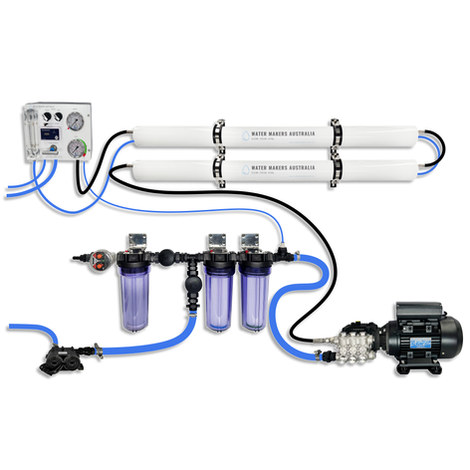
A two-membrane modular watermaker with 140 L/h nominal output, aimed at families and liveaboards that want more water per run.
Explore →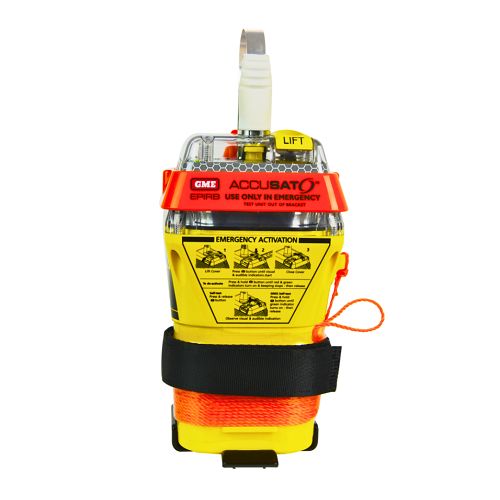
A 10‑year battery EPIRB with integrated GNSS (supports GPS and Galileo), infrared strobe and 121.5 MHz homing signal. Approved for worldwide COSPAS‑SARSAT operation.
Explore →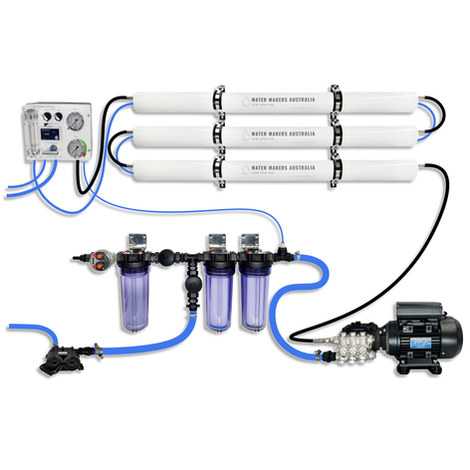
A three-membrane modular watermaker with 200 L/h nominal output and up to 240 L/h family-level marketing, for larger crews and heavy use.
Explore →