Loading this page…

Loading this page…
Sailing club
Hobsons Bay Yacht Club (HBYC) is a community-focused yacht and sailing club on the Nelson Place waterfront at Williamstown, Victoria. Operating since 1888, the club runs year‑round keelboat and dinghy racing, junior and adult learn-to-sail programmes through its Boating Academy, cruising activities, and active social and event facilities. The club sails on Hobsons Bay — the north‑west corner of Port Phillip — and shares the Williamstown waterfront with several longstanding Victorian yacht clubs.
About
Hobsons Bay Yacht Club (HBYC) is a community-focused yacht and sailing club on the Nelson Place waterfront at Williamstown, Victoria. Operating since 1888, the club runs year‑round keelboat and dinghy racing, junior and adult learn-to-sail programmes through its Boating Academy, cruising activities, and active social and event facilities. The club sails on Hobsons Bay — the north‑west corner of Port Phillip — and shares the Williamstown waterfront with several longstanding Victorian yacht clubs.
Service area: Hobsons Bay / Port Phillip, Williamstown (VIC)
Keep exploring
Ask around the junior dinghy scene on Port Phillip and Hobsons Bay's Pacers and Cadets come up quickly. The club maintains a strong junior fleet in those two classes, with mentoring and coaching from senior members forming the backbone of the pathway. Juniors sail most Sundays across the school terms on either side of summer, progressing from first sails in company through to solo boat handling and, for those with the appetite, into club racing.
Formal instruction runs through the club's status as an accredited Australian Sailing Discover Sailing Centre, so the introductory steps follow the national dinghy training scheme before sailors feed into the club's own fleets. The Cadet connection runs deep here: back in 1960 Hobsons Bay joined with neighbouring bayside clubs to build a local International Cadet fleet, commissioning six of the boats, and that investment in a youth class has echoed down the decades.
Adults are hardly left ashore. The racing programme covers the full year, from warm-weather twilight events through to winter series that draw one of the largest cold-season fleets on the bay, and the co-run series with the Royal Yacht Club of Victoria and Royal Melbourne Yacht Squadron widen the competition without anyone leaving home water. Cruising and recreational sailing sit alongside the pointy end, and an active social calendar — a fixture of the club since prize-giving nights were being reported in the local press in the 1890s — rounds things out. The emphasis throughout is on sailors developing inside a community that has been doing this, volunteers at the helm, since 1888.
Hobsons Bay Yacht Club occupies the Nelson Place waterfront at Williamstown, looking over the protected north-west corner of Port Phillip that gives the club its name. Of all the bay's corners, this is the one nearest the Yarra River mouth, which means two things: a front-row view of the Melbourne CBD across the water, and constant traffic. The commercial Port of Melbourne lies hard by, so racing here unfolds alongside shipping channels and the movements of large vessels — a discipline that sharpens crews and gives even an ordinary club race a working-harbour backdrop no other Victorian venue quite matches.
The bay itself is big but relatively shallow, an enclosed sheet of water where conditions can turn quickly. In the warmer months the sea breeze builds through the afternoon, rewarding sailors who can read its arrival; when fronts cross, the wind shifts fast and the shallow water kicks up a short, testing chop. It is the kind of venue that produces adaptable sailors, and it explains why the club's winter racing stays so well attended — the water never closes.
Ashore, the clubhouse stands on land the club has occupied since an 1888 lease, and behind it lies something few clubs can claim: a working yard and slipway, built up in stages from the 1930s through the 1960s and still hauling boats today. The waterfront strip here is shared with several of Melbourne's oldest clubs, making this stretch of Williamstown one of the densest concentrations of sailing heritage in the country.
Sixty members turned up when Hobsons Bay Yacht Club formed in March 1888; by year's end there were more than 130, and the first recorded race that May drew a crowd of over 600 to the Stevedore and Breakwater piers. A lease on the Nelson Place site followed in October at five pounds a year from the Harbor Trust, and the first clubhouse opened in 1889 with membership already past 200. The early fleet was timber centreboard yachts of 23 and 24 feet — names like Athlete, Ormonde, Hyacinth, Volunteer and Daisy fill the register — with Native racing from the very first season.
The club set markers early. The Ladies Skippers Race began in 1891, at a time when rival clubs admitted women once a year, and it still runs. Tragedy struck in April 1899 when Queenie sank off Werribee with all seven aboard, among them former Commodore John Clark together with four of his sons. Better memories followed: the Rudder Cup, which the club calls Australia's oldest ocean race, began in 1907 with club yacht Thistle first to win it; the Association Pennant fell to Independence in 1924; and the club even fielded its own football team from 1906. Thirty-four of 97 members enlisted in the First World War, 52 in the Second.
Fire gutted the clubhouse in 1951, taking records and boats with it, but the rebuilt rooms opened in October 1957 before 400 guests and a 32-yacht procession. The Port Phillip Sea Pilots Race, a 92-mile night race honouring first Commodore Captain Henry Press, joined the calendar in 1965, and generations of club yachts — Thermopylae, Sinnerman, Tevake II, Blunderbuss and others — have since contested the Sydney to Hobart.
Adelaide’s metropolitan coast fronts the eastern side of Gulf St Vincent and mixes short, sheltered bay sailing around Holdfast Bay and the Patawalonga with more exposed, open-water sailing north toward Outer Harbour and along the Le Fevre Peninsula. The area suits a wide range of activity — sheltered day sails, club and trailer-sailer racing, short coastal cruising into the Fleurieu and Yorke Peninsula, and launch-and-home-port racing — but demands local knowledge about shipping channels, tidal flows in the Port River/Outer Harbour approaches, and seasonal wind patterns.

A regular, layered maintenance routine combining hull cleaning, targeted anti-fouling management, cathodic protection and systems checks will substantially reduce marine growth and corrosion for boats kept year‑round in South Australian waters. Focus on preventing attachment and electrochemical attack, then inspect and act more often if you’re in warm, nutrient-rich or high‑traffic sheltered waters.
Explore →
Treat Tasmanian waters as cold year-round: prevent immersion where possible, wear appropriate layers and a lifejacket, carry reliable distress equipment, and have clear procedures to recover and rewarm anyone who gets wet.
Explore →
Tasmania has a mix of state marine parks, local harbour bylaws and environmental protections that affect where and how you anchor—so check the specific area’s rules before you go, aim to use designated anchorages or soft seabeds, and follow standard anchoring and biosecurity good practice.
Explore →
Use ramps and beaches with respect for local conditions: check ramp layout, tide and swell, wind direction, vehicle access and crowding; prepare boat and crew before you launch or retrieve; and follow local signage, courtesy and safety practices. Specifics vary by ramp and beach, so confirm details for the exact site before you go.
Explore →
A practical guide for new sailors on picking the right Australian sailing club: training, boat access, racing, social fit, costs and the key questions to ask before joining.
Explore →
A practical, Australia-focused guide for planning and sailing around the Whitsunday Islands: weather and seasons, navigation and anchoring, moorings and parks, provisioning and charters, safety and common mistakes, plus checklists and next steps.
Explore →A practical guide for recreational sailors planning passages to, from or around Eden and Twofold Bay. Covers sheltered anchorages, shore facilities, local weather and tidal considerations, preparing for Bass Strait conditions and a focused equipment and safety checklist.
Explore →A practical guide for recreational sailors planning visits to Albany and King George Sound. Covers the main anchorage areas, typical local weather patterns, tidal and current considerations, navigational hazards, on-the-water etiquette and a pre-departure checklist to help you plan a safe passage and enjoyable stopover
Explore →Burke Yachtsman Gear Bag 40L - Shop Now Zip Pay | Tamar Marine Skip to content 59 – 63 Holbrook Street, Invermay Online Shop Open 24/7 Products search Contact us 1300 MARINE $ 0.00 0 Cart Burke Yachtsman Gear Bag 40L $ 79.90 Colour Choose an option Black Blue Black Blue Clear - Burke Yachtsman Gear Bag 40L quantity + Add to cart Enquire about this product SKU BAGB-Y24/BLACK* Category Bags - Sail & Gear A Burke classic and customer favourite, the Yachtsman’s Gear Bag is built tough to handle wet, salty conditions while keeping your gear dry and protected. Made from double coated waterproof…
Explore →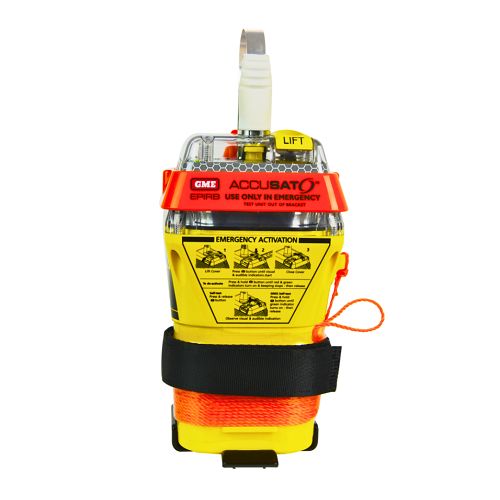
A 10‑year battery EPIRB with integrated GNSS (supports GPS and Galileo), infrared strobe and 121.5 MHz homing signal. Approved for worldwide COSPAS‑SARSAT operation.
Explore →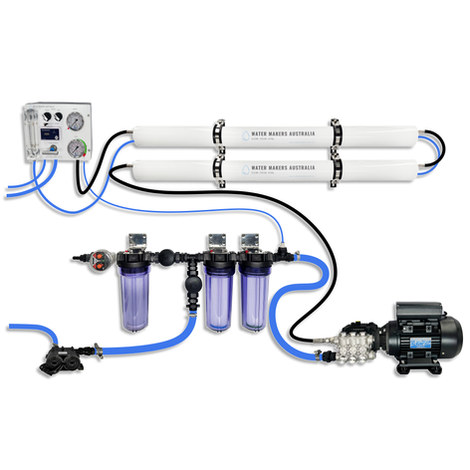
A two-membrane modular watermaker with 140 L/h nominal output, aimed at families and liveaboards that want more water per run.
Explore →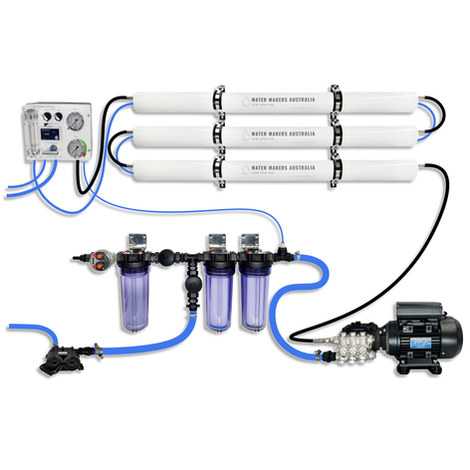
A three-membrane modular watermaker with 200 L/h nominal output and up to 240 L/h family-level marketing, for larger crews and heavy use.
Explore →