Loading this page…

Loading this page…
Sailing club
Humpybong Yacht Club is an off-the-beach sailing club based at Woody Point (Hornibrook Esplanade) serving north Brisbane and the southern Sunshine Coast. The club runs Learn to Sail programs for children and adults, fleet coaching (Optimist Green/Blue/Red, intermediate coaching), youth racing and club regattas. It offers membership, volunteer opportunities and a club calendar of events.
About
Humpybong Yacht Club is an off-the-beach sailing club based at Woody Point (Hornibrook Esplanade) serving north Brisbane and the southern Sunshine Coast. The club runs Learn to Sail programs for children and adults, fleet coaching (Optimist Green/Blue/Red, intermediate coaching), youth racing and club regattas. It offers membership, volunteer opportunities and a club calendar of events.
Service area: Woody Point, north Brisbane and southern Sunshine Coast (Hornibrook Esplanade)
Keep exploring
Humpybong Yacht Club is an off-the-beach sailing club based at Woody Point (Hornibrook Esplanade) serving north Brisbane and the southern Sunshine Coast. The club runs Learn to Sail programs for children and adults, fleet coaching (Optimist Green/Blue/Red, intermediate coaching), youth racing and club regattas. It offers membership, volunteer opportunities and a club calendar of events.
The program that best captures Humpybong's character is the Women and Girls' Regatta — WaGR for short — runs as a weekend of racing, coaching and mentoring that, per Live Sail Die, is the only regatta in south-east Queensland for women's and girls' off-the-beach classes that includes a junior division. Skippers must be female, though male crews are permitted, and the concept was inspired by Kohimarama Yacht Club's PredictWind Girls Regatta in New Zealand. Second staged in 2023, it sits alongside an active SheSails program and a link with Deaf Sailing Queensland that widens access further.
Entry-level sailing has its own irreverent doorway: the "Sh*t-box Laser" group invites newcomers to race any old backyard boat at minimal cost, stripping away the equipment barrier entirely. The accredited Discover Sailing Centre — described by the club as one of Queensland's fastest growing — runs the Tackers junior pathway alongside Start Sailing 1 and Better Sailing courses for youth and adults, plus OutThere Sailing for the social end of the sport.
Instructional depth runs deeper than most small clubs manage. A powerboat instructor delivers Powerboat Handling and Safety Boat courses, and the Discover Sailing Centre principal is also qualified as a dinghy racing instructor, and serves as both a Regional Race Officer and a Regional Judge; qualified instructor numbers doubled across the twelve months to 2023.
Annual regattas Humpybash and Winterbash draw dinghy and catamaran sailors from as far afield as Sydney and Townsville — the 2022 Winterbash fleets included Impulses, ILCA 4, 6 and 7 rigs, Herons and Sabres — while hosted class regattas in recent years have spanned Optimists, Sabres, 125s and Nacras through to A-Class catamarans. It is a program slate built to grow sailors, then keep them.
Humpybong sails on Bramble Bay, in the north-western corner of Moreton Bay, with courses laid off Woody Point where the racing is easily watched from the clubhouse or from the 240-metre Woody Point Jetty next door. The clubhouse occupies a site beside the public boat ramp at the corner of Hornibrook Esplanade and Oxley Avenue, giving members a grassed rigging area at the top of the ramp; launching is by hand, vehicle or the club tractor, with the nearby Pelican Park ramp recommended for larger craft.
All trailable sailing craft are welcome — trailer sailers, monohulls and catamarans — and the facilities are pitched at regatta scale: a canteen operates on most race days, camping is available at the club during special regattas, and the club lists state, national and international regatta-management experience among its capabilities.
The location carries layers of maritime history. Off nearby Picnic Point lie the remains of HMQS Gayundah, the colonial-era gunboat whose hull has marked this shoreline for generations, and the jetty beside the club remains a favoured fishing and strolling spot for Redcliffe locals. Bramble Bay's enclosed waters keep conditions manageable for junior fleets while still offering enough challenge for championship racing — which helps explain the club's double life as both a learn-to-sail nursery and a host of record-fleet state titles.
Positioned on the Redcliffe Peninsula within commuting range of Brisbane's northern suburbs and the southern Sunshine Coast, the club draws its membership from a wide and growing catchment, and its ramp-side site puts every one of those members minutes from the water.
The club's founding date is one of those details that has slipped through the record-keeping cracks — no constitution minute, opening-day report or anniversary history fixes the year the modern club began. The name, though, has deep roots in local sailing. Humpybong is the old district name for the Redcliffe peninsula, and the Humpybong Regatta was already an institution in the nineteenth century: the first is recorded on 24 May 1884, and a Humpybong Sailing Club was still running the annual event decades later, with the 27th edition reported on New Year's Day 1912.
Newspaper records show "Humpybong trainees" racing in 1948, and by 1965 the Humpy Bong Yacht Club possessed club rooms large enough that the Redcliffe Chess Club began meeting in them. The class associations anchor the modern era: Queensland's Mirror Class Association, which sailed from Humpybong, affiliated with the national Mirror body in 1970, and the 125 dinghy class has been tied to the club for decades — one was donated as a training boat as recently as October 2020.
The recent chapter is emphatic. In 2023 the club hosted the Queensland ILCA championships with a record fleet exceeding 100 boats, then capped the year by winning Queensland Club of the Year and the inaugural national Category B award, finishing ahead of fellow finalists Richmond River Sailing Club of New South Wales and Sandy Bay Sailing Club of Tasmania. Whatever year the club formally began, its regatta name has been part of Redcliffe's summer for well over a century — and the present club has given that old name its most decorated season yet.

Look for a friendly club with beginner-focused training, accessible facilities and boats, a supportive community, clear safety practices, and opportunities to progress at your own pace.
Explore →
Learn boat-handling basics (steering, points of sail and sail trim), safety and seamanship (personal flotation, wind awareness, man-overboard procedure), and simple anchoring/mooring — these give you the core skills to sail safely and enjoyably.
Explore →
Pick a stable, simple, forgiving dinghy with a single sail or basic sloop rig, affordable handling and easy maintenance—ideally one with a local class or school nearby so you can access coaching and spare parts.
Explore →
Keep the boat balanced by steering a consistent course for the sail trim and by moving crew weight fore/aft and side-to-side to control helm and reduce weather or lee helm. Upwind you aim for a slight weather helm and a heel that lets the sails work efficiently; downwind you flatten the boat a little, ease sheets to prevent luffing or accidental broaches, and shift weight aft as the apparent wind drops.
Explore →
A concise, practical guide to the points of sail and how to trim sails effectively for common Australian conditions. Learn the basics of wind angles, sail shape, telltales, reefing considerations and simple steps to improve boat speed and balance.
Explore →Practical guide for recreational sailors planning a coastal cruise from Sydney north to the Queensland border. Covers route options, weather and tidal considerations, planning checklists, common hazards, anchorages and practical examples for a safe, enjoyable trip.
Explore →A concise, practical guide for recreational sailors in New South Wales that explains southerly busters, sea breezes and east coast lows, how they form, how they affect coastal sailing, common signs to watch for, equipment and preparation, and clear next steps to plan safer outings.
Explore →A practical guide for recreational sailors planning voyages to Esperance and the Recherche Archipelago: what to expect, key planning considerations, common anchorages, safety and communications, equipment recommendations and sensible steps for a successful trip in this remote southern WA cruising area.
Explore →
The entry-level Poclink push-to-talk radio: 4G mobile network only, three years of service included, sold as a two-pack for half the price of the Pro and Ultra.
Explore →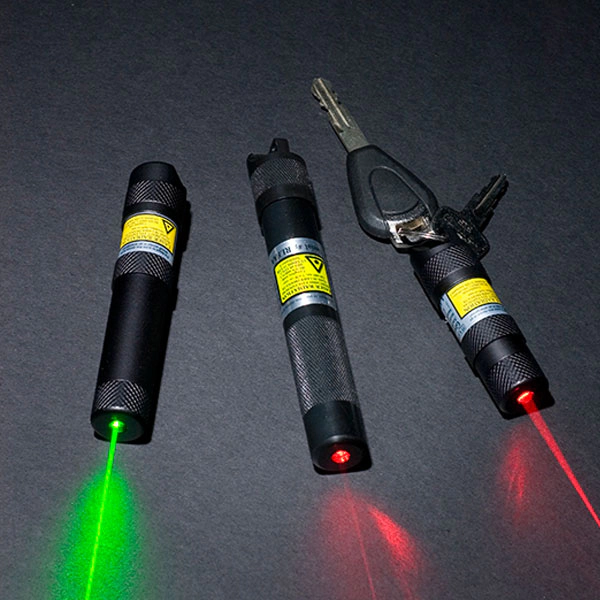
Hand-held, non-flammable laser signalling devices for day and night use, in red, green and Magnum versions, waterproof to 24 m and running for 5 to 72 hours on a battery.
Explore →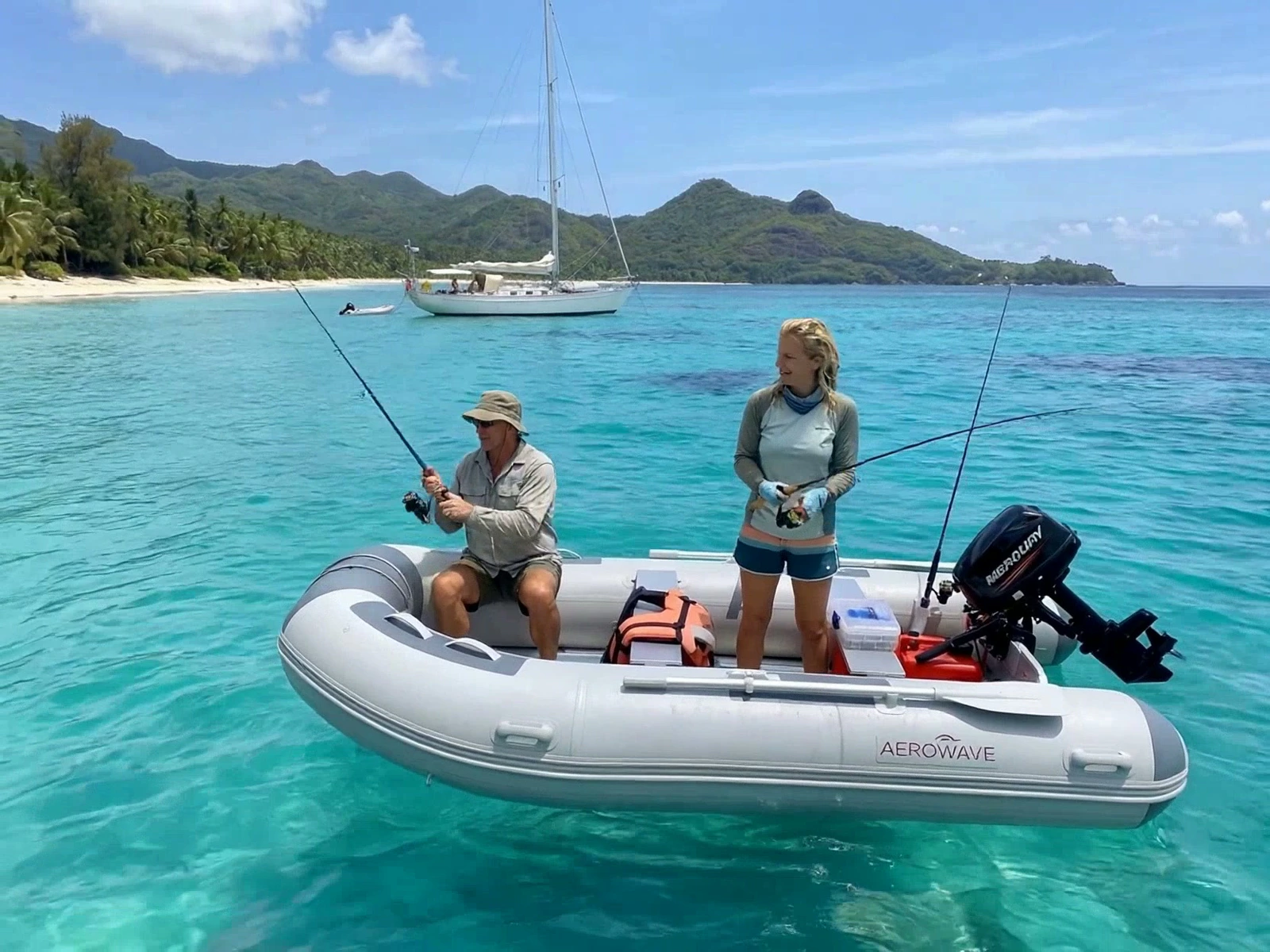
A 2.9 m four-person air-deck inflatable tender in 1.2 mm Valmex PVC. It weighs 52 kg, carries up to 510 kg and includes an electric pump.
Explore →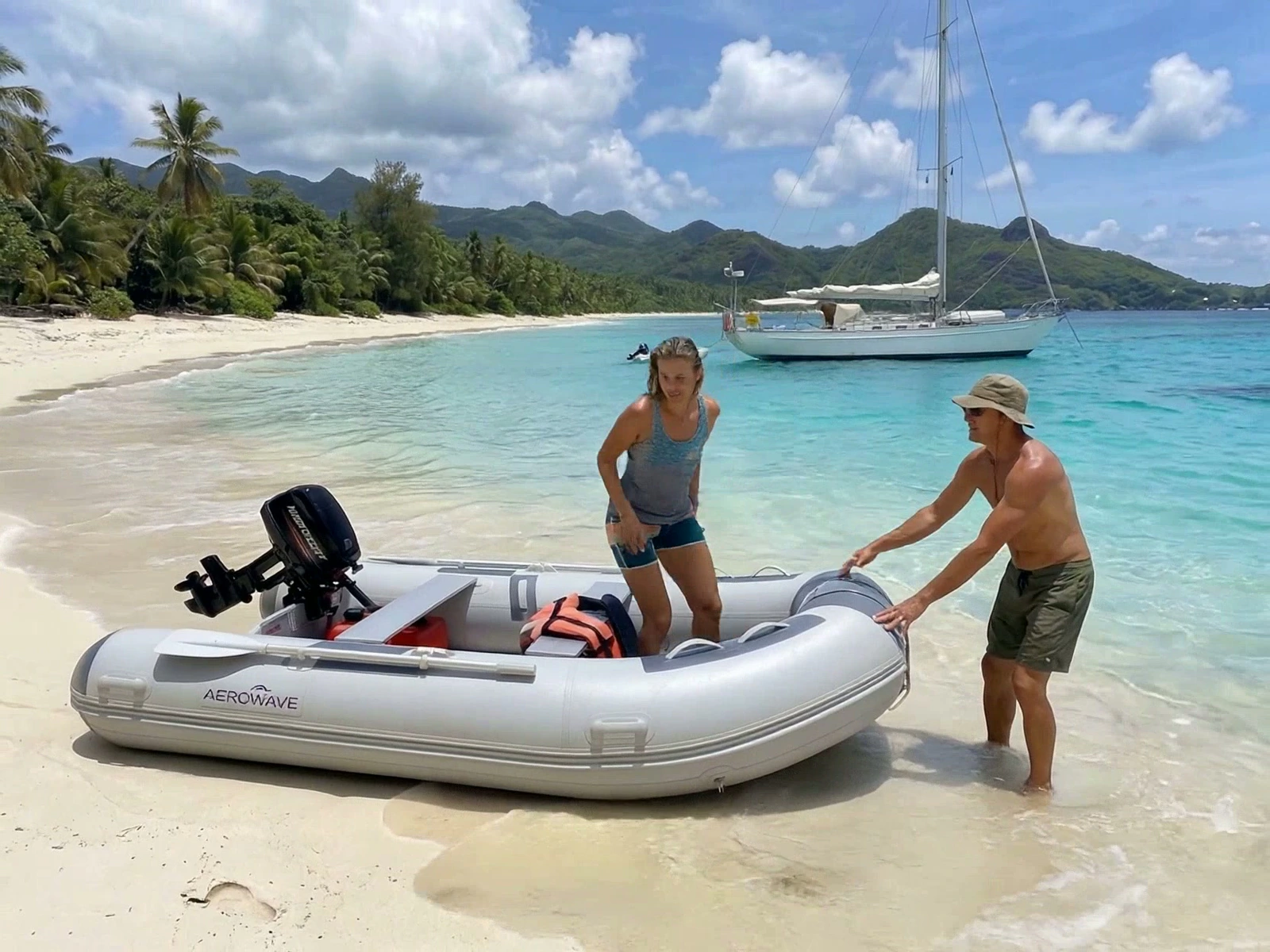
A 2.7 m air-deck inflatable tender in 1.2 mm Valmex PVC with thermo-welded seams. It weighs 49 kg, carries up to 484 kg and takes an outboard of about 10 HP.
Explore →