Loading this page…

Loading this page…
Sailing club
Jervoise Bay Sailing Club (JBSC) is an off‑the‑beach multihull and dinghy club based at 128 Woodman Point View, Coogee, Western Australia. Founded in 1977, JBSC specialises in catamaran and foiling racing and hosts regular summer Sunday racing, winter series events and major national and international multihull championships.
About
Jervoise Bay Sailing Club (JBSC) is an off‑the‑beach multihull and dinghy club based at 128 Woodman Point View, Coogee, Western Australia. Founded in 1977, JBSC specialises in catamaran and foiling racing and hosts regular summer Sunday racing, winter series events and major national and international multihull championships.
Service area: Coogee, Western Australia (Owen Anchorage / Woodman Point)
Keep exploring
Jervoise Bay approaches training the way it approaches everything: through its racing calendar. Rather than advertising a conventional junior sailing school, the club builds development into event-based programs aimed squarely at lifting the standard of its catamaran and foiling fleets. The clearest example was the F18 Training Series, run on Saturdays from November 2024 through April 2025 — a full season of coached sharpening in the lead-up to the world championship the club would host the following summer.
In March 2024 it also hosted the Gavz Rapid Result Racing College, a short intensive training event of the kind that travelling professionals typically deliver for racing clubs. And when the 9er State titles came around in March 2026, the club supported the junior and youth skiff sailors attending by opening up camping at the venue, a practical gesture that kept young competitors on site and on the water.
For sailors completely new to the sport, the honest picture is that the club's published program centres on racing and event training rather than an advertised beginner course list. In general terms, newcomers to multihull sailing in the Fremantle area would typically pick up fundamental skills through an accredited sailing school before bringing a boat — or a willingness to crew — to a specialist racing club such as this one. What such a club does offer, by its nature, is an apprenticeship of a different kind: consistent Sunday racing, coaching clinics tied to major regattas, and a membership steeped in catamaran craft across generations.
The competitive framework itself doubles as a development pathway. Divisions for F18 catamarans, Nacra 14 square cats and even kitefoils are scored on personal handicap through the SailRes system, so improving sailors can measure themselves against their own trajectory as much as against the fleet. Add the Commodore's Cup, Club Championship, Sprint Series and a June-to-September Winter Series, and the opportunities to learn by racing run practically all year.
Coogee's stretch of the Cockburn coast gives Jervoise Bay Sailing Club one of the more enviable race tracks in the country. From its base at 128 Woodman Point View, the club looks out over Owen Anchorage, a sheltered roadstead between the mainland and Garden Island where the water stays remarkably flat. The combination that multihull sailors dream about — steady southwest sea breezes averaging fifteen to twenty knots, minimal swell and plenty of room — is on daily offer through the summer, and the event website for the 2026 world championship made much of exactly that: consistent breeze, flat water, easy logistics.
Practicality matches the sailing conditions. The venue lies roughly half an hour from central Perth, with accommodation and amenities close at hand, which is precisely why national and international championships keep landing here. Onshore, the club offers well-maintained launching ramps including a private ramp for members, generous grassed rigging lawns where big multihull fleets can spread out, and secure boat storage. Anyone who has tried to run a catamaran championship off a cramped beach will appreciate how much those working spaces matter.
The geography of Woodman Point itself is woven into the club's identity. Originally established at Jervoise Bay on the southern side, the club moved to the point's northern flank when industry expanded on its original site, and the relocation turned out to be an upgrade: Owen Anchorage's protection means racing rarely gets blown out or beaten up by swell. Between the sea breeze machine, the flat-water track and shore facilities built by and for cat sailors, the venue's repeated selection for world and national titles — Tornado, Nacra, F18, wing foil — needs no further explanation.
The club began, improbably, in a shipyard. In 1977, workers at the Jervoise Bay yard started a sailing club on company land, launching off-the-beach boats after shifts in the waters they knew from work. It was an organic, blue-collar beginning, and when the yard's business later expanded and needed the site back, the club was redeveloped across the point on Owen Anchorage — the move that gave it the home it still occupies today.
From those modest origins, Jervoise Bay built a reputation in catamaran racing that few Australian clubs can match. The milestone that announced it internationally was the 1991/92 Tornado World Championship, staged when the Tornado stood as the Olympic multihull and its worlds drew the sharpest sailors in the discipline. Hosting duties kept coming: the 39th NACRA Nationals and the F18 Nationals in 2018 confirmed the venue's status within the Australian multihull scene, and the arrival of foiling brought new events — the Wing Foil State Championships in February 2023, then the Wing Foil Nationals in January 2024.
The 2025/26 summer amounted to a coronation. November 2025 saw the club run the Waxit Golden Grand Prix in conjunction with the WA Nacra State Championship, hot on the heels of its 2025 Opening Day on Sunday 5 October. Then came the double header at the top of the sport: the F18 Australian National Championship, followed immediately by the Formula 18 World Championship from 24 January to 3 February 2026. The world titles drew a big international fleet in which Nacra Evolutions accounted for thirty-three per cent of entries and Windrush Edges twenty-four per cent — a fitting showcase given the Windrush factory's proximity to the club.
Not yet fifty years old, Jervoise Bay has compressed into one working lifetime a journey from shipyard lunchtime sailing to hosting the world. Its members keep racing every Sunday through summer, with a winter series besides, much as they have since 1977.
Apollo Bay is a small working harbour on Victoria’s Great Ocean Road where sheltered inshore sailing meets the Southern Ocean. The character is a mix of protected harbour berths and an exposed open coast: pleasant day-sails and sheltered weekend cruising inside the bay, with demanding coastal passages immediately offshore where south‑westerly swell and strong winds from the Southern Ocean dominate. It suits coastal cruisers, trailer sailors who launch at the ramp, and experienced coastal sailors who understand bar and swell behaviour; it is not a casual open‑ocean anchorage for unprepared or

Expect very different seasonal systems across Western Australia: the south‑west (Perth to Albany) has a strong summer afternoon sea breeze (the “Fremantle Doctor”) and winter westerly fronts, while northern WA follows a wet/dry monsoonal cycle with strong seasonal onshore winds, thunderstorms and cyclone risk in the wet season. Local headlands, estuaries and tidal flows often change what you actually feel on the water, so learn the local timing and sheltered venues first.
Explore →
There are legal obligations in Western Australia for recreational boat owners and skippers covering vessel registration, carriage of safety equipment and general skipper responsibilities, but the exact requirements depend on vessel type, size, where you sail and whether the vessel is commercial or recreational. Check the Western Australian Department of Transport (DoT WA) and the national authority for the precise checklist that applies to your boat and voyage.
Explore →
Look for a friendly club with beginner-focused training, accessible facilities and boats, a supportive community, clear safety practices, and opportunities to progress at your own pace.
Explore →
Use ramps and beaches with respect for local conditions: check ramp layout, tide and swell, wind direction, vehicle access and crowding; prepare boat and crew before you launch or retrieve; and follow local signage, courtesy and safety practices. Specifics vary by ramp and beach, so confirm details for the exact site before you go.
Explore →Practical guidance for recreational sailors planning coastal and remote cruising in Western Australia, focusing on tidal planning, reef awareness, navigation and safety preparation tailored to local conditions.
Explore →A practical guide to the coastal weather systems that affect sailing along Western Australia's coast, focusing on the Fremantle Doctor, local sea breezes, and linked coastal phenomena. Explains how these systems form, when they tend to occur, how they influence boat handling and passage planning, common mistakes, and a
Explore →
A practical guide for new sailors on picking the right Australian sailing club: training, boat access, racing, social fit, costs and the key questions to ask before joining.
Explore →Practical guide for recreational sailors planning day sails and short cruises in Geographe Bay, focusing on launching, local conditions, anchorages and safety around Busselton, Dunsborough and Cape Naturaliste.
Explore →Burke Yachtsman Gear Bag 40L - Shop Now Zip Pay | Tamar Marine Skip to content 59 – 63 Holbrook Street, Invermay Online Shop Open 24/7 Products search Contact us 1300 MARINE $ 0.00 0 Cart Burke Yachtsman Gear Bag 40L $ 79.90 Colour Choose an option Black Blue Black Blue Clear - Burke Yachtsman Gear Bag 40L quantity + Add to cart Enquire about this product SKU BAGB-Y24/BLACK* Category Bags - Sail & Gear A Burke classic and customer favourite, the Yachtsman’s Gear Bag is built tough to handle wet, salty conditions while keeping your gear dry and protected. Made from double coated waterproof…
Explore →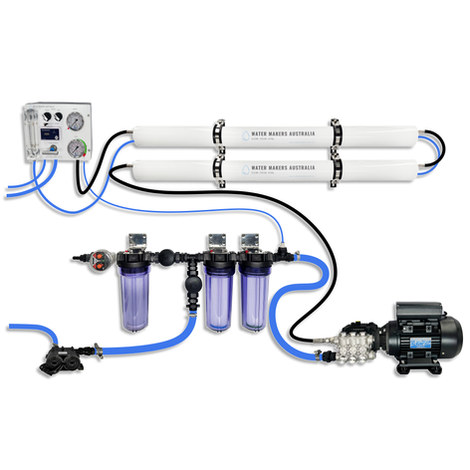
A two-membrane modular watermaker with 140 L/h nominal output, aimed at families and liveaboards that want more water per run.
Explore →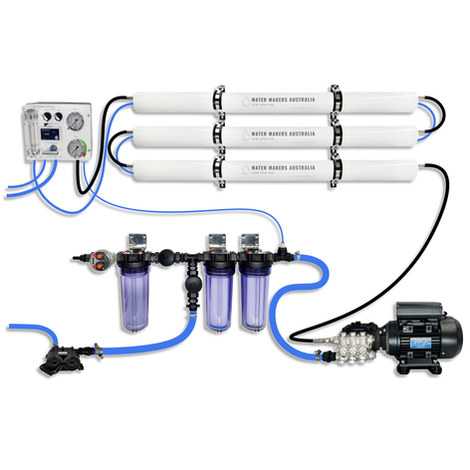
A three-membrane modular watermaker with 200 L/h nominal output and up to 240 L/h family-level marketing, for larger crews and heavy use.
Explore →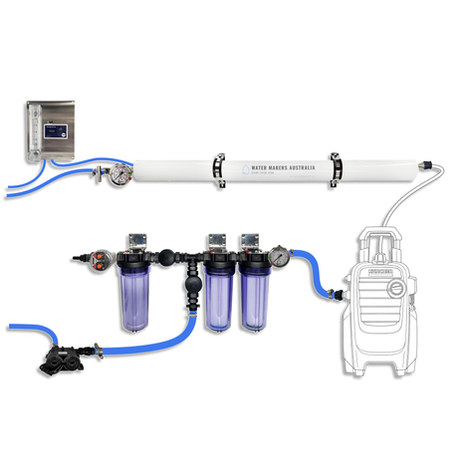
A one-membrane modular marine watermaker with 80 L/h nominal output, remote stainless control panel, standard consumables and direct Australian support.
Explore →