Loading this page…

Loading this page…
Sailing club
Kettering Yacht Club is a friendly racing club at Oyster Cove Marina, Kettering, on the D'Entrecasteaux Channel south of Hobart. It runs twilight races, kite nights, a winter series, the Channel Challenge and the Pipe Opener weekend from Hobart to Kettering, plus a Discover Sailing Start Crewing course for newcomers.
About
Kettering Yacht Club is a friendly racing club at Oyster Cove Marina, Kettering, on the D'Entrecasteaux Channel south of Hobart. It runs twilight races, kite nights, a winter series, the Channel Challenge and the Pipe Opener weekend from Hobart to Kettering, plus a Discover Sailing Start Crewing course for newcomers.
Service area: Kettering, Tasmania
Keep exploring
Kettering Yacht Club (KYC) is based at Oyster Cove Marina on Ferry Road, Kettering, on Little Oyster Cove off the D'Entrecasteaux Channel — about 30 minutes south of Hobart. It started life as the Channel Sailing Club and today has around 170 members.
The racing program includes twilight races, kite nights, a winter series and the Channel Challenge, and each September the Pipe Opener weekend brings boats down from Hobart with a passage race to Kettering followed by local racing. Newcomers can take the two-day Discover Sailing Start Crewing course to learn the basics of crewing on a keelboat. Races are scored in SailSys, and the club has its own clubrooms for events. Contact the club at info@kyc.yachting.org.au. See other clubs in the area on our Kettering sailing clubs page.
The easiest way into sailing at Kettering is the club's two-day Discover Sailing Start Crewing course, which introduces the basics of crewing on a keelboat — handling ropes and sails, moving safely around the boat and understanding what is happening during a race. It is designed for people with little or no experience.
After that, the racing calendar gives plenty of chances to practise: twilight races through summer, kite nights, a winter series and bigger events such as the Channel Challenge and the Pipe Opener. Skippers are often looking for crew, and racing in the Channel is a great way to build skills and confidence. For safety, our guide to essential safety equipment for Australian sailing boats is worth a read before heading out.
The club is based at Oyster Cove Marina in Kettering, on Little Oyster Cove off the D'Entrecasteaux Channel. The Channel is one of Tasmania's classic sailing grounds, running between the mainland and Bruny Island, with sheltered water, plenty of anchorages and good breezes for racing.
Races are held in the Channel and on the River Derwent, and the Pipe Opener each September combines a Hobart-to-Kettering passage race with local races such as the Cove Cup and the Oyster Cove Marina Race. For other clubs nearby, see Bruny Island Boat Club and Port Cygnet Sailing Club.
Kettering is also the departure point for the Bruny Island car ferry, so the cove is a busy little harbour, with ferries, fishing boats and cruising yachts coming and going. The Channel's breeze often builds from the south or north-west in the afternoon, and gusts can come down off the hills without much warning. Our FAQ on docking in gusty Tasmanian winds is useful before you bring a boat into the marina, and see our Kettering sailing clubs page.
Kettering Yacht Club began as the Channel Sailing Club and was incorporated as Kettering Yacht Club in 1993. It acquired its own committee boat in 2009 to run races on the Channel, and opened new clubrooms in 2013. Today it has a stable membership of about 170 and a full calendar of racing and social events.
Apollo Bay is a small working harbour on Victoria’s Great Ocean Road where sheltered inshore sailing meets the Southern Ocean. The character is a mix of protected harbour berths and an exposed open coast: pleasant day-sails and sheltered weekend cruising inside the bay, with demanding coastal passages immediately offshore where south‑westerly swell and strong winds from the Southern Ocean dominate. It suits coastal cruisers, trailer sailors who launch at the ramp, and experienced coastal sailors who understand bar and swell behaviour; it is not a casual open‑ocean anchorage for unprepared or

Write a one‑page plan with the who/what/when/where/how of your trip, keep a copy on board and leave the main copy with a responsible person ashore (and optionally with your club, marina office or local volunteer rescue service).
Explore →
Pick a protected bay, estuary or river reach where you can rig, launch and arrive on calm water within a short, sheltered transit; choose a site with a good ramp or jetty, clear recovery options and a nearby sailing club, marina or commercial operator for local knowledge and help.
Explore →
Watch for shallow entrance bars, shifting sandbanks and channels, tidal streams that accelerate through narrow channels or around headlands, drying mudflats and sills that expose at low water, and localised eddies or overfalls — and always confirm conditions for the specific estuary before you enter.
Explore →
Choose an anchor type and size matched to your boat, seabed and expected conditions; set it by lowering steadily, backing down under power to bury the fluke or hook, and scope the rode to suit tidal range and wind/sea state. Regularly inspect your set and use trip lines or secondary anchors where risk of wind or current change is high.
Explore →
A practical guide for new sailors on picking the right Australian sailing club: training, boat access, racing, social fit, costs and the key questions to ask before joining.
Explore →A practical guide for recreational sailors planning visits to Albany and King George Sound. Covers the main anchorage areas, typical local weather patterns, tidal and current considerations, navigational hazards, on-the-water etiquette and a pre-departure checklist to help you plan a safe passage and enjoyable stopover
Explore →
A concise, practical guide to the points of sail and how to trim sails effectively for common Australian conditions. Learn the basics of wind angles, sail shape, telltales, reefing considerations and simple steps to improve boat speed and balance.
Explore →A practical guide to preparing, planning and executing a recreational offshore passage along the New South Wales coast. Covers route selection, weather and tidal considerations, vessel and crew checks, safety equipment, communication, watchkeeping and common mistakes, with clear pre‑departure and underway checklists.
Explore →Burke Yachtsman Gear Bag 40L - Shop Now Zip Pay | Tamar Marine Skip to content 59 – 63 Holbrook Street, Invermay Online Shop Open 24/7 Products search Contact us 1300 MARINE $ 0.00 0 Cart Burke Yachtsman Gear Bag 40L $ 79.90 Colour Choose an option Black Blue Black Blue Clear - Burke Yachtsman Gear Bag 40L quantity + Add to cart Enquire about this product SKU BAGB-Y24/BLACK* Category Bags - Sail & Gear A Burke classic and customer favourite, the Yachtsman’s Gear Bag is built tough to handle wet, salty conditions while keeping your gear dry and protected. Made from double coated waterproof…
Explore →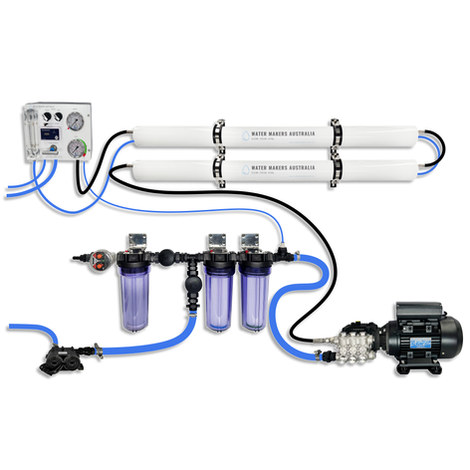
A two-membrane modular watermaker with 140 L/h nominal output, aimed at families and liveaboards that want more water per run.
Explore →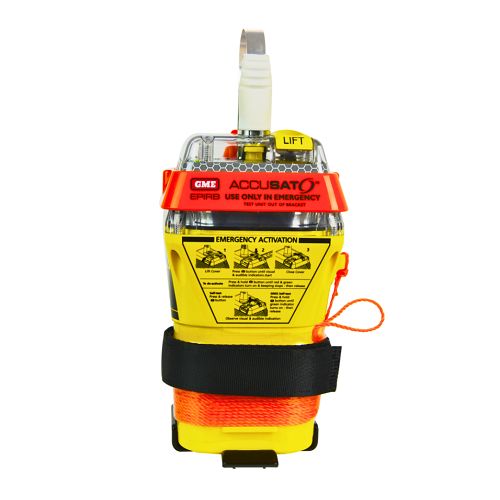
A 10‑year battery EPIRB with integrated GNSS (supports GPS and Galileo), infrared strobe and 121.5 MHz homing signal. Approved for worldwide COSPAS‑SARSAT operation.
Explore →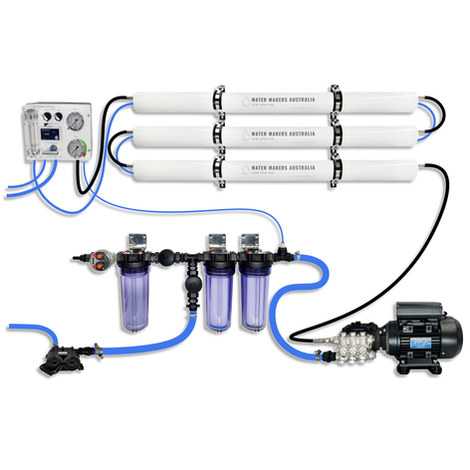
A three-membrane modular watermaker with 200 L/h nominal output and up to 240 L/h family-level marketing, for larger crews and heavy use.
Explore →