Loading this page…

Loading this page…
Sailing club
Koombana Bay Sailing Club (KBSC) is a mixed yacht and dinghy club based on the North Shore of Bunbury, Western Australia. The club runs an active racing and social programme across keelboats, multihulls and off‑the‑beach dinghies, provides structured learn‑to‑sail and adult keelboat training, and offers shore facilities including a clubhouse, permanent jetty and launching ramp. KBSC promotes accessible entry through SailPass and a broad junior pathway, and celebrated its 70th anniversary in October 2024.
About
Koombana Bay Sailing Club (KBSC) is a mixed yacht and dinghy club based on the North Shore of Bunbury, Western Australia. The club runs an active racing and social programme across keelboats, multihulls and off‑the‑beach dinghies, provides structured learn‑to‑sail and adult keelboat training, and offers shore facilities including a clubhouse, permanent jetty and launching ramp. KBSC promotes accessible entry through SailPass and a broad junior pathway, and celebrated its 70th anniversary in October 2024.
Service area: Bunbury and Koombana Bay (North Shore), Western Australia
Keep exploring
Learn-to-sail work at Koombana Bay is neither an add-on nor a marketing line; the expansion of junior sailing sat at the heart of the initiatives recognised by its 2021 state club-of-the-year award. The club runs Learn to Sail courses alongside keelboat crewing and helming programmes, all delivered by Australian Sailing qualified instructors. The keelboat arm is a particular point of difference: trainees learn their craft aboard an S80, the same Swarbrick-designed eight-metre class that races in the club's own fleet, so a graduate can step almost seamlessly from the training boat onto a competitive start line.
For younger sailors, the club promotes a thoughtful ladder of classes. The O'pen Bic gives beginners a lively modern trainer; the Mirror offers a more traditional two-handed pathway; the Jay Dee junior dinghy remains a West Australian staple; and the Mudlark — a WA-designed seven-foot single-handed trainer for six-to-twelve-year-olds — rounds out the junior options. That spread lets families match a child to the right boat at the right stage rather than forcing everyone through a single class, and it reflects decades of dinghy culture at Bunbury stretching back to the VJs and Sharpies of the club's earliest fleets.
Adults are not an afterthought. Keelboat crewing and helming courses give grown-up beginners a realistic route into the sport without buying a boat, and the club's use of SailPass lowers the threshold for social members curious about trying a sail. Once hooked, new sailors find Wednesday twilight sessions and Saturday racing waiting for them, with four handicap classes ensuring that a fresh crew in a small dinghy and an experienced keelboat team both find their level. In short, the pathway from first lesson to Saturday starter is short, well signposted and run by people who took it themselves.
Bunbury's geography hands Koombana Bay Sailing Club a rare double act. The bay itself faces north, tucked in behind the breakwater and outer harbour works, so it lies sheltered from the prevailing south-westerly weather that batters much of the capes coastline. Inside, members enjoy smooth, protected water through the summer — ideal for junior training, twilight sailing and off-the-beach racing.
Yet step past the breakwater and the Indian Ocean is right there, and because the club sits at Anchorage Cove within the harbour precinct, keelboats can head offshore without the mast-lowering gymnastics that estuary clubs endure. The club itself makes much of that freedom, and it shapes the character of its keelboat fleet.
The sailing week is built around the water on the doorstep. Wednesday twilight sailing makes use of long summer evenings on the flat bay, while Saturdays belong to racing across the four classes — junior and senior dinghies, keelboats large and small, and the catamaran divisions. The cat fleets, with their Nacra heritage and mixed handicap racing among Windrush 14s, Maricats and Infusion F18s, relish the open reaches the bay provides, and the S80s and cruiser-racers can mix bay courses with ocean passages as the calendar dictates.
Shore facilities have grown with the club's ambitions. Today's members work from a clubhouse, a permanent jetty and a launching ramp — infrastructure that traces its lineage to the purpose-built clubhouse opened in 1967 and the jetty and ramp constructed in the same era. For a South West regional club, the package is substantial: protected training water, direct ocean access, and a hard base in Anchorage Cove from which nearly five hundred members now sail. Little wonder Australian Sailing's cameras came calling for a closer look.
It started with a newcomer asking an obvious question. When John Allen arrived in Bunbury in 1954 and discovered the town had no sailing club, he recruited two friends and set about fixing the omission. The founding meeting of the Bunbury Sailing Club convened on 29 August that year at the Bunbury Rowing Club, with John Roberts in the chair and Allen taking the Secretary-Treasurer role; joining as a foundation member cost two guineas. Progress came fast.
Official opening day on the North Shore came on 4 December, Mayor FJ Withers doing the honours; more than a hundred spectators watched the first race, and Roberts' Mustang sailed into the record books as its winner. A fortnight later, at the eighth general meeting on 18 December, members resolved to rename the organisation Koombana Bay Sailing Club and elected Norman Parker as Commodore.
The building phase was characteristically enterprising. A £200 loan financed the first clubhouse, built around a tubular steel frame sourced for £83/10/- from Fremantle firm Tubular Steel Constructions, and within four months the young club held land, a clubhouse, thirty-four senior and junior members and seven associates. A decade of patient negotiation for a land grant followed, culminating in a new $25,000 clubhouse — supported by a $12,000 loan — which WA Premier Sir David Brand declared open on 5 March 1967, with a permanent jetty and launching ramp built in the same period.
On the water, the early fleets were Vaucluse Juniors bought second-hand for £45 to £60 apiece, joined from 1959 by Lightweight Sharpies, Colin Goodlad's Robese being the first of that class in Bunbury. By the 1970s the club was hosting major titles, among them the 18th Skate National titles and the 35th Commonwealth VJ titles. Seventy years after Allen's knock on his friends' doors, in October 2024, members gathered to celebrate an anniversary that traced all the way back to that two-guinea beginning.
Apollo Bay is a small working harbour on Victoria’s Great Ocean Road where sheltered inshore sailing meets the Southern Ocean. The character is a mix of protected harbour berths and an exposed open coast: pleasant day-sails and sheltered weekend cruising inside the bay, with demanding coastal passages immediately offshore where south‑westerly swell and strong winds from the Southern Ocean dominate. It suits coastal cruisers, trailer sailors who launch at the ramp, and experienced coastal sailors who understand bar and swell behaviour; it is not a casual open‑ocean anchorage for unprepared or

Expect very different seasonal systems across Western Australia: the south‑west (Perth to Albany) has a strong summer afternoon sea breeze (the “Fremantle Doctor”) and winter westerly fronts, while northern WA follows a wet/dry monsoonal cycle with strong seasonal onshore winds, thunderstorms and cyclone risk in the wet season. Local headlands, estuaries and tidal flows often change what you actually feel on the water, so learn the local timing and sheltered venues first.
Explore →
There are legal obligations in Western Australia for recreational boat owners and skippers covering vessel registration, carriage of safety equipment and general skipper responsibilities, but the exact requirements depend on vessel type, size, where you sail and whether the vessel is commercial or recreational. Check the Western Australian Department of Transport (DoT WA) and the national authority for the precise checklist that applies to your boat and voyage.
Explore →
Look for a friendly club with beginner-focused training, accessible facilities and boats, a supportive community, clear safety practices, and opportunities to progress at your own pace.
Explore →
Before your first sail in South Australian waters check the weather and tide, make sure the boat and safety equipment are fit for the trip, confirm local rules and any area-specific hazards, and tell someone your plan.
Explore →
A practical guide for new sailors on picking the right Australian sailing club: training, boat access, racing, social fit, costs and the key questions to ask before joining.
Explore →A practical guide to the coastal weather systems that affect sailing along Western Australia's coast, focusing on the Fremantle Doctor, local sea breezes, and linked coastal phenomena. Explains how these systems form, when they tend to occur, how they influence boat handling and passage planning, common mistakes, and a
Explore →A practical guide for recreational sailors planning visits to Albany and King George Sound. Covers the main anchorage areas, typical local weather patterns, tidal and current considerations, navigational hazards, on-the-water etiquette and a pre-departure checklist to help you plan a safe passage and enjoyable stopover
Explore →
A practical, Australia-focused guide for planning and sailing around the Whitsunday Islands: weather and seasons, navigation and anchoring, moorings and parks, provisioning and charters, safety and common mistakes, plus checklists and next steps.
Explore →Burke Yachtsman Gear Bag 40L - Shop Now Zip Pay | Tamar Marine Skip to content 59 – 63 Holbrook Street, Invermay Online Shop Open 24/7 Products search Contact us 1300 MARINE $ 0.00 0 Cart Burke Yachtsman Gear Bag 40L $ 79.90 Colour Choose an option Black Blue Black Blue Clear - Burke Yachtsman Gear Bag 40L quantity + Add to cart Enquire about this product SKU BAGB-Y24/BLACK* Category Bags - Sail & Gear A Burke classic and customer favourite, the Yachtsman’s Gear Bag is built tough to handle wet, salty conditions while keeping your gear dry and protected. Made from double coated waterproof…
Explore →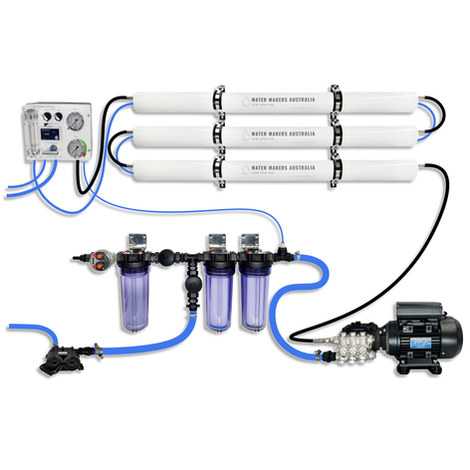
A three-membrane modular watermaker with 200 L/h nominal output and up to 240 L/h family-level marketing, for larger crews and heavy use.
Explore →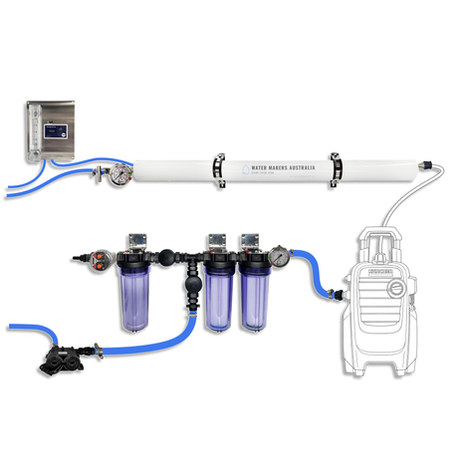
A one-membrane modular marine watermaker with 80 L/h nominal output, remote stainless control panel, standard consumables and direct Australian support.
Explore →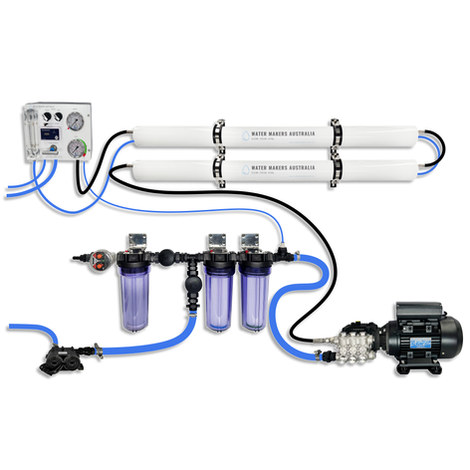
A two-membrane modular watermaker with 140 L/h nominal output, aimed at families and liveaboards that want more water per run.
Explore →