Loading this page…

Loading this page…
Sailing club
Lake Cootharaba Sailing Club (LCSC) is a volunteer-run dinghy and small-boat club based at Boreen Point on Lake Cootharaba, Noosa Shire, Queensland. The club runs weekly club racing throughout the season, a busy annual regatta calendar that includes Allboats (August), Cat Challenge (November), MonoMasters (December) and an Easter Regatta, and regular junior learn-to-sail programs through its Discover Sailing Centre operations. Facilities at 24 Boreen Parade include a clubhouse, boat storage and the club’s social Black Flag Bar.
About
Lake Cootharaba Sailing Club (LCSC) is a volunteer-run dinghy and small-boat club based at Boreen Point on Lake Cootharaba, Noosa Shire, Queensland. The club runs weekly club racing throughout the season, a busy annual regatta calendar that includes Allboats (August), Cat Challenge (November), MonoMasters (December) and an Easter Regatta, and regular junior learn-to-sail programs through its Discover Sailing Centre operations. Facilities at 24 Boreen Parade include a clubhouse, boat storage and the club’s social Black Flag Bar.
Service area: Lake Cootharaba / Boreen Point (Noosa Shire), Sunshine Coast, Queensland
Keep exploring
Lake Cootharaba Sailing Club is a member-run sailing club on Lake Cootharaba at Boreen Point, QLD. The club organises regular club racing, major regattas (including state and national championships and the Allboats Regatta), junior regattas and development programs, and offers learn-to-sail and other training courses. The club webpage lists contact phone numbers and notes the clubhouse is open on Sundays (weather permitting) and during regattas, with a Friday-night bar during the season.
The club is an accredited Discover Sailing Centre, and what distinguishes its offering is how deliberately everything is priced and packaged for families. Tackers courses for children run as 20-hour programs at a listed $320, with $50 Tackers Intro sessions for the curious — the national junior pathway, delivered with unusual cost transparency. Teenagers and adults from age twelve learn in Vagabond dinghies through Start Sailing 1 and 2, charged at $200 per 12-hour course.
Free Discover Sailing Days offer 30-to-45-minute try-sailing sessions for anyone aged five and up, Queensland Play On! Sports Vouchers are accepted, and the club honours the Duke of Edinburgh's International Award — small details that together lower every common barrier to entry. Junior members are trained by club coaches, and the club's 50th-anniversary history identifies junior training as a driver of membership growth; the club first became an official training centre back in 1981, launching junior sailing schools that have run in various forms ever since.
Racing underpins the instructional side. Club racing runs most Sundays through a season commencing in September, with classes spanning trailer sailers, catamarans and monohulls. The annual regatta slate — Allboats, the Cat Challenge, MonoMasters, the Easter Regatta and a Junior Allboats — gives graduates immediate goals to aim at, and recent national hosting includes the 45th Windsurfer Class Australian Championships in January 2023 plus the Open Skiff Nationals and Arrow Nationals over the 2023–24 summer. For a volunteer-run club at the end of a hinterland road, the breadth of the calendar is remarkable.
Lake Cootharaba is, by the club's and local sources' accounts, Queensland's largest coastal lake — roughly ten kilometres by five — a shallow tidal lake within the Noosa River system that drains the interior swamps through the river to the sea. Average depth is only about four feet, which keeps the water flat and warm and makes capsizes forgiving for training fleets, while the club credits the predominant sea breezes with delivering flat-water sailing conditions it rates among the finest on earth — a bold claim, but the club's own, and one its championship-hosting record does nothing to undermine. Water-skiing is prohibited on the lake, leaving the surface largely to sailors, paddlers and anglers.
The club occupies 24 Boreen Parade in Boreen Point village, on the lake's western shore, with a clubhouse, boat storage facilities and the Black Flag Bar, which opens most Friday nights from five. The village itself is small and characterful: a council campground, a general store and the historic Apollonian Hotel serve the sailing and holiday traffic.
Boreen Point sits within the Noosa Shire on the Sunshine Coast, and the journey there has always been part of the club's story: early members travelled for more than an hour over dirt roads — sometimes flooded — from farms as far afield as Kin Kin, just to get a sail. Modern access is considerably easier, but the lake has not changed: wide, shallow, breezy and uncrowded, it remains the kind of water where junior fleets, veteran windsurfers and trailer sailers can share a Sunday without friction.
The club's own 50th-anniversary history, written by Jean Duffield in January 1996, opens with Patron and Life Member Fred Bunney's recollection that it all started with one boat in 1945. The formal beginning came at eight o'clock on the evening of 12 February 1946, when thirteen named attendees plus sponsor M. Harris held the inaugural meeting. They named the club Lake Cootharaba Sailing Club, chose club colours and a triangular pennant, and moved to purchase allotment 15 of the Boreen Estate and erect a 24-by-20-foot shed.
First office bearers were HR Cooper as president, HD Wood as secretary-treasurer and F Bunney as vice president, with fees fixed at £1.10 a year — the same sum the club paid for the use of Merv Bunney's boat as its first official craft.
The early club concentrated on the 12-foot Trainee class, ran its first Easter Carnival in 1946, and in May that year affiliated with the National Fitness Committee and the Trainee Association of Queensland, appointing F.A. O'Connor as first Patron. After a hiatus, sailing resumed in 1951 with an annual general meeting at Boreen Point on 28 October, which returned F. Bunney as president and installed K.H. Lawrence as secretary-treasurer. Between 1951 and 1955 the club adopted a constitution, completed the boatshed and launched its first rescue boat, sold in 1958.
Construction of the present clubhouse began in 1960, with members performing most of the labour themselves; the original shed was sold off and taken away in 1961, the year the Ladies Committee formed. A major flood inundated the clubhouse in January 1968; the 1970s brought an aluminium rescue boat called The Doc, the club's first National Title event, a fresh constitution, plus new Poop Deck, canteen and bar additions. Official training-centre status arrived in 1981, incorporation in 1983, and after another major flood in 1992 the canteen was upgraded and registered as a café. The club owns its property outright — a fitting end point for a story that began with a single borrowed boat.

Maybe — it depends. In NSW you often need registration and a boat operator licence for motorised vessels, but many small trailerable sailing dinghies without engines don’t require boat registration or a licence. Check the specific rules for your craft, trailer and engine.
Explore →
Look for a friendly club with beginner-focused training, accessible facilities and boats, a supportive community, clear safety practices, and opportunities to progress at your own pace.
Explore →
Do a seasonal inspection and servicing routine that focuses on hull and antifouling, through-hulls and seacocks, rigging and sails, engine and fuel systems, electricals and batteries, safety gear and bilge systems. Tailor exact tasks to your boat type, age and where you sail in South Australia, and follow manufacturer and marine service advice for anything technical.
Explore →
Learn boat-handling basics (steering, points of sail and sail trim), safety and seamanship (personal flotation, wind awareness, man-overboard procedure), and simple anchoring/mooring — these give you the core skills to sail safely and enjoyably.
Explore →
A practical guide for new sailors on picking the right Australian sailing club: training, boat access, racing, social fit, costs and the key questions to ask before joining.
Explore →
Buying a Sailing Boat
Explore →
A practical, Australia-focused guide for planning and sailing around the Whitsunday Islands: weather and seasons, navigation and anchoring, moorings and parks, provisioning and charters, safety and common mistakes, plus checklists and next steps.
Explore →A practical guide for recreational sailors planning visits to Albany and King George Sound. Covers the main anchorage areas, typical local weather patterns, tidal and current considerations, navigational hazards, on-the-water etiquette and a pre-departure checklist to help you plan a safe passage and enjoyable stopover
Explore →Burke Yachtsman Gear Bag 40L - Shop Now Zip Pay | Tamar Marine Skip to content 59 – 63 Holbrook Street, Invermay Online Shop Open 24/7 Products search Contact us 1300 MARINE $ 0.00 0 Cart Burke Yachtsman Gear Bag 40L $ 79.90 Colour Choose an option Black Blue Black Blue Clear - Burke Yachtsman Gear Bag 40L quantity + Add to cart Enquire about this product SKU BAGB-Y24/BLACK* Category Bags - Sail & Gear A Burke classic and customer favourite, the Yachtsman’s Gear Bag is built tough to handle wet, salty conditions while keeping your gear dry and protected. Made from double coated waterproof…
Explore →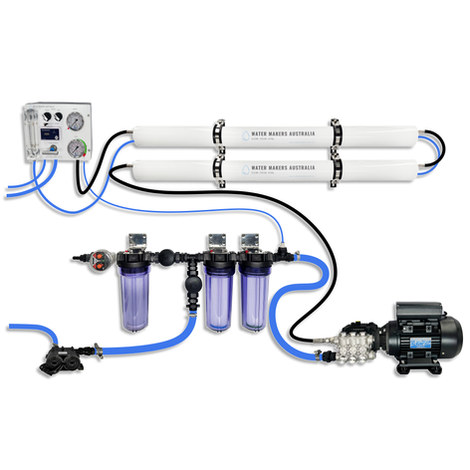
A two-membrane modular watermaker with 140 L/h nominal output, aimed at families and liveaboards that want more water per run.
Explore →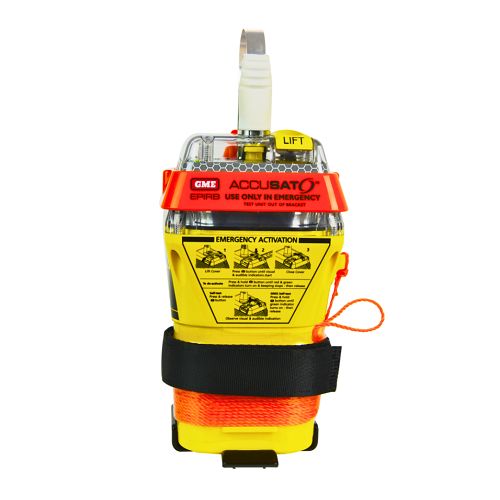
A 10‑year battery EPIRB with integrated GNSS (supports GPS and Galileo), infrared strobe and 121.5 MHz homing signal. Approved for worldwide COSPAS‑SARSAT operation.
Explore →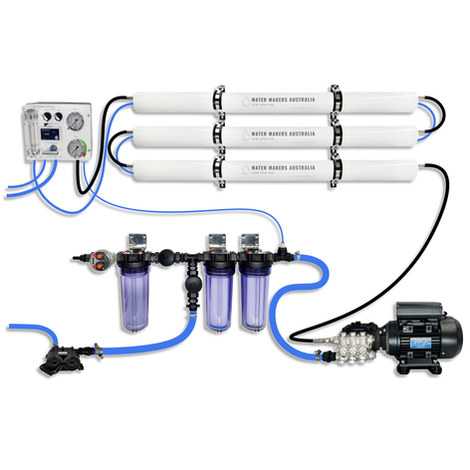
A three-membrane modular watermaker with 200 L/h nominal output and up to 240 L/h family-level marketing, for larger crews and heavy use.
Explore →