Loading this page…

Loading this page…
Sailing club
Lake Samsonvale Water Sports Association is a family-oriented boating club on Lake Samsonvale that welcomes canoes, kayaks, windsurfers and sailboats of all classes. The club runs sail racing and a radio-controlled yacht division, and operates a learn-to-sail program (including junior classes). Facilities include a clubhouse with a covered deck, showers and toilets, wood-fired barbecues around a grassed foreshore, and a member boat park with undercover storage for smaller vessels.
About
Lake Samsonvale Water Sports Association is a family-oriented boating club on Lake Samsonvale that welcomes canoes, kayaks, windsurfers and sailboats of all classes. The club runs sail racing and a radio-controlled yacht division, and operates a learn-to-sail program (including junior classes). Facilities include a clubhouse with a covered deck, showers and toilets, wood-fired barbecues around a grassed foreshore, and a member boat park with undercover storage for smaller vessels.
Service area: Samsonvale, QLD
Keep exploring
Lake Samsonvale Water Sports Association is a family-oriented boating club on Lake Samsonvale that welcomes canoes, kayaks, windsurfers and sailboats of all classes.
The club runs sail racing and a radio-controlled yacht division, and operates a learn-to-sail program (including junior classes). Facilities include a clubhouse with a covered deck, showers and toilets, wood-fired barbecues around a grassed foreshore, and a member boat park with undercover storage for smaller vessels.
The junior learn-to-sail program stands apart from the usual club model in one important way: rather than enrolling children in fixed eight-week blocks, LSWSA lets newcomers join at any point during the season, so a family that discovers the club in January is not told to wait until spring. Instruction runs through the warmer months on alternate Sundays, slotted between club racing days, and follows an easy rhythm — a 9.30 am start with theory delivered on the clubhouse deck, then rigging, coached time on the water backed by two safety boats, and finally a debrief over a sausage sizzle.
The association has bought ten Open Bic dinghies for training, and junior participation is covered by the family membership rather than billed as a separate course. Sail Training Co-ordinator Patrick Vale oversees the program, which is club-run; no Tackers branding or accredited Discover Sailing Centre status appears in the association's material, though the session structure mirrors what those national pathways teach.
Safety requirements are written into the bylaws rather than left to discretion: buoyancy vests are compulsory afloat, and a PFD of Level 50 or 100 must be worn at all times on the water. Competition days are described by the club as fairly informal affairs for trailer boats, skiffs and multihulls, with patrol boats out and every racing craft required under Australian Sailing rules to carry at least $10 million in public liability insurance. Beyond conventional sailing, the Radio Controlled Yacht Division, created in 2019, races on the Sundays between club fixtures and shares the junior training window, giving the club a second pathway for members who prefer tiller-free competition.
What distinguishes this stretch of water from almost any other in south-east Queensland is the regulatory regime wrapped around it. North Pine Dam is a Seqwater drinking-water storage, and the authority's zoning map reserves Zone 4 exclusively for members of the association; public sailing and powerboating are banned outright, swimming is prohibited across the whole lake, and fishing is excluded from the club's zone.
Only the association's safety boats may run motors — trailer-sailers can leave an installed outboard in place but must not use it — and everything on the water stops between sunset and sunrise. Fishing permits for other zones are obtainable through the association in conjunction with the Pine Rivers Fish Management Association.
Getting there is half the adventure. A signposted turnoff on Winn Road lies roughly ten minutes along Samsonvale Road out of Strathpine, or a similar run down Mount Samson Road from the Samford and Closeburn side, after which a locked gate gives way to a forest track down to the shore. Because of the water-supply status, gate keys are issued to members alone; visitors need to accompany a member or organise access ahead of time.
Once through, the reward is a fully enclosed lake that the club describes as carrying lighter breezes than Moreton Bay and offering a very safe environment for learners. The grassed shoreline doubles as the rigging area, with the water a few steps away. The reservoir sits among the suburbs of Warner, Joyner, Whiteside, Petrie, Lawnton and Bray Park, with public recreation areas at Bullocky Rest, Forgan Cove, Forgan Park, McGavin View, Kobble Creek and Tukuwompa Park dotted around its edges.
The club and its lake are the same age. North Pine Dam was built in 1976 to secure drinking water for the growing region north of Brisbane, its wall running 580 metres long and 40 metres high with five steel gates, and in that same year a group of local sailors formed what became the Lake Samsonvale Water Sports Association Inc. The pairing proved durable: as the reservoir settled into its dual life of water storage and restricted recreation, the association steadily converted about 4.5 hectares of the south bank from bush into the grassed, shaded venue members use today, adding a clubhouse with a covered deck, showers and toilets, plus wood-fired barbecues scattered around the grounds.
The association is incorporated and appears on Yachting Australia's affiliated-club listings under Strathpine, and its constitution and bylaws — which codify everything from lifejacket standards to insurance thresholds and the ban on night sailing — show an organisation that has formalised its arrangements with the water authority over time. Who called the first meeting, and how the founding negotiations with Seqwater unfolded, is not recorded in any public source the club maintains; the 1976 founding date on its own about page is the anchor point.
The most visible recent milestone is the creation of the Radio Controlled Yacht Division in 2019, which brought model-yacht racing into the fixture list on the Sundays between fleet racing. Another measure of the club's health is its annual Open Day: the November 2025 event, promoted through the sailing media with Commodore Paul Rowell at the helm, ran from 9 am to 3 pm and mixed try-sailing, paddling and model-yacht racing with an Amazing Race for families, underlining how the club recruits — by opening the gate once a year and letting the lake do the talking.
Adelaide’s metropolitan coast fronts the eastern side of Gulf St Vincent and mixes short, sheltered bay sailing around Holdfast Bay and the Patawalonga with more exposed, open-water sailing north toward Outer Harbour and along the Le Fevre Peninsula. The area suits a wide range of activity — sheltered day sails, club and trailer-sailer racing, short coastal cruising into the Fleurieu and Yorke Peninsula, and launch-and-home-port racing — but demands local knowledge about shipping channels, tidal flows in the Port River/Outer Harbour approaches, and seasonal wind patterns.

Look for a friendly club with beginner-focused training, accessible facilities and boats, a supportive community, clear safety practices, and opportunities to progress at your own pace.
Explore →
Before your first sail in South Australian waters check the weather and tide, make sure the boat and safety equipment are fit for the trip, confirm local rules and any area-specific hazards, and tell someone your plan.
Explore →
Yes — South Australian coastal waters include marine parks, aquatic reserves, harbour bylaws and local council restrictions that can affect anchoring, fishing, mooring and access; check the relevant state agencies, local councils and Notices to Mariners for location-specific rules and permit requirements.
Explore →
Treat Tasmanian waters as cold year-round: prevent immersion where possible, wear appropriate layers and a lifejacket, carry reliable distress equipment, and have clear procedures to recover and rewarm anyone who gets wet.
Explore →
A concise, practical guide to the points of sail and how to trim sails effectively for common Australian conditions. Learn the basics of wind angles, sail shape, telltales, reefing considerations and simple steps to improve boat speed and balance.
Explore →A practical, Australian-focused guide explaining how sails generate drive, the points of sail, and how to trim sails for different conditions. Includes simple explanations of aerodynamic concepts, step-by-step trim checks, common mistakes and clear next steps for practice on the water.
Explore →A practical guide for recreational sailors planning visits to Albany and King George Sound. Covers the main anchorage areas, typical local weather patterns, tidal and current considerations, navigational hazards, on-the-water etiquette and a pre-departure checklist to help you plan a safe passage and enjoyable stopover
Explore →
A practical guide for new sailors on picking the right Australian sailing club: training, boat access, racing, social fit, costs and the key questions to ask before joining.
Explore →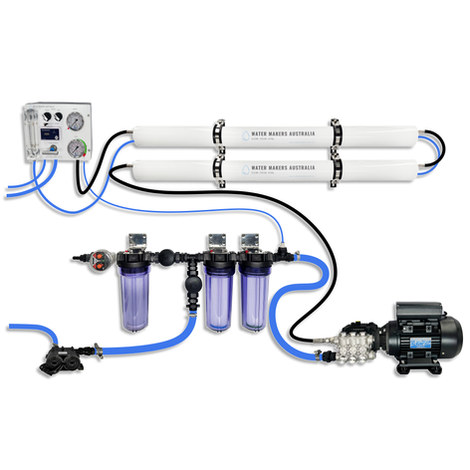
A two-membrane modular watermaker with 140 L/h nominal output, aimed at families and liveaboards that want more water per run.
Explore →Burke Yachtsman Gear Bag 40L - Shop Now Zip Pay | Tamar Marine Skip to content 59 – 63 Holbrook Street, Invermay Online Shop Open 24/7 Products search Contact us 1300 MARINE $ 0.00 0 Cart Burke Yachtsman Gear Bag 40L $ 79.90 Colour Choose an option Black Blue Black Blue Clear - Burke Yachtsman Gear Bag 40L quantity + Add to cart Enquire about this product SKU BAGB-Y24/BLACK* Category Bags - Sail & Gear A Burke classic and customer favourite, the Yachtsman’s Gear Bag is built tough to handle wet, salty conditions while keeping your gear dry and protected. Made from double coated waterproof…
Explore →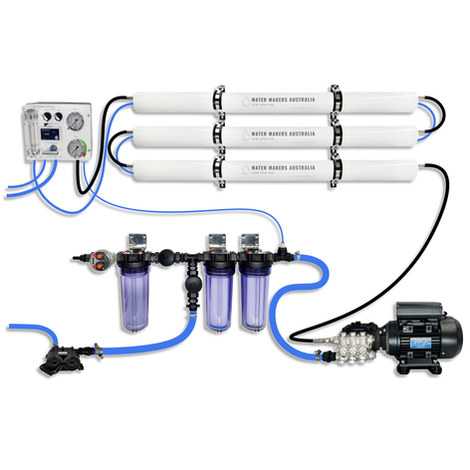
A three-membrane modular watermaker with 200 L/h nominal output and up to 240 L/h family-level marketing, for larger crews and heavy use.
Explore →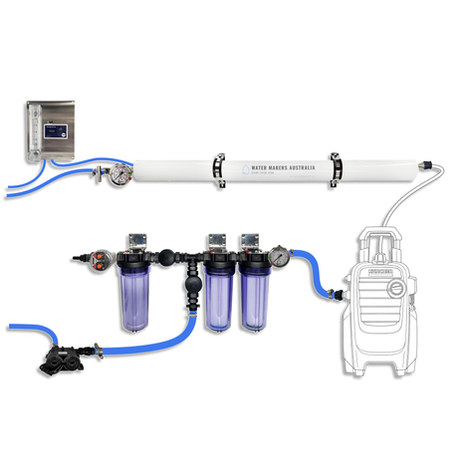
A one-membrane modular marine watermaker with 80 L/h nominal output, remote stainless control panel, standard consumables and direct Australian support.
Explore →