Loading this page…

Loading this page…
Sailing club
Lauderdale Yacht Club is a volunteer-run dinghy and catamaran club at Roches Beach on Frederick Henry Bay, about 20 minutes south-east of Hobart. Founded in 1974, it races most Sunday afternoons in the warmer months, runs sail training for youth and adults, and hosts the King of the Bay Regatta and national championships.
About
Lauderdale Yacht Club is a volunteer-run dinghy and catamaran club at Roches Beach on Frederick Henry Bay, about 20 minutes south-east of Hobart. Founded in 1974, it races most Sunday afternoons in the warmer months, runs sail training for youth and adults, and hosts the King of the Bay Regatta and national championships.
Service area: Frederick Henry Bay / Roches Beach, Lauderdale (near Hobart), TAS
Keep exploring
Lauderdale Yacht Club (LYC) is a non-profit, volunteer-run club at 5 Kirra Road, Lauderdale, on Roches Beach facing Frederick Henry Bay — about 20 minutes south-east of Hobart. It is a dinghy, skiff and catamaran club, with fleets that include O'pen Skiffs, Sabots, Pacers, Lasers, 29ers, windsurfers and catamarans such as the A Class, Formula 18, Paper Tiger, Taipan 4.9 and Nacra 5.8.
The club provides sail training for young people and adults, holds sailing on Sunday mornings from late September to April, and races most Sunday afternoons during the warmer months. Big days on the calendar include the Season Opening Day, a Christmas Fun Day and the King of the Bay Regatta. LYC is affiliated with Australian Sailing. See other clubs nearby on our Lauderdale sailing clubs page.
LYC provides sail training for both young people and adults. Sunday mornings from late September through to April are set aside for sailing and training, with advanced juniors moving on to afternoon training and racing as their skills grow. The mix of boats at the club — from Sabots and Pacers for learners to O'pen Skiffs, 29ers and Lasers for improving sailors — means there is a clear path from a first sail to competitive racing.
Catamaran sailors are particularly well served. The club has a long history with multihulls and currently sails A Class, Formula 18, Paper Tiger, Taipan 4.9 and Nacra 5.8 catamarans, as well as windsurfers. If you are coming from another club or class, the Sunday afternoon races are the easiest way to meet the fleet and find out what suits you.
The clubhouse is at 5 Kirra Road, Lauderdale, right on Roches Beach and looking out across Frederick Henry Bay. It is about 20 minutes' drive south-east of Hobart, across the Tasman Bridge and along the eastern shore.
Frederick Henry Bay is more open than the sheltered waters of the Derwent, and its breezes suit the club's fast fleets of skiffs and catamarans — part of the reason LYC has hosted national championships for classes such as the Cobra, Moth, Nacra, Paper Tiger and Formula 18. Beach launching straight from Roches Beach makes getting on and off the water simple. For clubs on the western shore of the Derwent, see our Sandy Bay sailing clubs page.
See our Lauderdale sailing clubs page for more clubs on the eastern shore.
Lauderdale Yacht Club was established in 1974, and its first races were sailed in the summer of 1974–75. Members built the clubhouse themselves between 1981 and 1983, with Alan Gardner serving as Commodore during the construction.
Over the years the club has sailed a wide range of classes, including B14 skiffs, Moths, Sharpies and Cobra catamarans, and it has hosted national championships for the Cobra, Moth, Nacra, Paper Tiger and Formula 18 classes. Today it remains a non-profit, volunteer-driven club with the same love of fast boats and beach sailing that got it started.
Batemans Bay and the Clyde River form a classic NSW South Coast cruising region where a sheltered, tidal estuary meets a short, island‑dotted entrance to the Tasman Sea. It’s distinctive for easy access from Canberra, a mix of river and bay sailing, a compact marina and mooring network, and a river entrance (the Clyde River bar) that can change rapidly. The area suits day sails, weekend cruising, trailer‑boat exploration and sheltered coastal passages; offshore or long‑passage plans require careful timing and local knowledge. Preparation for tidal flow, variable southerly swells and shallow, s

Use ramps and beaches with respect for local conditions: check ramp layout, tide and swell, wind direction, vehicle access and crowding; prepare boat and crew before you launch or retrieve; and follow local signage, courtesy and safety practices. Specifics vary by ramp and beach, so confirm details for the exact site before you go.
Explore →
Look for a friendly club with beginner-focused training, accessible facilities and boats, a supportive community, clear safety practices, and opportunities to progress at your own pace.
Explore →
Late spring to summer is usually the best time for beginners to start learning to sail in Tasmania because the weather is generally warmer, days are longer and conditions are often more settled. Expect lighter to moderate winds with regular afternoon sea breees in summer, while spring and autumn bring more changeable and sometimes stronger conditions; winter is colder, wetter and typically windier with more fronts and swell.
Explore →
Expect the usual IALA-B lateral system (red and green), cardinal and isolated-danger marks, safe-water and special marks, plus harbour-specific fairway buoys, leading/transit marks and exclusion or speed‑limit buoys. Check local harbour charts and Notices to Mariners for exact positions and light characteristics before entry.
Explore →
A practical guide for new sailors on picking the right Australian sailing club: training, boat access, racing, social fit, costs and the key questions to ask before joining.
Explore →A practical guide for recreational sailors planning visits to Albany and King George Sound. Covers the main anchorage areas, typical local weather patterns, tidal and current considerations, navigational hazards, on-the-water etiquette and a pre-departure checklist to help you plan a safe passage and enjoyable stopover
Explore →A practical guide for recreational sailors planning day sails or short cruises around Batemans Bay, Broulee and the Clyde River. Covers local conditions, safe approaches, anchorages, launching, tides, common hazards, and checklists for trip planning and on-water decisions.
Explore →
A concise, practical guide to the points of sail and how to trim sails effectively for common Australian conditions. Learn the basics of wind angles, sail shape, telltales, reefing considerations and simple steps to improve boat speed and balance.
Explore →Burke Yachtsman Gear Bag 40L - Shop Now Zip Pay | Tamar Marine Skip to content 59 – 63 Holbrook Street, Invermay Online Shop Open 24/7 Products search Contact us 1300 MARINE $ 0.00 0 Cart Burke Yachtsman Gear Bag 40L $ 79.90 Colour Choose an option Black Blue Black Blue Clear - Burke Yachtsman Gear Bag 40L quantity + Add to cart Enquire about this product SKU BAGB-Y24/BLACK* Category Bags - Sail & Gear A Burke classic and customer favourite, the Yachtsman’s Gear Bag is built tough to handle wet, salty conditions while keeping your gear dry and protected. Made from double coated waterproof…
Explore →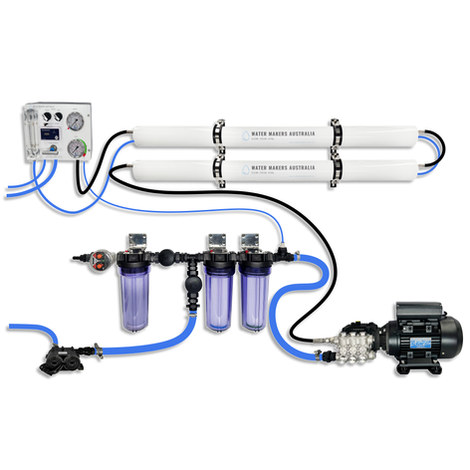
A two-membrane modular watermaker with 140 L/h nominal output, aimed at families and liveaboards that want more water per run.
Explore →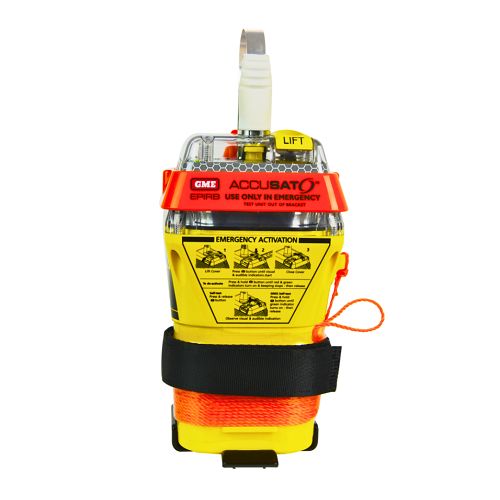
A 10‑year battery EPIRB with integrated GNSS (supports GPS and Galileo), infrared strobe and 121.5 MHz homing signal. Approved for worldwide COSPAS‑SARSAT operation.
Explore →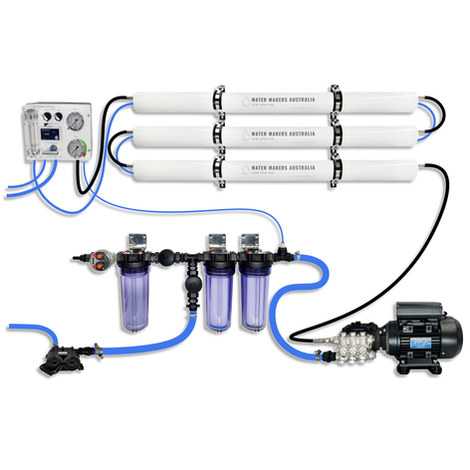
A three-membrane modular watermaker with 200 L/h nominal output and up to 240 L/h family-level marketing, for larger crews and heavy use.
Explore →